 By Iris
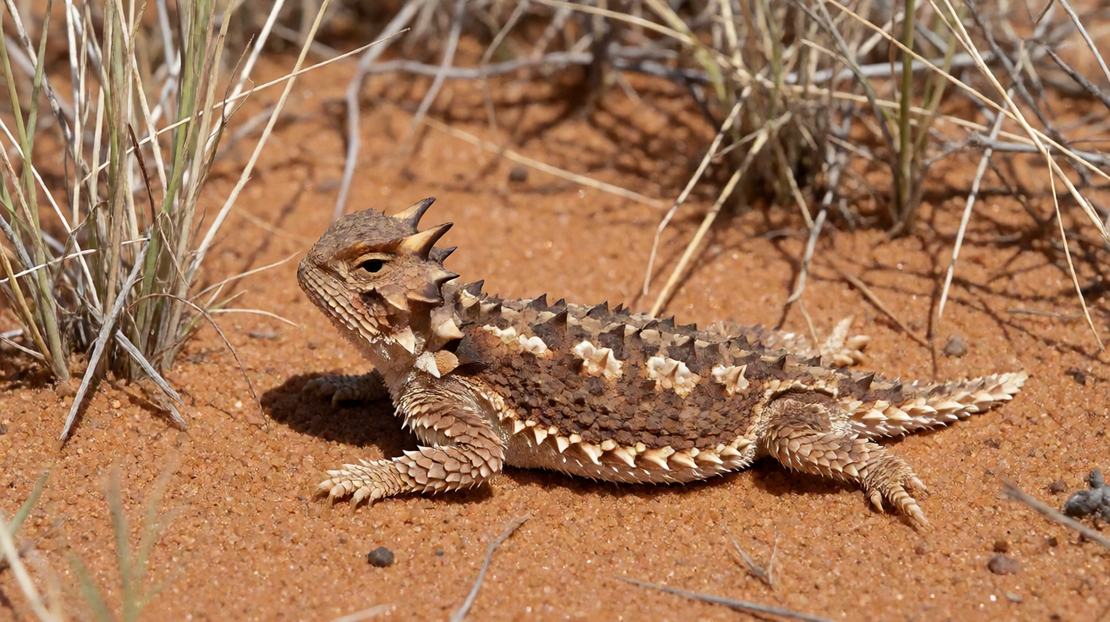
Phrynosoma cornutum | Texas Horned Lizard
Species Profile · Phrynosomatidae
Texas Horned Lizard
A flat lizard with a crown of horns and a taste for ants.
Least Concern
Length
Weight
Clutch
Hatch
Range
Rating
Sixty grams of desert lizard
Horns over a flat body
Crown of horns and a flat body mark this desert lizard. Length reaches 12 cm from snout to vent, and the tail adds a short spike. Weight stays near 60 g. Dry open ground in Texas and northern Mexico holds the species.
Sandy soil and sparse grass suit the animal, since it needs open space to bask. Harvester ants form most of the diet, and the lizard waits beside a trail for them. Bodies flatten when danger comes, and the horns then face outward. Cornered animals may squirt blood from the eye, and the taste drives a coyote away, so the trick works.
Few lizards depend on a single kind of prey, yet this one does. Numbers fall as the ants disappear, although the global rating stays low.
Family tree
Phrynosomatidae, the spiny lizards
Phrynosoma cornutum sits in Phrynosomatidae, the family of spiny lizards. Harlan named the species in 1825. Horned lizards form a genus of about twenty species, and this one carries the longest central horns. The Thorny Devil lives in Australian sand, while this animal keeps to North American desert.
Both eat ants, and both wear a body covered in spines. Their continents differ, though, because one lives in Australia and the other in Texas. Genetic work places the species among the flat bodied horned lizards. No subspecies is named today.
Texans made the animal a state symbol, and the law now protects it from collectors. One species now spans a shrinking range, although the map once reached far north.
One of many horned lizards
How to tell one
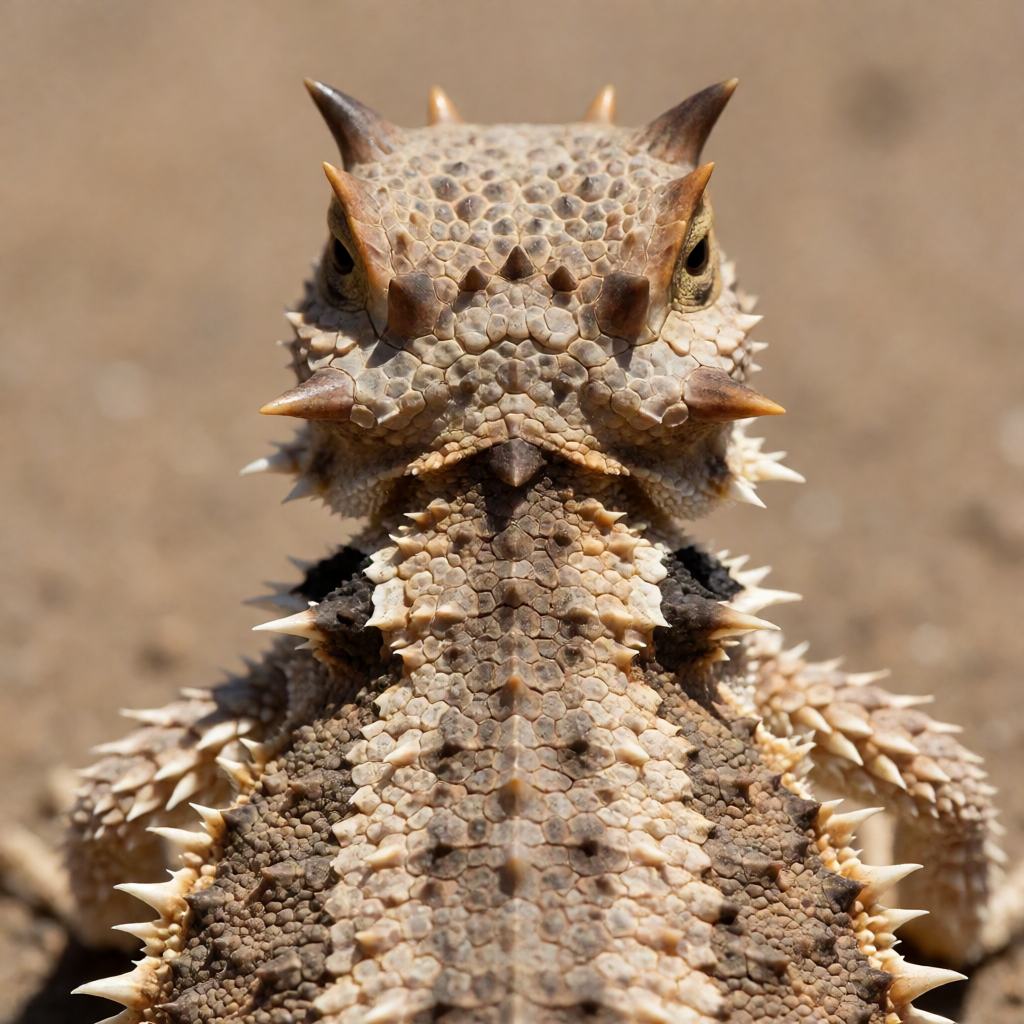
Length reaches 12 cm in a large female. Weight runs 40 to 60 g. Bodies look flat and wide, and a fringe of sharp spines runs along each side of the belly. Eight horns ring the head, and the two central pair grow longest.
Colour shifts with the soil, so a lizard on red sand looks red. Short tail carries spines, and the legs stay stout. The throat shows a dark patch in males, although the mark fades in winter. Scales stay rough, and each one ends in a point.
Eyes sit high, and the lids carry a small flap. Air fills the body, and the spines then stand out.
1
2
3
Horns, fringe and a flat body
Where it lives
Open desert scrub holds the main groups. Sandy or gravelly ground suits the animal best, since it burrows to escape heat. Range covers Texas, Oklahoma and parts of New Mexico, plus northern Mexico. Grass and low bush give cover.
The sun still reaches the ground. Harvester ant mounds decide where a lizard settles, although the mounds shift with the season. Each territory may hold one adult, and neighbours keep their distance, since the ants under it are scarce. Fire ant invasion removes the native ants that the lizard needs.
Pesticides kill the ants across wide areas. Roads and housing split the open ground into small pieces. Bare sand between houses can still hold a lizard, yet such patches keep shrinking while towns grow.
Open ground with ant mounds
What it eats
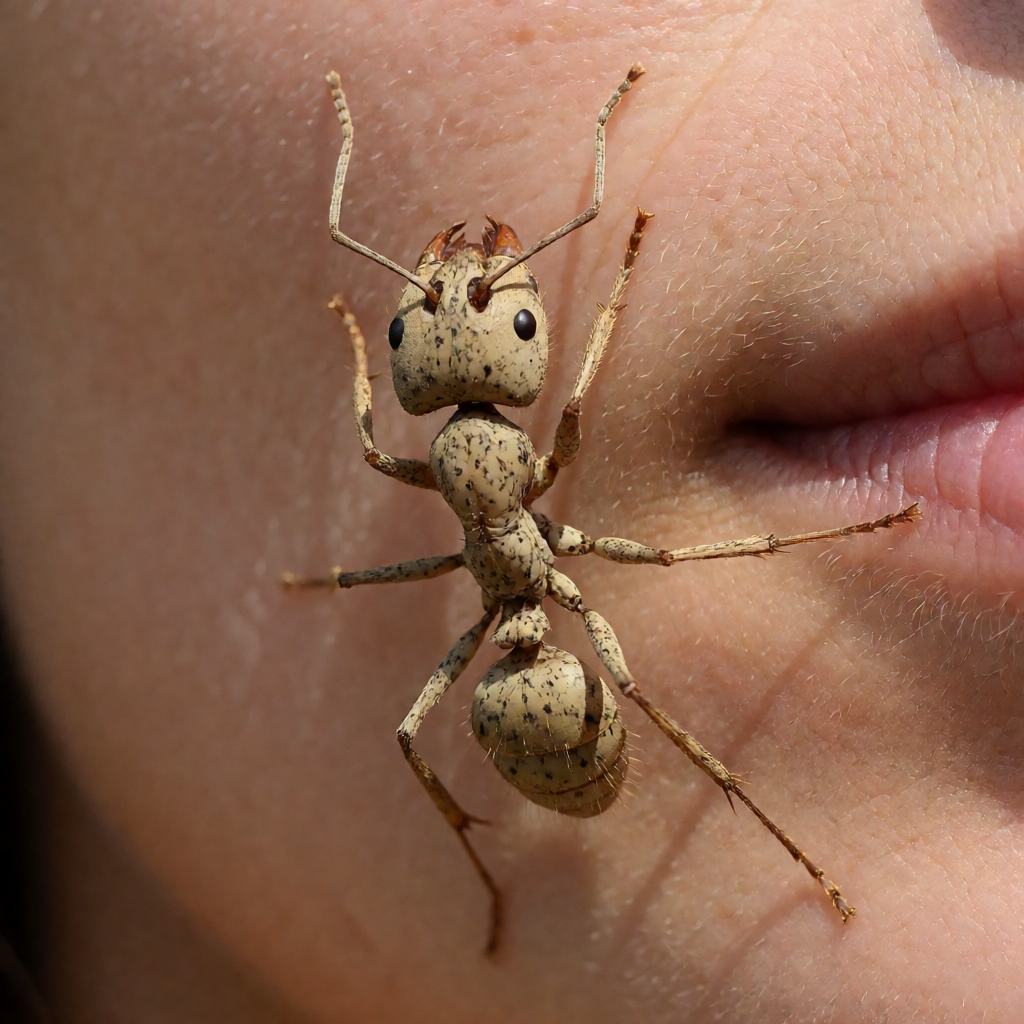
Harvester ants form most of the diet. Other insects fill a small share. The animal takes them when it can. Hunting means waiting beside a trail, and the lizard then picks off the ants one by one as they pass.
Tongue flicks out, and the jaws crush each ant. Ants carry formic acid, so the lizard must eat slowly. A full meal may take an hour of steady picking. Feeding stops at midday, since the sand grows too hot to stand on.
Young lizards take smaller ants, and they grow fast on the supply. Fire ants taste wrong, and a lizard that eats them may sicken. Few animals eat harvester ants, and that habit ties the species to one insect.
Harvester ants, almost only
The breeding cycle
Mating happens in spring, soon after the animals leave winter rest. A female lays 14 to 37 eggs in a burrow. Eggs hatch in about two months. Hatchlings look like small adults, and they hunt ants at once.
Females may lay two clutches in a good year. A female needs a deep body to carry so many eggs, because the clutch weighs her down. Nests sit in soft sand, where the sun warms them. Predators take eggs, so a clutch often fails.
Young lizards face birds, snakes and road traffic. A lizard may live five years, and it breeds only after two, so a lost adult is slow to replace.
Least Concern, and vanishing locally
Conservation
IUCN lists the species as Least Concern. Numbers fall in Texas, and the species has gone from many counties. Fire ants spread across the south, and they replace the native ants. Pesticides remove the food supply over large areas.
Collectors once took animals by the thousand, so the state banned the trade. Habitat loss follows housing and clean farming. Guarded areas cover part of the range, although the best ground sits on private land. Landowners now leave ant mounds and bare sand in place.
Surveys count animals along fixed routes, and the figures guide the work. Saving the lizard means saving the ant, because a single insect feeds the whole species.
Side by side
How It Compares
| Trait | Texas Horned Lizard | Thorny Devil |
|---|---|---|
| Length | about 12 cm, with a crown of horns | about 20 cm, with a body of spines |
| Weight | 40 to 60 g | 30 to 90 g |
| Home | dry open ground in Texas and northern Mexico | sand plains in central Australia |
| Food | harvester ants, almost only | ants, taken one by one on sand |
| Defence | horns, a flat body and blood from the eye | spines, a false head and slow walking |
| Clutch | 14 to 37 eggs in soft sand | three to ten eggs in a burrow |
Common misreadings
What People Get Wrong
- Many people think the lizard squirts blood at will, yet only a cornered animal does it.
- Some guides say the species eats many insects, although ants make up most of the diet.
- A common claim says the animal is a toad, yet it is a lizard with horns.
Going further
Sources and Further Reading
Quick hits
Five things to remember
- The two central horns grow longest.
- A cornered lizard squirts blood from the eye.
- Females lay up to 37 eggs.
- The animal eats harvester ants almost only.
- Texas made it a state symbol.