 By Iris
Rynchops niger | Black Skimmer
Species Profile · Laridae
Black Skimmer
A bird that fishes by cutting the water with its lower bill.
Least Concern
Length
Wingspan
Weight
Bill
Clutch
Rating
Three hundred grams of scissors
A bill made for the surface
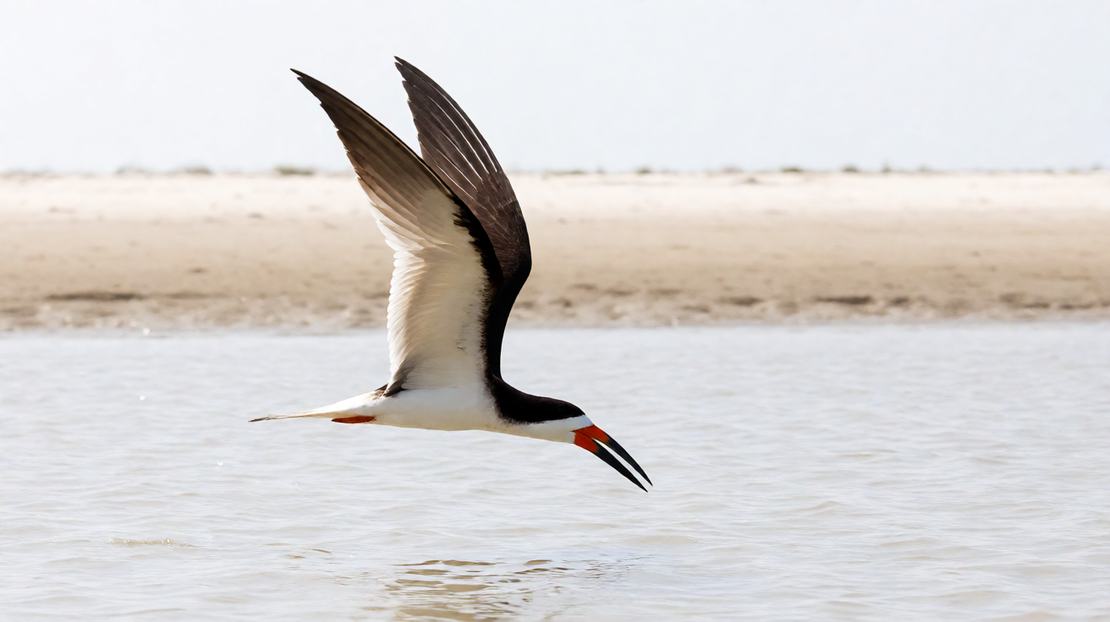
A red bill with a longer lower half marks this bird at once. Length runs 40 to 50 cm, and the wingspan reaches 1.2 m. Weight stays near 300 g. Black above and white below, the bird looks sharp in flight.
Low water over sand is where the species feeds, since the bill must touch the surface. The lower mandible cuts a shallow line, and it snaps shut on any fish it meets. Colonies gather on bars and islands along warm coasts. Northern birds drift south in autumn, although some stay through winter.
Few birds feed in this way, and none does it so well. A flock passing low over calm water looks like a row of scissors at work.
Family tree
Laridae, the gulls and terns
Rynchops niger sits in Laridae, the family of gulls and terns. Linnaeus named the species in 1758. Three skimmers are recognised today, and all of them live near warm water. The Common Tern hunts the same estuaries, while this bird works the surface at dusk.
Both nest on bare sand, and both gather in noisy colonies. Their bills differ, though, because one is a straight spike and the other carries a lower half that runs far past the tip. Genetic work puts the skimmers inside the gull family, although the bill looks unlike any other. No subspecies is named today.
Old accounts called the bird the cutwater, and the name describes the habit well. A single species now spans the Americas, yet the northern and southern groups rarely meet.
A skimmer inside the gull family
How to tell one
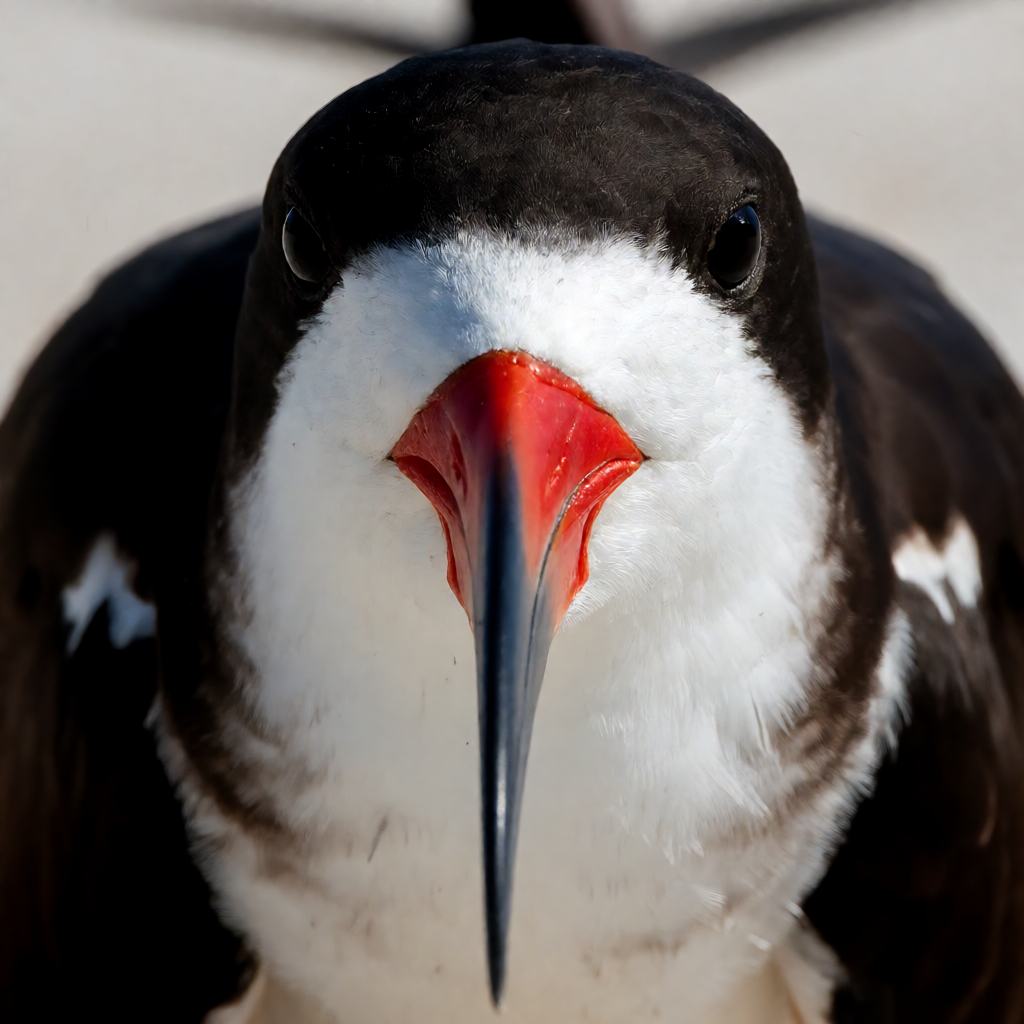
Length reaches 50 cm in the largest birds. Weight runs 265 to 350 g. Plumage looks black over the back and white underneath, with a short forked tail. The bill is red at the base and black at the tip.
Its lower half runs nearly 3 cm past the upper one. Eyes carry a vertical slit, which suits a bird that flies low at dusk and needs the light. Wings are long and pointed, and they beat slowly for a bird this size. Legs are short, so the bird sits low on the sand.
A feeding bird holds the head down. The lower bill slices the water. Feathers shed water quickly, so the body stays dry above the surface.
1
2
3
Slit eyes and a knife bill
Where it lives
Sandy bars and barrier islands hold the colonies. Estuaries, lagoons and slow rivers all give the calm water that the bird needs. Range covers the coasts of the Americas, from the United States to Argentina. Northern groups move south in autumn, since cold water clears the fish from the shallows.
Sandbars shift with every storm, so a colony may move from year to year. Salt marsh edges give cover for chicks near the water. Dredging removes the bars that colonies need, so the birds must find new ground each year. Sea level rise drowns the low islands first.
Off road vehicles crush eggs on open beaches. A colony needs a wide view of open water, and it needs quiet air overhead, since a hawk can drop fast.
Bars, lagoons and river mouths
What it eats
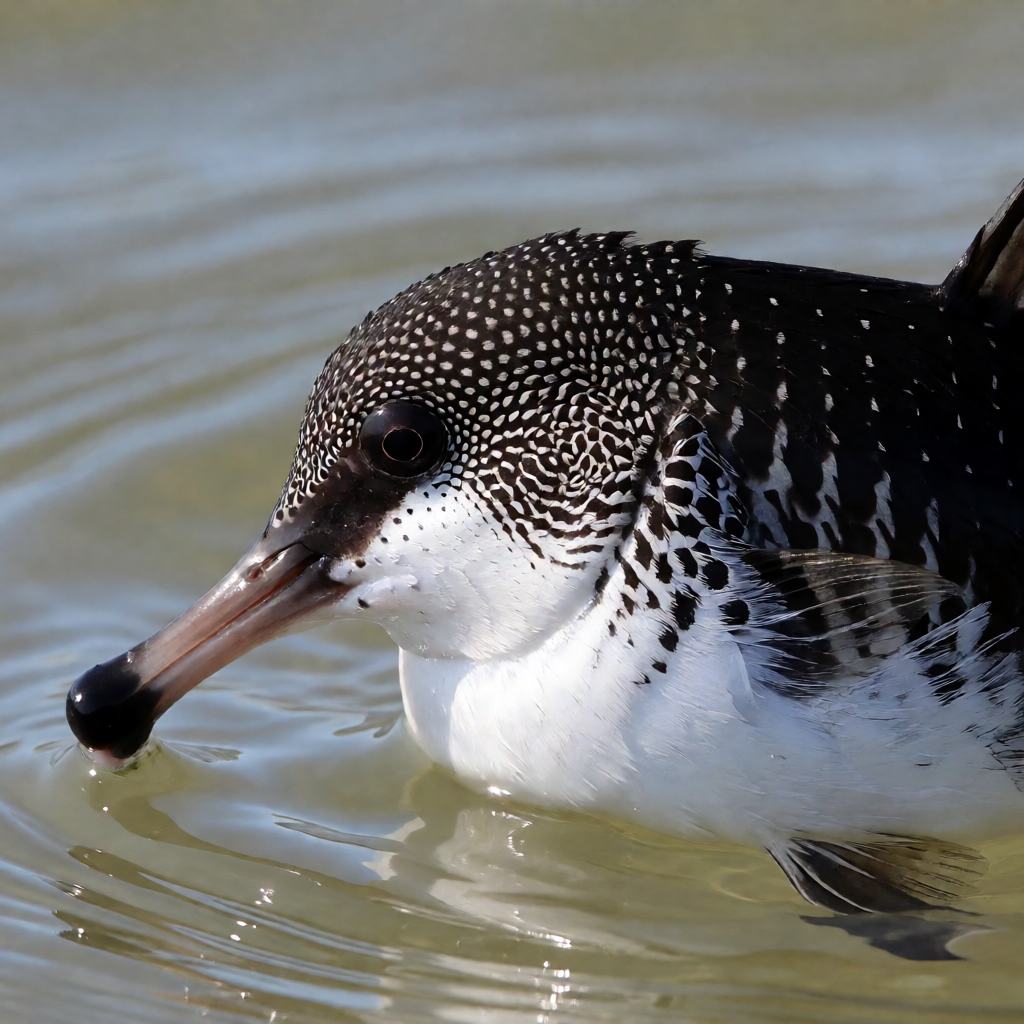
Small fish form the whole diet. Mullet, anchovy and menhaden turn up most often in samples. Feeding happens at dawn and at dusk, when fish rise near the surface. The bird flies low with the lower bill in the water.
Contact comes fast, and the bill closes by reflex before the head lifts clear of the surface. Skimming works only in calm water, so wind stops the hunt. A bird may feed alone, although flocks often work a channel together. Chicks take fish dropped by a parent, although they chase every passing shadow.
Young birds practice on still ponds before they try the surf. Winter food sits deeper, so the birds feed more at night, and they work the falling tide until dawn.
Fish taken at the surface
The breeding cycle
Colonies form on open sand in late spring. A scrape in the sand holds three to five eggs. Incubation takes about 22 days. Both parents sit, and they swap at intervals through the heat of the day.
Chicks hatch covered in down, and they crouch flat when a hawk passes. Parents bring fish through the first weeks. Chicks fledge at about four weeks, although they beg for food much longer. Tides wash out nests in a high spring, so a colony may fail in one night.
Gulls and foxes take eggs where people leave food around. Few chicks survive a wet season, and a colony then shifts to a new bar.
Least Concern, and losing beaches
Conservation
IUCN lists the species as Least Concern. Numbers fall along the Atlantic coast, although the global total remains large. Beach development removes the open sand that colonies need. Disturbance by people and dogs costs eggs in the nesting season.
Sea level rise threatens the low islands that hold the colonies. Dredging and channel work change the bars from year to year. Hunting ended long ago, yet birds are still shot on some rivers. Protected beaches now close in the nesting season.
Stewards fence colonies and count nests each spring. Saving a colony means saving a whole bar, because the birds return to the same shape of sand year after year.
Side by side
How It Compares
| Trait | Black Skimmer | Common Tern |
|---|---|---|
| Length | 40 to 50 cm, with a 1.2 m wingspan | 31 to 35 cm, with a 90 cm wingspan |
| Bill | red with a black tip, lower half longer | straight and red, with both halves equal |
| Home | bars and lagoons along American coasts | coasts and lakes across Europe and North America |
| Food | small fish cut from the surface at dusk | fish caught by plunging from a height |
| Nest | a scrape on bare sand, three to five eggs | a scrape in sand or grass, two to three eggs |
| Young | chicks crouch flat on open sand | chicks hide in low grass near the nest |
Common misreadings
What People Get Wrong
- Many people think the bird scoops fish with the upper bill, yet the lower half does the work.
- Some guides say the colony nests in grass, although every nest sits on bare sand.
- A common claim says the bird feeds by day, yet most hunting happens at dusk.
Going further
Sources and Further Reading
Quick hits
Five things to remember
- The lower bill is longer than the upper one.
- Birds feed by cutting the water surface.
- Colonies nest on bare sand bars.
- Chicks crouch flat when a hawk passes.
- Eyes carry a vertical slit.