 By Iris
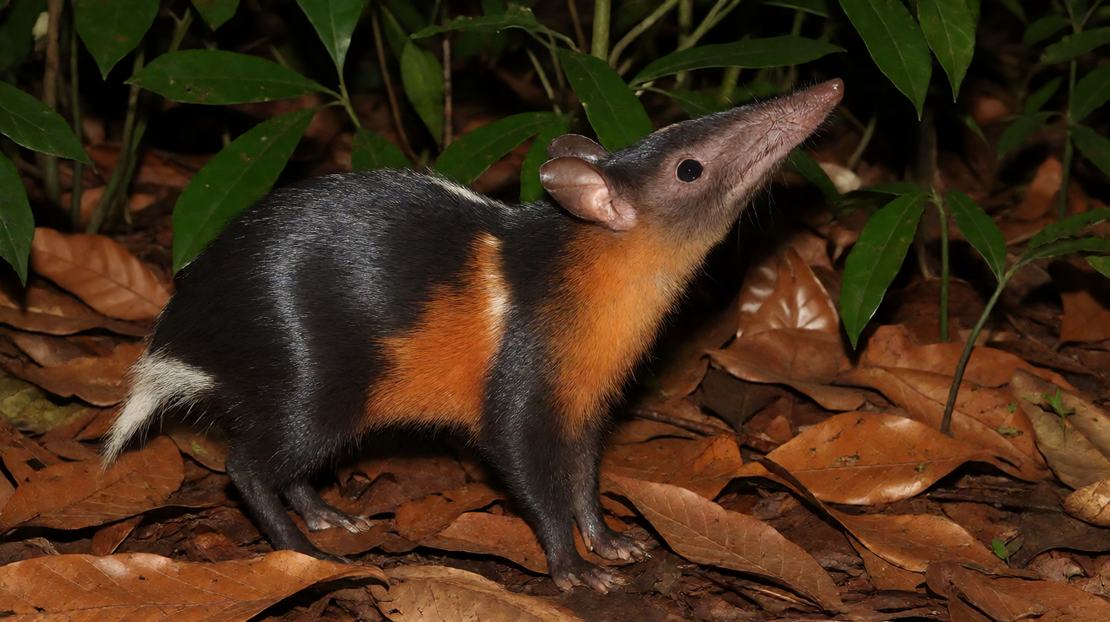
Rhynchocyon petersi | Black-and-Rufous Sengi
Species Profile · Macroscelididae
Black-and-Rufous Sengi
A sengi in black and rust, with legs built for a sprint.
Least Concern
Body
Tail
Weight
Snout
Range
Rating
Four hundred and fifty grams of speed
A trunk where a nose should be
Glossy black and rust red patches cover a small, long legged body. A flexible snout probes the leaf litter. Body length runs 22 to 30 cm, and the tail adds another 20 cm. Weight sits near 450 grams.
This is one of the largest sengis alive. Eastern Tanzania and south east Kenya hold the species. Forest floor, thicket and coastal scrub all suit it. Pairs stay together and hold a small patch.
Daylight hours bring the animal out, unlike many small mammals. Hunting happens along cleared trails, and the animal runs fast when startled.
Family tree
Macroscelididae, the sengis
Rhynchocyon petersi sits in Macroscelididae, the sengi family. Du Bocage named the species in 1880 from a Zanzibar specimen. Order Macroscelidea belongs to Afrotheria, an old African branch. Elephants, hyraxes and golden moles share that branch.
Older texts called the group elephant shrews, a name that caused confusion. The Common Shrew is a true shrew, while this animal sits in another order entirely. Both hunt bugs in litter, yet they are not close kin at all. Four giant sengis share the genus.
Gene work puts the sengi line far from the true shrews. Two forms are named, one on the mainland and one on Zanzibar.
An old African branch
How to tell one
Body length runs 22 to 30 cm. Tail length adds another 20 to 25 cm. Weight sits near 400 to 500 grams. Coat colours run from jet black to deep chestnut.
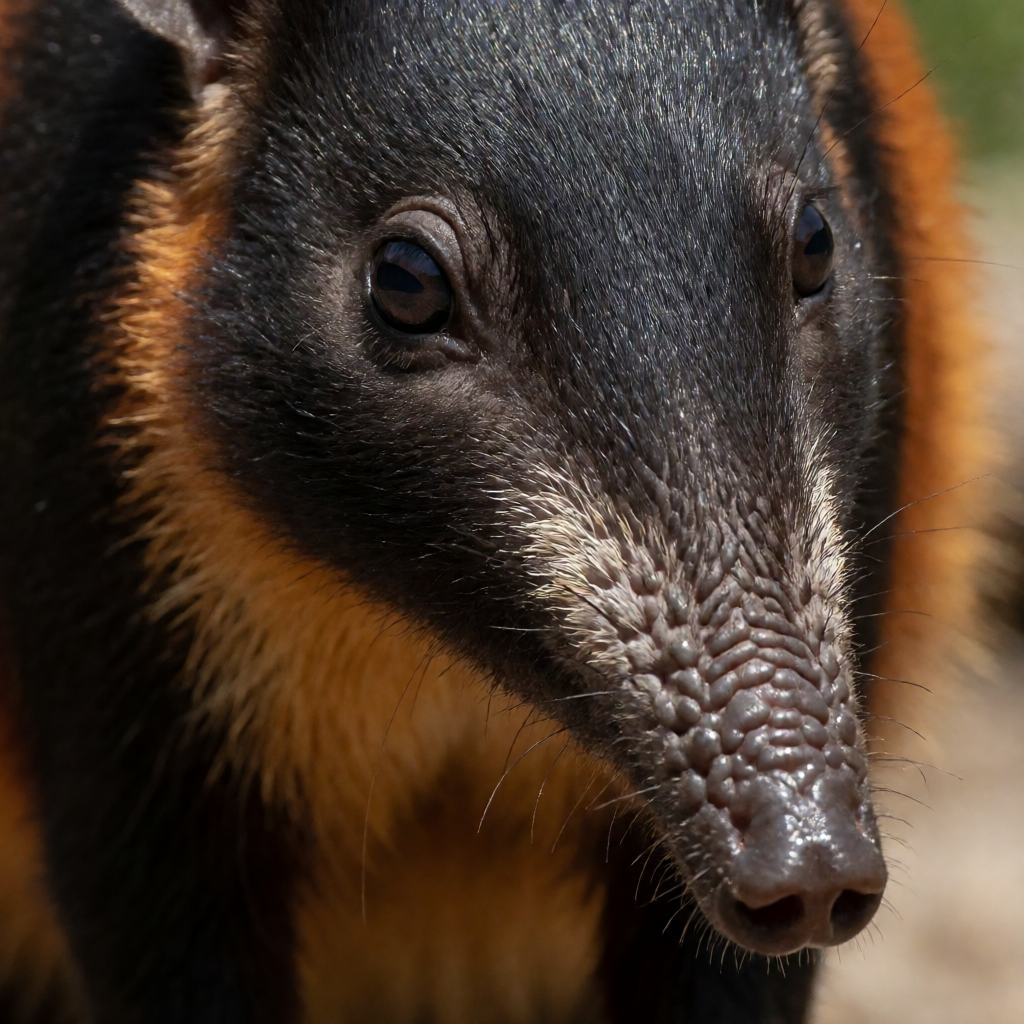
Black rump patches mark the back end. Its snout is long, flexible and always moving. Legs are long and thin, with small hooves on the toes. Front feet carry strong claws for digging.
Eyes are large and set on the sides of the head. Sengis of this size run on the toes, which keeps the body clear of wet litter and thorns.
1
2
3
Long legs, thin snout
Where it lives
Eastern Arc forest holds the core range. Coastal forest and thicket carry other groups. Records come from Tanzania, south east Kenya, Zanzibar and Mafia Island. Dense leaf litter matters, since the animal hunts inside it.
Cover must stay thick, because a sengi needs escape routes. Fragmented patches hold small groups. Sacred forest and village thicket sometimes keep animals. Logging removes the closed canopy, and the ground then dries.
Traps set for small game catch sengis as well. Each pair needs a few hectares, so a small patch of thicket holds very few animals at best.
Forest floor and thicket
What it eats
Bugs form the whole diet. Beetles, ants and termites are the usual prey. Earthworms are taken when the ground stays wet. Snouts turn over leaves, and the front claws scratch the soil.
Prey is flicked into the mouth with the tongue. Hunting pauses often, since the animal must watch the litter for the least movement. Feeding runs through the day in short bursts. Pairs forage apart, and each animal keeps to its own side of the trail through the day.
Ground beetles make up a large share in coastal forest, though the mix shifts inland. Food is never stored, because the animal has no burrow to keep it in and no reason to cache.
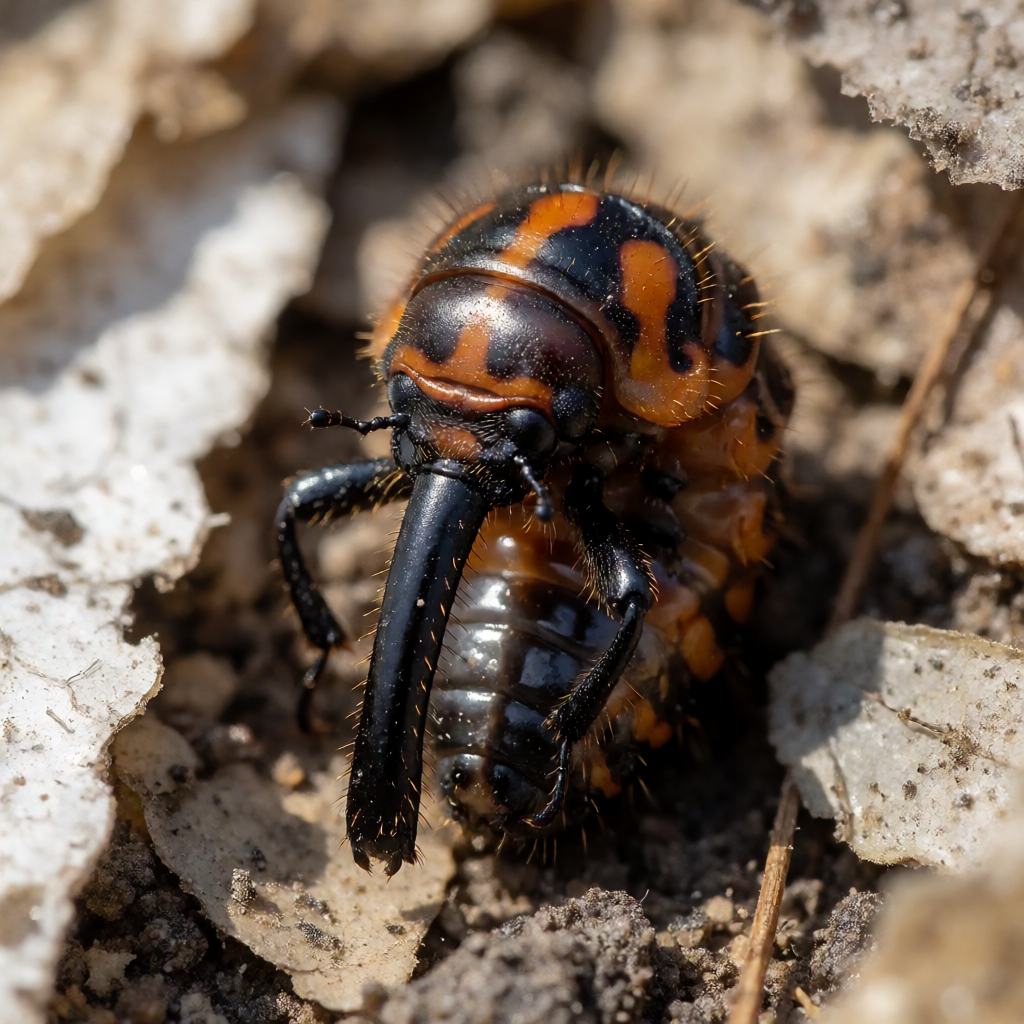
Insects from the litter
The breeding cycle
Pairs stay together for years. Each pair shares a patch and a trail system. Nests of dry leaves sit in a shallow hollow. One or two young are born after about six weeks.
Young stay in the nest for a few days. Mothers visit to nurse, and fathers keep watch on the nest entrance nearby. Young follow the parents within a month, although they still sleep in the nest. Females may breed several times a year.
Hunters take many young, so the fast cycle keeps the numbers steady. Birds of prey and small cats are the main danger, and a sengi escapes by speed rather than cover.
Least Concern, and quietly falling
Conservation
IUCN lists the species as Least Concern in a survey from 2016. Range size stays above the threshold for a threatened rating, though the margin is thin. Numbers fall, though, as forest shrinks. Charcoal burning removes thicket across the range, and the trade reaches remote valleys.
Farm clearance takes the coastal patches, although the losses go unrecorded. Trapping kills animals along trails. Several reserves protect part of the range in the Eastern Arc. Sacred groves hold small groups outside the reserves.
Traps with cameras now give better counts than they did a decade ago, and the picture improves. Keeping thicket between the reserves matters as much as keeping the reserves, since a pair cannot cross open farmland.
Side by side
How It Compares
| Trait | Black-and-Rufous Sengi | Common Shrew |
|---|---|---|
| Length | 22 to 30 cm body, and a 20 cm tail | 6 to 8 cm body, and a short tail |
| Weight | about 450 grams | 5 to 12 grams |
| Home | coastal forest and thicket in East Africa | grassland and hedgerow across Europe and Asia |
| Snout | long and flexible, and it probes the litter | pointed and twitching, and it smells the way |
| Food | ants, termites and spiders from the litter | insects, worms and snails, eaten hourly |
| Habit | daylight, along cleared trails | night and day, in short bursts of hunting |
Common misreadings
What People Get Wrong
- Many people take the sengi for a shrew, yet it belongs to an old African branch.
- Some guides say the animal comes out only at night, although it hunts in daylight.
- A common claim says the species lives in rain forest, yet thicket and scrub hold it.
Going further
Sources and Further Reading
Quick hits
Five things to remember
- Adults weigh about 450 grams.
- Its snout never stops moving.
- Pairs share a patch for years.
- One or two young form a litter.
- It runs on its toes.