 By st20113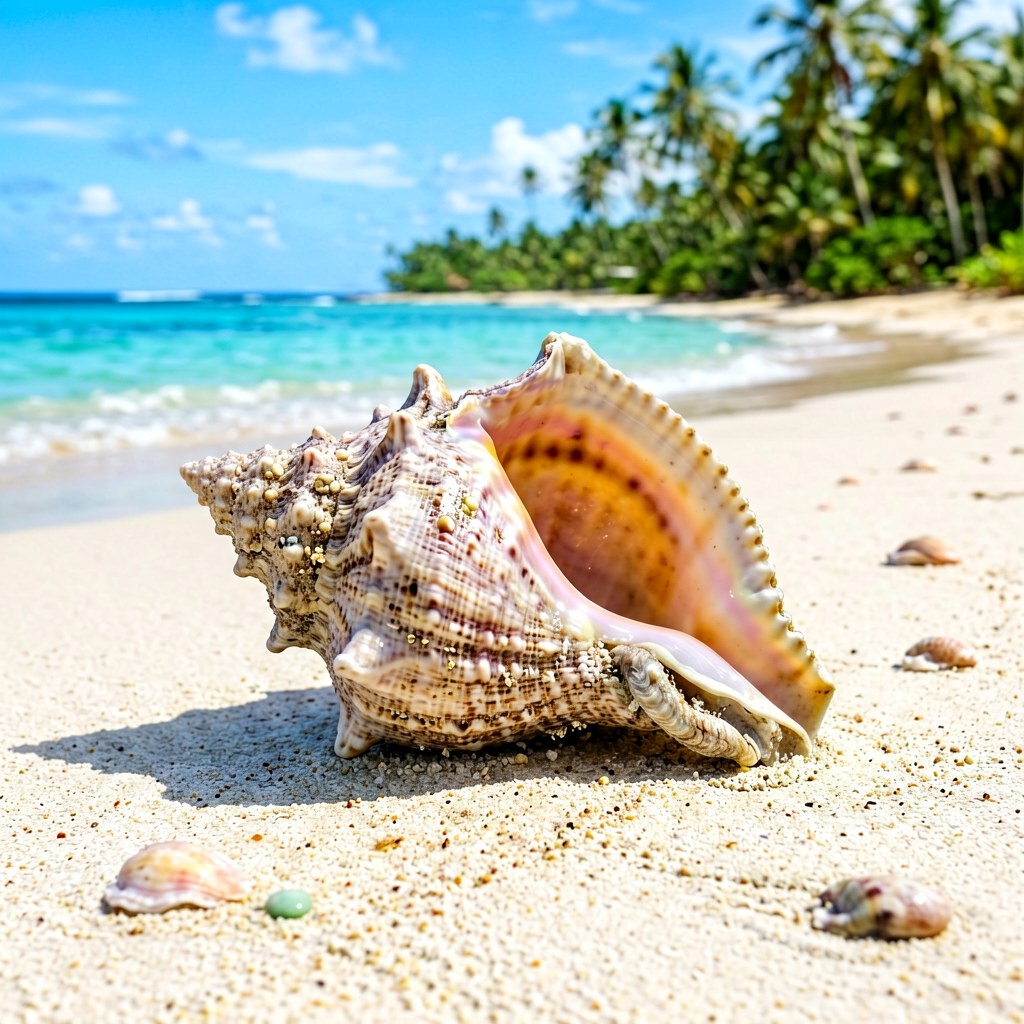
Strombus gigas | Queen Conch
Introduction
The queen conch (Strombus gigas) is one of the most iconic marine gastropods of the Caribbean Sea and tropical western Atlantic. A large sea snail in the family Strombidae, it is celebrated for its handsome shell with a flared lip and a deep pink, nacreous interior prized by collectors and artisans for centuries. Beyond ornament, the queen conch is a culturally important food across the Caribbean, where its firm, mildly sweet meat features in fritters, chowders, and salads. Ecologically it helps maintain seagrass meadows and algal plains, grazing detritus and epiphytes that recycle nutrients and keep shallow coastal waters clear. Once abundant, the species has declined sharply over recent decades from intensive, often illegal, harvest for meat and shell, plus habitat loss tied to coastal development and climate change. It is now the focus of fisheries management, international trade controls, and community conservation. Understanding its biology and life history is essential for sustaining Caribbean coastal ecosystems.
Taxonomy
Strombus gigas was formally described by Carl Linnaeus in the 1758 tenth edition of Systema Naturae, assigned to genus Strombus with the epithet gigas, Latin for “giant,” honoring its size. The genus sits in family Strombidae, order Littorinimorpha, a diverse caenogastropod group including many tropical conchs. Molecular and morphological work places the queen conch closest to other western Atlantic strombids such as the milk conch (Strombus costatus) and fighting conch (Strombus pugilis). Among the bivalve mollusks sharing its shallow habitat, the grooved carpet shell (Ruditapes decussatus), described at https://www.gloencyc.com/ruditapes-decussatus-grooved-carpet-shell/, is a useful analogue: both are shallow, sediment-associated mollusks taken by coastal fisheries, though they belong to separate classes of Mollusca. Within Strombidae the species is placed in subfamily Strombinae and is generally treated as a single variable species across the Caribbean, though historical confusion with the smaller Strombus raninus (dwarf conch) has complicated older accounts. Modern DNA studies confirm the queen conch as a distinct lineage adapted to the warm, clear waters of the Antilles, Bahamas, and southern Florida shelf.
Physical Characteristics
The adult queen conch is among the largest Atlantic gastropods, its shell typically 15 to 31 cm long and weighing over 2.3 kg, with exceptional specimens larger still. The shell is heavy and solid, with a rounded inflated body whorl and a thickened, flared lip that forms only as the animal nears maturity—making shell shape a handy age and maturity cue. The exterior is pale pink to tan, often coated with a rough yellowish periostracum, while the aperture’s interior shows the famous rose-pink nacre. The soft animal has a broad head with two long eye stalks tipped by well-developed eyes and a truncated snout. A hallmark of strombids is the strong, sickle-shaped operculum on the foot, used to lever the body forward in a distinctive leaping hop across the bottom rather than a smooth glide. The mantle is mottled brown, green, and cream with sensory papillae along its edge. Juvenile shells differ greatly: more elongated, sharply spired, strongly ridged, and lacking the adult flare. Coloration and sculpture vary geographically, with island populations showing subtle differences in size, lip thickness, and ornament that reflect local conditions and genetic structure.
Habitat
Queen conchs occupy shallow warm environments from inshore seagrass beds and algal plains to sandy and muddy bottoms, mostly between 1 and 30 m deep and occasionally to 60 m. They favor clear, well-oxygenated water above about 19 degrees C and near-full marine salinity—conditions typical of Caribbean oligotrophic shelves. Seagrass meadows, especially turtle grass (Thalassia testudinum), are critical: they supply epiphytic algae and detritus as food and shelter juveniles from predators after settlement. As they grow, conchs may move to deeper sandy or algal plains, where adults aggregate loosely, sometimes by the hundreds, particularly when spawning. Adults are largely sedentary, creeping slowly to feed and find habitat, yet capable of short migrations and showing site fidelity. Major concentrations occur across the Bahamas, Turks and Caicos, Cuba, the Dominican Republic, Puerto Rico, and the Belize Barrier Reef. The species is cold-sensitive; abrupt temperature drops from winter cold fronts can trigger mass mortality, so warm-water stability is central to its survival.
Diet
The queen conch is chiefly herbivorous and detritivorous, feeding mainly on macroscopic and filamentous algae and the epiphytic films coating seagrass blades and hard surfaces. With its radula—a tongue-like ribbon of chitinous teeth—it rasps algae and microbial films and ingests detrital organic matter from sediment. Gut studies show a diverse, opportunistic diet including diatoms, small seagrass fragments, sponge spicules, and assorted debris taken incidentally while grazing. Algae form the nutritional base, but the conch is no strict specialist and eats available palatable organic matter, a flexibility that lets it persist in oligotrophic waters. Juveniles in dense grass eat fine epiphytic films and soft sediments; larger adults handle coarser algae and greater detritus volumes. By processing large amounts of substrate, the conch aids nutrient cycling, breaking down and redistributing organic matter to sustain seagrass productivity. This grazing role also makes it sensitive to water-quality decline from eutrophication or sediment runoff, which can smother the algal and epiphytic communities it needs.
Reproduction
Queen conch reproduction features internal fertilization, long-lived planktonic larvae, and aggregating spawners. Sexes are separate, and maturity comes only after several years, typically when the shell forms its flared lip—the basis of many fisheries’ legal minimum-size rules. Through the warm spawning season, from late spring into early autumn, adults gather in large mating aggregations, sometimes hundreds or thousands strong, on sandy or algal grounds. Courtship involves the male mounting the female and passing a spermatophore; internal fertilization follows, and the female later deposits eggs in long gelatinous strings on clean sand, each holding hundreds of thousands of tiny eggs. These hatch into free-swimming veliger larvae that drift in the plankton for roughly three to four weeks or more, dispersed by currents and highly vulnerable to predation and starvation. Survivors settle and metamorphose into crawling juveniles that hide in seagrass. Growth is slow: three to five or more years to reproductive size, with wild lifespans possibly twenty to thirty years. This slow maturity and high larval loss make depleted populations slow to recover.
Conservation
The queen conch’s conservation status worries managers worldwide. It is listed on CITES Appendix II, regulating international commercial trade, and the IUCN ranks it globally vulnerable, with some local stocks in steeper decline. The main threat is overfishing—legal and illegal—driven by meat and ornamental-shell demand; slow growth and late maturity let stocks crash and recover only slowly. Destructive practices, such as taking immature conchs or using SCUBA on deep aggregations, worsen the problem. Habitat degradation from coastal building, dredging, pollution, and seagrass loss undermines recruitment, while climate change—warming, acidification, stronger storms—adds long-term risk. Responses include size limits, closed seasons, no-take reserves, and lip-based maturity rules, plus regional stock assessments. Community management, mariculture trials, and education show promise. Sustained CITES enforcement, science-based quotas, and habitat protection are essential if the queen conch is to remain a living part of Caribbean seas.
Fun Facts
- The queen conch’s shell yields the pink pearlescent interior used for cameos and jewelry and adopted as a national shell symbol by several Caribbean nations.
- Unlike most snails that glide, the queen conch “hops” using its sharp operculum as a lever to push its heavy body forward.
- A single female can release up to half a million eggs in a season, yet only a tiny fraction reach adulthood.
- Some Caribbean economies once leaned heavily on conch exports, with the meat a dietary staple for centuries.
- Queen conchs have good distance vision for a snail, with eyes on long stalks that detect movement and threats.