 By st20113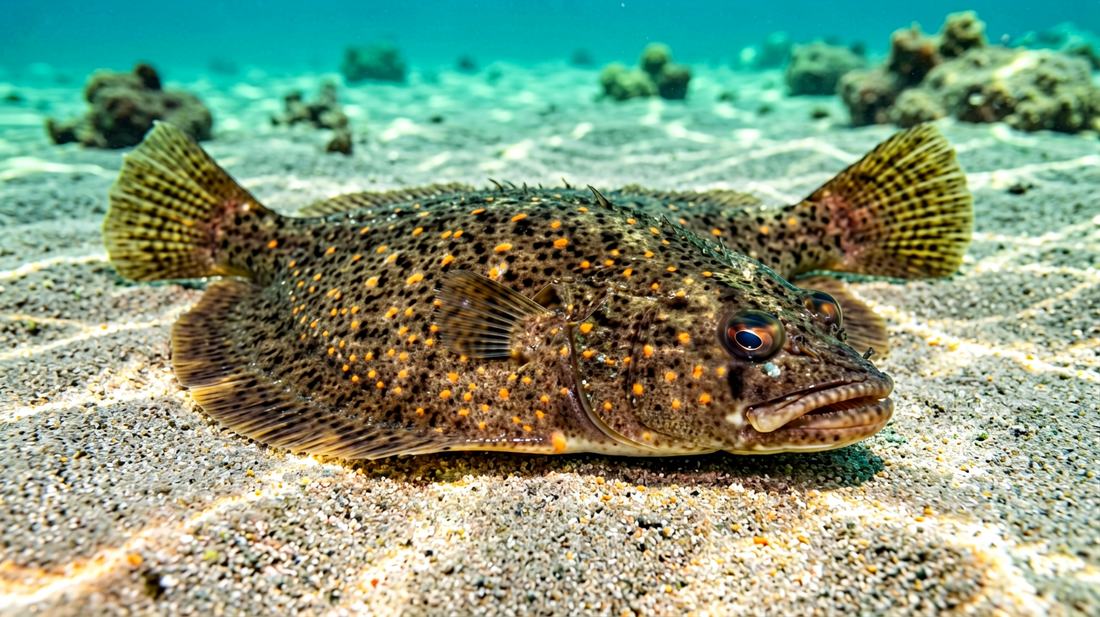
Platichthys flesus | European Flounder
Species Profile · Pleuronectidae
European Flounder
A right-eyed flatfish of estuaries that can live all its life in fresh water but must run back down to the sea to spawn.
IUCN: Least Concern
Range
Length
Weight
Eggs
Left-eyed
Half sea fish, half river fish
The flounder
The European flounder is a right-eyed flatfish. It is one of the commonest flatfishes of the shallow coastal waters of western Europe. It keeps closer inshore than the plaice. It also lives in more brackish water. It is a rather drab fish. It is mottled brown, grey and olive. It carries scattered darker marks and a dusting of dull orange spots.
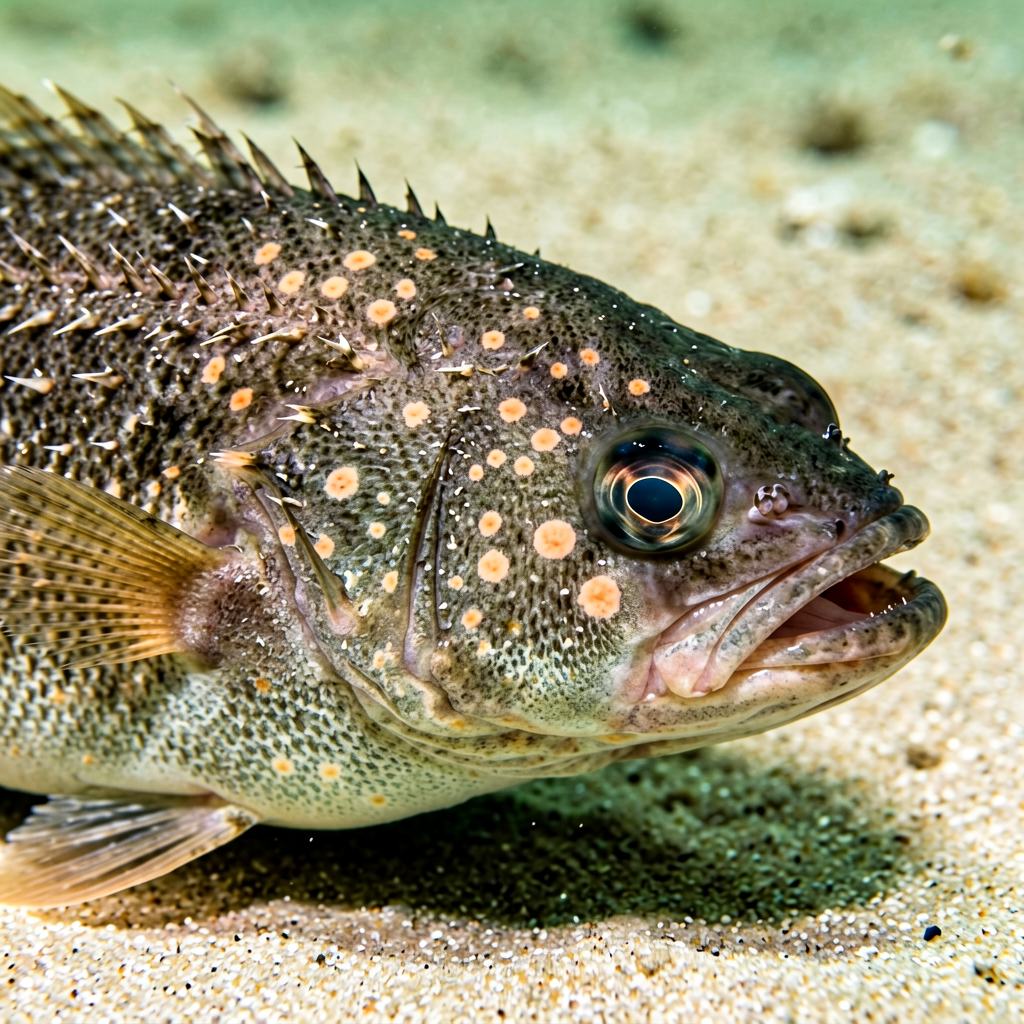
Those spots are much less obvious than the plaice’s bright orange ones. It has another useful clue. A row of rough bony lumps runs along the base of the dorsal and anal fins. More lumps sit across the head and along the lateral line. These give the upper surface a gritty feel. So the fish can be told by touch as well as by sight. The flounder is unusual among flatfishes.
It pushes into fresh water to a striking degree. It runs up estuaries and rivers in large numbers. In some rivers it lives all year above the tidal limit. Yet it must return to the sea to breed. It matters in the market in northern Europe. It is most important in the Baltic and in North Sea estuaries. Anglers also meet it often, since it feeds in very shallow water near the shore.
Family tree
Platichthys, the flat fish
The European flounder is in the family Pleuronectidae, the righteye flounders. That family holds about 60 species. They live in the Arctic, the Atlantic and the Pacific. Within it the species sits in the genus Platichthys. That genus holds three or four species. The best known are the European flounder and the starry flounder of the North Pacific. The genus name joins the Greek platys, meaning broad or flat, with ichthys, meaning fish. It refers to the flattened body form.
The species name flesus is a Latin word of unclear origin. It appears to have meant a flatfish in classical times. The oddest feature of the species is its eye. Most animals are right-eyed, like others in the family. But a large minority are left-eyed instead. The proportion rises in the Baltic to as much as 30 or 40 per cent. This shows the way the eye moves is not fixed. It has also fed the row over why flatfish became lopsided.
Gene work has made the family tree clear. Platichthys turns out to be closer to the genus Pleuronectes, which holds the plaice, than the old grouping suggested. That means either fast parting or a lot of coming together. The fossil record of flatfishes goes back to the Eocene. It has forms with partly migrated eyes and partly twisted skulls. The group is one of the best recorded big shifts in the fossils of backboned animals.
Bumps you can feel
How to identify one
The European flounder is a fairly large flatfish. Most fish reach 25 to 30 cm in total length. The maximum is about 50 to 60 cm. The largest fish weigh 2 to 3 kilograms. Females grow much larger and live longer than males. Males rarely exceed 30 cm in the Baltic and the North Sea. The body is roughly oval. Its outline is less even than the plaice’s. The front tapers more sharply towards the mouth. The rear is somewhat narrower. The top side carries hard bony bumps. They form a row along the base of the dorsal and anal fins. There is another row along the lateral line and more across the head.
The bumps are larger in males. They are biggest in the breeding season. They are almost gone in some females. They are also weak in young fish in the south of the range. These bumps and the lack of bright orange spots are the best way to tell it from the plaice. The top side has small scales half buried in the skin. Its colour varies greatly. It runs through brown, grey, olive and buff. There are darker blotches and bands. Scattered spots of dull orange, red or brown appear too. The pattern helps it match the sea bed. The blind side is plain white or cream. The mouth is small.
Its jaws are slightly uneven. The upper jaw reaches further forward on the blind side. The teeth are small and blunt. They form bands on the jaws and a single row on the roof of the mouth. That suits seizing soft worms and crabs. It does not suit catching fast prey. The dorsal fin reaches forward over the skull in some fish. The lateral line is straight along the body. It continues onto the head and divides there. The pelvic fin on the eyed side is joined to the anal fin by a membrane. That is a good clue to this genus.
1
2
3
Estuaries and river reaches
Where it lives
The European flounder lives along the coasts of the north-eastern Atlantic. Its range runs from the White Sea and northern Norway southwards. It covers the North Sea, the Irish Sea and the English Channel. It continues through the Bay of Biscay to Portugal. It also enters the Mediterranean and the Black Sea. It reaches deep into the Baltic. There it is one of the most common flatfishes. It makes the most of its taste for brackish water. The species is mostly inshore and estuarine. It is commonest between the tideline and about 20 metres. It rarely descends below 100 metres.
It lives on sand and mud. It uses estuary flats, sheltered bays and coastal lagoons. It also enters fully fresh water. It swims up rivers well above the tidal limit. This is one of its clearest marks. Flounders are often taken many km upstream. This happens in the Thames, the Elbe and the Rhine. In several rivers some fish stay in fresh water all year. They only go to sea to spawn. Such fish are often paler and more even in colour. Young and adults both bear low salt levels.
The young of the year make the most use of estuaries. Post-larval fish enter them in huge numbers in spring. They use the rich shallows and tidal creeks as a nursery. There they are fairly safe from hunters. They move to more saline water as they grow. Over most of the range the species does not move far. Local movements do occur. Fish come inshore in autumn and move offshore in winter. In the coldest months they lie in deeper water.
Worms from the mud
What it eats
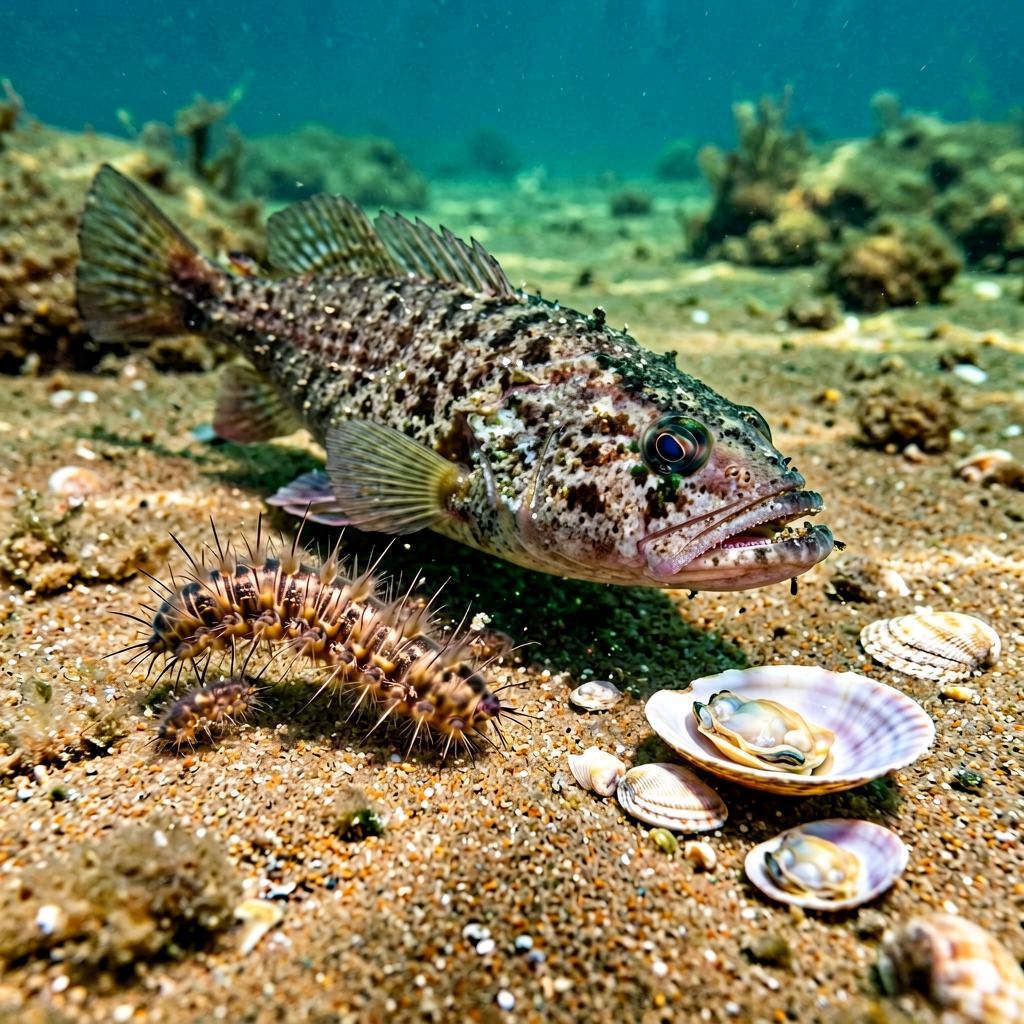
The flounder is a bottom feeder. It eats soft-bodied invertebrates and small fishes. Polychaete worms matter more to it than to the plaice. The plaice feeds more heavily on thin-shelled bivalves. Ragworms of the genus Nereis are important. So is the lugworm Arenicola and various small sedentary worms. The fish pulls them from the sand and mud. Its mouth is small and slightly asymmetrical. It can push its upper jaw down to take prey below the surface.
It also eats sand hoppers, opossum shrimps and small crabs and prawns. Small shellfish are taken too. These include the cockle and the Baltic tellin. In some places it eats a lot of small fish. Sand gobies, sprats and the young of other flatfishes all feature. The larger fish, which are mostly females, eat more fish than the smaller ones. It also takes plant material and living detritus. Overall it is best called an eater of anything. The stomach contents reflect what is about locally and in each season.
There is no strong liking. That readiness helps it in estuaries, where the small animals vary a lot. It feeds mostly in darkness and around the times of the tides. It is much more active at night in shallow water. It moves up the shore with the flood tide. It retreats with the ebb. Fish kept in a tank without tides keep the same rhythm for weeks. Young flounders eat small crustaceans and meiofauna from the mud. How much of that food there is helps fix the size of each year’s brood.
An eye that moves
The breeding cycle
The flounder spawns in winter and spring. The season varies with latitude and water temperature. In the southern North Sea and the Channel it falls in about January to March. In the Irish Sea it is February to April. In the Baltic it is March to May. In the Mediterranean and the Black Sea it is December to February. The fish leave their inshore feeding grounds for deeper water. They usually breed at 20 to 40 metres, sometimes much deeper. They gather in large numbers over sand and gravel banks. They pick banks where the tide keeps eggs and young in the water. Eggs are shed free and fertilised outside the body. They float near the surface.
They grow for 5 to 14 days, mostly by how warm the water is. Then the larva hatches and starts feeding on plankton. The number of eggs turns a great deal on the size of the female. A fish of 250 mm makes about 400,000. The largest produce more than 1.5 million. The eggs are small and many. That reflects the heavy losses among drifting young. The young fish is even at hatching. It stays so through the early stages. It feeds at the surface and drifts towards the coast. Metamorphosis begins at a length of about 12 to 15 mm. The right eye starts to move over the top of the head.
The skull begins to twist. It changes from swimming upright to swimming flat. The fish takes up the adult habit of living on the bottom. It settles in shallow water and in estuaries. It often moves into fresh water in its first summer. Growth is fairly fast for the first two or three years. The fish reaches about 15 cm by the end of year two. It reaches about 25 cm by the end of year four. Females live 12 to 15 years. Males live about 7 to 9 years.
Nursery grounds under pressure
Baltic numbers falling
The European flounder is Least Concern worldwide. The species is not threatened with extinction over most of its range. That range is vast. It runs from the Arctic to the Mediterranean and into the Black Sea. It also spans a huge range of salt levels, from fresh water to full sea water. Even so, there is worry where the fish is fished hardest. Baltic numbers in particular have fallen well below their old level. Two causes are usually named. One is too much fishing.
This take many young fish along with the catch of other species. The other is the loss of inshore nursery grounds. Young flounders need the shallows of estuaries. Those are exactly the areas most affected by dredging and pollution. They are also the areas most hit by land claim and by barriers. Barriers block the fish from the upper reaches of estuaries. The flounder also meets pollution head on. It lives and feeds in estuary mud. That mud collects a wide range of poisons.
The species is used in European checks as a watchdog. Its liver damage and liver enzymes are measured as a matter of course. Fish from dirty sites show clear harm. The wide range and broad tolerance of the species shield it to some extent. There is no sign of a fall overall across the range. The future in the worst-hit parts of Europe turns on two things. One is keeping estuary and shore nursery grounds in good heart. The other is holding down the toll on young fish.
Quick hits
Five things to remember
- The flounder can live all its life in fresh water and has been caught many km up rivers, but it still has to run back down to the sea to spawn.
- Rough bony bumps along the head and fins give the top side a gritty feel quite unlike the smooth skin of the plaice, so the two can be told apart by touch.
- In the Baltic as many as a third of the flounders are left-eyed rather than right-eyed, one of the highest rates of reversed asymmetry known in any flatfish.
- Flounders follow the tide up the shore in the dark to feed, and fish kept in a tank with no tide will keep the same rhythm for weeks.
- The largest females release over a million and a half eggs in a season, while a small first-time spawner may produce fewer than half a million.