 By st20113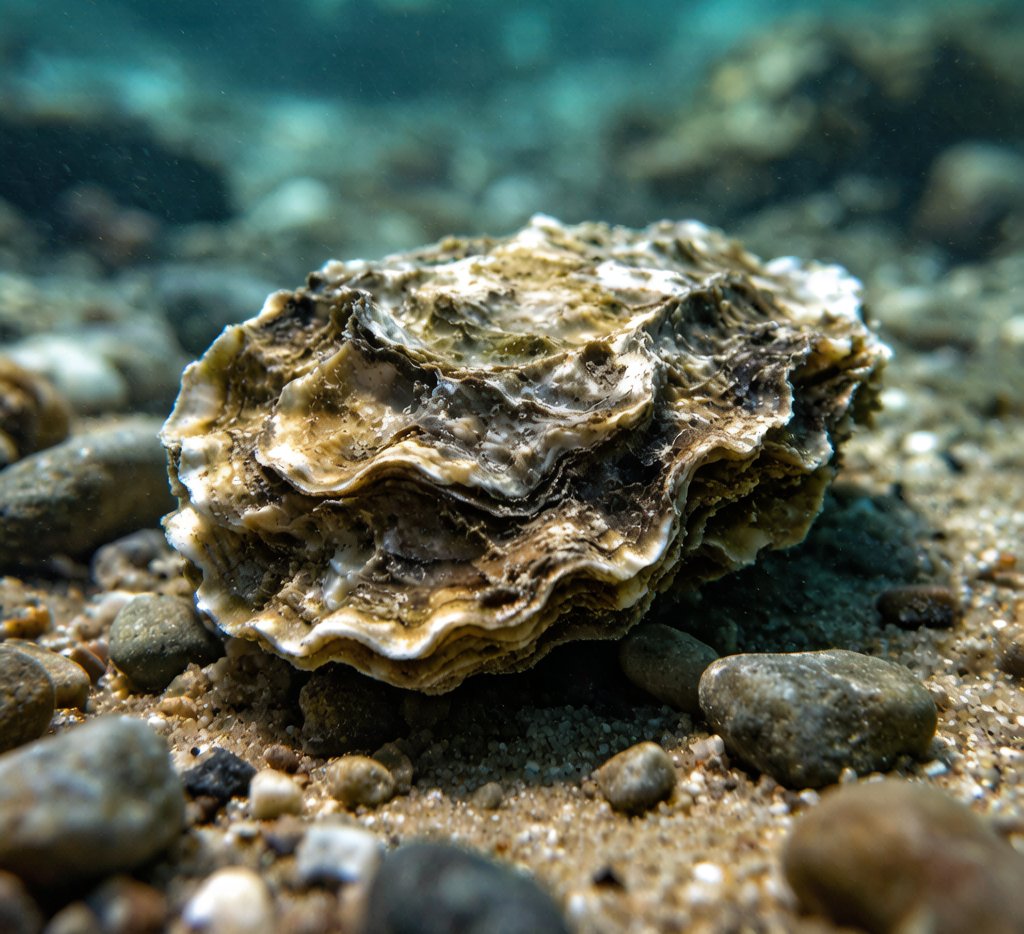
Introduction
The European Flat Oyster (Ostrea edulis) is one of the most significant bivalve molluscs in European marine ecosystems and has been prized by coastal communities for over two thousand years. Native to the coastal waters of Europe from Norway to West Africa, including the Mediterranean and Black Sea, this species was historically so abundant that vast oyster reefs extended across enormous stretches of European coastline. The European Flat Oyster holds dual significance: as an economically vital species underpinning European aquaculture production and the gourmet seafood industry, and as an ecological keystone species capable of building complex reef structures that support extraordinary biodiversity. The dramatic depletion of wild populations over two centuries of intensive exploitation has made restoration of European Flat Oyster beds a priority for marine conservation programmes across the continent.
Taxonomy
Ostrea edulis belongs to the phylum Mollusca, the second-largest animal phylum after Arthropoda, within the class Bivalvia, a group of laterally compressed two-shelled filter feeders. The family Ostreidae comprises the true oysters, distinguished by their irregularly shaped shells, adductor muscle placement, and mode of cementation to substrates. The genus Ostrea contains approximately a dozen extant species worldwide, many commercially important in their respective regions. The species epithet “edulis” is Latin for edible, a testament to the long-standing culinary reputation of this animal. Phylogenetic studies suggest significant genetic differentiation between Mediterranean and Atlantic lineages, with important implications for restoration strategies and aquaculture breeding programmes.
Physical Characteristics
The European Flat Oyster develops a roughly circular to oval shell with a distinctive flat upper valve and a more deeply curved lower valve, reaching commercial size at eight to fifteen centimetres across, with specimens exceeding twenty centimetres occasionally encountered in pristine conditions. The exterior of the shell is rough and flaky, with concentric growth rings reflecting seasonal variation in growth rate. The interior surface is smooth, pale white to bluish-grey, and highly iridescent, featuring a characteristic dark purple muscle scar left by the large adductor muscle. The two shell valves are joined at the hinge by an elastic ligament rather than interlocking teeth, allowing the upper valve to open slightly when the adductor muscle relaxes. Unlike most bivalves, Ostrea edulis does not possess a muscular foot for locomotion and becomes permanently cemented to a hard substrate following larval settlement and metamorphosis.
Habitat
Ostrea edulis inhabits subtidal marine and estuarine environments across the northeastern Atlantic, from southern Norway and the British Isles through the Atlantic coasts of France, Spain, and Portugal to Morocco, and throughout the Mediterranean and Black Sea. The species requires hard substrates for larval settlement, attaching to bedrock, boulders, stones, and the shells of conspecifics or other molluscs. It is typically found at depths between five and fifty metres, though it can occur from the lower intertidal zone down to approximately eighty metres. Optimal conditions include fully marine salinities above twenty-five practical salinity units and temperatures between ten and twenty-five degrees Celsius. Oyster beds historically created complex three-dimensional reef structures providing habitat for dozens of associated species including starfish, marine worms, and small crustaceans.
Diet
The European Flat Oyster is a specialised filter feeder, drawing water into its mantle cavity through the incurrent siphon and passing it over the gills, where suspended food particles are trapped in mucus and transported by ciliary action to the mouth. Its diet consists primarily of phytoplankton including diatoms, dinoflagellates, and green algae, supplemented by microzooplankton such as copepod nauplii, bacteria, detritus, and dissolved organic matter. Filtration rates are temperature dependent, peaking during warmer months, with individuals capable of filtering several litres of water per hour. An adult oyster can filter in excess of two hundred litres of water daily, playing a significant role in clarifying coastal waters and cycling nutrients between the water column and the benthos.
Reproduction
The European Flat Oyster is a simultaneous hermaphrodite that can produce both eggs and sperm during a single breeding season, though it typically functions as a male first before switching to female, a pattern known as sequential hermaphroditism influenced by body size, temperature, and nutritional status. Spawning occurs when water temperatures rise above fifteen to eighteen degrees Celsius, generally during spring and summer. A single large female may release several million eggs during a spawning season, while males release sperm in clouds that fertilise eggs within close proximity. The resulting planktonic larvae drift in the water column for one to two weeks before encountering suitable hard substrate, at which point they metamorphose into juvenile oysters called spat and permanently cement themselves. Larval mortality is extremely high, with fewer than one percent of fertilised eggs reaching the spat stage under natural conditions.
Conservation
The European Flat Oyster is classified as Near Threatened by the IUCN, reflecting its dramatic decline from historical abundance across most of its range.