 By st20113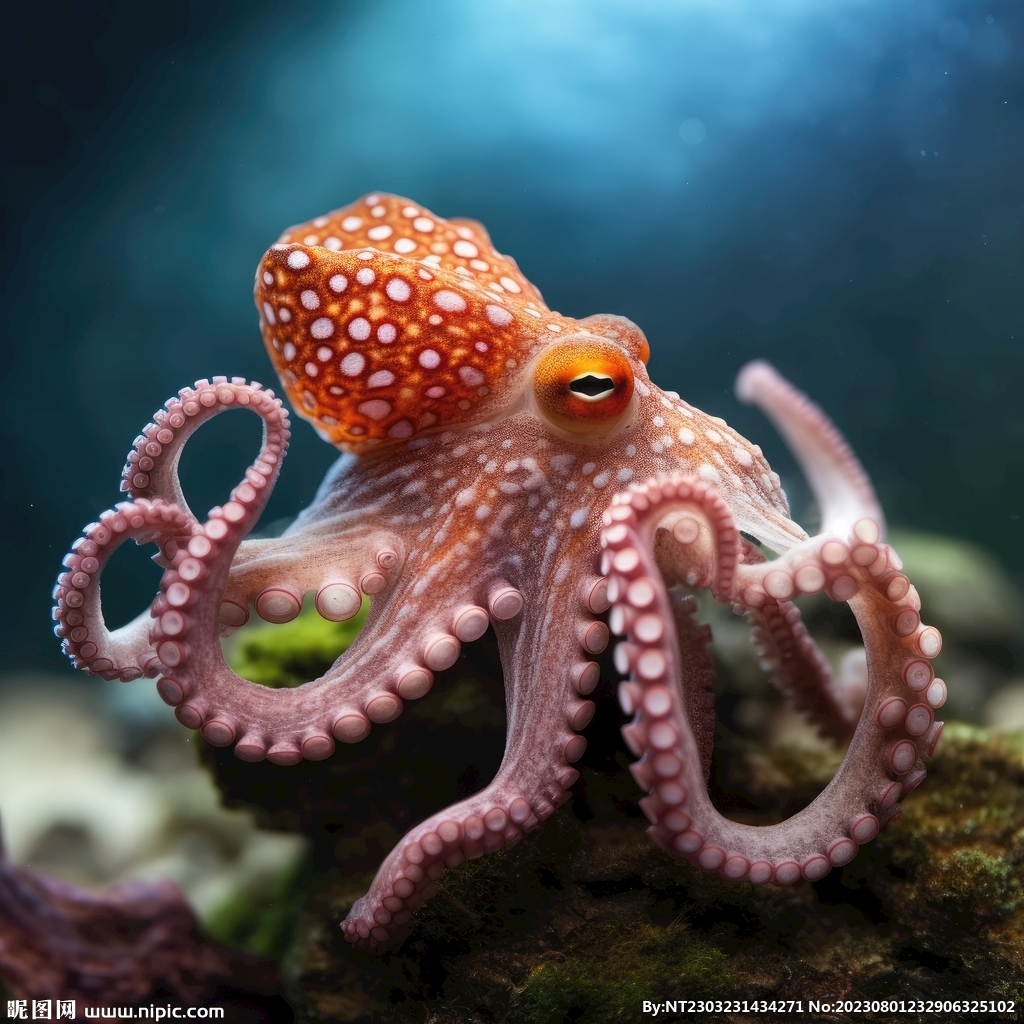
The Octopus (order Octopoda) is a master of disguise, a problem-solver of extraordinary intelligence, and one of the most neurologically sophisticated invertebrates on Earth – a remarkable achievement given that its most recent common ancestor with vertebrates lived over 500 million years ago, before the emergence of bones, eyes, or even a true head. With eight flexible arms lined with hundreds of suckers, each containing chemical sensors that can taste what they touch; eyes that are evolutionarily convergent with vertebrate eyes in their optical precision but architecturally distinct; and a flexible, boneless body that can squeeze through any aperture larger than its beak, the Octopus represents a completely alien form of intelligence – a sentient being that evolved intelligence along an entirely different evolutionary trajectory from humans, dolphins, or crows. Found in all oceans of the world, from shallow coastal tide pools to the abyssal depths of the deep sea, Octopuses occupy a remarkable diversity of marine environments and have evolved an extraordinary array of species – from the Giant Pacific Octopus (Enteroctopus dofleini), with an arm span of up to 6 meters and a weight of 50 kg, to the tiny Octopus wolfi, which measures just 2.5 cm and weighs less than a gram.
Intelligence and Problem-Solving
The Octopus’s intelligence is perhaps its most astonishing attribute, challenging fundamental assumptions about the evolution of cognition. Octopuses have been documented solving complex problems: opening jars to access food inside, unscrewing container lids, navigating mazes, learning by observation (watching another Octopus solve a puzzle and then replicating the solution), and using tools – stacking coconut shell halves to create portable shelters for future use, an example of anticipatory tool use previously thought to be the exclusive province of vertebrates. This extraordinary cognitive ability exists in a brain that is radically different from the vertebrate brain – the Octopus’s nervous system is distributed, with approximately two-thirds of its neurons located not in the central brain but in the eight arms themselves, which can process sensory information and initiate movement independently of the central brain. This “decentralized intelligence” represents a fundamentally different model of cognitive organization from any vertebrate – including humans – and has profound implications for our understanding of the evolution and nature of intelligence itself.
The Octopus’s role as a mid-level predator in marine ecosystems connects it to the broader ocean food web in complex ways. Octopuses feed primarily on crustaceans (crabs, shrimp, lobsters), bivalves, and small fish, using their venom (delivered through a beak in the mouth) to paralyze prey and their powerful arms to manipulate and consume it. As prey, Octopuses are consumed by a wide range of marine predators, including orcas, dolphins, seals, large fish, and seabirds, serving as an important trophic link between lower-level prey and apex marine predators. The Water Cycle shapes the Octopus’s marine environment by determining ocean temperature, salinity, and the distribution of currents that carry the planktonic Octopus larvae across the ocean during their 1-3 month pelagic (open ocean) phase before they settle to the seafloor as juveniles.
Camouflage and the Art of Deception
The Octopus’s ability to change its color, texture, and body shape in milliseconds – unmatched by any other animal – is one of the most extraordinary feats of biological engineering in the ocean. Controlled by a distributed neural network that processes visual information from the eyes and communicates color-change commands to millions of specialized skin cells called chromatophores (containing pigments), iridophores (reflecting light), and leucophores (scattering light), the Octopus can blend into any background with remarkable precision. Beyond simple camouflage, some species like the Mimic Octopus (Thaumoctopus mimicus) can imitate the appearance and behavior of venomous animals – flattening its body to look like a lionfish, extending arms to mimic sea snakes, or changing color to match jellyfish – as a form of active defense against predators. This sophisticated behavioral repertoire suggests a level of cognitive processing – assessing threat levels, selecting appropriate mimicry strategies, and coordinating complex physiological responses – that challenges conventional assumptions about the intelligence of invertebrates.
Reproduction and the Circle of Life
The Octopus life cycle is one of the most poignant in the animal kingdom: after a single breeding event, the female lays tens of thousands to over 100,000 eggs, which she guards obsessively for up to 10 months – the longest brooding period of any animal – without eating, gradually weakening as she expends all her energy reserves to keep the eggs oxygenated and clean. The male typically dies shortly after mating, and the female typically dies shortly after the eggs hatch, completing a life cycle in which the entire adult generation sacrifices itself for the next. The hatched planktonic larvae drift in the ocean for weeks or months, part of the vast planktonic community that forms the base of the marine food web and ultimately sustains the Blue Whales and Bottlenose Dolphins at the top of the ecosystem.
Hi there to all, how is the whole thing, I think every one
is getting more from this website, and your views are pleasant
in support of new viewers.