 By st20113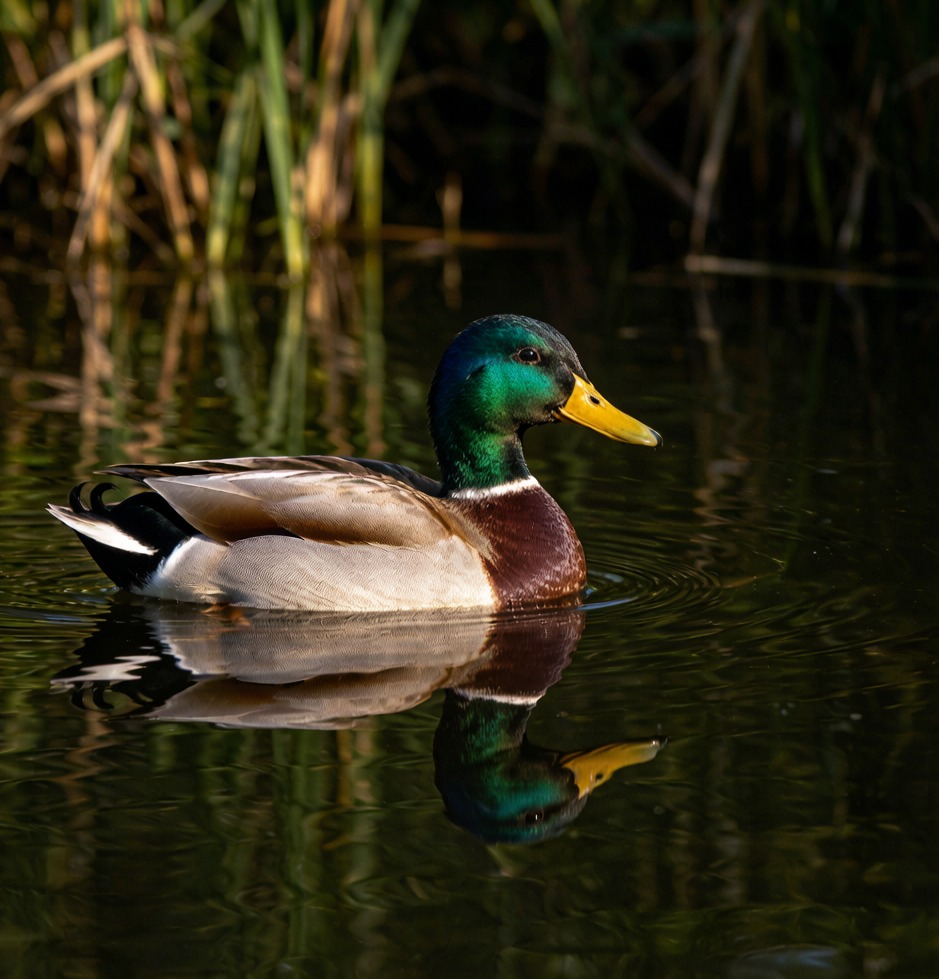
Introduction
The Mallard Duck (Anas platyrhynchos) is perhaps the most familiar waterfowl species in the world and one of the most studied birds in science. Found on nearly every continent, from the Arctic tundra to tropical marshes, Mallards have been domesticated by humans for more than 2,000 years and are the ancestors of most domestic duck breeds raised worldwide for meat, eggs and feathers. Wild Mallards remain a flagship species for marsh conservation, and their adaptability has allowed them to colonise urban environments
Taxonomy
Scientifically classified as Anas platyrhynchos within the family Anatidae, the family of ducks, geese and swans, the Mallard belongs to the genus Anas, which includes many of the world’s familiar surface-feeding ducks. The Mallard is considered the ancestor of most domestic duck breeds, and it also hybridises readily with many other duck species, creating complex identification challenges for ornithologists. The species’ scientific name derives from the Greek word anas meaning duck and platyrhynchos meaning flat-beak, referring to its distinctive broad, flattened bill
Physical Characteristics
The Mallard exhibits one of the most striking examples of sexual dimorphism among birds, with males and females looking so different that they were long thought to be different species. The male in breeding plumage has an iridescent dark green head and upper neck, a narrow white collar separating the head from the chest, a grey body with a pinkish breast, black upper-tail coverts and a distinctive upturned curl at the tip of the central tail feathers. The bill is yellow to
Habitat
Mallards occupy an extraordinary range of aquatic habitats across their cosmopolitan range, from Arctic tundra ponds to tropical lakes, from mountain streams to coastal estuaries and inland seas. They are found on lakes, ponds, rivers, streams, marshes and even temporary floodwaters, though they show a strong preference for shallow, productive waters with abundant emergent vegetation. They are primarily a freshwater species but are also found in brackish tidal waters in winter. Urban parks, garden ponds, reservoirs and drainage ditches provide excellent habitat
Diet
The Mallard Duck is an omnivore with a highly varied diet that shifts with season, habitat and life stage. Plant material, including the seeds, stems and leaves of aquatic plants, aquatic mosses and agricultural grains, forms the majority of the diet year-round. Invertebrates, especially aquatic insect larvae, snails, crustaceans and worms, become more important during the breeding season and when provisioning growing ducklings, providing the protein needed for rapid growth and development. Mallards feed by dabbling, immersing the head and neck while
Reproduction
Mallards form pairs in autumn, with bonded pairs migrating together to breeding areas in spring. The male guards the female throughout the breeding season, defending her from other males. Nesting typically begins in April, with the female building a concealed nest on the ground among dense vegetation, sometimes up to several hundred metres from water. A typical clutch of eight to thirteen eggs is incubated by the female alone for about 27 to 28 days. Ducklings leave the nest within hours of
Conservation
The Mallard Duck is classified as Least Concern by the IUCN due to its enormous global range, estimated at over 20 million square kilometres, and a population that numbers in the tens of millions. However, there are growing concerns about genetic introgression from domestic Mallard strains in wild populations in some areas, and the Mallard has been identified as a potential competitive threat to some native duck species with which it hybridises. The species is also affected by habitat loss and degradation
Fun Facts
The Common Kingfisher (common-kingfisher-alcedo-atthis) is one of the most colourful small birds sharing the same ponds and rivers as the Mallard Duck, often seen hunting from overhanging branches. Mallard Ducklings can swim and dive within hours of hatching, demonstrating one of the most remarkable levels of precocial development of any bird species in the world. The Mallard’s characteristic quack is actually produced almost exclusively by females, with males producing a softer, raspier call. Mallards have been domesticated for more than 2,000 years