 By st20113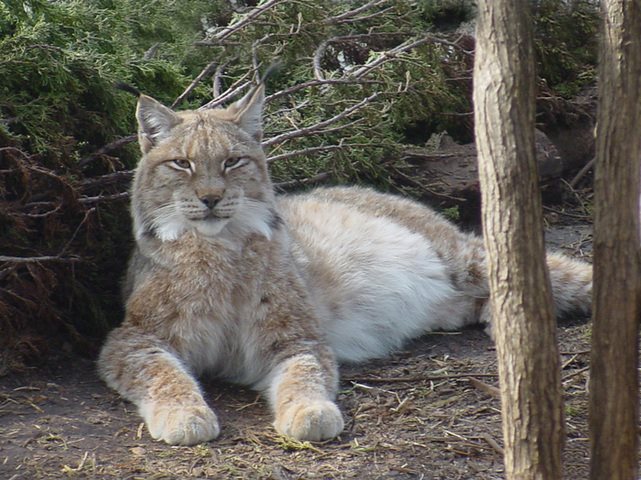
Introduction
The Eurasian lynx (Lynx lynx) is the largest of the world’s lynx species and a secretive forest cat spread across Europe and northern Asia. With tufted ears, a short tail, and a coat that shifts from silver-gray to reddish-brown with the seasons, it is a master of silent hunting. As a top predator, it helps keep populations of deer and other prey in balance. After severe declines, careful reintroduction has restored it to parts of its former range.
Taxonomy
The Eurasian lynx is one of four species in the genus Lynx, alongside the Canada lynx, bobcat, and Iberian lynx. It belongs to the family Felidae and is most closely related to the bobcat across the Atlantic. Several subspecies are recognized across its vast range, from the forests of Europe to the mountains of Siberia. Genetic studies show that lynxes diverged early within the cat family, retaining primitive traits such as a small number of teeth.
Physical Characteristics
Adults measure 80 to 130 centimeters in length and weigh between 18 and 38 kilograms, with males heavier than females. The lynx is built for cold climates: long legs and large, furred paws act like snowshoes, while a ruff of fur around the face protects against wind. Black ear tufts may improve hearing, and the short, stubby tail is tipped with black. Its thick coat provides excellent camouflage among rocks and snow, and keen eyes detect the faintest movement.
Habitat
Eurasian lynx favor mature forests with dense cover and rocky outcrops, but they also use montane scrub, taiga, and woodland edges. They avoid open farmland and densely settled areas, needing large, quiet territories to hunt. In winter they range widely over snow, relying on their broad paws to pursue prey. Good habitat includes enough ungulate prey and sufficient cover for stalking, which is why intact forest matters so much to their survival.
Diet
These cats are specialized predators of medium-sized mammals. Roe deer and chamois form the core of the diet where available, with hares, foxes, birds, and small rodents taken when larger prey is scarce. A lynx often kills more than it can eat at once, caching the remainder under snow or leaves. By focusing on weak or sick individuals, it helps maintain healthy prey populations. Hunting is solitary and largely nocturnal, based on patient stalking followed by a short, explosive charge.
Reproduction
Mating takes place in late winter, and after a gestation of about seventy days females retreat to a sheltered den among rocks or roots to give birth. Litters usually contain one to four kittens, blind and helpless at first. The mother alone raises them, moving them between hiding spots to avoid danger. Young lynx stay with their mother through their first winter and become independent at roughly ten months, then disperse to find their own territories.
Conservation
Classified as Least Concern globally, the Eurasian lynx nonetheless vanished from many European countries by the twentieth century. Reintroduction and strict protection have brought it back to the Alps, Carpathians, and parts of Scandinavia, though illegal hunting and habitat fragmentation remain threats. Coexistence with livestock farmers requires compensation schemes and guard animals. The smaller bobcat fills a similar niche in North America.
Fun Facts
A lynx can leap several meters in a single bound when chasing prey through deep snow. Its oversized paws distribute weight so well that it can run on crusted snow where deer sink. The black ear tufts are thought to channel sound toward the ears, sharpening its already excellent hearing. Solitary by nature, individuals mark vast territories with scent and rarely meet except to mate. Despite their strength, lynx are shy and avoid people, so they are rarely seen and are often called the ghosts of the northern woods. In the boreal wilderness it overlaps with the gray wolf, the cunning red fox, and the formidable brown bear, each shaping the forest in its own way.