 By Iris
Gymnobelideus leadbeateri | Leadbeater’s Possum
Species Profile · Petauridae
Leadbeater’s Possum
A possum that cannot glide, living in hollows a century in the making.
Critically Endangered
Body
Tail
Weight
Litter
Hollows
Rating
Under two thousand left
The possum that stayed behind
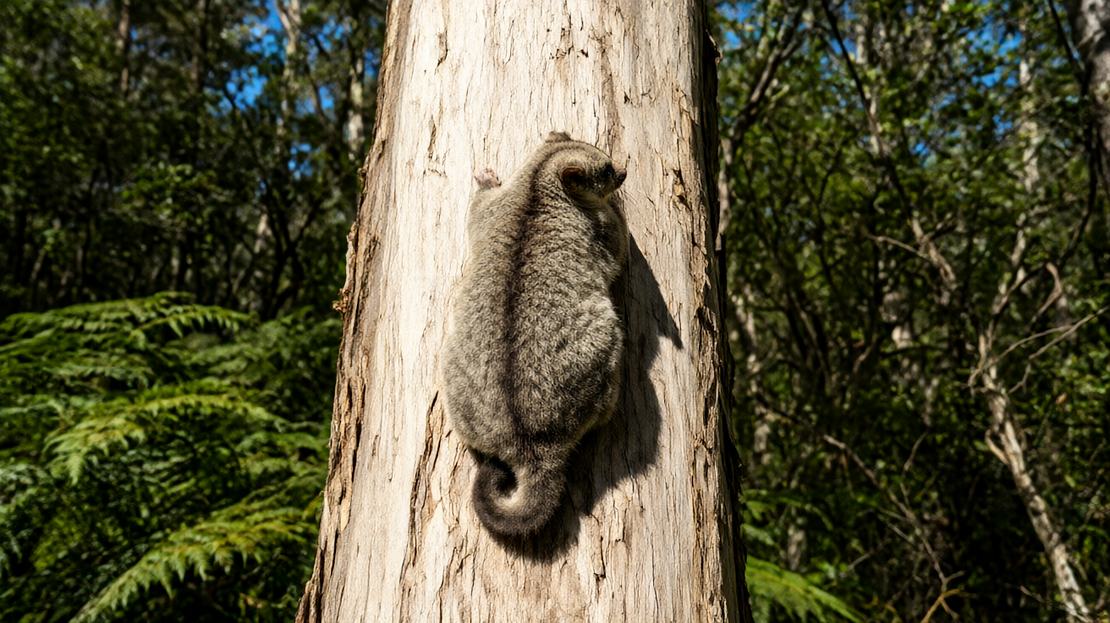
A small grey animal runs along a high branch and stops at a bark wound. It laps the sweet sap. Leadbeater’s possums live only in the mountain ash forests of central Victoria. Adults run 15 to 17 cm in the body, and the tail adds another 20 cm.
Weight stays between 100 and 170 g. Soft grey brown fur covers the body, and a dark stripe runs down the back. That stripe marks the animal at a glance, even in poor light, and it never fades with age. The tail grows thick toward the tip and works like a balance pole.
Nothing about the animal suggests a glider, since it carries no membrane at all. Family groups share a hollow in an old tree, and they sleep there through the day, packed together for warmth. Nights pass in a burst of activity, and the group rarely stops moving. Few people ever see one.
Family tree
Petauridae, the gliders and their kin
Petauridae holds the gliders and this possum, although the family name now covers a wide range. A Sugar Glider shares the same family and the same taste for sap. Bark stripping comes easily to both. Yet only one of them glides between trees. This genus holds a single species, which makes the animal unusual among possums.
Museum work once placed it closer to the ringtail possums. Teeth and skull shape settled the question, and gene work confirmed the answer. The species separated from other petaurids millions of years ago. That long isolation explains why it never grew a gliding membrane. Names honour John Leadbeater, a nineteenth century taxidermist.
Victoria made the animal its state emblem in 1971. That status gave the species a public face, although it did little for the forest. Tourists now ask about an animal that few Australians have seen alive.
A petaurid that cannot glide
How to tell one
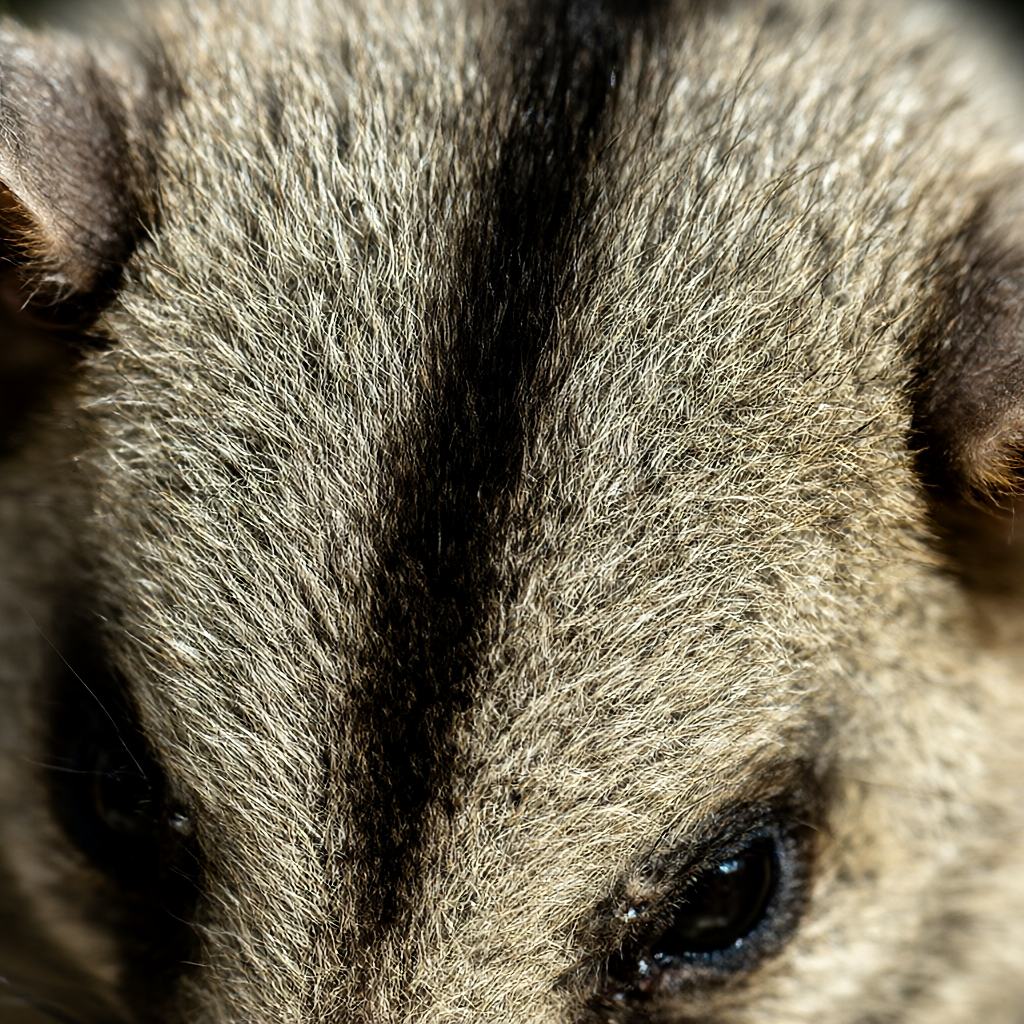
Fur looks soft and dense, with grey above and cream below. One dark stripe runs from the neck to the base of the tail. Ears stand large and rounded, and they turn toward small sounds, since hearing guides the hunt. Eyes sit forward and carry a reflective layer, because the animal hunts in near darkness. Fingers end in fine claws.
One toe on each hind foot carries a grooming comb. Hind legs stay short, which suits a life spent running along branches. The tail grows a club of fat near the tip, and the animal stores energy there for the weeks when sap runs thin. Males carry a scent gland on the chest, and they rub it on bark while they patrol. Females raise two young at a time in most years.
Young animals leave the nest at about four months, yet they still follow adults for weeks. Scent marks tell neighbours who passed, and the group renews them every night. Bodies stay small because the animal never needs to carry fat for a long winter.
1
2
3
Stripe, claws and a fat tail
Where it lives
Mountain ash grows tall in these forests, and old trees carry the hollows that the possum needs. Hollows take a century to form, and young trees offer none at all, which is why logging hurts so much. Wattle grows in the understorey, and its sap feeds the group. Dense mid storey gives cover from owls and from currawongs. Rain falls through the year, so the forest stays cool and wet.
Fire shapes these forests, since mountain ash dies after a hot burn and regrows from seed. A single severe fire can remove every hollow across a whole district, and animals then have nowhere to nest. Forest loss adds pressure. Logging takes the old trees first. Isolated patches hold animals for a while, yet they lose variety fast.
Roads and clearings stop movement between patches, while logged ground offers no hollows. Snow gums take over on the highest ridges, although the possum avoids them. Wet gullies link two slopes. Those links carry most of the gene flow.
Mountain ash forest in Victoria
What it eats
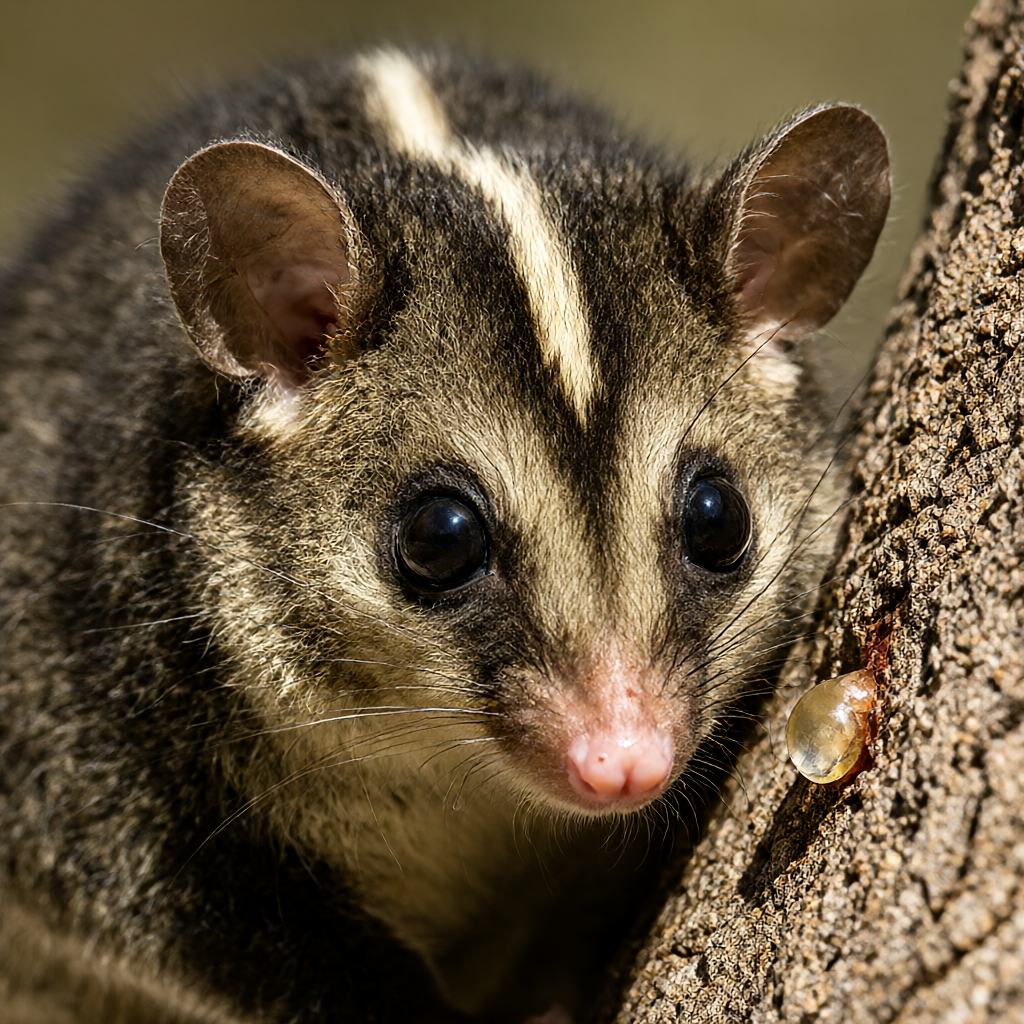
Sap forms the main food. The animal takes it from wattle and eucalypt wounds, although insects fill the gaps in winter. Insects supply the rest, since beetles and moths sit under bark. Honeydew appears on leaves in some seasons, and the animal licks it off. Nectar and pollen get eaten when flowers open.
Feeding happens in short bursts through the night, with long pauses between them. Groups may visit dozens of trees before dawn. Bark gets stripped away to reach the sap, and old wounds stay visible for years. Each wound keeps producing for weeks, so the animal returns to the same tree. Sugar gives quick energy, which suits a small body with a fast engine that burns fuel all night.
Food runs short in winter, so animals then rely on stored fat. Young animals learn which trees produce by following adults. Nobody has measured how much sap one group takes in a year.
Sap, insects and honeydew
The breeding cycle
Females may raise two litters in a good year. Each litter holds one or two young. The mother carries them in a pouch for the first weeks. Young leave the pouch at about two months, then ride on her back.
Independence comes at four months, and the group helps raise them. Breeding females rank above their daughters, and older females help with the young. Groups hold one adult male and one or two females, and the male defends the hollow. Males leave the group at about a year, while females often stay.
Breeding stops when food runs short, which keeps numbers in step with the forest. Captive animals have lived past ten years. Nobody knows how long a wild animal survives, since few are followed from birth. Two young a year cannot replace a heavy loss of old trees.
Critically Endangered, and fire prone
Conservation
IUCN lists the species as Critically Endangered. Fewer than 2,000 animals may remain. Logging takes hollow bearing trees, and those trees cannot be replaced quickly. The 2009 fires burned a large share of the remaining forest, and the loss hit every colony there.
Salvage logging after the fire removed more of the burnt hollows. Protection now covers some reserves, yet most animals live outside them. Nest boxes offer a short term fix, although they do not last like old wood. Captive breeding has produced young, yet release remains difficult.
Fire risk grows as the climate dries, and one more severe season could end the species. One hot fire in the wrong valley would wipe out the group there. Forest corridors matter most, since cut off groups lose variety within a few decades. Long-term survival depends on the old trees, since hollows and sap both vanish with them.
Side by side
How It Compares
| Trait | Leadbeater’s Possum | Sugar Glider |
|---|---|---|
| Length | 15 to 17 cm body, 20 cm tail | 12 to 32 cm body |
| Weight | 100 to 170 g | 100 to 160 g |
| Home | old mountain ash forest in Victoria | woodland across Australia and New Guinea |
| Diet | sap from wattle and gum trees | sap, nectar and insects |
| Habit | runs along branches and cannot glide | glides up to 50 m between trees |
| Rating | Critically Endangered | Least Concern |
Common misreadings
What People Get Wrong
- Most people assume the animal glides between trees, although it has no gliding membrane.
- Popular accounts place it among the gliders, yet the tail works as a balance pole.
- Some guides blame bushfires alone for the decline, though logging removed the old hollows first.
Going further
Sources and Further Reading
Quick hits
Five things to remember
- Victoria made it the state emblem in 1971.
- A dark stripe runs down the back.
- Sap from wattle forms the main food.
- The animal cannot glide at all.
- Hollows take a century to form.