 By st20113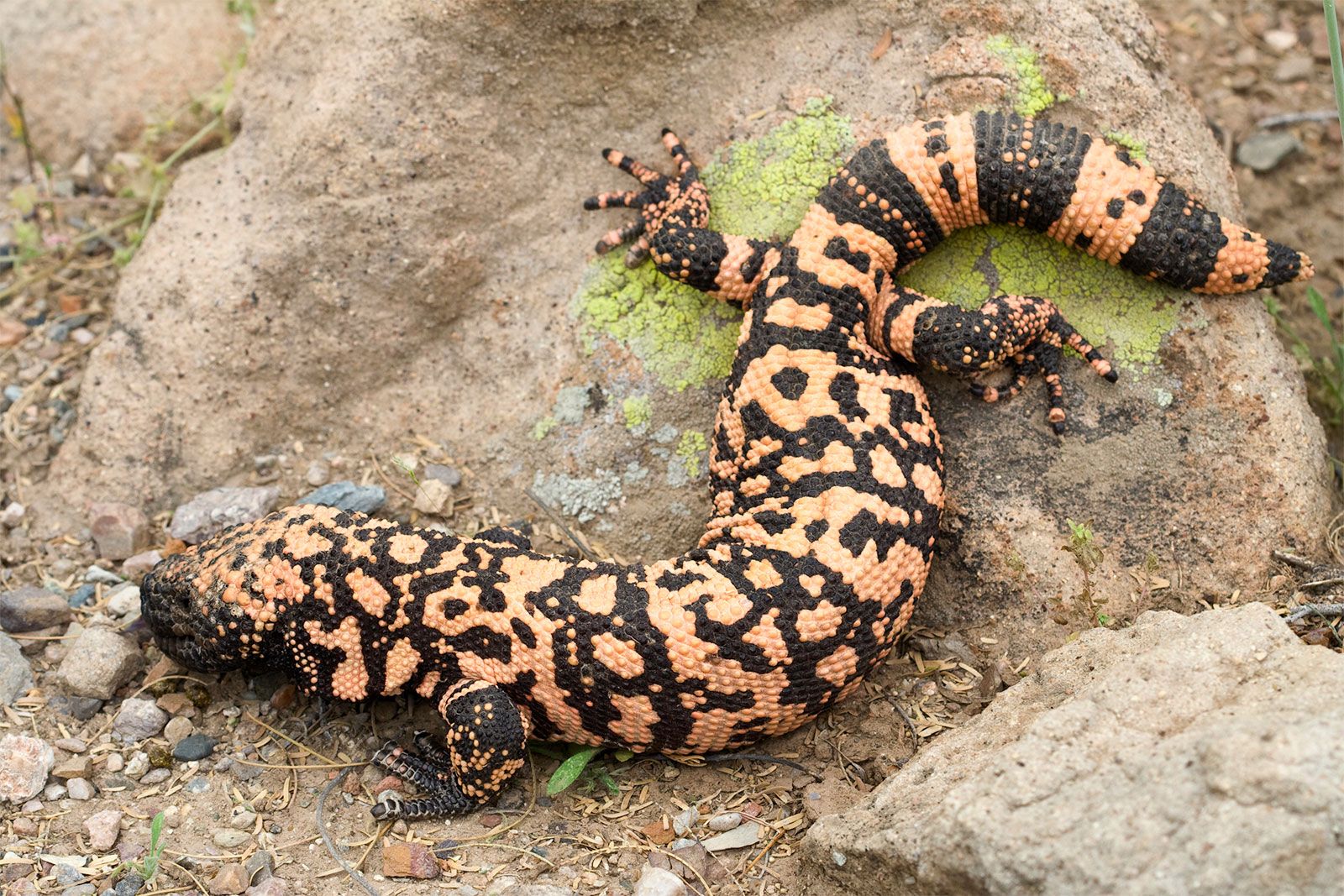
The Gila Monster (Heloderma suspectum) is a large, venomous lizard native to the southwestern United States and northwestern Mexico. One of only two known species of venomous lizards worldwide, it is the largest native lizard species in the United States and plays a unique ecological role as both predator and seed disperser.
Physical Characteristics: Gila Monsters are heavy-bodied lizards typically measuring 30–60 cm in length and weighing 0.7–2.3 kg. Their striking black body is adorned with contrasting patches of bright pink, orange, or yellow—an aposematic warning coloration. Their skin is covered with bead-like osteoderms providing armor-like protection. Venom is delivered through grooved teeth in the lower jaw.
Venom System: The venom contains bioactive compounds including helodermin and exendin-4. Exendin-4 from Gila Monster saliva led to the development of the diabetes drug exenatide (Byetta). While painful, fatalities in humans are exceedingly rare.
Habitat and Behavior: Gila Monsters inhabit arid and semi-arid regions. They spend approximately 95% of their lives underground, emerging primarily to feed and mate. Their diet consists primarily of bird eggs, but also includes small mammals, lizards, and carrion.
Reproduction: Females lay 2–13 eggs in sandy burrows in late summer. Hatchlings are approximately 16 cm long with the same striking coloration as adults. Sexual maturity is reached at 3–5 years of age.
Conservation Status: Listed as Near Threatened by the IUCN. Threats include habitat destruction, vehicle strikes, collection for the pet trade, and predation by introduced fire ants.