 By st20113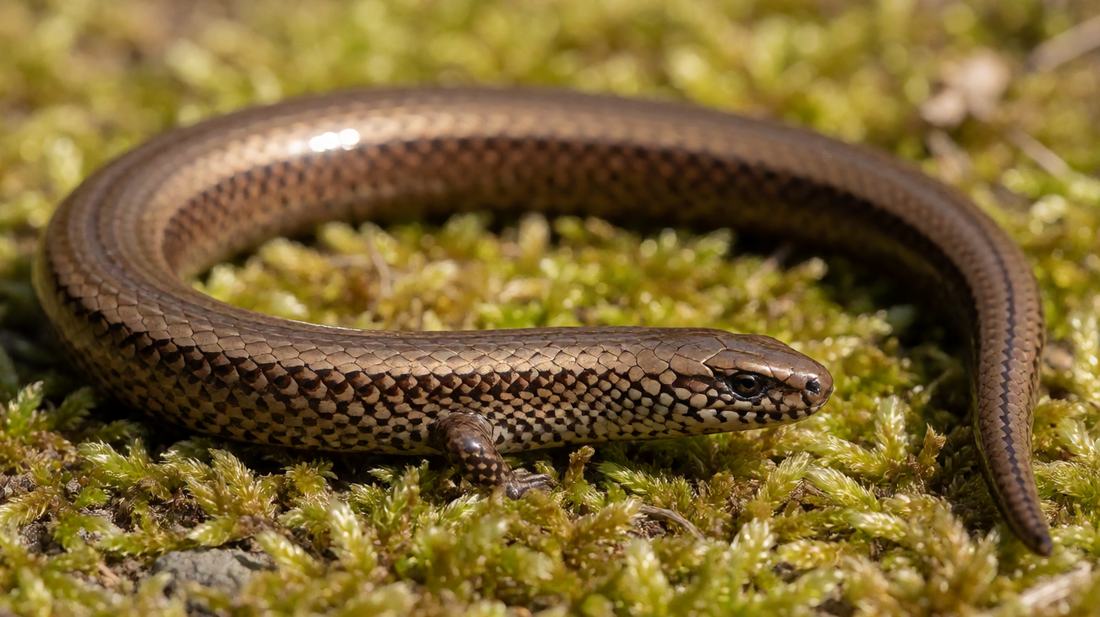
Anguis colchica | Eastern Slow Worm
Species Profile · Anguidae
Eastern Slow Worm
A smooth bronze legless lizard of damp grass and hedgerows that drops its tail to escape danger and can live for decades.
A legless lizard that looks like a snake but can blink
Length
Tail
Young
Lifespan
Eyelids
Family
The Eastern Slow Worm
A legless lizard, not a snake
The Eastern Slow Worm is a legless lizard rather than a snake. It lives in damp grass and woodland edges. The body is smooth and bronze brown.
It moves slowly and rarely bites. It spends the day under stones and logs. On warm evenings it comes out to hunt slugs.
Family tree
Squamata, Anguidae
The species sits in the family Anguidae. Its order is the Squamata, the scaled reptiles. It was split from the widespread slow worm in recent years. It shares the order with the Common Adder.
Both animals live in similar ground cover. Lizards differ from snakes in several clear ways. Our animal has eyelids and a small ear opening.
45 cm of smooth bronze scale
How to tell one
An adult measures about 45 cm from snout to tail tip. The tail makes up more than half of that length. The scales are smooth and glossy. Colour runs from grey brown to copper.
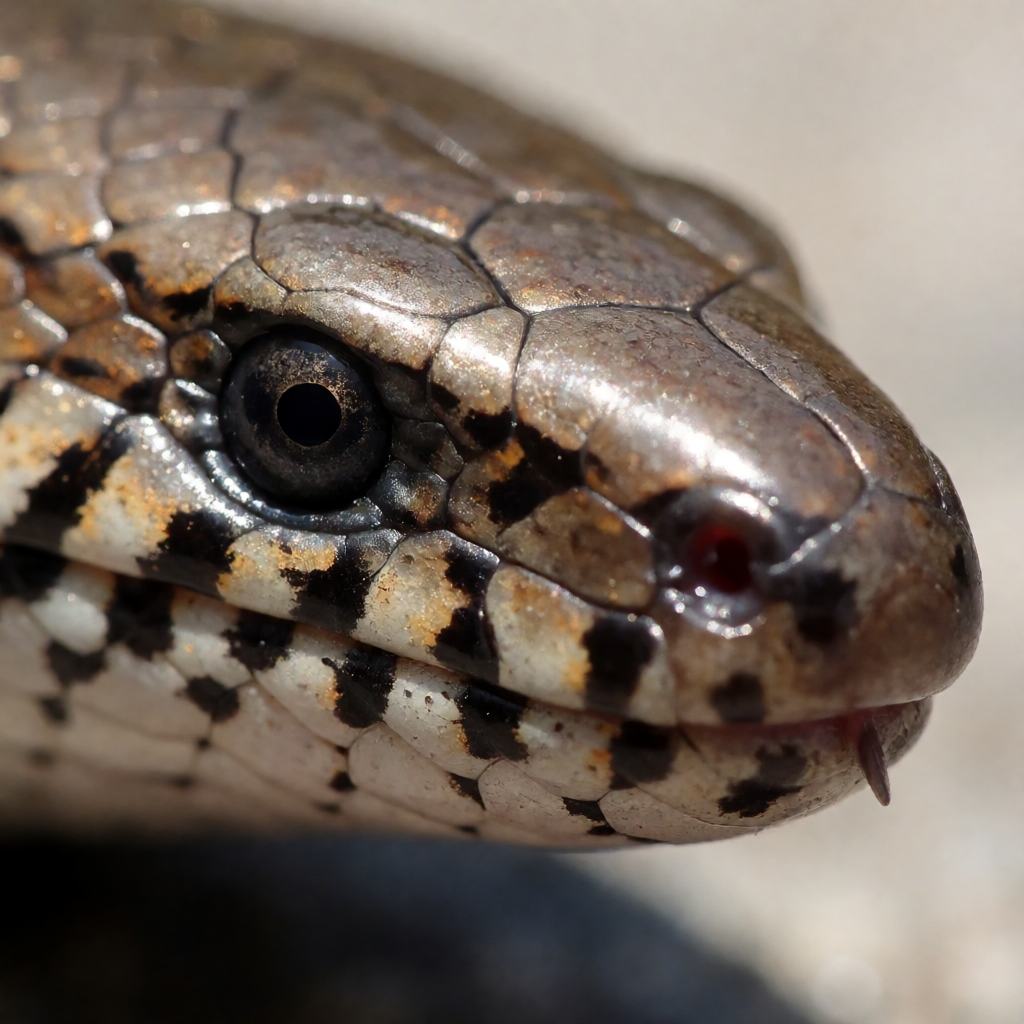
The flanks are darker than the back. The head is small and blunt. The eyes are small with lids that can close.
1
2
3
Damp grass, hedges and woodland edges
Where it lives
The species likes damp ground with plenty of cover. Rough grass, hedges and woodland edges suit it well. It shelters under stones, logs and sheets of metal. It also uses old walls and garden compost heaps.
It needs warm open patches for basking. Very dry sandy ground holds no animals at all. It often shares a hiding place with other slow worms.
Earthworms, slugs and snails
What it eats
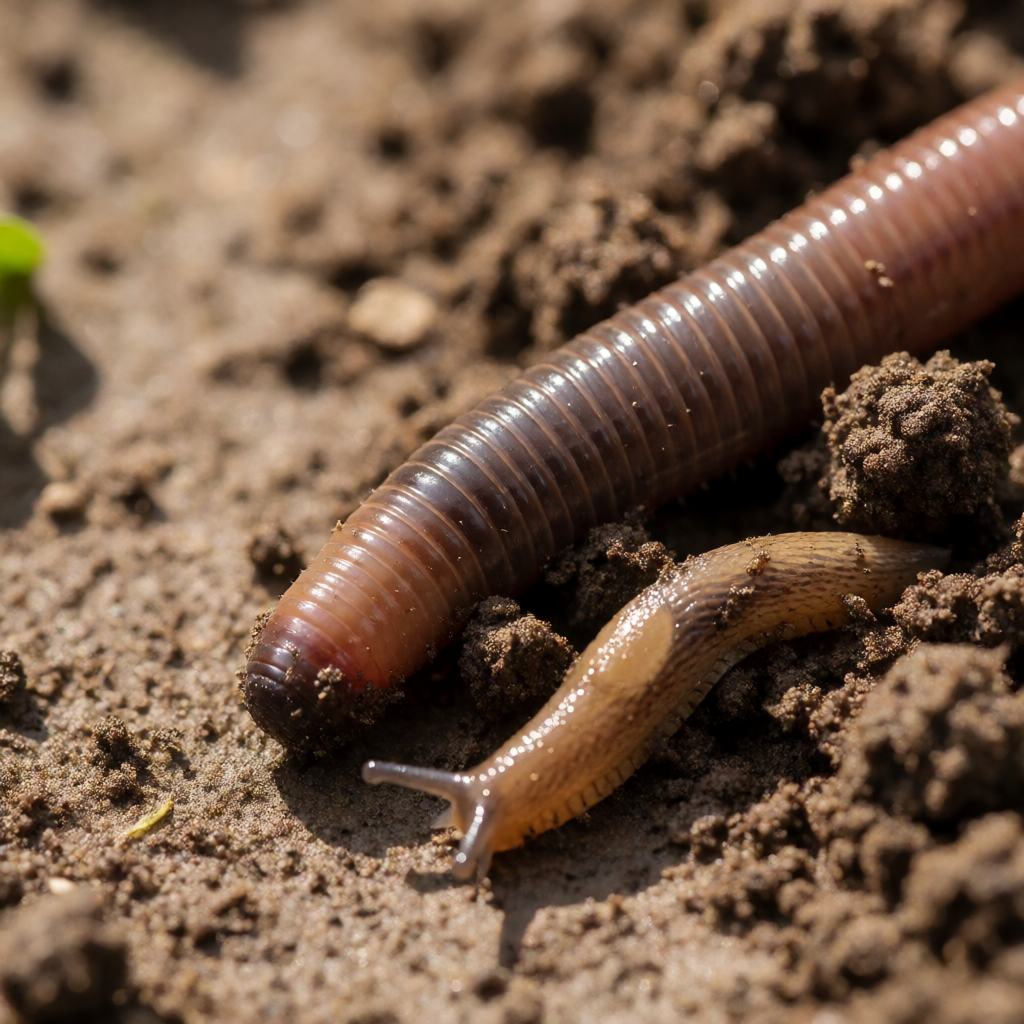
The animal eats earthworms, slugs and snails. It also takes soft insects and their larvae. It seizes prey with small backward pointing teeth. It does not crush or chew its food much.
A slug may be swallowed slowly over several minutes. It hunts in the hours around dusk. The animal needs no water beyond what its food holds.
Live young in late summer
The breeding cycle
The female keeps the eggs inside her body. She gives birth to between about 5 and 15 young. The young break free of a thin membrane at birth. They measure about 7 cm at that point.
They can fend for themselves at once. The female breeds every second year in cool regions. The animal may live for more than 20 years.
Tidy gardens and busy roads
Conservation
The IUCN has not assessed this species on its own. Garden chemicals and tidy lawns have cut its numbers. Roads kill many animals as they bask on warm tarmac. Introduced pheasants and cats take a heavy toll.
Rough corners left in gardens help the species a lot. Compost heaps and log piles make good shelter. Its close relative in western Europe remains common.
Quick hits
Five things to remember
- It can drop its tail to escape a predator and grow a short new one.
- Unlike a snake it can blink and close its eyes.
- A slow worm often outlives a pet dog by many years.
- It may share its winter shelter with several others.
- The animal feels warm and dry in the hand, never slimy.