 By Iris
Dromas ardeola | Crab Plover
Species Profile · Dromadidae
Crab Plover
A black and white wader that nests in tunnels instead of scrapes.
Least Concern
Length
Weight
Burrow
Incubation
Numbers
Rating
Thirty-three days in the dark
A burrow on a hot island
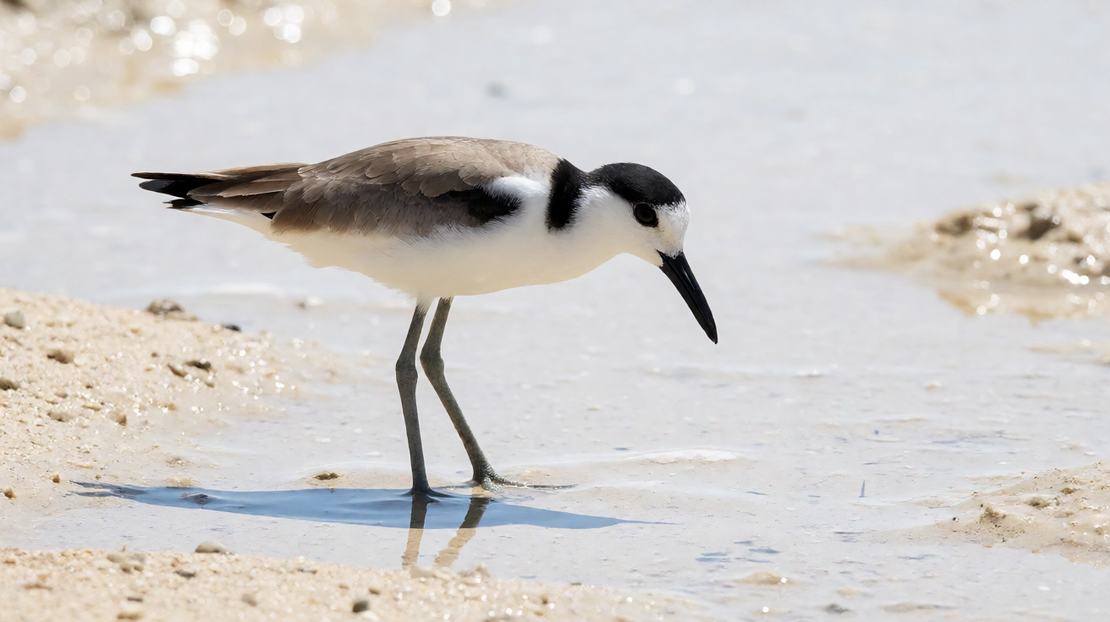
Black and white feathers make this wader easy to name. Its bill is heavy and black, and it looks too big for the body. Long blue grey legs carry small webs between the toes. Crab plovers nest in holes dug into sand.
No other wader does that. Colonies sit on hot islands in the Gulf and the Red Sea. Heat inside a burrow would kill most chicks, yet these birds turn it to use. Adults feed on crabs along the tide line.
Walking is slow, and the strike comes without warning. Such a strike is quick, and the crab rarely gets away.
Family tree
Dromadidae, a family of one
Dromas ardeola stands alone in the family Dromadidae. Paykull named the species in 1805. No close relative exists, since the bird sits apart from every other wader on the shore. Older lists put it near the coursers and the pratincoles, though the likeness is shallow.
Open beaches hold the Ringed Plover, while this bird digs a tunnel. Both feed on the shore, and both follow the tide out. Their nests differ, though, since a plover scrapes a hollow and a crab plover digs a burrow. Genetic work keeps the family on its own branch.
One species, one genus, one family, which is rare among shorebirds. No subspecies is named today.
One species, one family
How to tell one
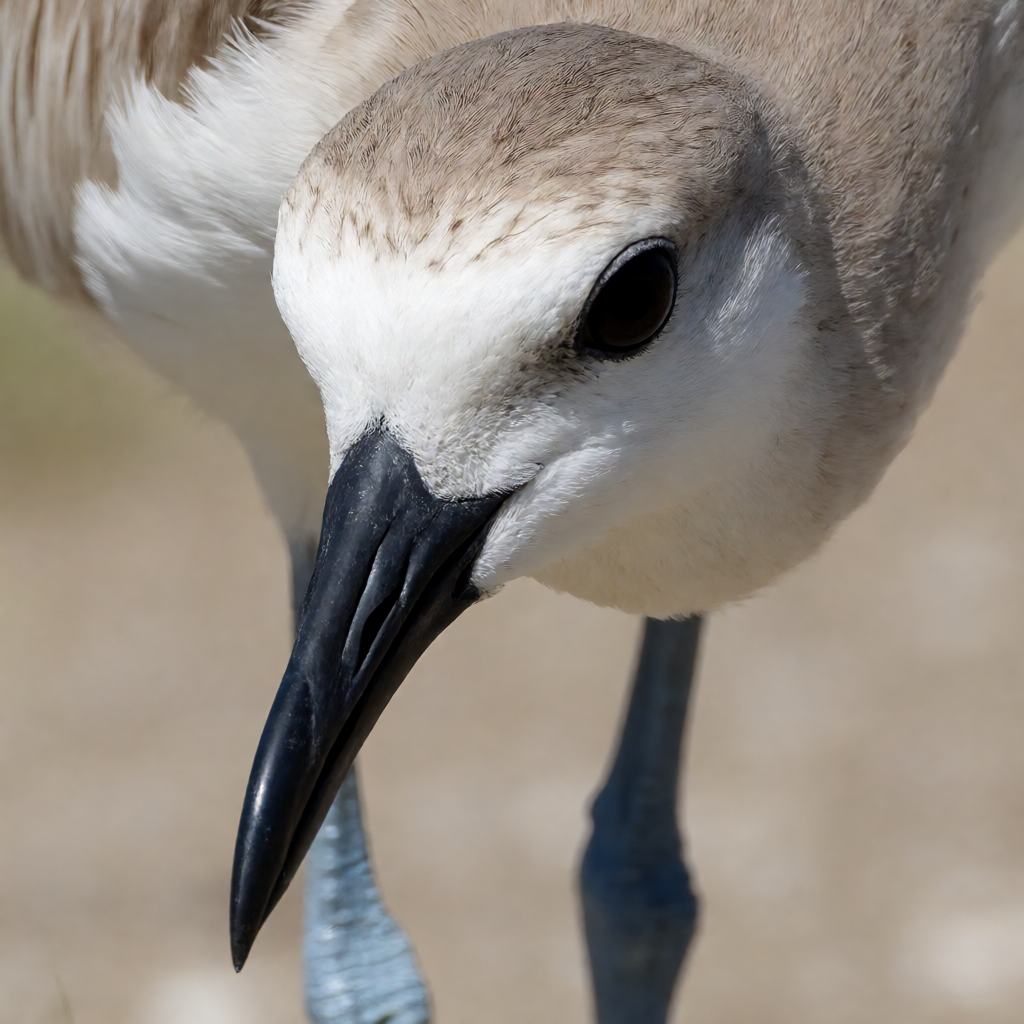
Body length runs 38 to 41 cm. Weight sits near 350 grams, though large males run heavier. Back and crown are black, while the rest of the plumage is white. A stout black bill opens wide enough to hold a large crab.
Legs are long and pale blue grey, and the toes carry small webs that help on soft mud. Heads look large for a wader. Wings are broad, so the flight looks steady and slow. Males and females look much alike.
Standing birds hold the bill level, which gives a heavy look. Birds of this size can live past ten years, though few are followed that long.
1
2
3
A bill built for crabs
Where it lives
Tropical coasts and shallow seas hold the species. Breeding islands need bare sand and little shade, because the birds will not nest where plants grow. Gulf islands carry the largest colonies. Red Sea islands and the Somali coast hold others.
Winter range spreads along the Indian Ocean. Mudflats, reefs and lagoons all serve as feeding grounds, though the birds prefer a flat with soft mud. Birds feed by day and by night, since the tide sets the schedule. Low tide opens the flats, and the crabs come out.
High tide pushes the birds to roost on sand banks. A colony may hold thousands of pairs on one small island, and the noise carries far out to sea.
Hot islands and wide mudflats
What it eats
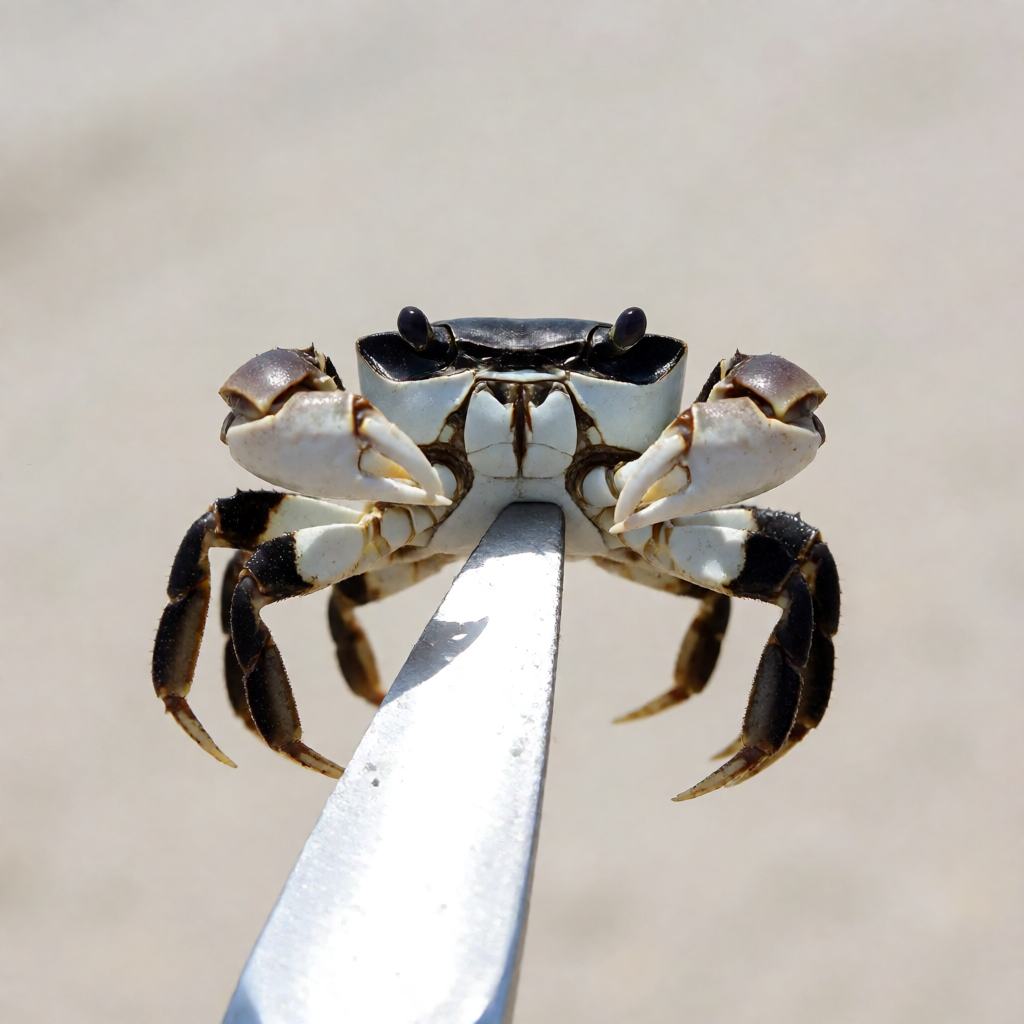
Crabs form most of the diet, although the birds also take molluscs and worms when crabs are scarce. Small crabs are swallowed whole, while large ones are pulled apart first. Large crabs are shaken apart, and the legs come off first. Molluscs and worms fill out the list.
Prey is found by sight on open mud. A bird often waits beside a crab hole. That wait can last minutes, and the strike comes fast. Feeding peaks at low tide, when the flats lie open.
Night feeding is common, because many crabs move after dark. One bird may eat dozens of crabs in a day, and a colony takes a heavy share of the local stock.
Crabs by day and by night
The breeding cycle
Breeding starts in April and runs into July. Pairs gather in dense colonies on hot islands. Burrows are dug into sand and may run 2 m deep. One egg sits in a chamber at the end.
Incubation takes about 33 days. Eggs are white, which helps in the dark chamber. Chicks stay in the burrow for weeks, and a parent brings food to the entrance. Young leave at about 40 days, and they can fly soon after.
Heat in the burrow keeps the egg warm, so a parent spends less time sitting. Such a nest is safe from gulls, although a flood can fill the tunnel in minutes.
Least Concern, and colony bound
Conservation
IUCN lists the species as Least Concern, in an assessment from 2024. Numbers run 34,800 to 46,300 mature birds, and the trend looks stable. Breeding islands are few, and that fact concentrates the risk. Disturbance by people and dogs can clear a colony, and the birds rarely return that year.
Coastal building removes the flat feeding grounds, although the birds can shift to nearby mud. Oil spills near the Gulf would hit the largest colony. Hunting is limited, although eggs are taken on some islands. Most colonies sit in places that are hard to reach, which helps.
One storm at the wrong moment could still wipe out a season. Every egg sits in an open burrow, so the species carries one shared weakness.
Side by side
How It Compares
| Trait | Crab Plover | Ringed Plover |
|---|---|---|
| Length | 38 to 41 cm | 18 to 20 cm, half the size |
| Weight | about 350 grams | 55 to 75 grams |
| Home | tropical coasts from the Gulf to the Indian Ocean | northern beaches from the Arctic to Europe |
| Bill | heavy and black, and built for crabs | short and stubby, and built for worms |
| Food | crabs, molluscs and worms on open mud | worms, crustaceans and insects on sand |
| Nest | a burrow two metres into sand, with one egg | a scrape on shingle, with four eggs |
Common misreadings
What People Get Wrong
- Many people think the bird nests in a scrape like other waders, yet it digs a tunnel.
- Some guides say the chicks leave the nest at once, although they stay underground for weeks.
- A common claim says the species feeds only by day, yet it hunts crabs at night as well.
Going further
Sources and Further Reading
Quick hits
Five things to remember
- Its bill looks too heavy for the body.
- Nests are tunnels dug into sand.
- One egg is laid per pair.
- Chicks stay underground for weeks.
- Many birds feed at night.