 By Iris
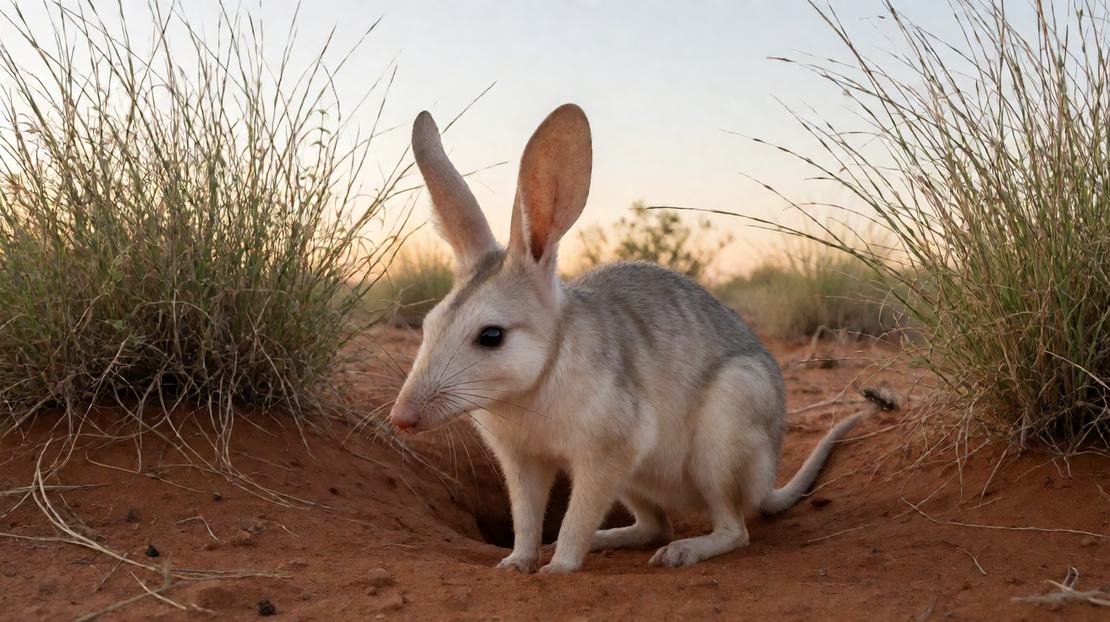
Macrotis lagotis | Greater Bilby
Species Profile · Thylacomyidae
Greater Bilby
A small grey marsupial with ears taller than its head.
Vulnerable
Length
Weight
Ears
Burrow
Young
Rating
Fifty centimetres of desert survivor
Ears, a long snout and a spiral burrow
Picture a small grey rabbit built from spare parts. Its ears stand taller than its head. The snout ends in a soft pink tip. The animal spends the day at the bottom of a spiral burrow.
After dark it walks long distances across red sand with its nose down. Few Australians have seen one alive. Yet the species has become a national symbol, since chocolate versions of it sell in every state each Easter. Chocolate bilbies now outsell chocolate rabbits in several states.
That swap raises money for conservation, and it also tells a story. One century ago the animal lived across most of the continent. Today the wild numbers hold a fraction of that ground.
Family tree
Thylacomyidae, the bilbies
Macrotis lagotis belongs to Thylacomyidae, a family of bandicoots. Its nearest relative on this site is the Quokka, a small macropod of Western Australia. Both are marsupials, and both have lost ground to foxes and cats.
Yet the two need different cover, since one hides in dense shrub and the other digs in open ground. Another bilby vanished in the 1950s, and this one carries the family alone. John Gould described the species in 1837.
The genus name means big ear, and lagotis repeats the hare like ears. Some workers still place the family inside Peramelidae, although most now keep the split. No subspecies is recognised.
One family, one species left
How to tell one
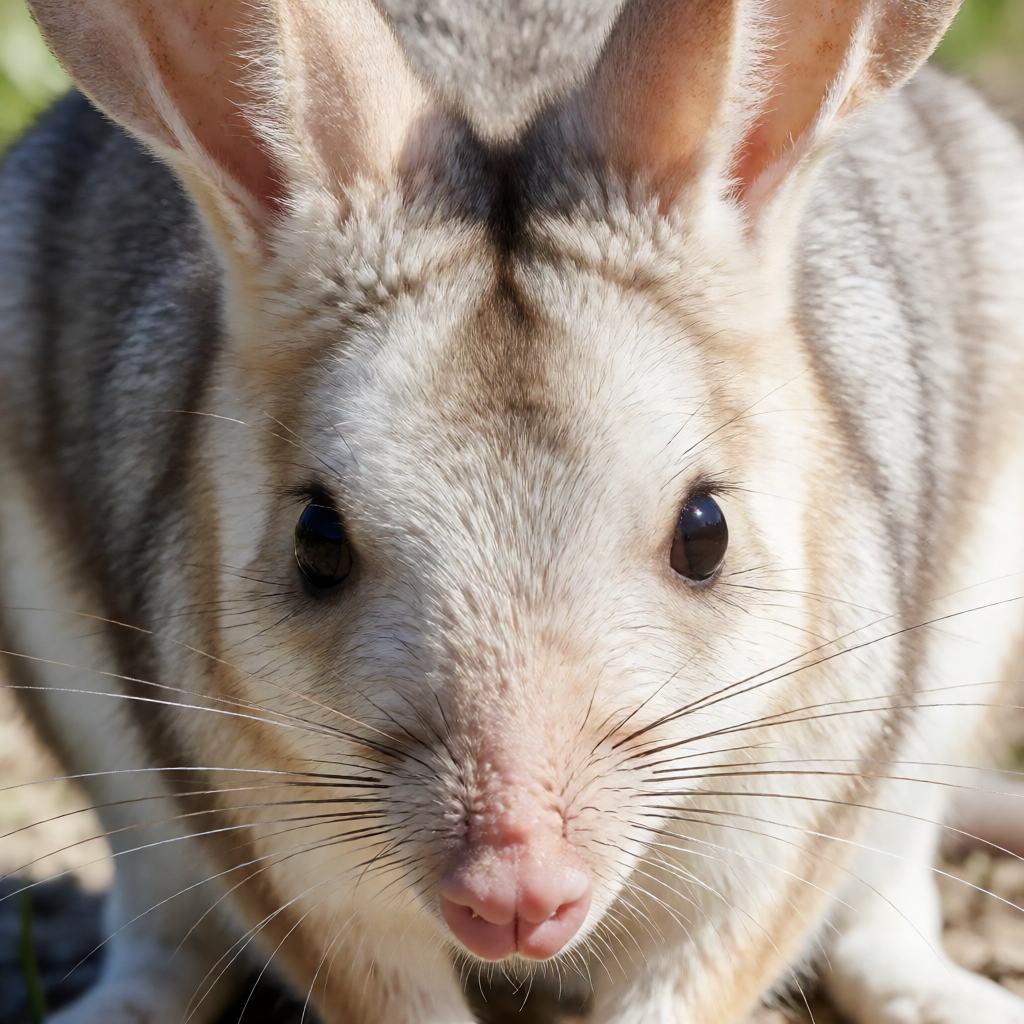
Body length runs 29 cm to 55 cm, and the tail adds 20 cm to 29 cm. Males weigh up to 2.5 kg, while females stay near 1 kg. Ears reach 8 cm, and each one turns on its own, while the animal listens for a beetle. Its snout is long and bare at the tip.
Fur is soft blue grey above and white underneath. Its thin tail carries a black base and a white tip. Front claws are strong, and they work like small shovels. Hind legs are slender, yet they carry the animal at speed.
The pouch opens backward, so it does not fill with sand. Running animals keep the nose close to the ground, and they turn without slowing.
1
2
3
A body built for digging
Where it lives
Today the species holds a scattered range across the arid inland. Three strongholds remain, in the Tanami, the Great Sandy Desert and south west Queensland. Soil must be light enough to dig, so the animal avoids hard clay.
Each burrow spirals down for 1 m to 2 m, and it ends in a chamber large enough to turn around. Each female may keep a dozen burrows inside her home range. Spinifex and mulga cover suit the species, because the roots hold the tunnel roof.
Summer heat pushes the animal underground, where the air stays cooler. Winter nights are the best time to look, since the ground softens after rain. Fire clears old growth, and the animal returns once the grass comes back.
Red sand and spinifex
What it eats
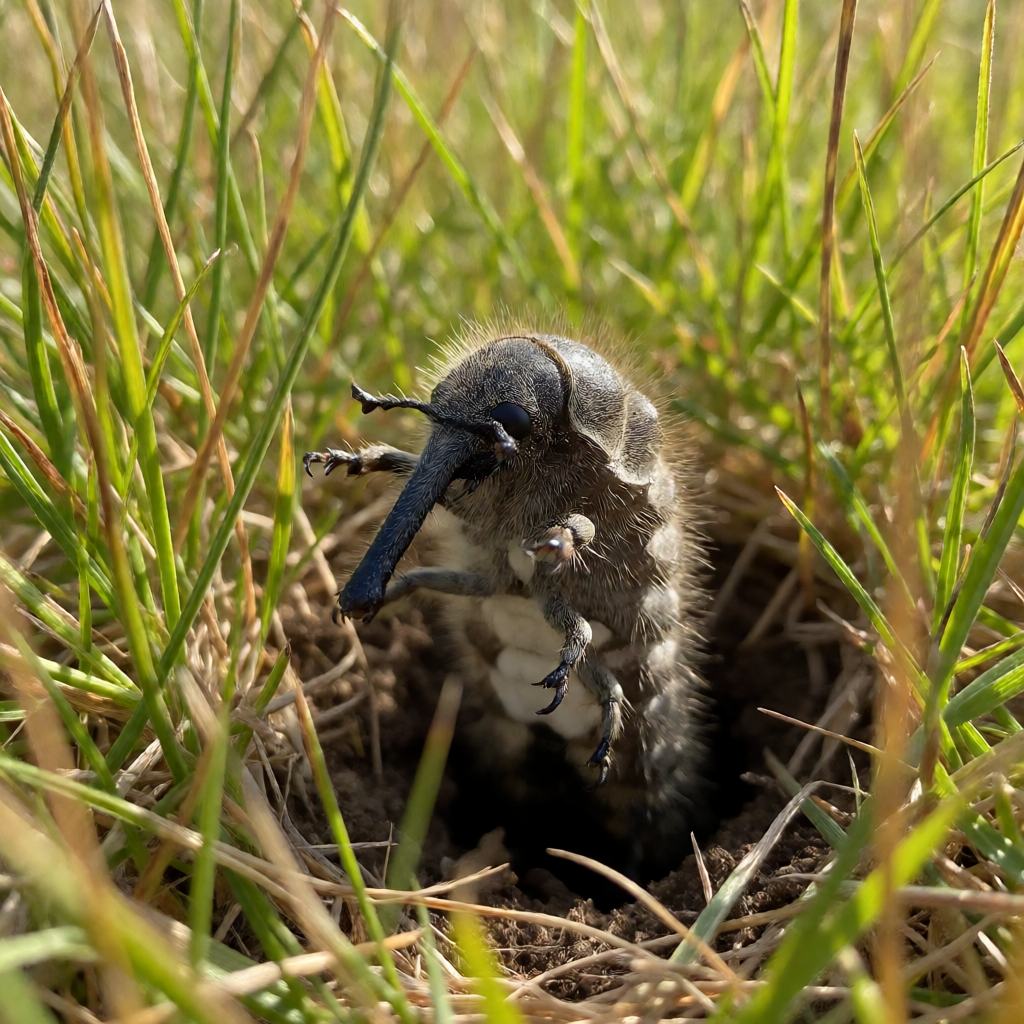
Bilbies eat almost anything they find in the soil. Termites, ants, beetles and their larvae form the bulk of the diet. Seeds, bulbs, fungi and fruit fill in the rest, though the animal prefers live insects. The animal digs a small cone shaped pit.
It then picks out food with a long tongue. No water is needed, since the insects supply the moisture. One animal may travel 2 km to 3 km in a night, and it digs dozens of holes along the way. Each pit stays open for a while, and other animals use the disturbed soil.
That digging helps the ground, because it mixes leaf litter into the sand. Feral cats learn to wait by the pits, so feeding carries a risk.
Insects and seeds
The breeding cycle
Breeding follows rain, and it can happen in any month. Males mate with several females, and they may fight others for access. Gestation lasts about 14 days, one of the shortest known in mammals. One to three young crawl into the pouch.
Each one attaches to a teat. They stay there for 75 to 80 days before they leave. Females can carry a new litter while an older one still follows her. That overlap lets numbers grow fast when conditions allow.
Young animals disperse across open ground, and many die in the first month, since cats patrol the same routes. Females may raise four litters in a good year.
Vulnerable, and fenced in
Conservation
The greater bilby is listed as Vulnerable on the Red List. Foxes and stray cats drive the decline, and rabbits compete for food. Cattle and sheep pack the soil down with hard hooves, so many old burrows collapse within a season.
Fenced sites now shield several groups from predators. Inside those enclosures the animals breed well, and rangers move some of them back to open country each year. Ranger teams burn small patches, which keeps the ground open.
An Easter campaign raises money for these programmes. Even so, the wild range keeps shrinking. The species depends on active management.
Side by side
How It Compares
| Trait | Greater Bilby | Quokka |
|---|---|---|
| Length | 29 cm to 55 cm in the body, plus a long tail | about 50 cm, with a short tail |
| Ears | 8 cm, and each one turns on its own | short rounded ears that barely move |
| Home | a spiral burrow 1 m to 2 m deep | dense scrub near water, and no burrow at all |
| Food | termites, seeds and bulbs dug from the sand | grasses and leaves, taken by day |
| Young | one to three, carried in a backward pouch | one joey, carried in a forward pouch |
| Threat | foxes and feral cats on open ground | foxes, cats and clearing along the south coast |
Common misreadings
What People Get Wrong
- Many people think the bilby is a rabbit, yet it is a marsupial with a backward pouch. The ears and the long snout do the same work, and the teeth are nothing alike.
- A common tale says the animal drinks from soaks each night, although most of its water comes from insects. Digging for termites supplies the rest, so a bilby can go months without a drink.
- Some books claim the species still lives across the whole continent, yet the wild range covers a small inland corner. Foxes and cats cleared the rest within a century of settlement.
Going further
Sources and Further Reading
Quick hits
Five things to remember
- Each burrow spirals down two metres.
- Its ears turn in different directions.
- The pouch opens toward the tail.
- One litter can arrive after 14 days.
- Chocolate bilbies fund field work.