 By Iris
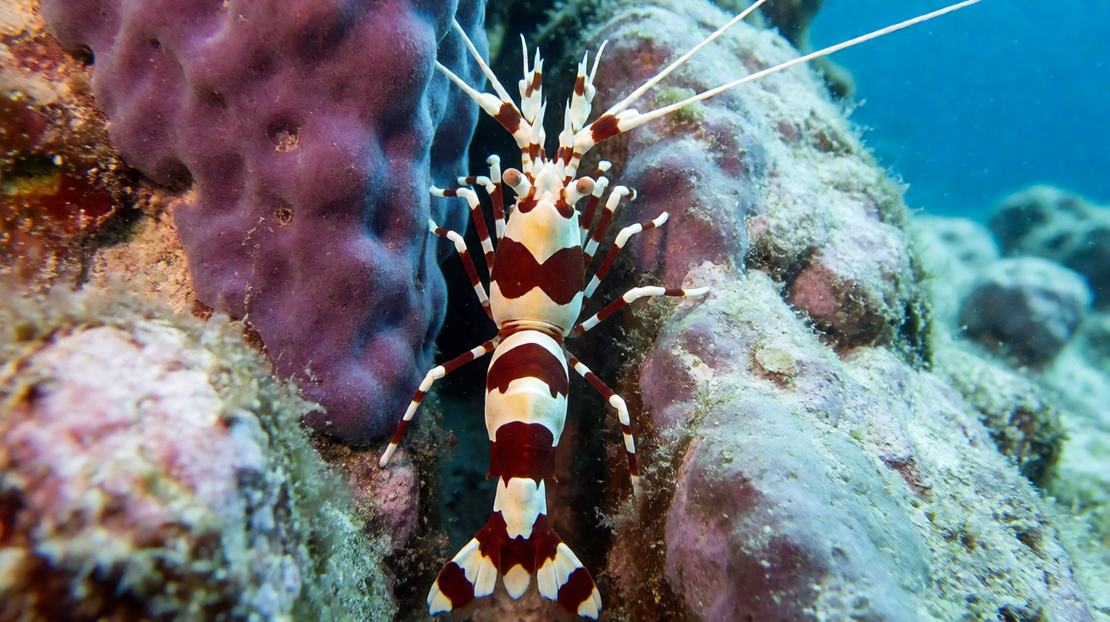
Stenopus hispidus | Banded Coral Shrimp
Species Profile · Stenopodidae
Banded Coral Shrimp
A shrimp in red and white bars that cleans fish for a living.
Not Evaluated
Length
Bands
Claws
Work
Home
Rating
Six centimetres in a reef crevice
Red and white bars
Banded coral shrimp stand in a crevice and wave long white feelers. Red and white bands cross the body, and the claws match, although the tips stay white. Body length reaches 6 cm. Fish that want cleaning stop nearby, and the shrimp climbs onto them.
It then picks off parasites, and it eats what it finds. That trade helps both animals, since the fish loses pests and the shrimp gains food. Pairs share one hole for months, and the two animals defend the entrance against any rival that comes close. Most reef divers know the species well.
The species is common. Nothing about it is rare, and the trade keeps it cheap.
Family tree
Stenopodidae, the coral shrimps
Stenopus hispidus is one of about thirty banded shrimps. Family is Stenopodidae, and the group holds the cleaner shrimps of warm reefs. Its nearest relative here is the Pistol Shrimp, another reef hunter with one big claw.
Both carry a pair of enlarged front legs, and both use them for display. Yet the two live in different ways, since one snaps and the other cleans. Pierre Latreille described the species in 1811, and the name has held since.
Its genus ranges across every warm ocean, and the species does too. Workers once split the animal into several species by geography, and later study showed that the differences were too small to keep. No subspecies is listed.
Armour, claws and feelers
How to tell one
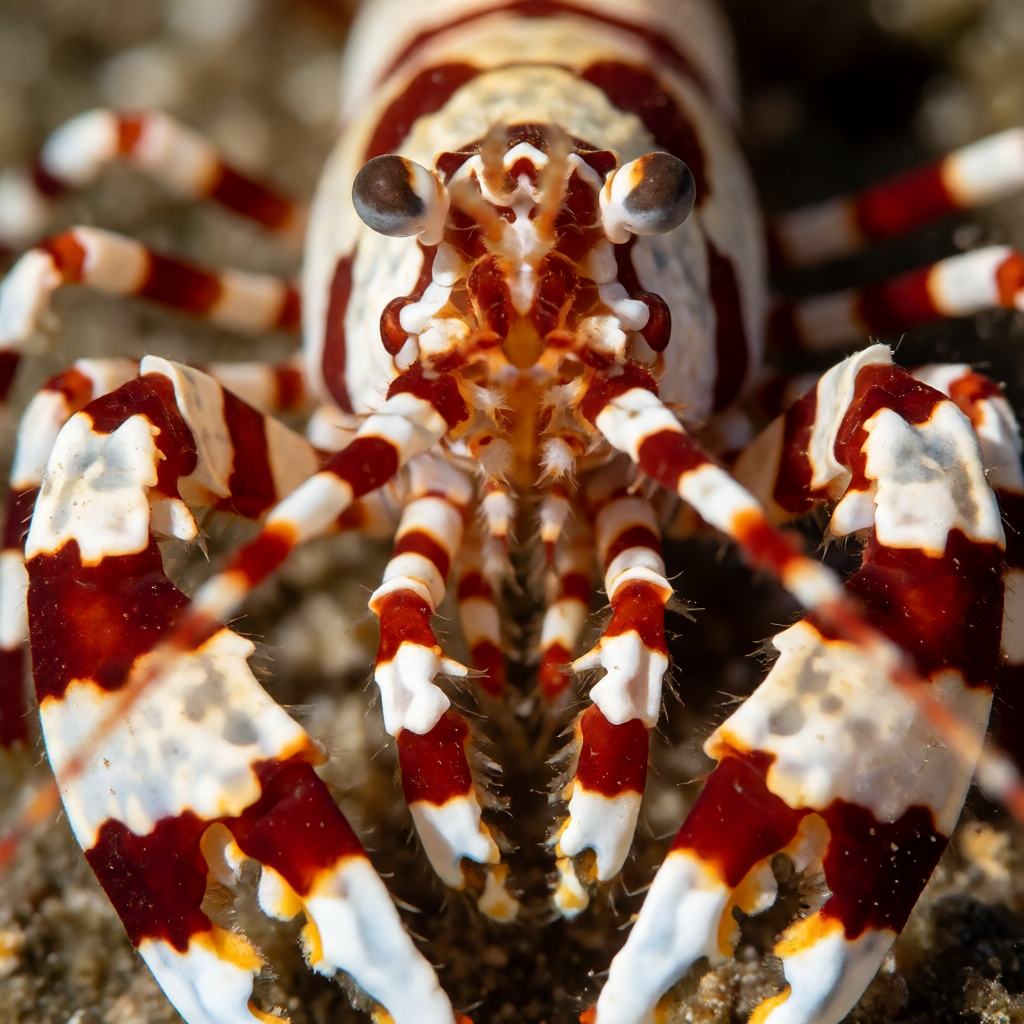
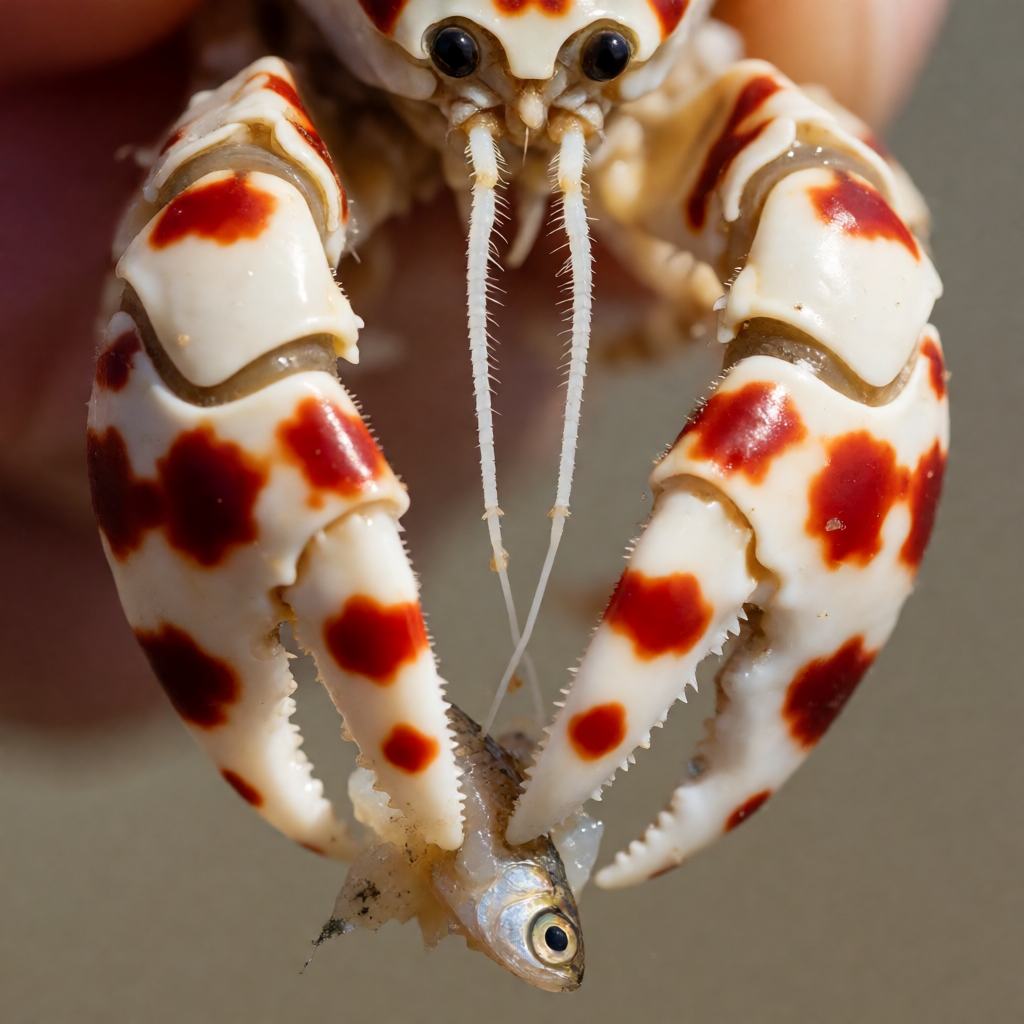
Length reaches 6 cm, and a large female may pass 7 cm. Bands of crimson and cream ring the body and the legs, although the pattern fades in old animals. Claws are huge. Each claw ends in a white tip, and the pair looks too heavy for the animal.
Two long feelers sweep the water ahead of the body, and they carry chemical sense over a distance of several centimetres. Shell is hard, and it carries small spines. Eyes sit on short stalks, and they look forward under the brow. Walking legs are thin, and they grip rock with sharp tips, though the grip seldom slips.
Abdomen curls under the body. Females carry eggs under the abdomen, and the mass looks green at first. Colour stays bright.
1
2
3
Crevices in every warm sea
Where it lives
Coral reefs hold the species in every warm sea. Its range covers the Caribbean, the Red Sea and the whole Indo Pacific. Depth runs from 1 m to 40 m, and most animals sit shallower.
Caves and ledges suit them. One hole in the reef offers shelter, and the pair rarely leaves it. Each pair claims a cleaning station, and fish learn the spot, so the same wrasse may return to the same crevice for weeks.
Reef damage removes the holes, and the animals then move. Warm water sets the range, although the species tolerates a wide band. The bottom stays shallow.
A cleaning station on the reef
What it eats
Parasites form the main food, and dead skin follows. It also takes algae and loose tissue, and it eats while it cleans. Fish line up at the station, and each one waits its turn, since the cleaners work slowly.
One large grouper may hold still for minutes while two shrimps work over its gills and its mouth, which no other meal would allow. Nothing is killed, since the food comes from the client’s own body. Small crustaceans also go down, and the shrimp takes them alone.
Feeding happens by day. Night sends the pair into the hole, and the station closes until dawn. Nothing is stored.
A pair that stays together
The breeding cycle
Pairs stay together for months, and both animals defend the hole. Females carry eggs under the abdomen, and they release larvae after two weeks. Larvae drift in the plankton, and they pass through several stages.
That floating stage lasts about six weeks, so a current can carry the young far from the reef where they hatched. Larvae then settle on rock, and they change into small shrimps. Juveniles grow fast, and they reach adult size within a year, although few survive that long.
Pairs may stay together through several broods, although either animal can leave. Captive animals breed readily. Aquariums keep pairs, and the trade sells them cheap.
Not Evaluated, and widely traded
Conservation
No Red List entry exists. Nobody has counted the population, and the trend stays unknown. Collectors take the animal for aquariums, and the trade is large.
Cyanide fishing stuns reef animals, and the chemical kills many shrimps. Coral bleaching removes the reef, although the species still uses many sites. Cleaner shrimps need a healthy reef and plenty of fish, so a damaged reef loses them even when the rock remains.
No rule protects the species, and no reserve targets it. Marine parks cover much of the range, and the animals breed inside them. The species stays common.
Side by side
How It Compares
| Trait | Banded Coral Shrimp | Pistol Shrimp |
|---|---|---|
| Length | 6 cm, with a large female passing 7 cm | 3 cm to 5 cm, and the big claw looks out of scale |
| Colour | crimson and cream bands, with white claw tips | dull red and grey, with one pale claw |
| Food | parasites and dead skin taken from fish | small fish and shrimp, stunned by sound |
| Weapon | two heavy claws, used for display and for cleaning | one snapping claw that fires a bubble |
| Home | a reef crevice shared by a pair | a burrow shared with a goby |
| Range | every warm sea, from the Caribbean to the Pacific | warm shallows of the Atlantic and the Pacific |
Common misreadings
What People Get Wrong
- Many people think the shrimp bites the fish, yet it only picks off parasites and dead skin. That trade helps both animals, since the client loses pests and the shrimp gains food.
- A common tale says the pair splits after breeding, although the two animals stay together for months. Both defend the hole, and either one can drive off a rival shrimp.
- Guides claim the larvae settle at once, yet the floating stage lasts about six weeks. A current can carry the young far from the reef where they hatched.
Going further
Sources and Further Reading
Quick hits
Five things to remember
- It cleans the teeth of moray eels.
- The claws carry white tips.
- A pair shares one hole.
- The feelers wave to advertise.
- Larvae drift for six weeks.