 By Iris
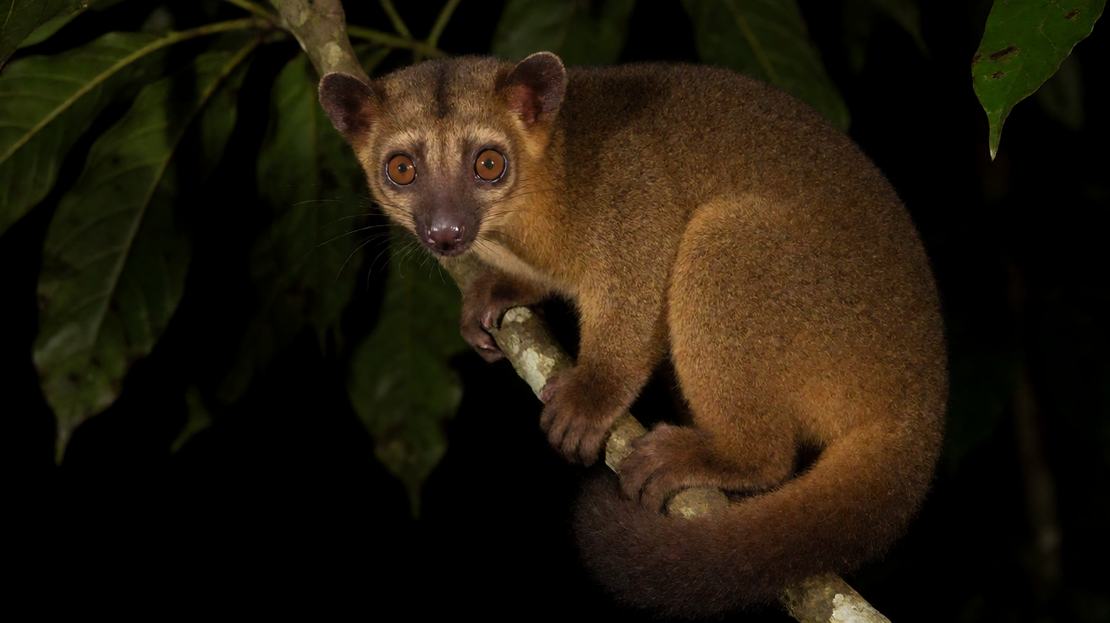
Potos flavus | Kinkajou
Species Profile · Procyonidae
Kinkajou
A honey coloured tree dweller with a tail that grips like a hand.
Least Concern
Length
Tail
Weight
Range
Food
Rating
Honey, figs and a gripping tail
A raccoon that lives in trees
Honey coloured fur covers the body, and a long tail curls around branches. Nobody calls it a monkey, yet it lives like one. The kinkajou stays in trees. Its tail grips a branch, and the animal hangs by it.
Most people never see one, since the animal works at night and sleeps by day. Face is round, and the eyes are large and dark. Weight runs from 1.4 kg to 4.6 kg. A honey bear is another name for the species, and it comes from a taste for nectar that the animal shares with almost no other carnivore.
Nothing about the body looks like a raccoon, although the two are close kin. The animal is not a primate.
Family tree
Procyonidae, the raccoon family
Potos flavus is the only living member of its genus. The family is Procyonidae, and the same group holds raccoons, coatis and olingos. Its nearest relative on this site is the Raccoon, a ground living cousin of the same family.
Both carry five toes, and both walk flat on the sole. Yet the two part ways above the ground, since one hunts in water and the other in trees. Workers placed the species in Potos in 1825.
Genetic work confirms the family, and it shows an old split from the raccoon line. Two subspecies are sometimes listed, one from Central America and one from the Amazon basin, yet most workers treat the animal as a single variable form. No other species shares the genus.
Procyonidae, kin to raccoons
How to tell one
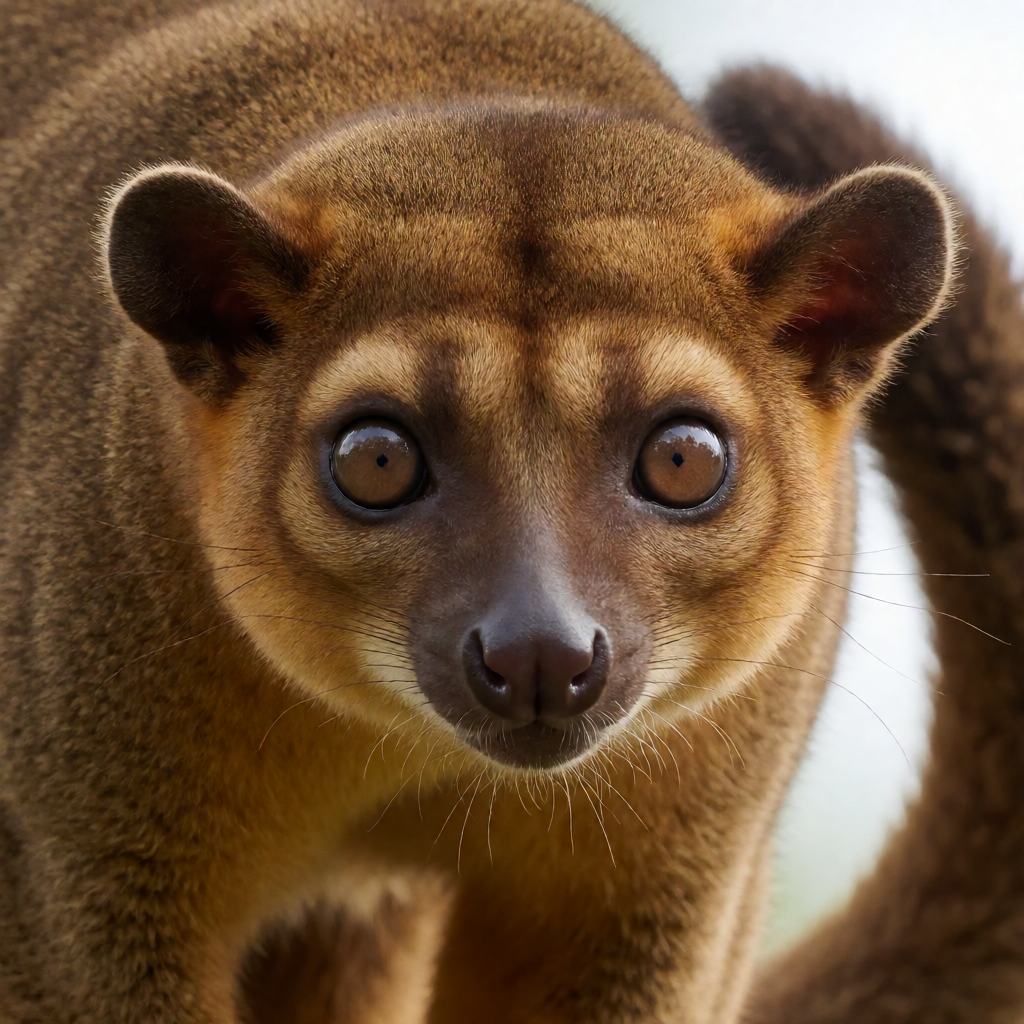
Body length runs from 40 cm to 60 cm, and the tail adds about 40 cm. Fur is short, dense and honey coloured. Some animals look brown, and others look pale gold. Its tail is prehensile, and the tip curls around a branch and holds the whole body.
Face is round, and the muzzle is short. Large eyes gather what light the forest offers, and a reflective layer behind the retina then bounces it back for a second chance. Ears are small and round, and they sit low on the skull. A long tongue reaches into flowers for nectar.
Claws are short and curved. Females carry two teats on the chest, and the young cling there instead of in a pouch. Scent glands sit near the mouth and on the throat.
1
2
3
A tail that holds
Where it lives
Forest holds the species, from southern Mexico to Bolivia. Lowland rain forest suits it best, although the animal also enters dry forest and shade coffee. The range covers much of Central America and northern South America.
Trees decide the range. One animal may use 40 hectares, and it returns to the same fruiting trees each night. Canopy height matters, since the animal rarely comes down.
Cacao and coffee farms keep the species when tall shade trees remain, so a well planted field can hold as many animals as a patch of forest. Deforestation removes the route, and the animal then disappears. Altitude limits the spread.
Canopy from Mexico to Bolivia
What it eats
Fruit forms most of the diet, and figs rank first. Figs fruit at night, and the tree then fills with animals from several kilometres away. Nectar, flowers and honey follow, and a long tongue takes them. It also eats insects, birds’ eggs and small vertebrates, so it is not a strict plant eater.
Most feeding happens in the crown of a tree. It can hang by its hind feet and tail while both front paws hold a fruit, and that pose lets it strip a branch in minutes. Juice is squeezed out, and the pulp is dropped, since the animal wants sugar rather than fibre. Feeding peaks soon after sunset, and it runs until dawn.
Water comes from fruit. Captive animals take bananas and figs, and they stay healthy on both.
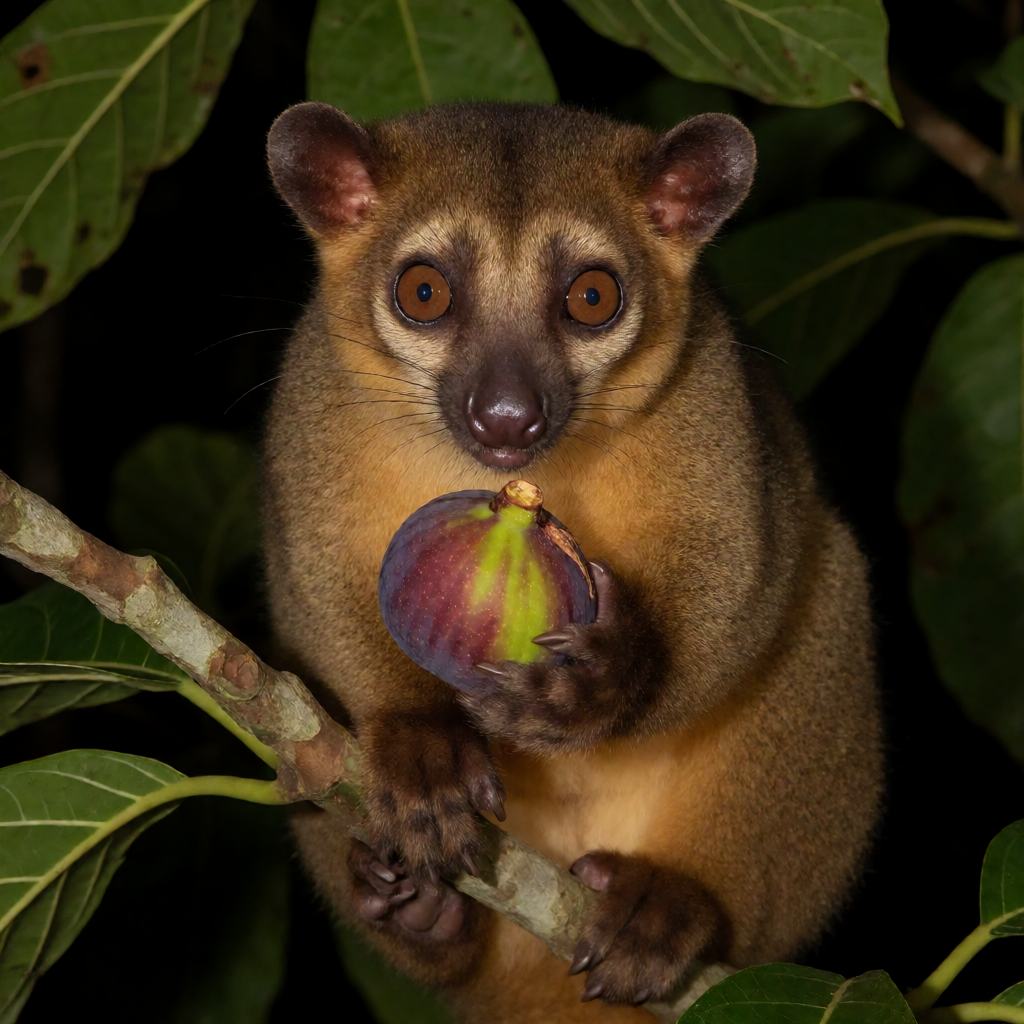
Fruit first, insects after
The breeding cycle
Adults live alone, and pairs form only for a short time. Breeding happens in any month, although most births fall in the wet season. Pregnancy lasts about 100 days, and one young is usual. A newborn is blind and helpless, and it weighs no more than 200 g.
Mothers carry the young for weeks, and the small animal grips the fur while she climbs and feeds at night. Solid food appears at about ten weeks. Older young ride on the back, and they stay near the mother for months. Father takes no part in rearing, and he leaves after mating.
Two young are rare. Captive animals live past 20 years, and wild ones may last less.
Least Concern, and still hunted
Conservation
No global decline is recorded yet. The 2016 assessment ranks the species as Least Concern. Numbers stay high across the Amazon, since the animal tolerates secondary growth and farms.
Hunting for meat and for the pet trade removes animals. Forest clearing is the main risk, although the species survives in shade plantations. Females raise one young a year, so a hunted population recovers slowly even when the forest around it stays intact.
Nobody counts the animals, so the figures remain rough. Protected areas cover much of the range, and the species breeds well inside them. That rank has held since 2016, and no review has changed it.
Side by side
How It Compares
| Trait | Kinkajou | Raccoon |
|---|---|---|
| Length | 40 cm to 60 cm in the body, and the tail adds 40 cm | 40 cm to 70 cm in the body, and the tail adds 25 cm |
| Colour | honey coloured fur, and the face stays plain | grey brown fur, and a black mask crosses the eyes |
| Food | fruit first, then nectar, insects and eggs | almost anything, from crabs and frogs to rubbish |
| Young | one young after 100 days, carried on the chest | two to five young after 65 days, left in a den |
| Build | a tail that grips a branch like a hand | a tail that cannot grip, and paws that open shells |
| Range | forest from Mexico to Bolivia | North America, and now a city animal in Europe |
Common misreadings
What People Get Wrong
- Many people call the animal a monkey, yet it sits in the raccoon family. The tail grips branches, and the face looks like a primate from below.
- A common tale says the species eats only fruit, although it takes eggs and insects as well. Figs matter most, and a fruiting tree fills with animals after dark.
- Guides claim the animal makes a good pet, yet adults bite and need space. A wild caught young may tame, but it seldom stays gentle for long.
Going further
Sources and Further Reading
Quick hits
Five things to remember
- The tail works as a fifth hand.
- The animal loves honey and nectar.
- It is not a monkey at all.
- A kinkajou can hang upside down.
- Wild ones rarely touch the ground.