 By Iris
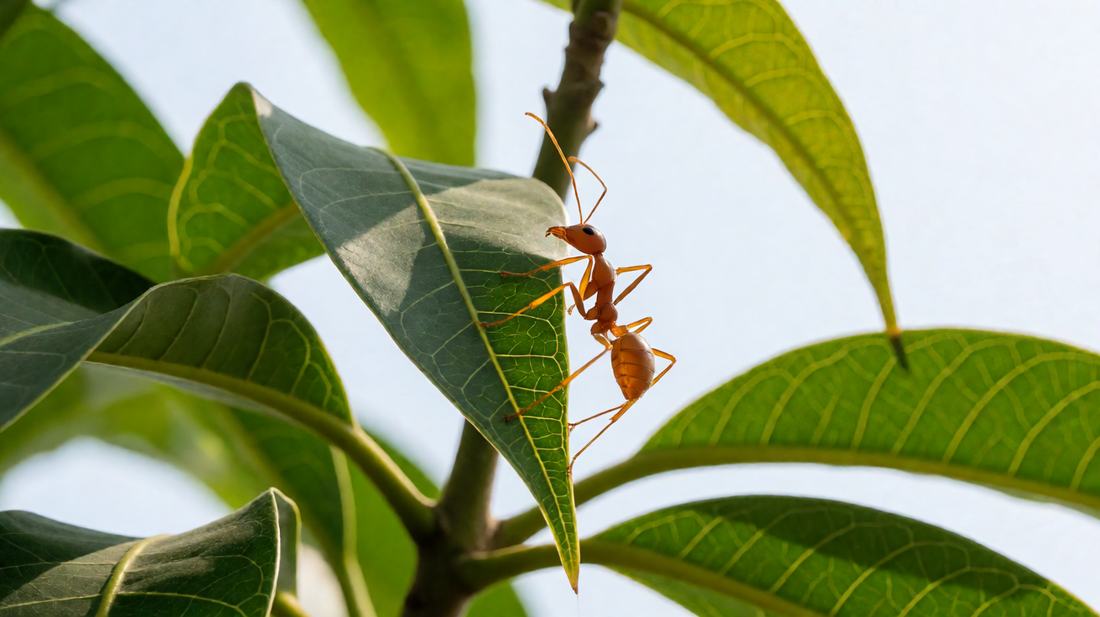
Oecophylla smaragdina | Weaver Ant
Species Profile · Formicidae
Weaver Ant
An ant that lives in the canopy and stitches living leaves together with silk from its own larvae.
Least Concern
Worker length
Colony
Nest
Silk
Diet
Rating
A nest made of living leaves
The ant that sews leaves
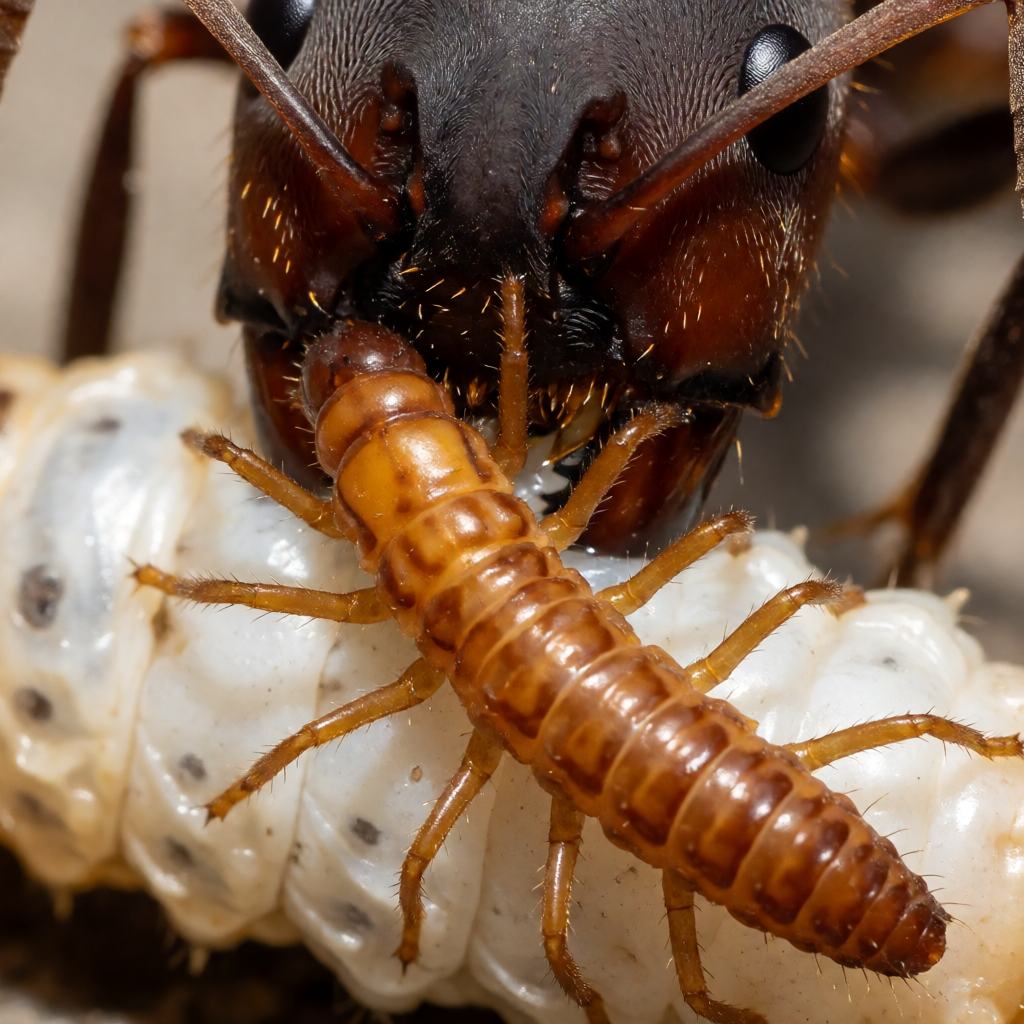
Weaver ants build homes from living leaves. Workers pull the edges together. Then they stitch the seam with silk taken from their larvae. A larva is held in the jaws and squeezed gently until the silk flows.
Hundreds of workers do this at once, and a nest takes shape within hours. Colonies can hold hundreds of thousands of ants. Nests hang in the canopy. The species lives across South and Southeast Asia.
Its orange body, however, makes it easy to know. So does its fierce bite. Few insects defend a tree so well.
Family tree
Formicidae, the ants
Scientists call this ant Oecophylla smaragdina. It belongs to the ant family, in a group of tree-dwelling species. Its closest kin is the Red Wood Ant, a European mound builder that also lives in huge societies and defends them with acid. Both species farm sugary food, and both attack intruders in groups.
The weaver genus holds only two living species, one Asian and one African. Its genus name means leaf dweller in Greek. Early writers described the nests, although nobody knew how the silk was made for another century. Later work showed that the larvae serve as living tools, which is rare among insects.
Fossil ants of the same group appear in amber from fifty million years ago. That record hints the leaf-stitching habit is very old.
10 mm of orange-red ant
How to tell one
Workers come in two sizes. Major workers reach about 10 mm. Minors are half that size. Colour ranges from orange to reddish brown, and the legs are slightly paler.
Long slender legs carry the ant quickly along twigs, across gaps and over the smooth bark of the trunk. Strong curved jaws grip leaf edges, prey and the bodies of rival ants. A sting is absent, yet the bite is painful. The ant sprays formic acid into the wound, which raises a sharp smell when a nest is disturbed.
Large eyes sit on the sides of the head. Because the legs are long, the ant can bridge gaps wider than its own body. A worker can lift several times its own weight in silk and leaf.
1
2
3
Tropical forest canopy
Where it lives
The species lives in tropical lowland forest and woodland. Mango, citrus and mangrove trees all hold colonies, since all three offer living leaves. One colony spans several trees.
Nests sit in the outer canopy, where sun warms the leaves. Because the ants need living leaves, they rarely settle on dead wood. Gardens, orchards and roadside trees often carry colonies.
The ants tolerate a wide range of rainfall, although they shun the driest ground. In cities they nest in shade trees along streets and in parks. Dry weather pushes them deeper into evergreen patches.
Insects, honeydew and sap
What it eats
Weaver ants hunt insects and other small animals, since the colony needs constant protein. Caterpillars, beetles and flies form much of the catch, along with spiders and the grubs of other insects. Workers also farm plant bugs.
That sugar, therefore, keeps the colony fed through dry weeks. Because the ants guard the bugs, the bugs produce more honeydew. The setup looks much like farming, and the ants treat the bugs as stock.
Colonies raid other insects in groups, so few prey escape. A large colony can clear a small tree of pests within a few days, then move to the next tree. Farmers in Asia have used this habit for centuries, because the ants cost nothing to keep.
New queens join nearby nests
The breeding cycle
Colonies hold several queens. Each queen lays eggs in a nest deep inside the canopy, where workers keep the brood warm. Workers tend the brood and move larvae between nests as the weather changes.
New colonies start when a group of workers and a queen leave on foot. That process is called budding, and it keeps new nests close to the old one. Winged males and queens appear in the wet season.
After mating, the males die within a few days, and the young queens join existing nests nearby. Because the colony spreads slowly, a single society may last many years. Some nests hold more than one queen, which makes the colony harder to kill.
Least Concern, but losing forest
Conservation
Red List officials place the weaver ant in the least concern class. Its range is broad, its numbers are high, and it lives in gardens as readily as in forest. No major decline, however, has been recorded.
Forest clearance removes habitat, yet the ant also lives in orchards and plantations. Sprays are a sharper threat, since they kill whole colonies at once. Because the ants defend fruit trees, farmers often protect them.
In parts of Asia the larvae are eaten and the adults used in medicine. Taking larvae for food has not cut wild numbers so far, although the trade is poorly watched.
Side by side
How It Compares
| Trait | Weaver Ant | Red Wood Ant |
|---|---|---|
| Home | tropical forest canopy from India to Australia | pine and oak forest across Europe |
| Length | workers about 10 mm | workers 9 to 11 mm |
| Colour | bright orange-red | red-brown with a dark abdomen |
| Nest | living leaves stitched with larval silk | a mound of needles and twigs |
| Food | insects, honeydew and small prey | insects, honeydew and seeds |
| Standing | Least Concern | Near Threatened in Europe |
Common misreadings
What People Get Wrong
- A common tale says weaver ants cut leaves to build a nest, yet they never cut a healthy one. Workers pull living leaves together and bind the edges with silk.
- Many people think the silk comes from spiders, yet the colony makes its own. Each larva spins a thread, and workers use the grub like a glue gun.
- Visitors often fear the bite, yet the jaws are not the worst part. The ant sprays acid from its abdomen, and that spray stings far more than the bite.
Going further
Sources and Further Reading
Quick hits
Five things to remember
- Workers stitch leaves together using silk from their own larvae.
- A single colony can hold hundreds of thousands of ants.
- The ants keep plant bugs and harvest their honeydew.
- Farmers in Asia use the species as natural pest control.
- Its bite sprays formic acid into the wound.