 By Iris
The Kingdom of Mapungubwe | The First State of the South
Historical Profile · Southern Africa
The Kingdom of Mapungubwe | The First State of the South
A hilltop town at the meeting of two rivers that worked gold, traded with the coast, and became the first state of southern Africa.
c. AD 1075-1220
The kingdom
Its site
Its work
Its rulers
It fell
The big picture
Introduction
Mapungubwe was a kingdom in the north of what is now South Africa. High ground above the meeting of two great rivers held the state. Dates run from about AD 1075 to about 1220. Here for the first time in southern Africa a king, a court and a class of rulers can be seen in the record.
People worked gold and traded with the ports of the east coast. Kings, moreover, were buried on a hill. When the state fell, its people moved north. The same way of life grew up again at Great Zimbabwe.
Stone walls and gold work, in fact, marked both places. In turn trade with the coast made the region rich. Thus a line of states began in the south.
Setting
Historical Context
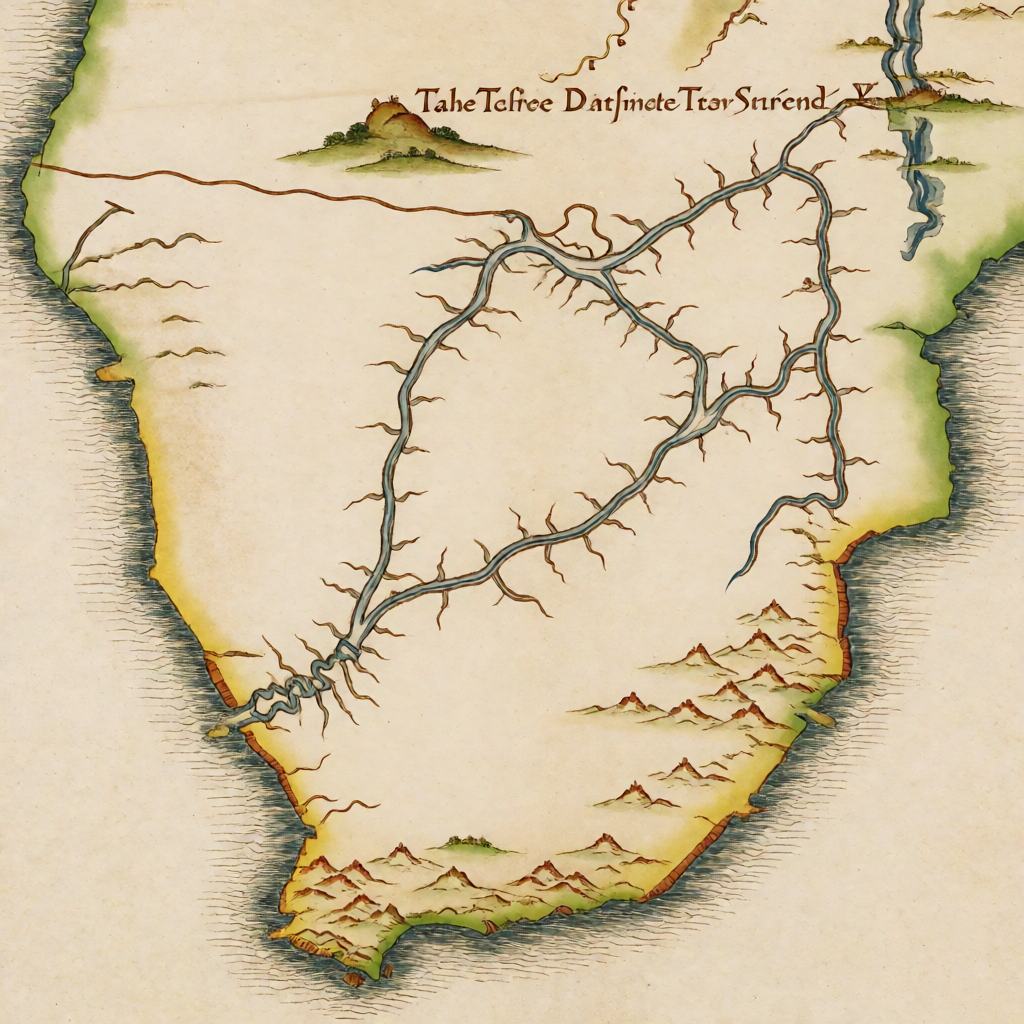
Land of the north, in fact, is dry and open. Two rivers, the Limpopo and the Shashe, meet in a wide valley. That valley was the road by which the trade of the interior reached the sea. Such a position put the region at the head of a long line of trade. The line ran east to the ports of The Swahili Coast. From there it reached Arabia, India and China, indeed. People of the region were farmers and workers of metal.
They grew grain and kept stock on the open ground. They worked iron and copper in the valleys, and lived in small settlements of mud and timber. Their dead were buried in the ground with a few goods. Thus trade changed the region. From about AD 900 the goods of the east coast began to reach the interior. Glass beads and cloth were traded for the gold and the ivory of the south. In turn chiefs who controlled the crossing of the rivers grew rich on the trade.
Their settlements grew into towns. Wealth of the region, moreover, rested on gold. Gold was found in the rivers and the hills to the west. Much of it went east to the coast. Rulers of Mapungubwe took a share of the gold that passed through their land, and that share paid for the court and for the goods they bought.
Turning points
Key Events
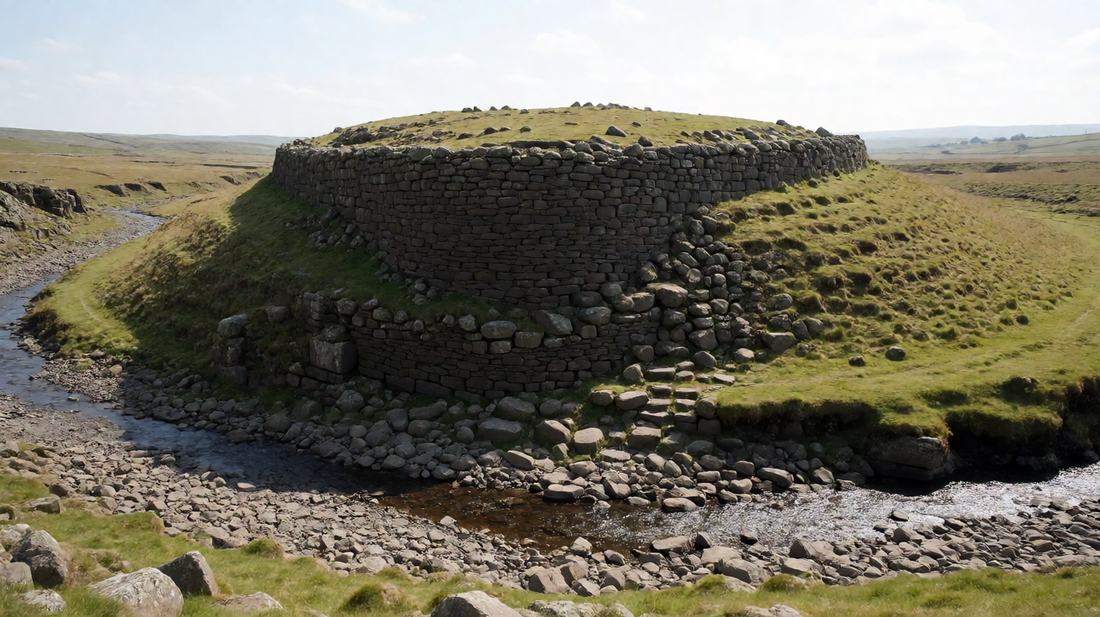
Kingdom life, in fact, grew in the 1000s. A first settlement stood in the valley. It grew into a town of some size. Then, in about 1075, the rulers moved to a hill above the valley and built their court on the top. That move marks the point at which a chief became a king. Hill and court were the heart of the state. It held the houses of the king and the graves of the rulers, reached by a narrow path that a few men could hold.
People of the town, however, lived below. A wall of stone ringed the whole settlement. Thus gold work reached a high point. Graves on the hill held objects of gold foil and of gold wire. Most famous of them is a small wooden figure covered with thin sheets of gold. Such objects show the skill of the craftsmen of the state, indeed. Such work is the oldest gold work found in southern Africa.
Decline set in during the 1200s. Climate grew drier, and the land could no longer feed the town. People moved north, and the trade of the region passed to other hands. In turn the site was left to the weather. Nobody saw the site again until the 1930s.

1
2
3
Who held power
People and Powers
A king stood at the top of the state, set apart from the rest. He lived on the hill. He was reached only through his officials. Court officials held the records of the trade, and the king took a share of the gold and the ivory that passed. Officials, in effect, ran the state. They collected the tribute, kept the stores and led the work on the walls and the terraces.
Below them stood the people of the town, and below them again the farmers of the valley. Trade, however, was watched by the court. Goods of the coast came in, and the gold of the interior went out. All of it passed through the hands of the king. That control was the base of the power of the state. Rank, moreover, was fixed by birth.
The royal family stood apart. Graves on the hill, indeed, show the difference between the rulers and the rest. Objects buried with the kings were of gold, of copper and of glass from far away. Graves of the common people held a few beads and a pot.
Everyday world
Daily Life and Society
Most people, however, were farmers. They grew grain and kept stock. They lived in small settlements of mud and timber. Land, moreover, was held by the family group.
Elders settled disputes among themselves, in effect. The town was the centre of craft. Workers made cloth, pottery and metal goods, and traded them for the goods of the coast. A market also stood in the town.
Traders of the region came there to buy and to sell. The hill, indeed, was the place of the king. It held the court, the store houses and the graves of the rulers, . It was the centre of the religious life of the state, and the whole state was ordered around it.
Craft and ideas
Trade, Technology and Ideas
Trade, in short, was the base of the wealth of the state. Goods of the east coast reached the interior along the rivers, while the gold of the south went the other way. In turn glass beads, cloth and metal goods came in. Gold and ivory went out.
Gold work, moreover, was the great skill of the age. Workers of Mapungubwe made objects of gold foil and of gold wire, and they covered wooden figures with thin sheets of the metal. Their work is the oldest gold work found in southern Africa, and it shows the skill of the craftsmen of the state. Building, however, was done in stone.
Walls of the town were built of blocks of local stone, laid without mortar, and the terraces of the hill were built in the same way. The same method was used later at Great Zimbabwe, indeed. Both sites are the oldest of their kind in the region.
What lasted
Legacy
Mapungubwe, in short, was the first state of southern Africa. It was the first place where a king, a court and a class of rulers can be seen in the record. The way of life it began was carried on by the states that came after it. Its gold work is the oldest in the region.
In turn its people moved north. When the state fell, the same way of life grew up again at Great Zimbabwe. Stone walls and gold work of the later site look back to Mapungubwe. A line of states that ran from the Limpopo to the Zambezi began there.
Today the site is a world heritage site in South Africa, indeed. Its hill and its graves are protected. Gold objects found there are among the greatest treasures of the country. What the state began, moreover, is still being studied.
Side by side
How It Compares
| Point | Mapungubwe | Great Zimbabwe |
|---|---|---|
| Dates | c. AD 1075-1220 | c. AD 1100-1450 |
| Its site | A hill above two rivers | A high plateau of stone |
| Built of | Earth, stone and timber | Cut stone set without mortar |
| Wealth from | Gold and the coast trade | Gold, trade and the coast |
| Its rulers | Buried on the hill | In the great enclosure |
| Relation | The earlier state | The later and larger one |
Common misreadings
What People Get Wrong
- Mapungubwe was a simple village. It was a town with a royal hill and workshops.
- It fell to war. The climate turned dry and its people moved north.
- It was forgotten for ever. Its gold work was found again in the 1930s.
Going further
Sources and Further Reading
- Wikipedia, Kingdom of Mapungubwe
- Encyclopaedia Britannica, Mapungubwe. Encyclopaedia Britannica, Inc.
- Huffman, T. N. 2007. Handbook to the Iron Age. University of KwaZulu-Natal Press.
- UNESCO World Heritage Centre, Mapungubwe Cultural Landscape.
Quick hits
Five Things to Remember
- The kingdom of Mapungubwe rose in about AD 1075.
- It stood where the Limpopo and the Shashe rivers meet.
- Its people worked gold and traded with the ports of the east coast.
- Its rulers were buried on a hill above the town.
- It fell in about 1220, and its people moved north.