 By Iris
The Phoenicians | The Traders of the Levant
Historical Profile · The Levant
The Phoenicians | The Traders of the Levant
A line of small port cities on the eastern shore of the sea that carried goods, letters and a new alphabet to the whole of the Mediterranean.
c. 1200-539 BC
The cities
Their ships
Purple dye
Their trade
Their alphabet
The big picture
Introduction
Phoenicia was a group of trading cities on the coast of the Levant. Today the ground is Lebanon and Syria. One language and one way of life held them together. Still, they never formed a single state.
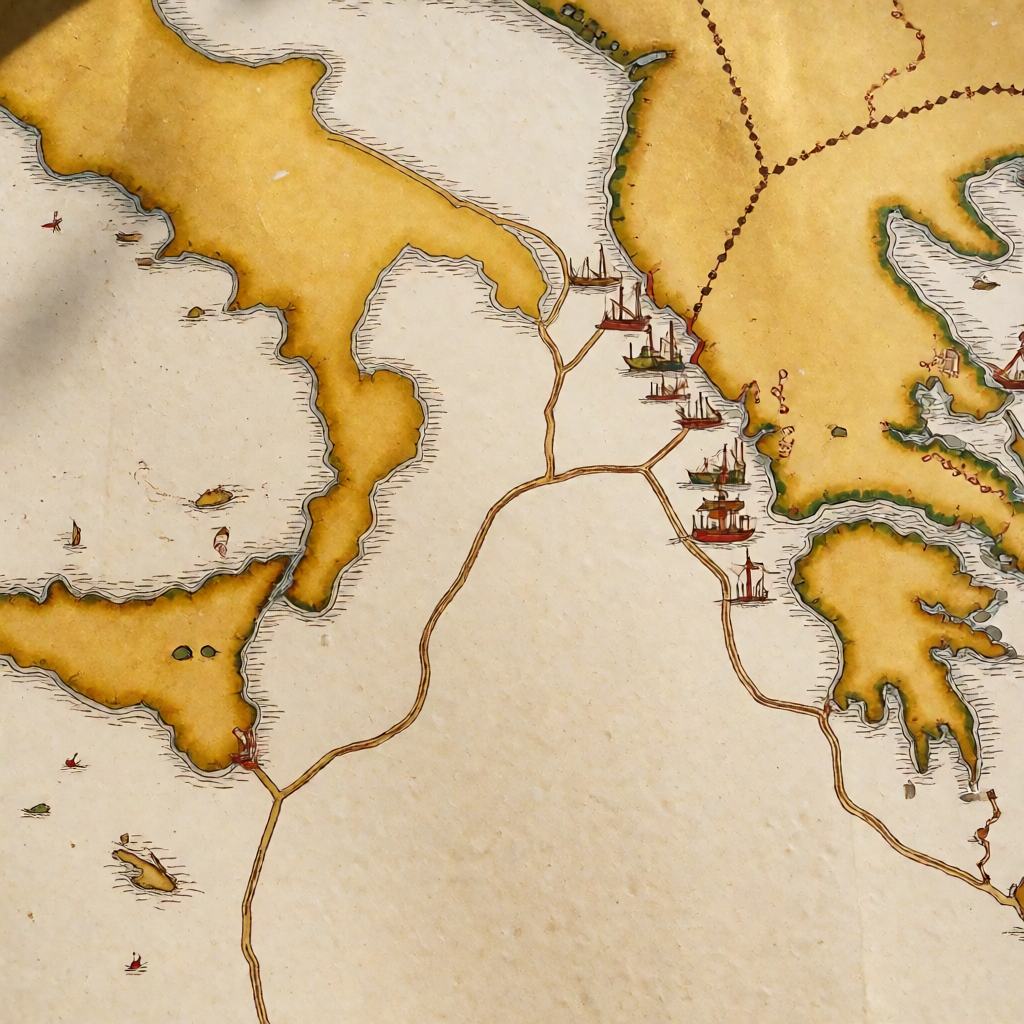
Cities such as Tyre, Sidon and Byblos sent ships across the whole sea and out through the strait to the Atlantic. Letters travelled with them as well. Colonies were founded as far west as Spain and North Africa. Carthage was the greatest of those colonies.
Trade reached Ancient Egypt in the south and Mesopotamia in the east. Thus their ports became a meeting place for ideas. For the oldest lands of the world, the sea road ran through the hands of these traders.
Setting
Historical Context
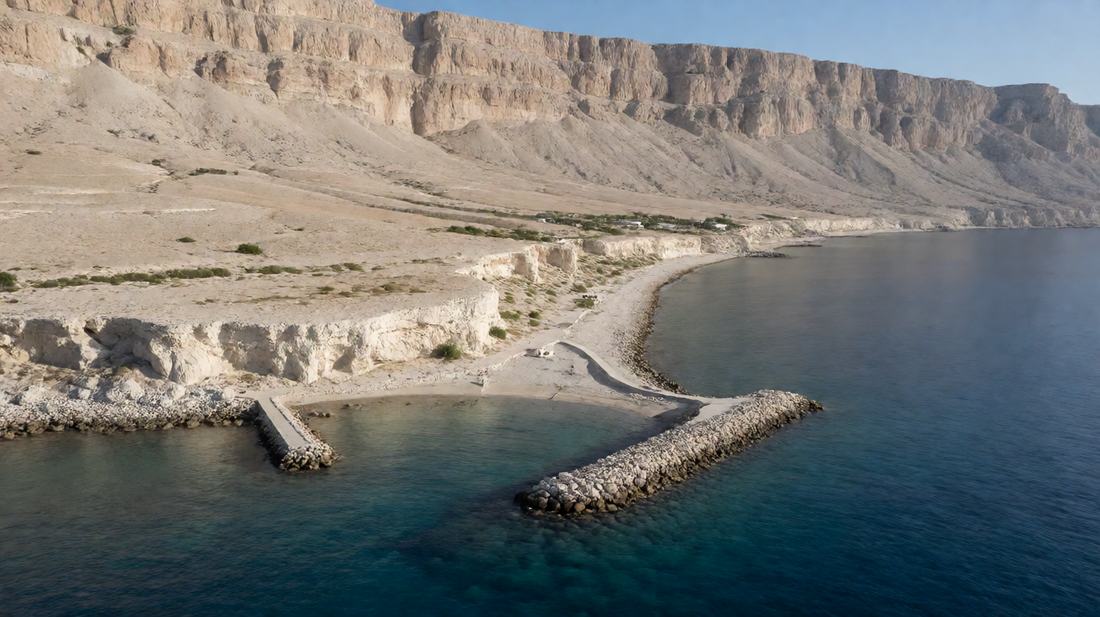
They held a narrow coast. A line of hills ran close to the sea. Only a strip along the shore was good ground. Cities grew up on small islands and headlands. There a harbour could be held against attack, and each city had its own king and its own fleet. Land behind the cities was poor. Thus the sea became the only road to wealth. Position put them between great powers.
To the south lay Egypt, and to the east the lands of Mesopotamia. Both wanted the goods that came down the coast. There was timber from the hills, cloth dyed a deep purple, wine and oil, and metal worked in the workshops of the towns. In return, however, the Phoenicians took gold, silver and grain. Ships ran through the middle of this traffic. Ports became the meeting place of two old civilisations. Purple dye was their most famous product. Its colour came from the sea.
Indeed, a great quantity of raw material went into a single robe. Work went on in open vats, and the whole place had a powerful smell. Dye was so costly that it became a mark of high rank. Later the colour took its name from the people. Ships were built for the open sea. Broad and strong, they carried a single square sail and a row of oars, and they could cross long stretches of water with a heavy cargo. Crews knew the winds and the currents of the whole sea, and they sailed by the stars as well.
Turning points
Key Events
City life rose in the 1200s BC. That was the age when the great powers of the eastern sea fell. Egyptian control of the coast weakened. Thus the cities of the Levant were left to run their own affairs. Tyre became the leading port under a line of kings. Its ships reached the whole of the eastern sea. In the 800s BC the traders began to push further west. They set up posts along the African coast and far out on the islands of the western sea. In about 814 BC they founded Carthage.
Ships passed the strait and reached the Atlantic. There they traded for tin and silver. Crews may even have sailed beyond, down the African coast. Cities also fought one another. In the 700s BC they came under the shadow of Assyria. Later came Babylon, and then Persia in turn. They paid tribute and kept their own kings, and their ships went on trading through every change of master. Tyre was besieged and taken more than once. Yet it rose again each time.
Disaster came in 332 BC, when Alexander the Great took Tyre after a long and bitter siege. Tyre was never the same, however. Its colonies in the west carried on the trade. Ships of the Phoenician cities passed into the hands of new masters. Coast and cities became part of the wider Greek world. Classical Greece took the letters of the traders and made them its own. Slowly the language of the cities gave way.

1
2
3
Who held power
People and Powers
Each city was a kingdom of its own. A king held the chief office. A council of the leading families stood beside him. In Tyre the crown passed from father to son for centuries, and the kings were also the chief priests of the city god. When the kings fell under foreign masters, however, the council of merchants took more of the power. In effect, the state was a trading company as much as a kingdom.
Ships were owned by the leading families. Kings, moreover, took a share of the profit. Cities kept the sea lanes to themselves, and their routes and markets were kept from rivals with great care. Work was plentiful, indeed. Docks, workshops and dye houses gave work to thousands. Ships needed crews, rope makers, sail makers and carpenters.
Beyond the cities, farmers worked the narrow land and paid rent to the owners of the estates. Colonies had their own life. Each was founded by a city of the homeland, and each kept the customs and the god of its founder. Colonies traded with one another and with the homeland, and in turn they grew strong. In time the greatest of them, Carthage, became a power in its own right, and it outgrew them all.
Everyday world
Daily Life and Society
Most people in the cities worked. City streets were crowded and busy. Sailors, dockers and traders filled the streets, and the harbour was the centre of everything. Workshops along the shore turned out cloth, metal and glass for the ships as well.
Houses, moreover, were built of stone and of timber brought down from the hills. Temples stood on high ground. Each city god was held to protect the fleet. Offerings were made before a voyage.
Priests were paid by the state. Still, marriage and the family held the cities together. Leading families were linked by marriage, and the office of king often passed through both lines of descent. Women held property and took part in the family business, and a few of them are named as founders of colonies.
Craft and ideas
Trade, Technology and Ideas
Trade was the reason the cities existed. Traders carried the goods of the east to the west and the goods of the west to the east. They took a profit at every stage. Ships were built of the timber of the hills. Crews knew every harbour and every wind of the sea.
Their greatest gift, however, was the alphabet. Letters were few and simple, and they stood for single sounds rather than for whole words. This was far easier than the writing of Egypt or Mesopotamia, and in turn it spread with their trade. Greeks took the letters and added vowels. They passed them on to Europe, and the script of this page comes from that line.
Building and craft, moreover, were also their strengths. Their masons cut stone to a true line. Their metal workers cast and hammered. Their weavers made cloth that was valued across the sea, and their engineers built harbours with walls and gates. Their ships were quick and strong.
What lasted
Legacy
Phoenicia left no empire, but it changed the world. Ships from their ports joined the ends of the sea. Letters from their cities became the base of nearly every script in Europe. Goods and ideas moved between lands that had never met, and the whole Mediterranean became one market.
Cities of the coast, however, were remembered long after they fell. Greeks and Romans told stories of the Phoenician traders. Cadmus, a Phoenician who was said to have brought writing to Greece, stood at the head of the Greek story of letters. Outliving the homeland, the western colonies grew strong.
Carthage grew into the greatest sea power of the west, and for another five hundred years it carried the Phoenician way of trade. Coast and cities are now part of the modern world, and the old towns still stand.
Side by side
How It Compares
| Point | The Phoenicians | Carthage |
|---|---|---|
| Where | A line of ports on the Levant | The north coast of Africa |
| Kind of power | A group of trading cities | One city and its own lands |
| Rule | A king in each city | A council of leading families |
| Trade | Opened the western sea | Held the western sea |
| Best known for | The alphabet | The war with Rome |
| End | Under Persia after 539 BC | Destroyed in 146 BC |
Common misreadings
What People Get Wrong
- The Phoenicians were one country. They were a group of separate cities.
- They were the first seafarers. They followed routes that others had already opened.
- Their writing was a picture script. It was an alphabet of single sounds.
Going further
Sources and Further Reading
- Wikipedia, Phoenicia
- Encyclopaedia Britannica, Phoenicia. Encyclopaedia Britannica, Inc.
- Markoe, G. E. 2000. Phoenicians. British Museum Press.
- Aubet, M. E. 2001. The Phoenicians and the West. Cambridge University Press.
Quick hits
Five Things to Remember
- The Phoenicians were the trading cities of the Levant, above all Tyre, Sidon and Byblos.
- They never formed a single state, and each city had its own king.
- Their ships reached the whole of the Mediterranean and passed out into the Atlantic.
- Their purple dye was made on the coast and became a mark of high rank.
- Their alphabet was taken up by the Greeks and became the base of European writing.