 By st20113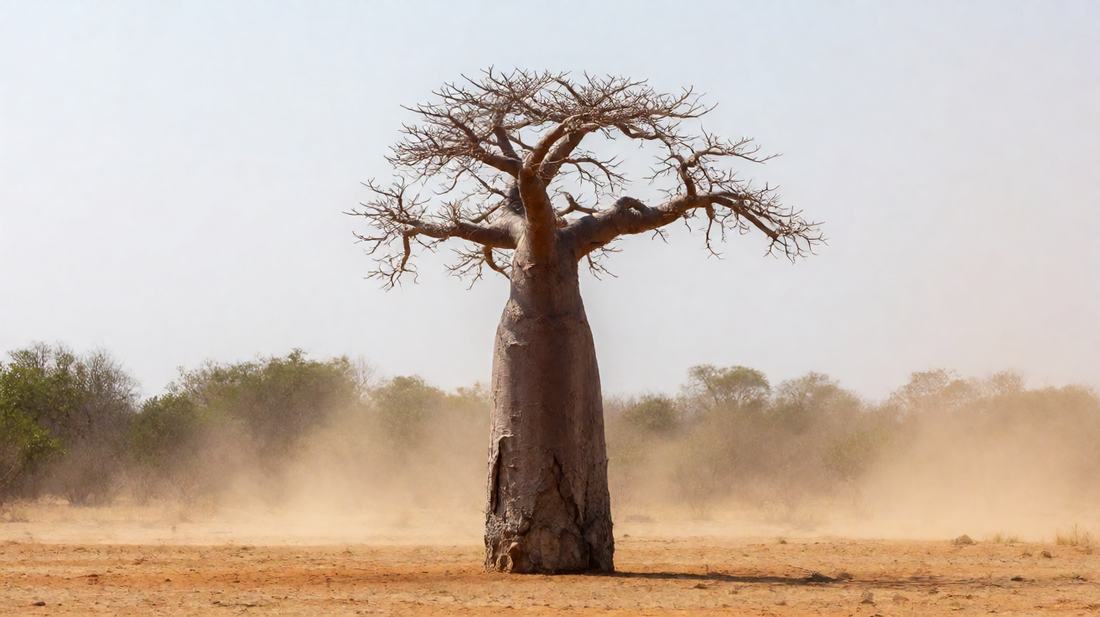
Adansonia za | Za Baobab
Species Profile · Malvaceae
Za Baobab
A Malagasy baobab with a bottle trunk full of water and a flower that opens once, at dusk, for a single night.
Least Concern (2015) 2015 assessment
Height
Trunk
Leaflets
Fruit
Bloom
Rating
The Za Baobab
A bottle trunk in dry Madagascar
This baobab grows in western and southern Madagascar. The tree stores water in a huge trunk. Bark stays smooth and pale grey. Leaves appear only during the wet season.
Flowers come at the start of the rains. A local name, bozy, is used across much of the island. Because the trunk can hold many thousands of litres of water, the tree survives months without rain. Meanwhile, cattle and goats eat the fallen flowers.
People harvest the fruit for food. Long life and slow growth make the tree a landmark in dry country.
Family tree
Malvaceae, the mallows
The za belongs to the mallow family. Baillon described it in 1890. 8 baobab species are recognised today.
6 of them grow only on Madagascar. One lives in mainland Africa. One grows in north-west Australia.
Gene work points to the island as the birthplace of the whole group. A relative, the Baobab, ranges across Africa and holds far more water in its trunk. Two other Malagasy species are now listed as Endangered, whereas the za still holds a wide range.
A trunk of water
How to tell one
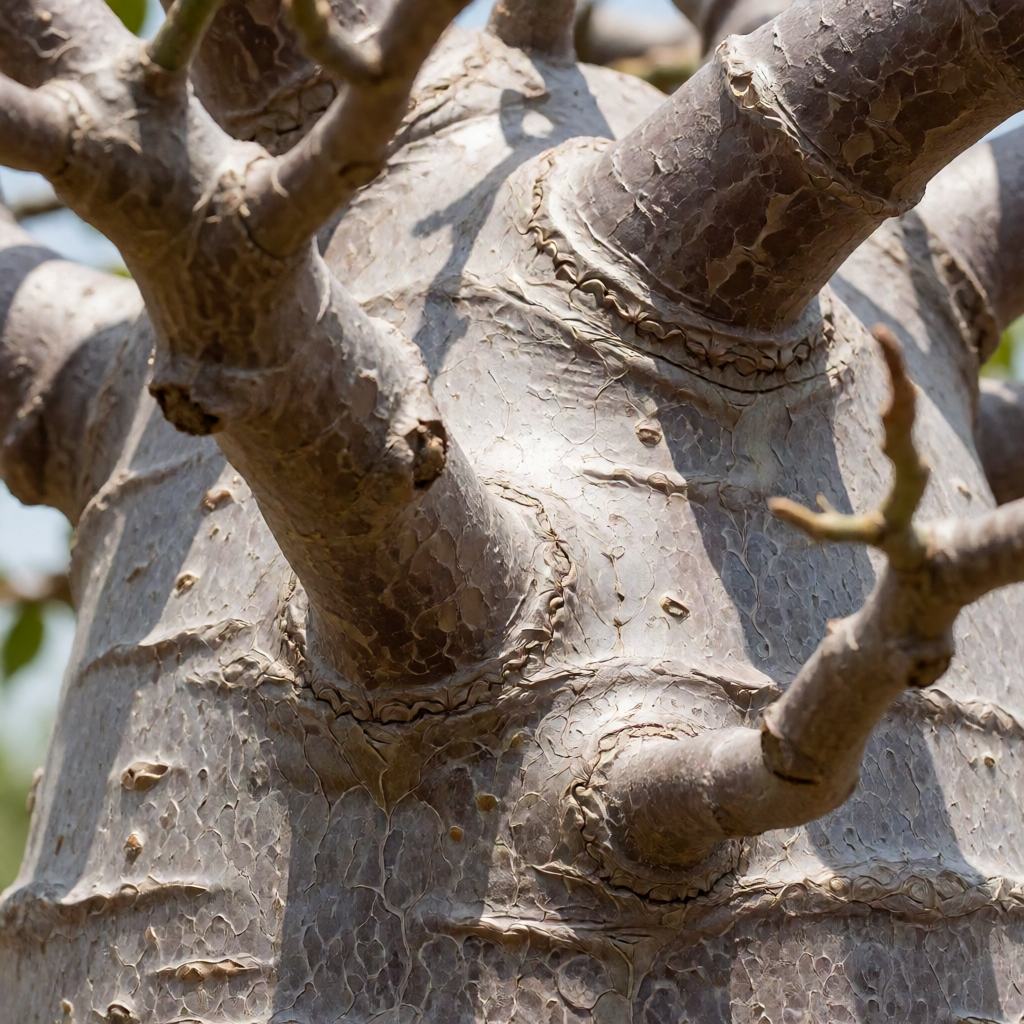
Height ranges from 5 to 30 m. The trunk can measure 3 m across. Bark stays grey and smooth on young trees. Older trunks gain deep folds.
Branches spread wide and carry few leaves. A digitate leaf holds 5 to 7 leaflets. Each leaflet looks like a small spoon. Wood is soft and full of water.
Because the tree drops every leaf in the dry season, it loses almost no water through its canopy. Flowers open at dusk and last a single night.
1
2
3
Thorn and scrub
Where it lives
Dry forest and spiny thicket are the main homes. The species also grows in savanna and scrub. Soils are sandy or chalky.
Some trees stand on rocky ground. Elevation runs from sea level to 800 m. Rain falls in a short season, therefore the tree must hoard what it gets.
Because the tree needs open ground and plenty of light, it seldom survives once dense woodland closes over it. Moreover, goats browse young seedlings. Fire kills small trees before they can build a trunk.
Roots and sunlight
What it eats
Roots spread wide and stay near the surface. Water is drawn from a huge trunk reserve. Fine roots take up minerals from sandy soil. Leaves make food from sunlight.
In fact, a single leaf lasts only one wet season. Fruit feeds lemurs, bats and people. Because the tree grows on poor soil and stores what it needs, it can wait out a drought that would kill a faster-growing plant.
Night flowers
The breeding cycle
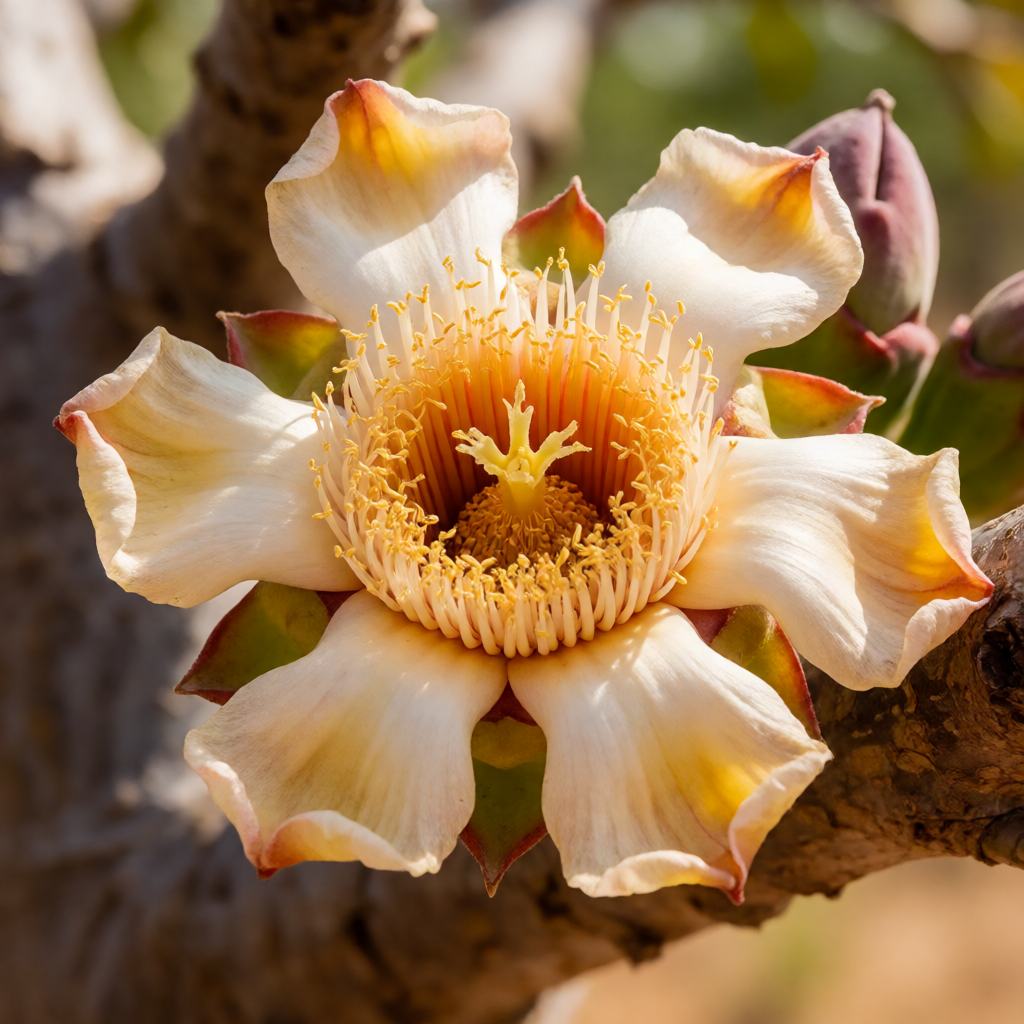
Trees flower from November to March. Flowers open after dark. A long tongue or a furry face carries pollen between trees.
Hawkmoths work the flowers at night. Fruit bats do the same. A round fruit holds many seeds.
Each fruit measures 10 to 15 cm. Seeds need bare ground to sprout. Because a seedling must escape goats, fire and drought for many years, only a tiny share of the seeds ever becomes a tree.
Least Concern
Conservation
The IUCN rates the species as Least Concern. Its range covers a huge area. More than 100 groups are known.
Numbers are still falling, however. Clearance for farmland removes old trees. Goats and cattle stop new ones from growing.
Charcoal production takes a further toll. Because old baobabs live for centuries and young ones face so many hazards, a fall in numbers takes a long time to notice and an even longer time to fix. Local people often protect the trees on their land.
Side by side
How It Compares
| Trait | Za Baobab | African Baobab |
|---|---|---|
| Range | western and southern Madagascar | mainland Africa and Arabia |
| Height | 5 to 30 m | up to 25 m |
| Flower colour | yellow to orange-red | white |
| Pollinators | hawkmoths and fruit bats | bats and bushbabies |
| Fruit | round, 10 to 15 cm | oblong, up to 20 cm |
| IUCN status | Least Concern | Least Concern |
Common misreadings
What People Get Wrong
- Baobabs are said to be hollow. The trunk is solid wood and stored water.
- The tree is thought to grow fast. It grows slowly and may live for centuries.
- Only Africa is said to have baobabs. 6 of the 8 species live on Madagascar.
Going further
Sources and Further Reading
- IUCN Red List, Adansonia za
- Letsara, R. et al. 2019. Adansonia za. The IUCN Red List of Threatened Species.
- Wan, J.-N. et al. 2024. The rise of baobab trees in Madagascar. Nature 629.
- GBIF Backbone Taxonomy. Adansonia za Baill.
Quick hits
Five things to remember
- Bozy and reniala are local names.
- One trunk can store many thousands of litres.
- Flowers open at dusk and last one night.
- The fruit can measure 15 cm across.
- 6 of the 8 baobab species live only on Madagascar.