 By Iris
Smutsia temminckii | Ground Pangolin
Species Profile · Manidae
Ground Pangolin
A scale-covered ant hunter that walks on two legs and rolls into an armoured ball when danger comes.
Vulnerable (2019) 2019 assessment
Length
Weight
Scales
Tongue
Pup
Rating
The Ground Pangolin
The pangolin that walks on two legs
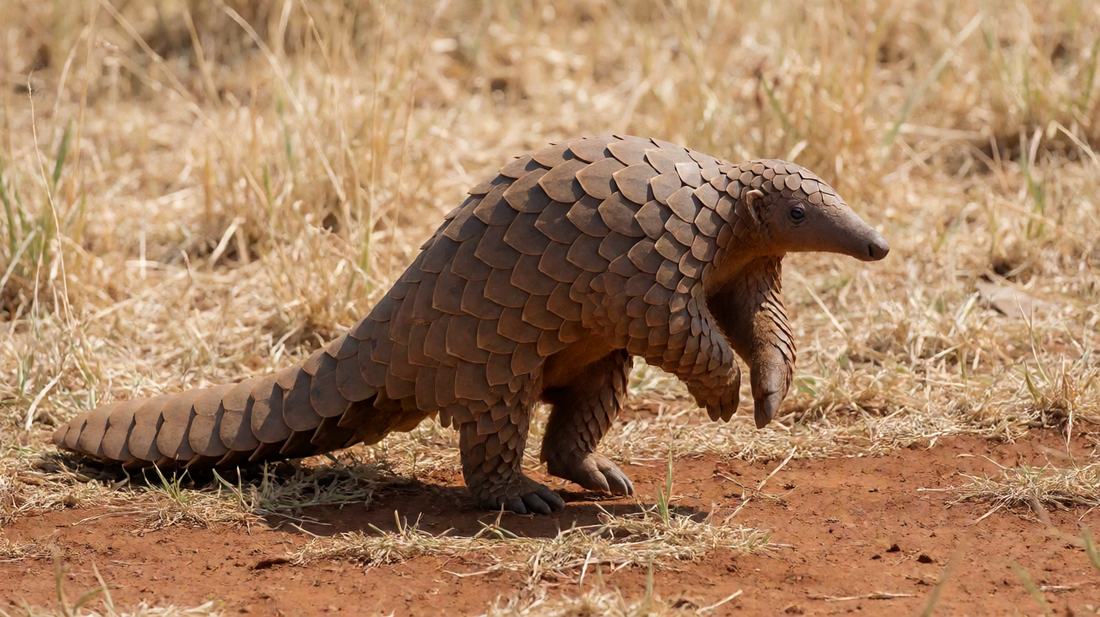
This pangolin lives in the savannas of eastern and southern Africa. A coat of hard brown scales covers its body. Scales are made of keratin, the same stuff as a fingernail. The animal walks on its hind legs.
It holds the front claws tucked up against its chest. Its heavy tail balances the body. In fact, it is the only pangolin that moves this way. Because the species feeds almost entirely on ants and termites, it must roam a wide area to find enough of them.
Poaching for scales and meat has driven numbers down fast. Today, the animal ranks among the most traded wild mammals on Earth.
Family tree
Manidae, the pangolins
The pangolin belongs to the family Manidae. Smuts named it in 1832. He placed it in the genus Manis. Later workers therefore moved it into a genus of its own, Smutsia.
However, no subspecies are known. This animal was named for the Dutch zoologist Coenraad Jacob Temminck. Its closest relative is the giant pangolin of central Africa. Both live in Africa, whereas the other four species come from Asia.
A cousin in Asia, the Pangolin, faces the same market for its scales. Although the two groups split long ago, they share almost every detail of build and habit.
One fifth scale
How to tell one
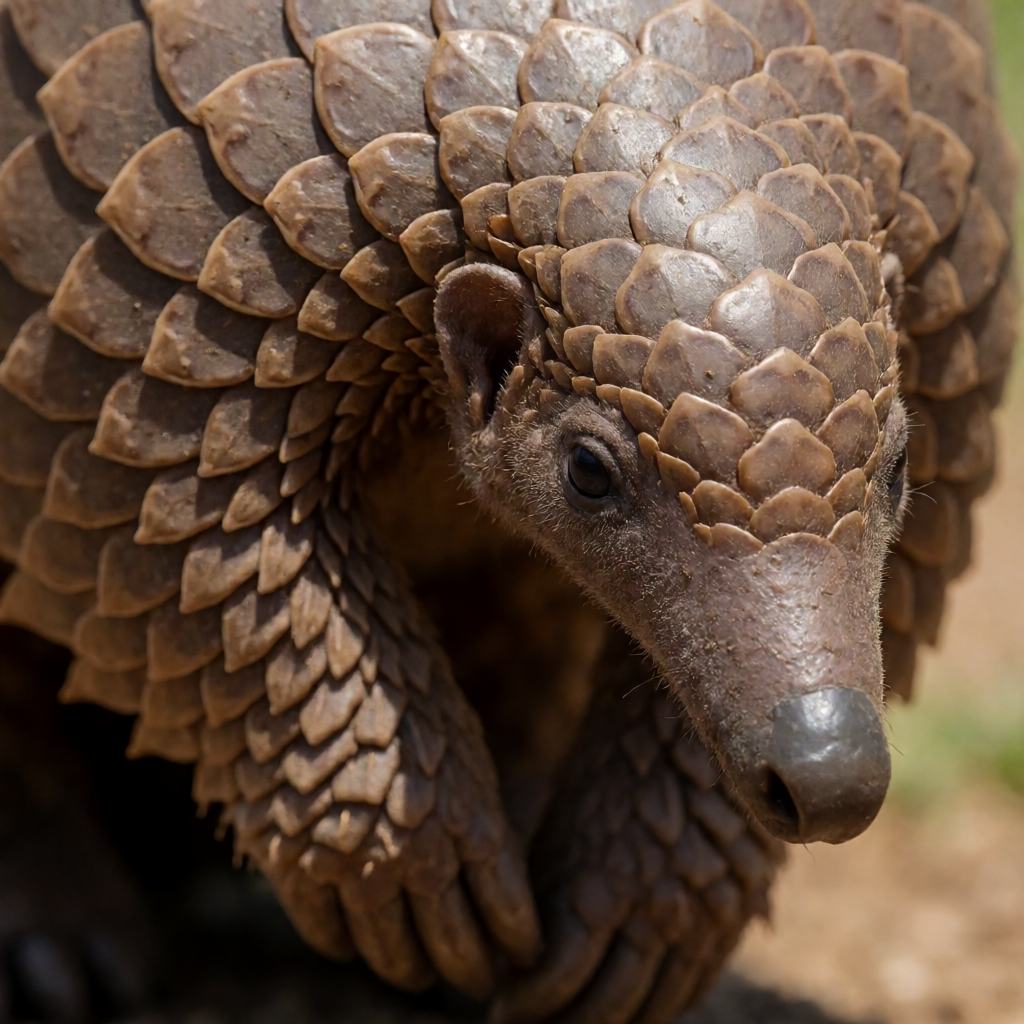
Adults reach about 140 cm from nose to tail tip. Weight runs between 9 and 10 kg. About 340 to 420 scales cover the body. Those scales make up a fifth of the total weight.
Three long claws on each fore foot dig out termite mounds. Each claw can grow 6 cm long. Its tongue reaches 30 to 40 cm into a nest. There are no teeth in the jaw.
A strong stomach holds small stones that grind the food up. Because the tongue is anchored near the pelvis, it can slide far out of the mouth and sweep up insects that other animals cannot reach.
1
2
3
Savanna burrows
Where it lives
Savanna and open woodland suit the species best, although it also uses floodplain grass. It keeps clear of dense forest and of farmland. Rainfall across the range runs from 250 to 1,400 mm a year. Some animals live as high as 1,700 m.
A ready supply of ants matters more than any other factor. The pangolin also needs burrows or thick cover. It seldom digs its own. In fact, it takes over holes left by warthogs and aardvarks.
One home range can cover 0.2 to 23.4 km². Because the animal sleeps by day in a deep burrow and hunts alone at night, it is very hard to count in the wild.
Ants and termites
What it eats
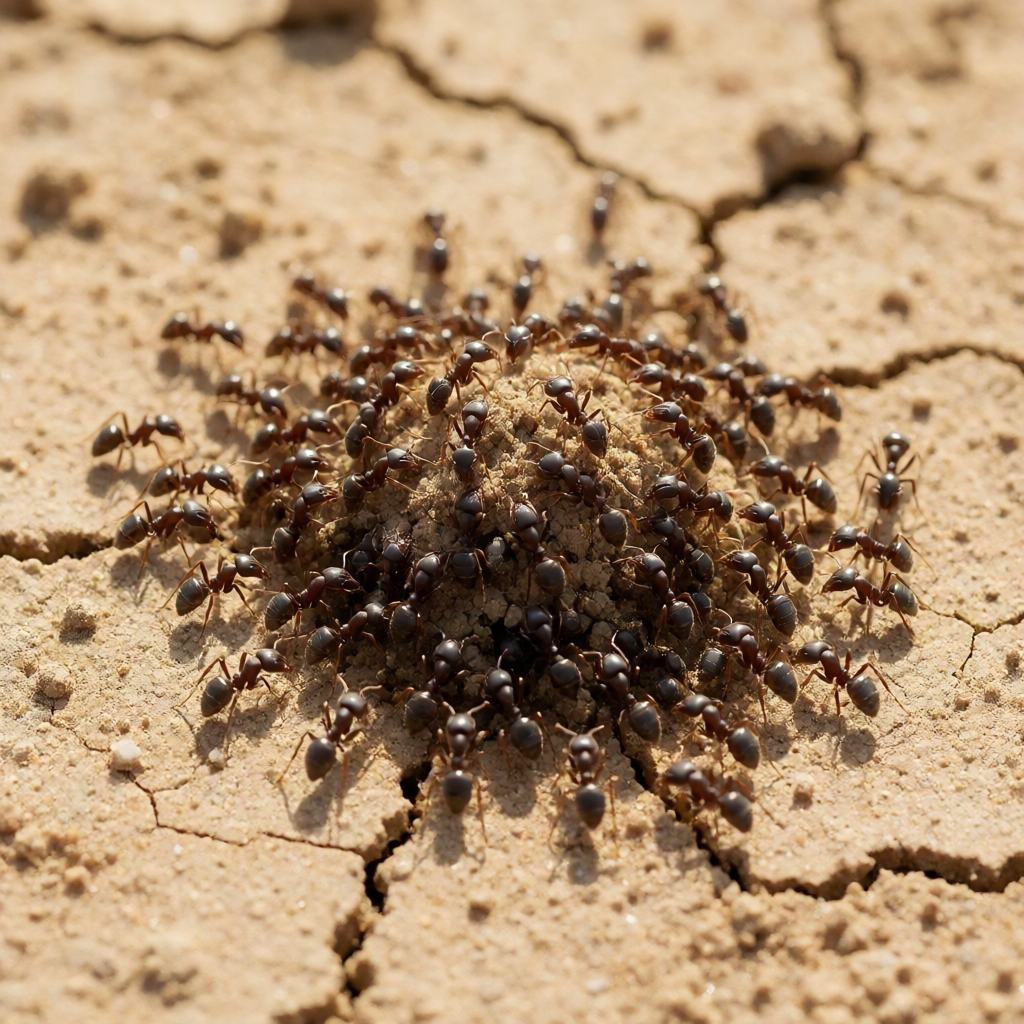
Ants and termites form almost the whole diet. One meal may hold thousands of insects. The animal sniffs out a nest after dark.
It tears the mound open with its claws. Then it licks up the insects with a sticky tongue. Water comes mostly from the prey.
Because the prey is swallowed whole and ground up inside the stomach, the pangolin has no need of teeth at any stage of life. Hunting grounds are used for a few nights only, therefore a wide area is needed. Part of every night goes on the move from one nest to the next.
One pup
The breeding cycle
A female bears one pup at a time. Pups arrive in late summer or autumn. A newborn has soft, pale scales. It clings to the base of the mother’s tail.
She carries it for about 3 months. Weaning follows at around 4 months. Later, the pup rides on her back. It leaves at 5 or 6 months.
Females may breed every year. Because a single pup takes months to raise, a hunted population recovers very slowly.
Vulnerable
Conservation
The IUCN rates the species as Vulnerable. Numbers are thought to have fallen by 30 to 40% over 45 years. Poaching is the main cause of the fall.
Meanwhile, electric fences kill animals that try to dig beneath them. Roads take a steady toll as well. Moreover, farmland is replacing savanna in many districts.
Trade in the species was banned worldwide in 2016. Therefore, captive breeding has proved very difficult. Because one pangolin is worth a great deal to a poacher, protection depends far more on patrols and court cases than on any written rule.
Side by side
How It Compares
| Trait | Ground Pangolin | Giant Pangolin |
|---|---|---|
| Range | eastern and southern Africa | central and western Africa |
| Posture | walks on its hind legs | walks on all fours |
| Weight | 9 to 10 kg | 30 kg or more |
| Burrows | takes over old holes | digs its own |
| Trade rule | Appendix I | Appendix I |
| IUCN status | Vulnerable | Endangered |
Common misreadings
What People Get Wrong
- Pangolins are said to be reptiles. They are mammals under a coat of keratin.
- The scales are harvested without killing. Almost every animal is killed first.
- A pangolin is thought to chew. Its stomach grinds the prey with small stones.
Going further
Sources and Further Reading
- IUCN Red List, Smutsia temminckii
- Pietersen, D., Jansen, R. & Connelly, E. 2019. Smutsia temminckii. The IUCN Red List of Threatened Species.
- IUCN SSC Pangolin Specialist Group. Pangolin species profiles.
- Animal Diversity Web, University of Michigan. Smutsia temminckii.
Quick hits
Five things to remember
- Scales account for a fifth of its body weight.
- It carries more than 340 scales.
- It walks on two legs, unlike every other pangolin.
- One home range can top 23 km².
- A pup rides on its mother’s tail.