 By st20113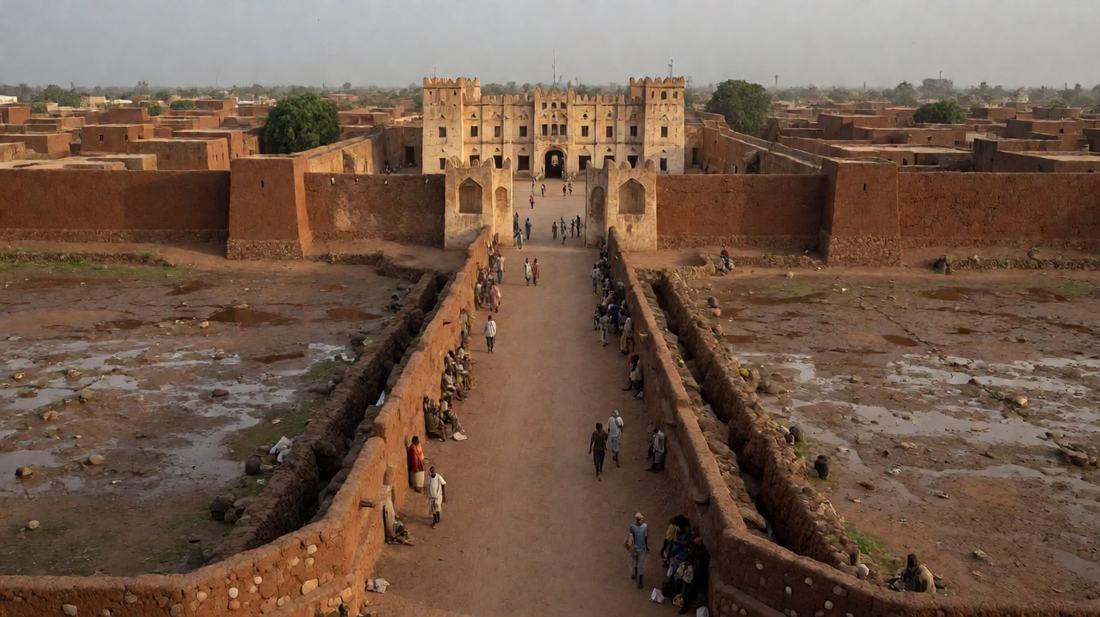
The Kingdom of Benin | The Walls of Edo
Historical Profile · Southern Nigeria
The Kingdom of Benin | The Walls of Edo
A West African kingdom of brass casters and earthworks, ruled by the Oba from a capital ringed by walls and ditches that ran for hundreds of kilometres.
c. AD 1200-1897
Ruled by
Strong ruler
Capital
Walls
City burned
The big picture
Introduction
The Kingdom of Benin grew up inland from the coast of southern Nigeria. It lies in a wet belt of land. Its capital was Edo. That is where Benin City stands today.
The kingdom was ruled by a king called the Oba. It lasted from about AD 1200 until 1897. In that year a British force burned the city. It also carried off its treasures.
At its height Edo was one of the largest cities in Africa. It was ringed by a system of walls and ditches. The kingdom is best known for the brass plaques made in its palace workshops.
Setting
Historical Context
The land was rich and difficult at the same time. It lies in a belt of heavy rainfall. The soil is poor once the cover is cleared. The people there were farmers and traders of the Edo group.
They grew food in cleared plots. They traded salt, cloth and metal with their neighbours. The first line of rulers was a group of kings called the Ogiso. By the 1100s that line had lost its hold.
The chiefs sent for a prince from the city of Ife. His son became the first Oba. From that point the throne passed in one family. The office kept that form for the next 700 years.
Turning points
Key Events
The kingdom took its lasting shape under a ruler called Ewuare. He came to power in 1440. He rebuilt the capital and reformed the army. He pushed the borders out in every direction. He also set up the ceremony that surrounded the throne. European ships reached the coast in the 1400s. By the 1480s the Portuguese had sent envoys to Edo. A trade opened in pepper, cloth, beads and ivory.
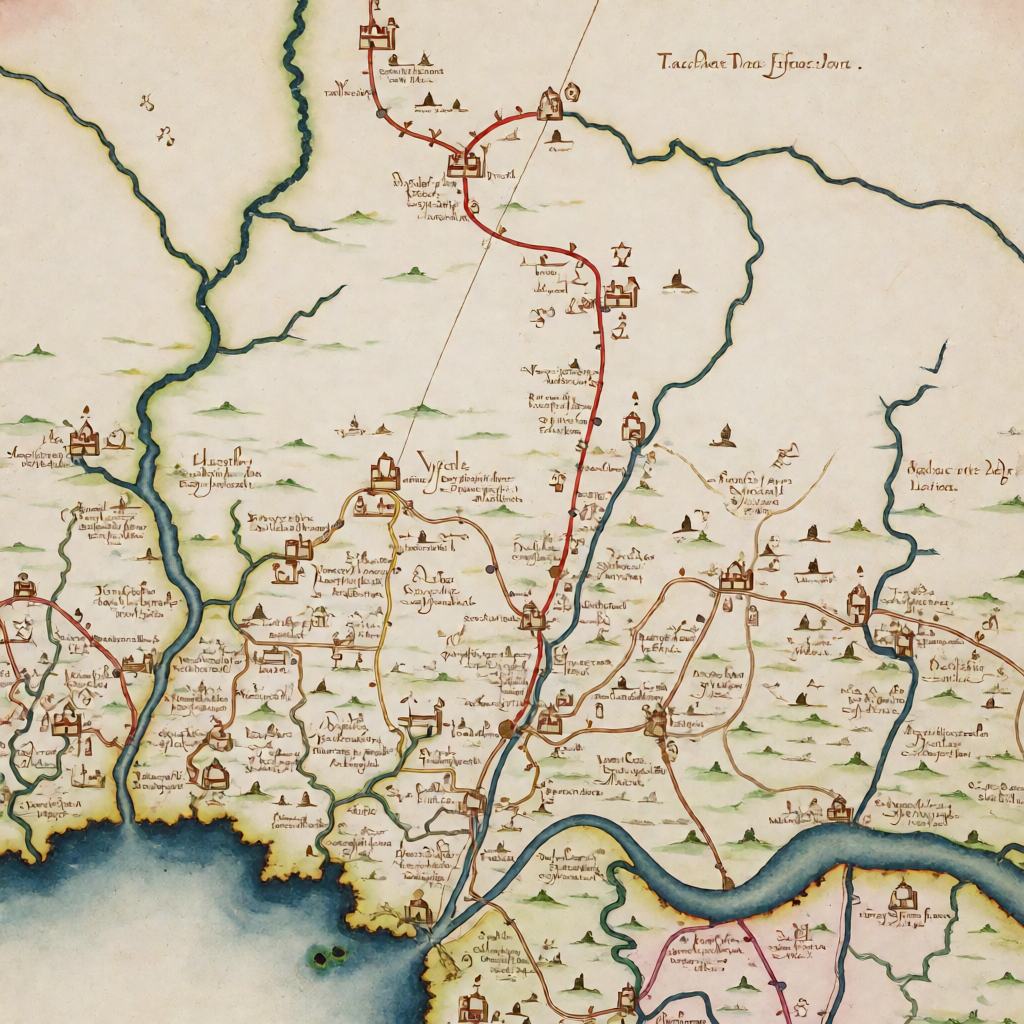
In return came brass, which the palace workshops needed. For a century the two sides traded and sent ambassadors. The wealth of the kingdom rested on more than the coast. Edo held the middle of a set of routes. They ran down to the coast on one side and north toward the Niger on the other. Goods went up the river and then along the desert routes. There they joined the wider system of the Trans-Saharan Trade. It was the same kind of position that had built the great states of the western Sudan.
Among them was the Mali Empire far to the west. The end came in 1897. A British party was ambushed on the road to the capital. A force was sent to take the city. Edo was burned and the Oba was sent into exile. The brass pieces went to London and were sold on.
1
2
3
Who held power
People and Powers
The Oba stood at the centre of everything. He was the head of the state and the chief judge. He was also first among the priests of the royal ancestors. His person was treated with great formality. Access to him was controlled through a long chain of officials.
The queen mother held a position of her own. She had a town, lands and a title. Below the royal family stood two groups of chiefs. One group traced its rank to the founding families. The other was appointed by the Oba, often for service in war.
The balance between them was a constant theme of politics in the kingdom. The palace also held the guilds. These were bodies of craftsmen who worked only for the crown. Each guild had its own quarter in the city and its own head. Each passed its skill down in families.
Everyday world
Daily Life and Society
Edo was laid out with care. A broad straight avenue ran from the palace to the main market. The palace stood inside its own walled compound. The houses of the chiefs stood along the avenues. Each had a walled courtyard with an open hall.
The city was ringed by earthworks. The walls and ditches were not one line but a network. They enclosed the capital and the farmland around it. The ditches were cut deep. The earth was used to raise the walls.
Together the lines ran for hundreds of kilometres. Most people lived in villages and worked the land. Farmers paid a share of the harvest to the chiefs and the palace. Trade was in the hands of the chiefs and of the markets. The markets were held on a fixed cycle of 4 days.
Craft and ideas
Trade, Technology and Ideas
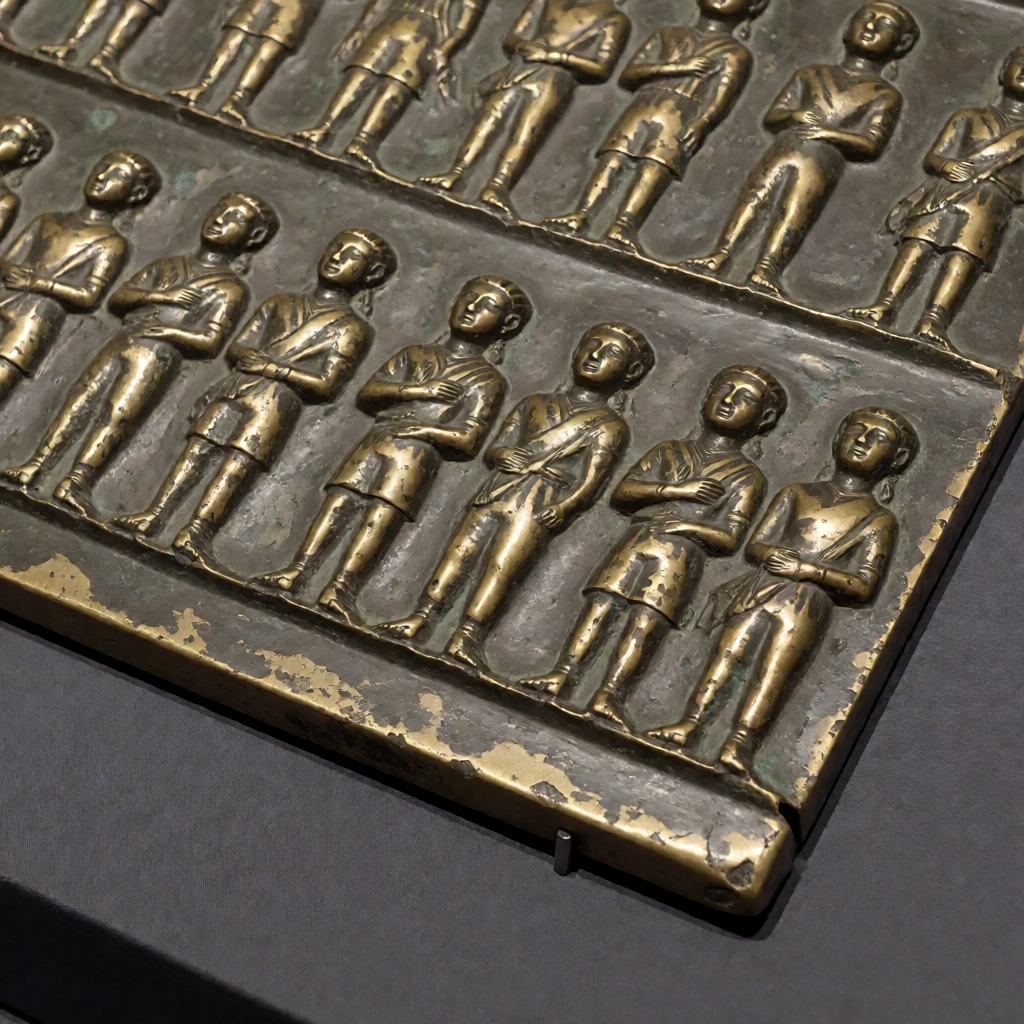
The fame of Benin rests on its metal casting. The palace casters worked in brass brought in from outside. A wax model was covered in clay. It was heated so that the wax ran out. Then it was filled with molten metal. The mould is broken to release the piece.
So every casting is a one-off. The method was used for heads, figures and plaques. The plaques are a record as well as an ornament. They show the Oba in his regalia. They show attendants, chiefs, musicians and envoys from Europe. Read together they form a picture of the court and its ceremonies.
Carvers shaped ivory and wood. The palace kept a store of carved tusks. Bead makers made the strings of red beads worn by the Oba. Cloth was woven and dyed. The state kept records of its dealings.
What lasted
Legacy
The kingdom ended as a state in 1897. The office of the Oba was restored in 1914. It still exists. The present Oba is a figure of standing in Nigeria.
He holds no political power. The greater legacy is the art. The brass pieces taken in 1897 are now in museums in Britain, Germany and the United States. The argument over whether they should go back has run for decades.
Some have been returned. For the study of African history the plaques did something more. They showed a court with its own record of itself. Much of Europe had preferred to believe that such work came from outside Africa.
Quick hits
Five Things to Remember
- The Kingdom of Benin ran from about AD 1200 to 1897, with its capital at Edo.
- It was ruled by the Oba, and its greatest early ruler was Ewuare, from 1440.
- Its walls and ditches enclosed the capital and its farmland for hundreds of kilometres.
- The palace guilds cast brass by the lost wax method and carved ivory and wood.
- A British force burned Edo in 1897 and took the palace brass to Europe.