 By Iris
The Taj Mahal | A Monument in Marble
Historical Profile · Agra, Mughal India
The Taj Mahal | A Monument in Marble
A tomb in white marble, inlaid with stone brought from across Asia, built by an emperor for his wife and finished in a little over twenty years.
AD 1632-1653
Begun
Finished
Marble from
Dome rises
Listed
The big picture
Introduction
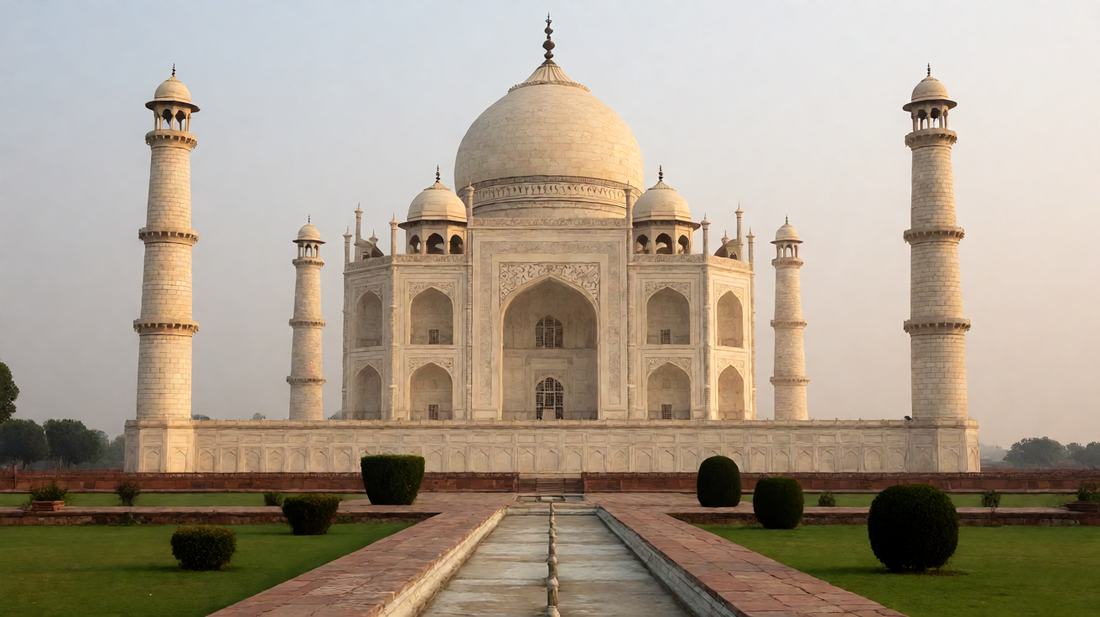
The Taj Mahal stands beside the river Yamuna at Agra. It is in northern India. It is a tomb, built by the emperor Shah Jahan. He built it for his wife Mumtaz Mahal.
She died in 1631. Work began in 1632 and the main building was finished in 1648. The whole complex was complete by 1653. It is built of white marble.
It stands at the end of a long formal garden. A water channel runs down the middle. It is the best known building in India.
Setting
Historical Context
The Mughal Empire had come from Central Asia. It had ruled most of northern India since 1526. By the time of Shah Jahan it was very rich. It drew taxes from the richest farmland in the region. Its goods went out through the ports of Gujarat and Bengal.
That wealth came from trade in both directions. Cotton cloth, indigo and saltpetre went out. Silver and luxury goods came back. Jade and crystal from Central Asia reached Agra. They came by the caravan roads later called the Silk Road.
Stone came from as far as Persia and Afghanistan. It was cut and set into the marble on the spot. The emperor paid for the tomb himself.
Turning points
Key Events
Mumtaz Mahal died in 1631 at Burhanpur. She was travelling with the court. The emperor decided at once to build a tomb. Work began the next year at Agra, beside the river. The main buildings were finished in 1648. The whole complex was finished by 1653.
The site was chosen for its position on the river. The ground beside the water was raised and levelled. A well and a system of channels carried water. The river was used to bring heavy stone on barges. The end of the story is bitter. In 1658 Shah Jahan fell ill.
His son Aurangzeb took the throne. He put his father under house arrest. The old emperor spent his last 8 years in one room. He could see the tomb from the window. When he died in 1666 he was buried beside his wife.
1
2
3
Who held power
People and Powers
The emperor was the patron. The tomb carries his taste. Shah Jahan had already built a great deal. He built a fort, palaces and a whole new city at Delhi. He liked symmetry, water and white marble.
The designers are harder to pin down. An architect named Ustad Ahmad Lahauri is usually credited with the plan. A Persian called Isa Khan worked on the dome. A large team was needed. Calligraphers, inlay workers and stone cutters were brought in.
They came from Persia, from the Deccan and from northern India. A workforce of about 20000 people was employed. The building took more than 20 years.
Everyday world
Daily Life and Society
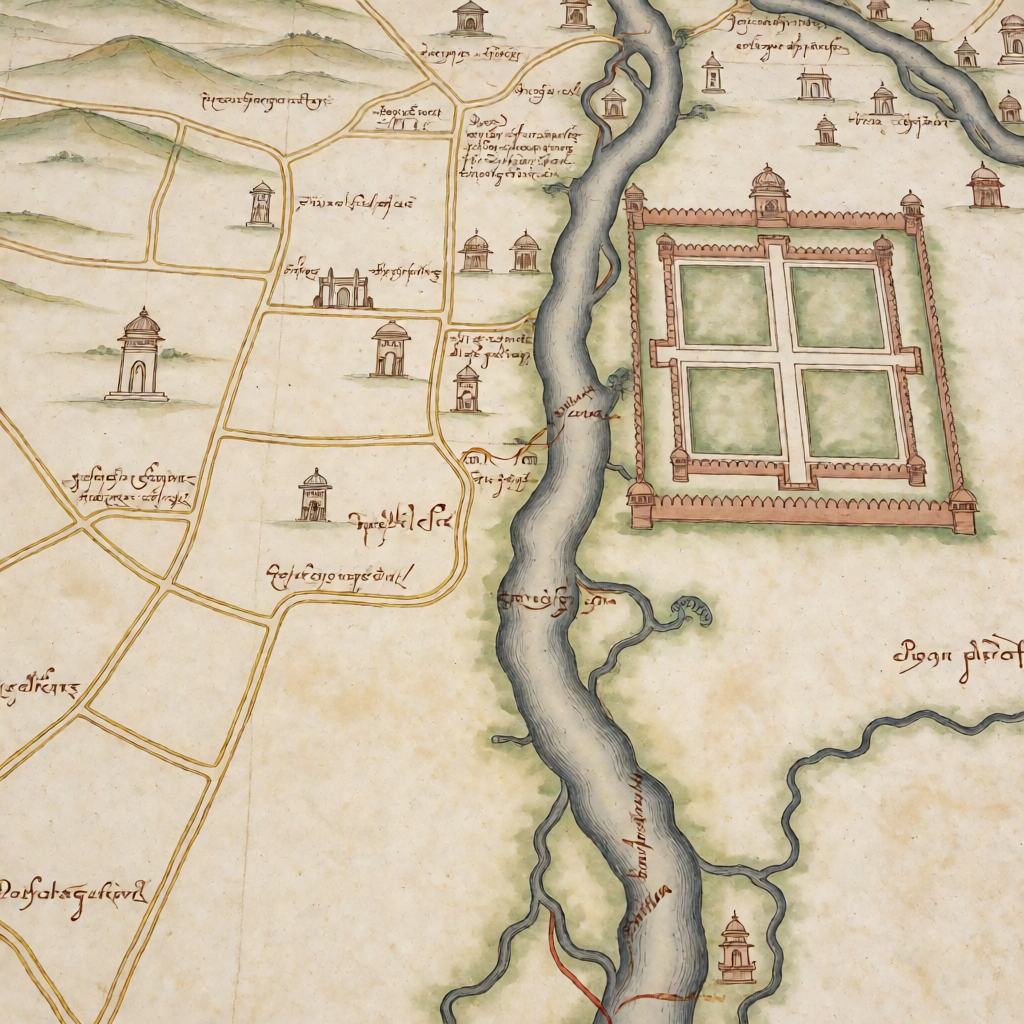
The complex was not only a tomb. It was a small town of its own. There was a gateway, a guest house and a mosque. A second building balanced the mosque. The garden was laid out on a strict plan. It was a square divided into four. The tomb stood on a platform at one end. Water channels and fountains ran through it.
The garden was a picture of paradise. It was also a public space. Visitors could walk there. The emperor came on the anniversary of his wife’s death. The mosque beside it is still a working place of worship. The tomb itself was closed and quiet. Only the two grave markers stood inside. Building the tomb changed the city.
A whole quarter grew up beside the site. There were workshops for cutting and polishing stone. Rows of houses were built for the craftsmen. The market at Agra grew with them. When the work ended many of the craftsmen stayed. Their descendants kept the trades alive for generations.
Craft and ideas
Trade, Technology and Ideas
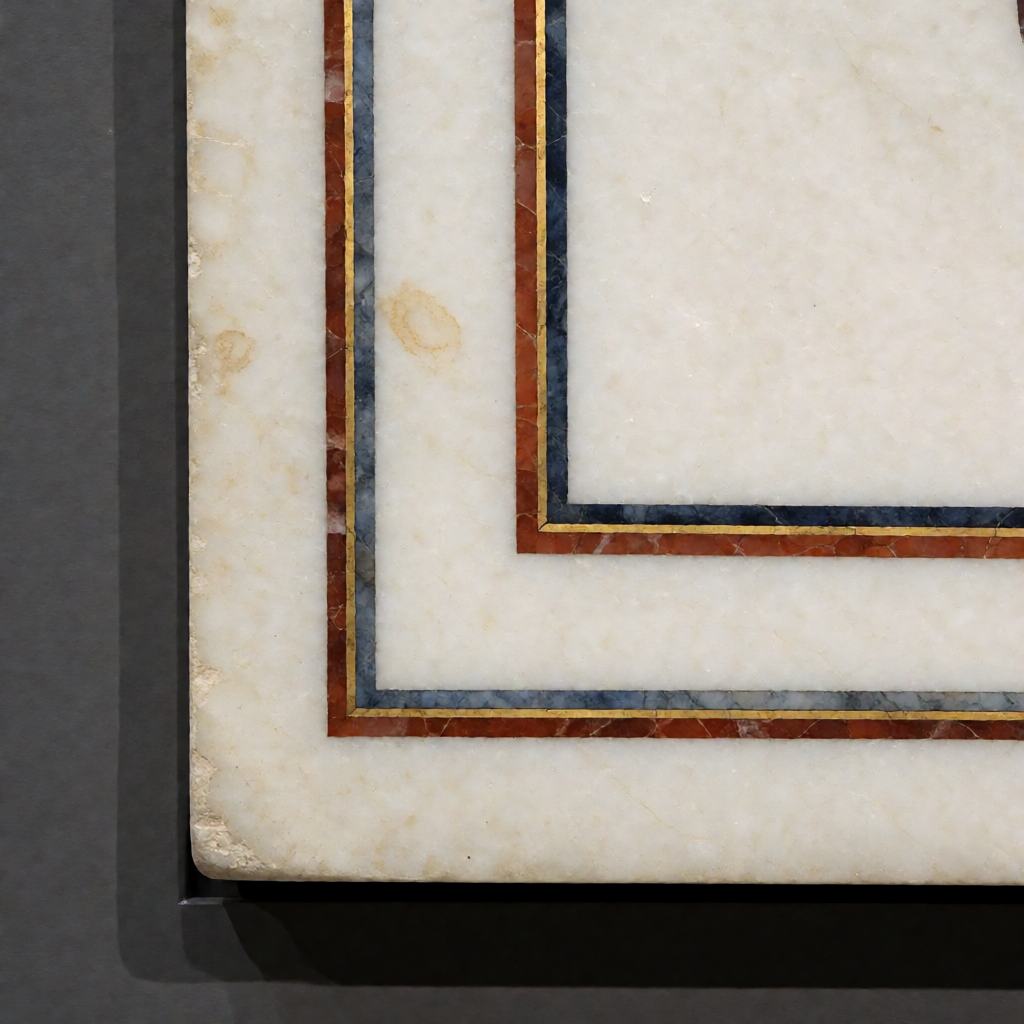
The building is a study in material. Its marble came from Makrana, about 300 km away. It is one of the purest white marbles ever used. It was cut in the quarry and hauled overland. The decoration is the real marvel. Fine lines of coloured stone were set into the white marble.
Some panels hold more than 30 different kinds of stone. The calligraphy on the gateway is cut with great skill. The letters look the same size all the way up. The corners of the tomb are cut away. The plan is not a true square but a shape with 8 sides. The building reads as round from a distance.
The dome is the centre of the design. It rises about 73 m above the platform. It is held by a double shell. Around it stand 4 minarets, each about 40 m tall. Each one leans slightly outward. If one fell it would fall away from the tomb.
What lasted
Legacy
The Taj Mahal is the fullest statement of Mughal building. It marks the end of the greatest period of that building. After Aurangzeb the empire spent its money on war. The great works stopped.
The building has been treated badly and well in turn. In the 1800s British officials stripped the gold from the finial. They talked of pulling the tomb down for its marble. By the early 1900s a viceroy had the garden restored.
In 1983 the site became a world heritage site. Today about 7 million people visit it in a normal year. Air pollution has stained the marble. A clean air zone now protects the site.
Quick hits
Five Things to Remember
- The Taj Mahal was built by Shah Jahan for his wife Mumtaz Mahal.
- Work began in 1632 and the whole complex was finished by 1653.
- The marble came from Makrana, about 300 km away.
- The dome rises about 73 m and is ringed by 4 minarets.
- The garden is laid out as a square divided into four.