 By st20113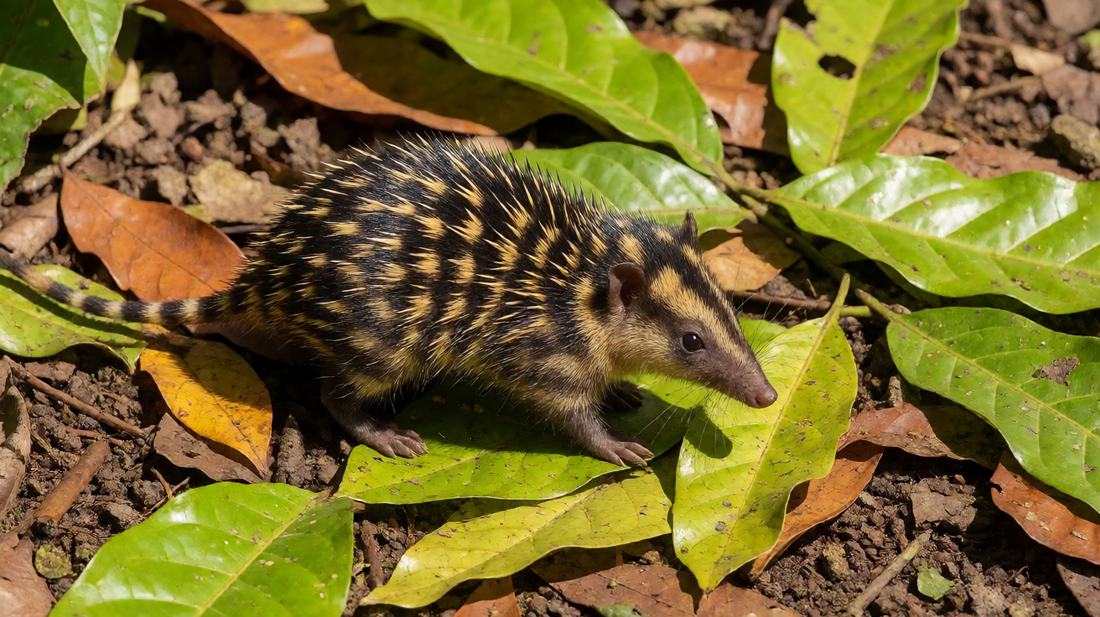
Hemicentetes semispinosus | Lowland Streaked Tenrec
Species Profile · Tenrecidae
Lowland Streaked Tenrec
A small Malagasy mammal with yellow stripes and sharp spines that stamps its feet to stir earthworms out of the soil.
Least Concern
Length
Weight
Young
Pregnancy
Weaning
Altitude
The Lowland Streaked Tenrec
Stripes and spines
This small mammal lives only on the island of Madagascar. It has black fur mixed with yellow stripes. Sharp spines grow along its back and head.
The animal is active by day and by night. It spends much of its time digging in soft soil. Its main food is the common earthworm.
It stamps its front feet to stir the worms up. The stripes may warn hunters to keep away.
Family tree
Tenrecidae, an island family
Hemicentetes semispinosus is its Latin name. The animal sits in the family Tenrecidae. That group lives only on Madagascar and nearby islands. Tenrecs are not related to hedgehogs or to shrews.
They are closer to elephants and to aardvarks. Its nearest kin is the highland streaked tenrec. The 2 forms look much alike. This one stays at lower ground.
A Hedgehog lives in a very different place but wears the same spiny coat. Both animals roll up or bristle when danger comes.
140 mm of striped fur
How to tell one
Body length averages about 140 mm. Some adults reach 172 mm. Body weight runs from 125 to 280 g. The coat is black with yellow or brown stripes.
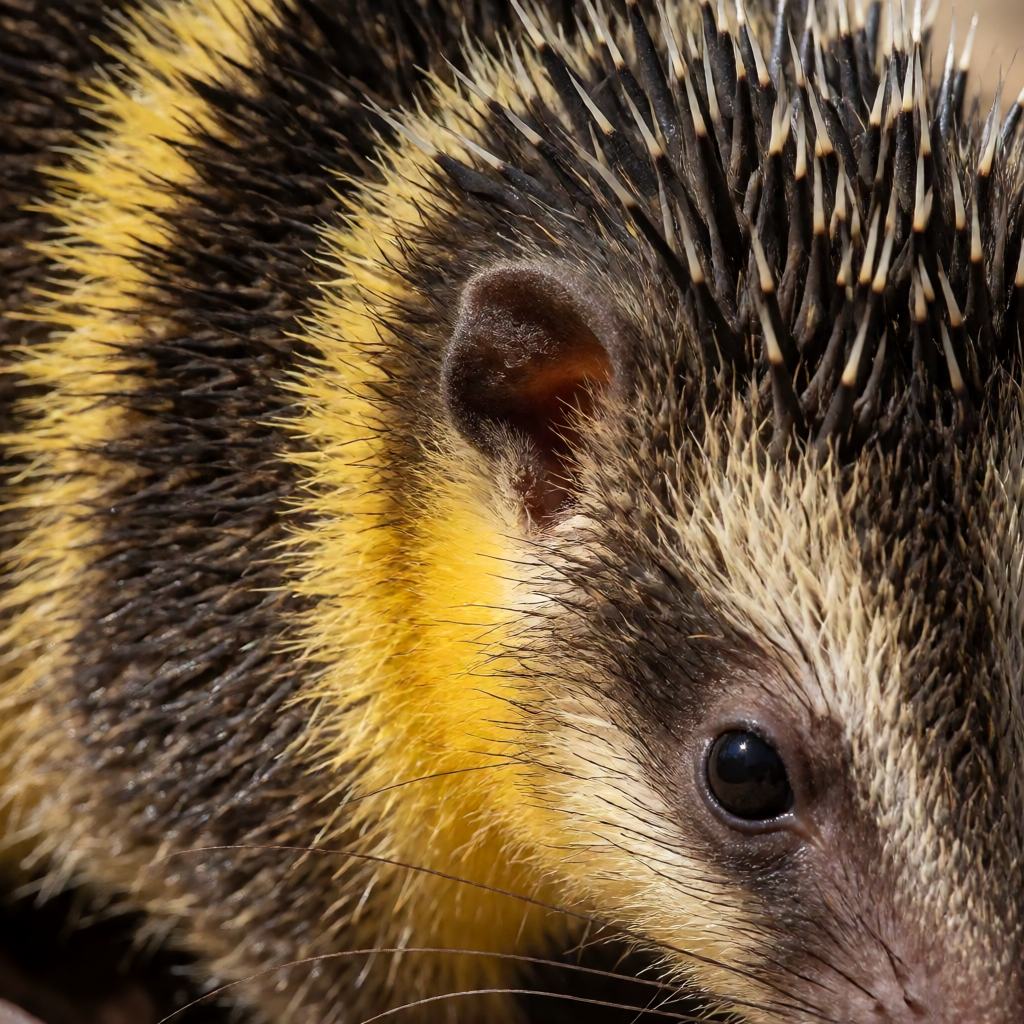
One stripe runs down the snout. Another runs along the middle of the back. Two more stripes sit along the sides. Spines on the head and neck are long and dense.
The belly has few spines or none. Those loose spines come away in a hunter’s mouth. The hands are long with strong middle fingers.
1
2
3
Eastern Madagascar rain forest
Where it lives
This animal lives in the north and east of Madagascar. It uses lowland rain forest and shrubland. It also moves into farmland.
It is found from the coast up to 1,550 m. The animal digs long, shallow burrows. A family group shares the same burrow.
It is most active in soft, damp soil. Fallen leaves give it cover and food.
Earthworms and grubs
What it eats
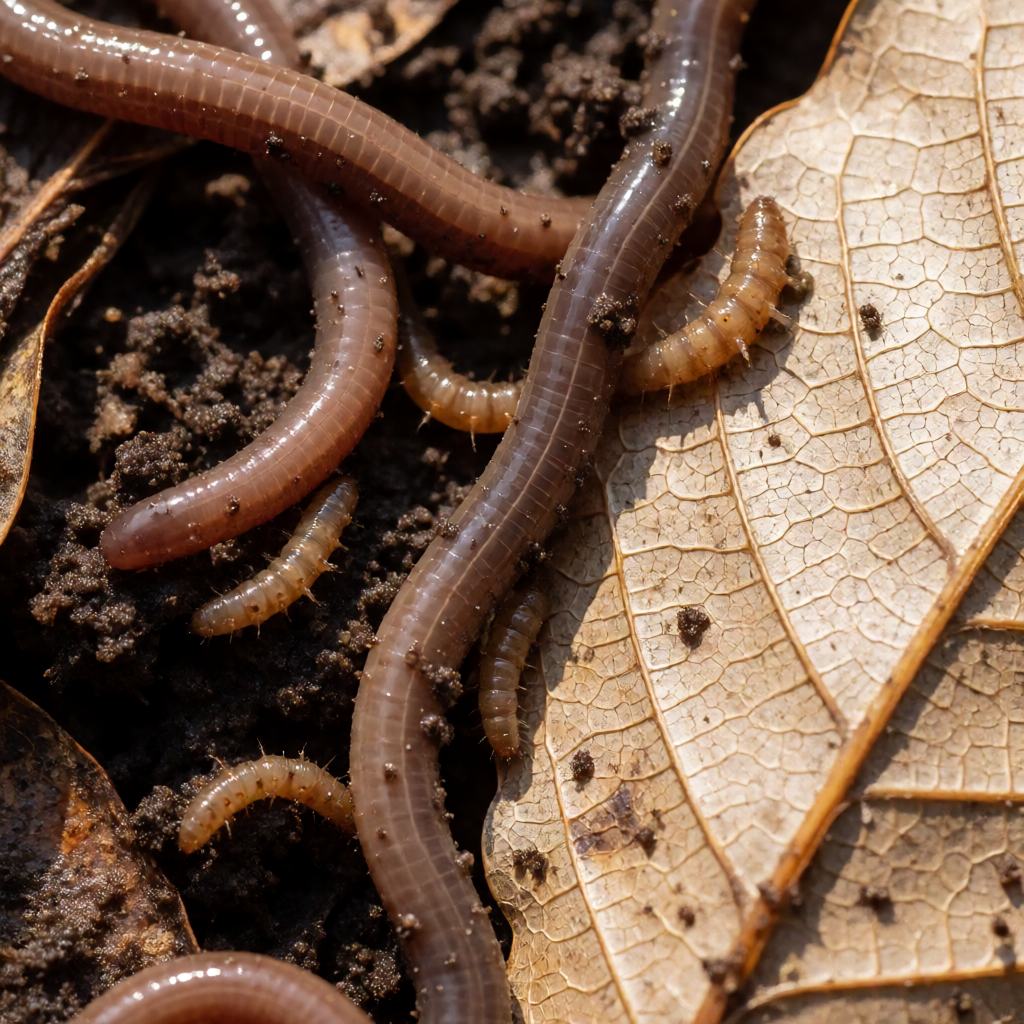
Earthworms form the main part of the diet. The animal stamps its front feet on the ground. That tapping is thought to bring worms to the surface.
It also takes other small animals in the soil. Insects and their young are eaten. Fruit is taken when it can be found.
The long snout pokes about in the leaf litter. Soil grains scratch the teeth over time.
Five to eight young a litter
The breeding cycle
Breeding runs from October to December. It may happen at other times too. The timing depends on food and on temperature.
A female is pregnant for 58 days. She gives birth to 5 to 8 young. The young are weaned at 18 to 25 days.
They stay in the family burrow at first. Both parents may share the care of the young.
No IUCN rating
Conservation
No IUCN rating exists for this animal. It has not been assessed against the global rules. Loss of forest is the main risk.
Trees are cut for charcoal and for farmland. The animal is also hunted for food in places. Its habit of using farmland may help it survive.
No special rescue plan is in place. Protected forest in the east gives it some cover.
Quick hits
Five things to remember
- Some of its spines rub together to make a high sound.
- It uses that sound to keep in touch with its family.
- It stamps its feet to make worms come up.
- It cannot see well and relies on touch and smell.
- It differs from a hedgehog in its teeth and its bones.