 By st20113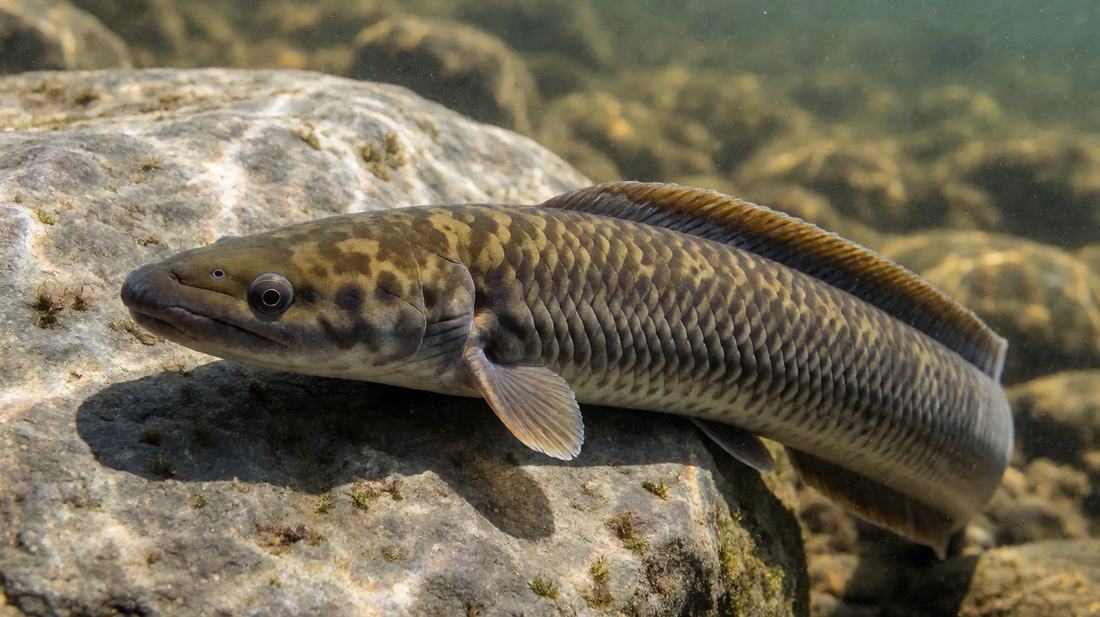
Petromyzon marinus | Sea Lamprey
Species Profile · Petromyzontidae
Sea Lamprey
A long jawless animal of the North Atlantic that spends two years at sea feeding on other fish and then enters rivers to spawn and die.
A jawless eel like animal that fastens to other fish with a disc of teeth
Length
Teeth
Gill pores
At sea
Eggs
Group age
The Sea Lamprey
A jawless traveller of two waters
The Sea Lamprey is a long eel like animal of the North Atlantic. It is 1 of the oldest kinds of backboned animals alive. It has no jaws and no paired fins. The adult attaches itself to other fish and drinks their blood.
It spends its early years buried in river mud. Then it swims out to sea to grow. Later it returns to fresh water to breed and die.
Family tree
Petromyzontida, Petromyzontidae
The Sea Lamprey belongs to the phylum Chordata. Its class is the Petromyzontida. Its order is the Petromyzontiformes. Its family is the Petromyzontidae, the lampreys.
Our animal shares the family with the Brook Lamprey. That lamprey never feeds as an adult. It spawns and dies within a few weeks. Our lamprey feeds at sea for 1 to 2 years.
Both belong to the same old group of jawless animals. The group appeared more than 300 million years ago.
120 cm and 100 teeth
How to tell one
The adult reaches about 120 cm in length. The body is long, smooth and eel like. The skin is mottled olive brown and grey. It has no scales and no paired fins.
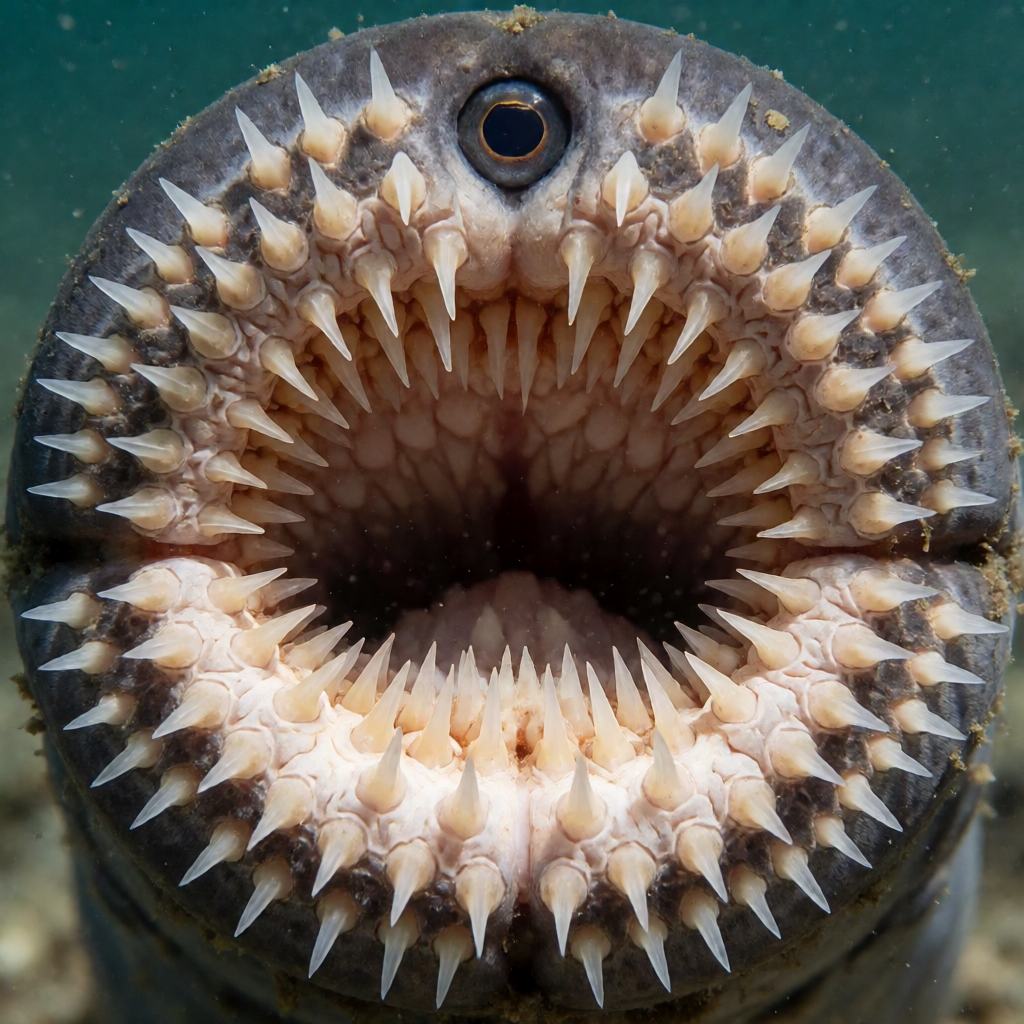
Seven round gill pores sit in a row on each side. A single nostril opens on top of the head. The mouth is a wide round sucking disc. That disc carries about 100 horny teeth.
A rasping tongue sits in the middle. Small eyes sit just above the disc.
1
2
3
The open Atlantic and clean rivers
Where it lives
The adult lives in the sea along both sides of the Atlantic. It is found in coastal water and estuaries. It also follows its prey into deep water. The young live in the mud of clean rivers.
They need soft silt and slow current. They stay buried with only the head showing. The grown animals swim up river to spawn. They need clear gravel beds for the nest.
Dams and dirty water block these journeys. Cold rivers with clean gravel suit them best.
Fish blood at sea, drifting matter as a young
What it eats
The young lamprey feeds on tiny drifting matter. It filters food from the water with a fine mesh. The adult feeds in a very different way. It fastens its disc to the side of a fish.
Then it rasps through the skin with its tongue. It drinks blood and body fluids from the wound. Its saliva stops the blood from clotting. A single host may carry several lampreys at once.
Some hosts die from the loss of blood. The adult may not feed for months at a time.
A gravel nest and 100,000 eggs
The breeding cycle
The grown animals stop feeding before they enter the river. They swim upstream in spring. The male clears a shallow nest in the gravel. He moves stones with his mouth.
The female lays about 100,000 eggs in that nest. Several pairs may share the same site. The adults die soon after spawning. The eggs hatch into small larvae called ammocoetes.
Each larva burrows into the silt. It lives there for 3 to 7 years before it changes.
Least Concern, but a problem in the Great Lakes
Conservation
The Sea Lamprey is listed as Least Concern by the IUCN. Its numbers are stable across most of its range. It faces a very different problem in North America.
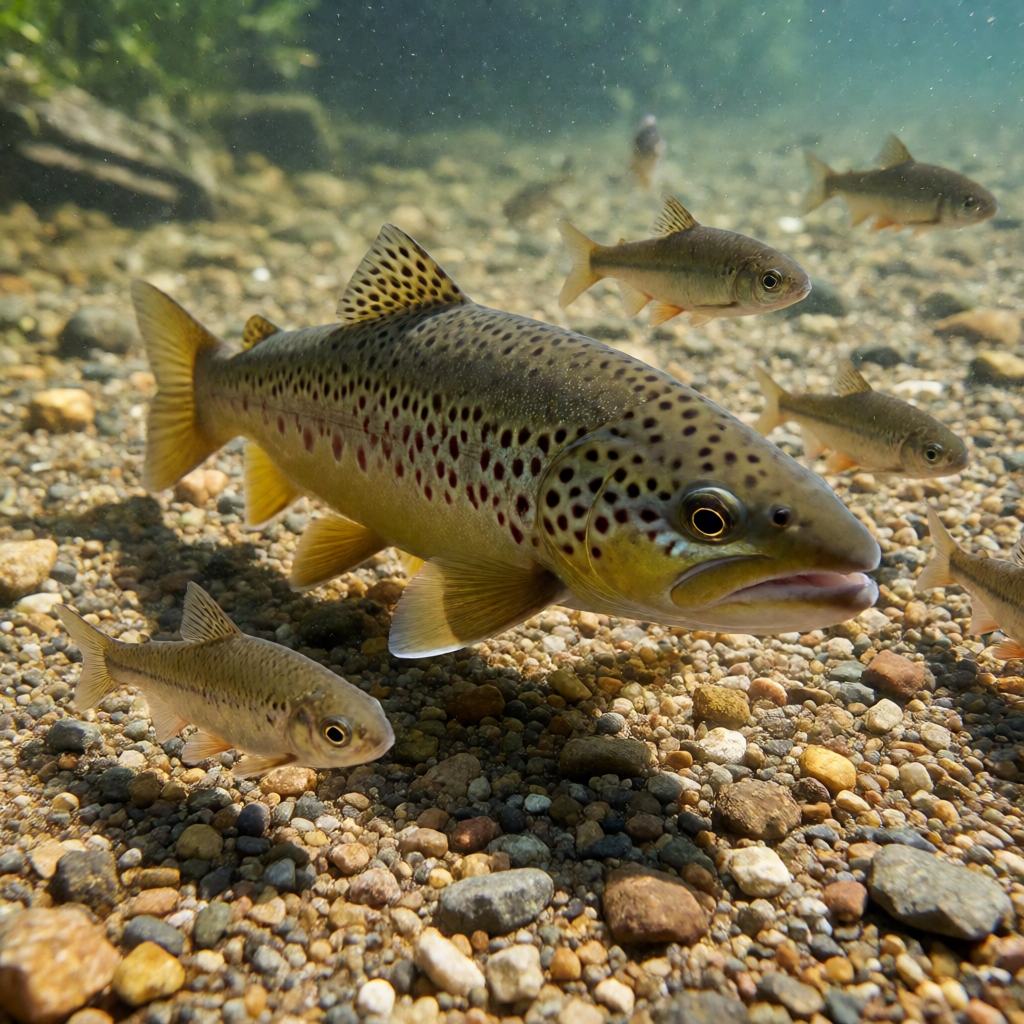
It reached the Great Lakes through shipping canals. There it attacks trout and other valuable fish. Control teams use special chemicals and traps.
Barriers stop it from swimming up to spawn. In Europe it is protected in several countries. Pollution and dams remain its main risks.
Quick hits
Five things to remember
- It belongs to a group of animals that have no jaws at all.
- It uses its tongue like a file to open a wound.
- The young look nothing like the adults.
- Both parents die after a single breeding season.
- Its numbers in the Great Lakes are kept down by special traps.