 By st20113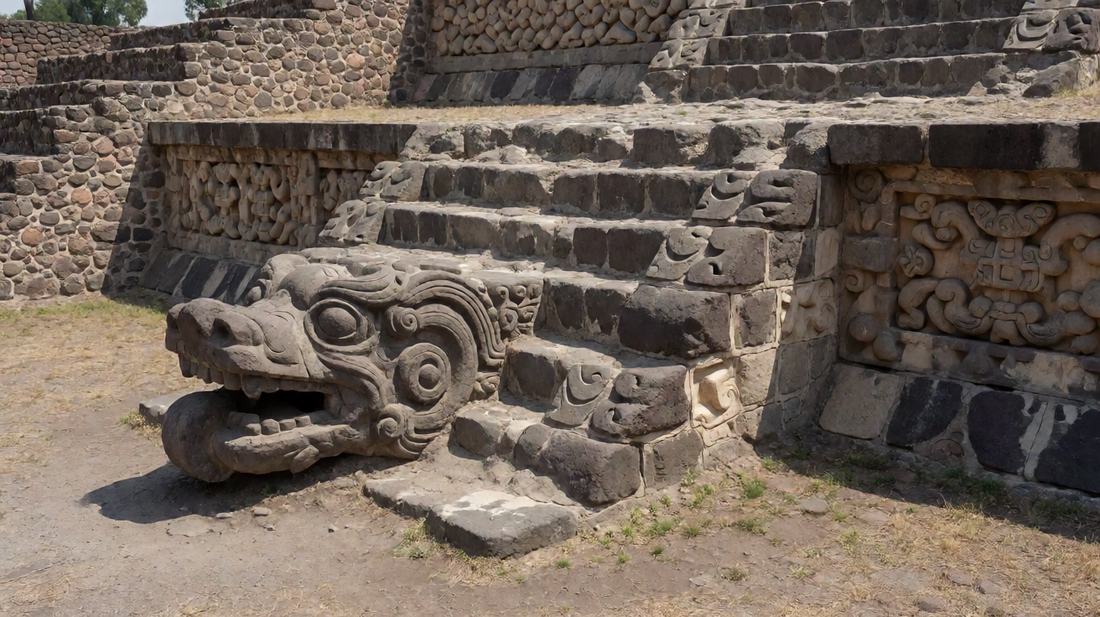
The Aztec Empire | The Aztecs
Historical Profile · Valley of Mexico
The Aztec Empire | The Aztecs
From an island in a shallow lake, the Aztec built the strongest state in the region in less than two hundred years.
c. 1428-1521
Founded
League
Fields
City size
Fall
The big picture
Introduction
The Aztec empire was built by people who came last and started with nothing. In about 1250 a group of farmers from the north walked into the Valley of Mexico. Every good piece of land was already taken. They ended up on a small island in a shallow lake.
From that island they built the strongest state in the region, in less than two hundred years. Their capital was one of the largest cities in the world. In 1521 a Spanish army and its local allies destroyed it.
Setting
Historical Context
The Valley of Mexico is a high bowl in the middle of the country. Mountains ring it. A chain of shallow lakes lies inside. The land is rich and the air is mild. So the valley had held large states long before the Aztec came.
The greatest was Teotihuacan. Its huge pyramids were already old and empty when the newcomers arrived. The Aztec were the last of several groups to move into the valley. They spoke Nahuatl, the same language as many of their neighbours. They took over the gods and the ways of the older peoples.
That is why Aztec faith, art and farming look like the work of a culture that had been there for a thousand years. The Aztec did not invent the world they ruled. They inherited it and then drove it hard.
Turning points
Key Events
For a hundred years the newcomers served as soldiers for stronger towns. Then, in 1325, they founded their city on the island. They called it Tenochtitlan. For a long time they paid tribute to a nearby power. They were treated as rough neighbours. Everything changed in 1428. Tenochtitlan joined two other cities in a revolt and beat the ruling town. That league became the empire.
The three cities agreed to share whatever they took. Tenochtitlan was the senior partner. Under a run of strong rulers the league pushed out in every direction. By 1519 it held most of central Mexico, from the Gulf coast to the Pacific. It demanded tribute from hundreds of towns. Then came the Spanish. In 1519 Hernan Cortes landed on the coast with a few hundred men. He marched inland.
He made allies of peoples who hated Aztec rule. The emperor Moctezuma II was taken prisoner in his own city. The Spanish were driven out in 1520 in a night of heavy fighting. They came back in 1521 with a larger force, boats to attack the island and thousands of local allies. After a long siege, Tenochtitlan fell in August 1521. Hunger and disease did as much as the fighting.
1
2
3
Who held power
People and Powers
The Aztec ruler was called the huey tlatoani. It means the great speaker. He was chosen from the royal family by a council of nobles. He was both a war leader and a holy figure. He lived in a palace at the centre of the city. He was treated with great respect, though he was not a god. The council could pass him over. Below him came a class of nobles. They held land and filled the top posts in the army, the courts and the temples. They paid no tax.
Priests were important and were often younger sons of noble families. Then came the mass of farmers, craftsmen and traders. Most people belonged to a group called a calpulli. It owned land in common and paid tax and work to the state. Traders were a special case. Long-distance traders carried goods across the empire and beyond. They also acted as spies and scouts for the army. They had their own courts and their own god. They were richer and more free than their low rank would suggest. War was the engine of the state.
The aim was not only land but tribute and captives. Prisoners were needed for sacrifice. The Aztec believed that the gods, and above all the sun, needed human blood to keep working. So war was a duty owed to the universe, not only a way to get rich. Every young man was trained for it. Below everyone were slaves. Their place was not always for life. A person could fall into slavery through debt or as a punishment. The children of slaves were free. Slaves could own property and could buy their own freedom.
Everyday world
Daily Life and Society
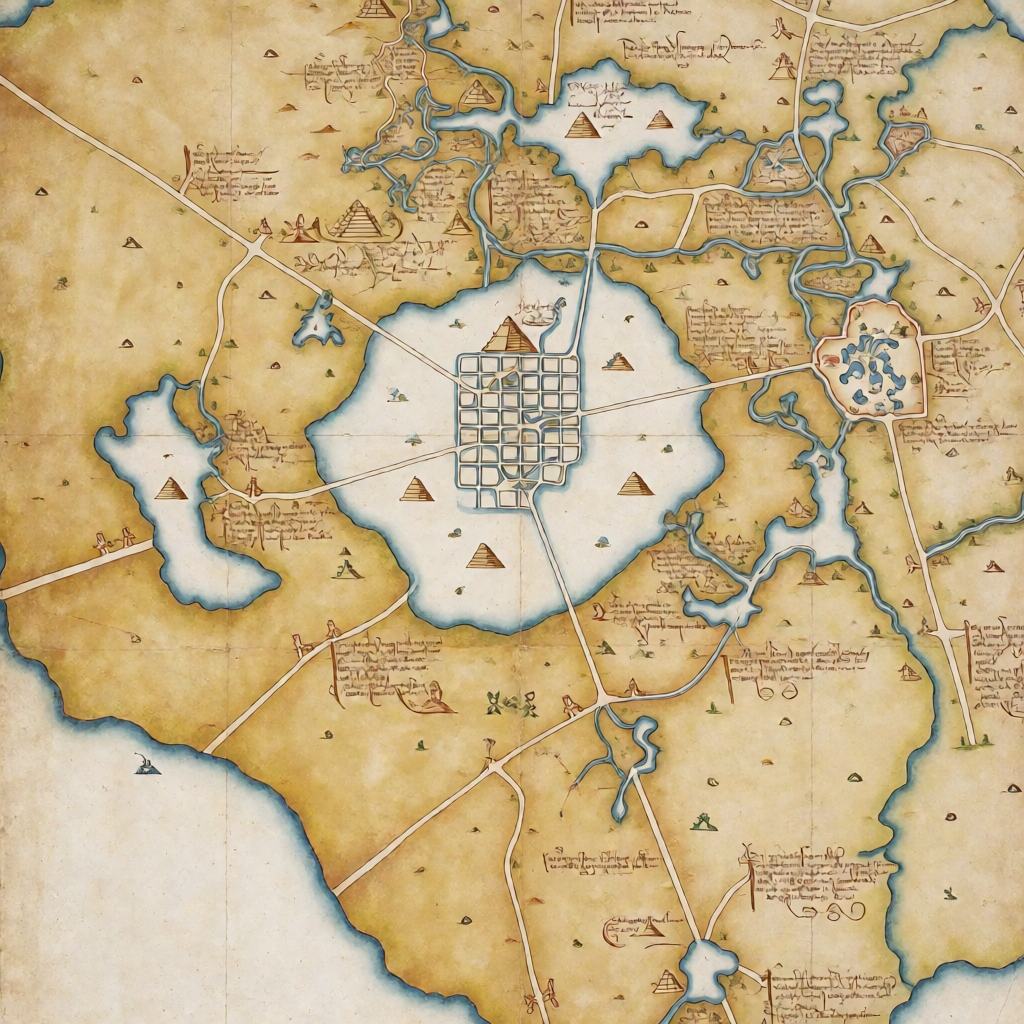
The capital was built on an island in a lake. So food and land were always a problem. The Aztec solved it with chinampas. These were man-made fields. Mud and plants were piled onto shallow parts of the lake. Trees held them in place. These plots were very rich. They grew maize, beans, squash, chilli and flowers. The canals between them moved crops and people by canoe. The city itself had canals for streets. Three long causeways joined the island to the shore.
In the middle was a walled holy area with a huge stepped pyramid. On top stood two temples, one for the rain god and one for the war god. At its height the city held well over 100000 people. The market at Tlatelolco was one of the busiest in the world. It sold food, cloth, tools, feathers, gold and slaves. It ran under strict rules, with judges on hand to settle disputes. Houses were simple. Most were one room of mud brick with a flat roof and a floor of packed earth. Furniture was scarce. People sat and slept on mats. Corn was made into flat cakes and eaten with beans and a sauce of chilli and tomato.
The tomato, the avocado and chocolate all came from this region. All were unknown in Europe before the Spanish came. The lakes around the city were full of life. The strangest creature in them was the axolotl. It is a kind of salamander that never fully grows up. It keeps its feathery gills and its tail fin and stays in the water all its life. People ate it and used it as medicine. They knew it as a common animal of the canals. Today the axolotl is found in the wild only in what is left of those same canals. The draining of the lake almost finished it.
Craft and ideas
Trade, Technology and Ideas
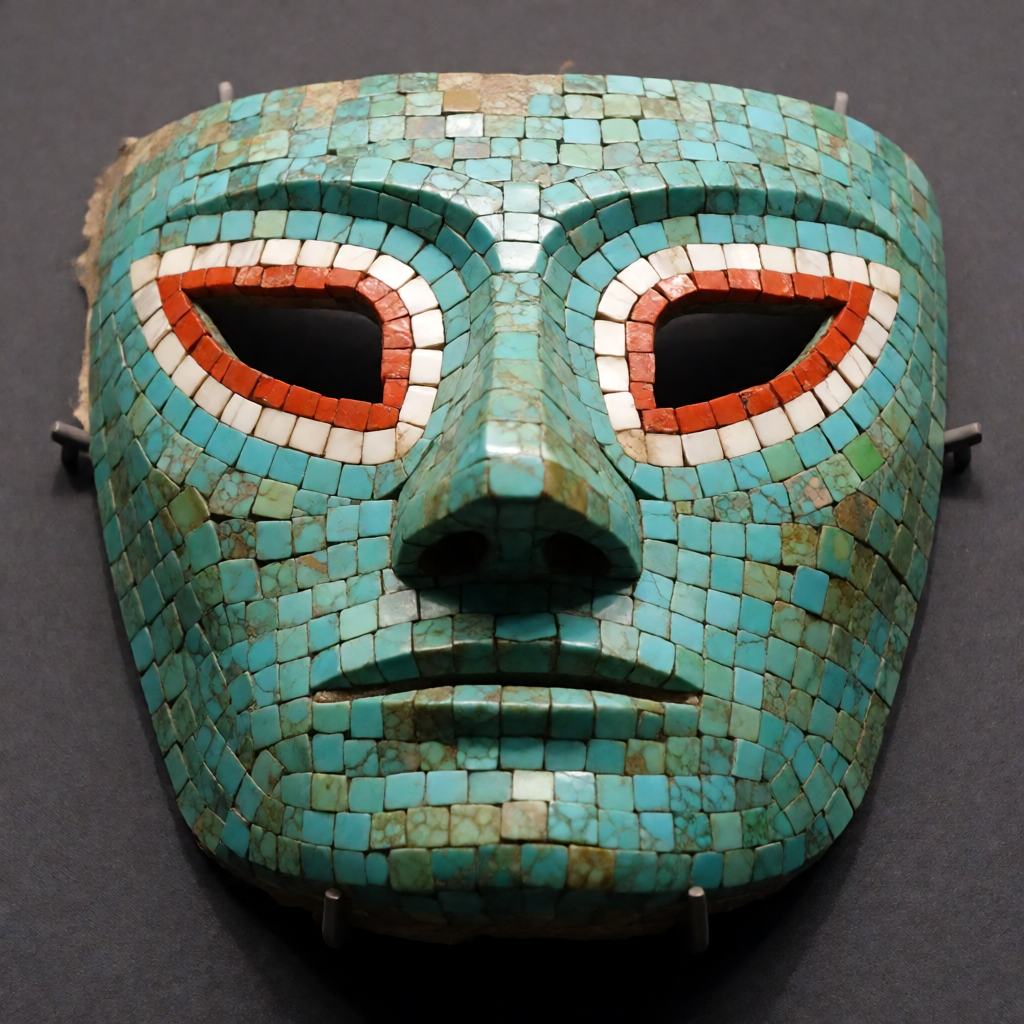
The Aztec had no iron and no bronze for tools. They worked gold, silver and copper for ornaments. They used sharp blades of obsidian, a glass-like stone, for knives and weapons. Obsidian blades were sharper than the steel the Spanish carried. But they broke more easily. Cotton cloth, feather work and fine stone carving were the pride of the craftsmen. The tribute system was the real machine of the empire. Every beaten town owed a fixed list of goods each year. The list held maize, beans, cotton cloth, feathers, gold, jade and animal skins.
Officials kept these lists on long painted rolls. The rolls still survive. They are among the best records we have of what the empire made and what it took. The Aztec kept two calendars. One was of 260 days. The other was of 365. Together they made a longer cycle of about 52 years. Every 52 years the people put out all their fires and waited in fear for the dawn. They feared the sun would not rise again.
Writing was done in pictures and signs. The Aztec also used a simple number system. Schools existed for boys of different rank. Some girls were trained as priestesses and healers. Medicine and plants were well studied. Aztec healers knew hundreds of plants from the warm lowlands and the cool highlands. They set broken bones and treated wounds. They used herbs for fever and pain. Spanish doctors later borrowed a great deal from them.
What lasted
Legacy
The empire fell, but the people and the language did not. Nahuatl is still spoken by over a million people. Words from it are used all over the world. Chocolate, tomato, avocado and chilli all come from it.
Mexico City stands on the ruins of Tenochtitlan. Builders there still find Aztec stone under the streets. The Aztec are remembered for two things that sit badly together. They built a highly ordered state, with courts, schools, markets and a careful record of everything they owned.
And they killed people on the tops of their pyramids, on a scale that shocked the Spanish and still shocks us. Both are true. The empire was at once a great work of government and a machine for war and sacrifice. It cannot be understood by looking at only one of them.
Quick hits
Five Things to Remember
- The Aztec founded Tenochtitlan in 1325 on an island in a lake, and built an empire from there.
- The empire was run by a league of three cities from 1428, with Tenochtitlan as the senior partner.
- Chinampas, man-made fields on the shallow lake, fed a city of well over 100000 people.
- Tribute lists, painted on long rolls, recorded exactly what each beaten town had to pay.
- Tenochtitlan fell in 1521 to the Spanish and their local allies, after a long siege.