 By st20113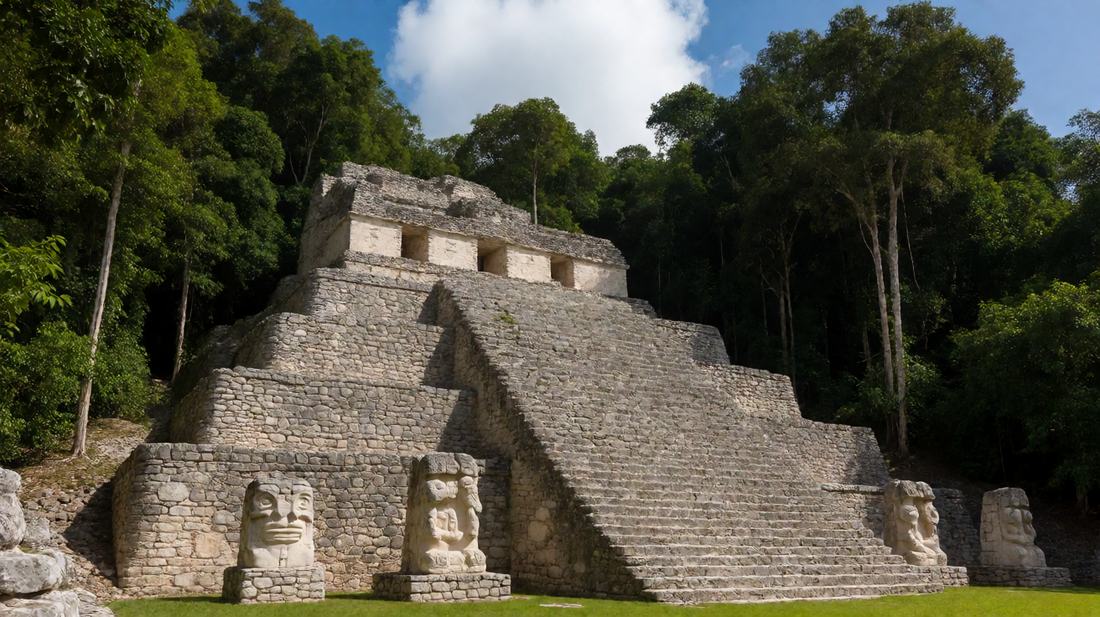
The Maya City-States | The Mayans
Historical Profile · Mesoamerica
The Maya City-States | The Mayans
Rival jungle cities raised pyramids, tracked the sky with two calendars and carved the names of their kings in stone.
c. AD 250-900
Period
Cities
Sacred round
Long cycle
Tallest pyramid
The big picture
Introduction
For six hundred years the Maya built the most advanced cities in the Americas. They rose in the wet lowlands of what is now southern Mexico, Guatemala, Belize and Honduras. This was in the middle of the first thousand years AD.
They cut great open squares out of the jungle. They raised stone pyramids above the tree line. They painted walls with scenes of gods and kings.
They also wrote, and much of it can now be read. Their story is a warning about how fast a bright society can fall.
Setting
Historical Context
The Maya lands are hot, wet and green. Rain falls for months each year. The forest grows back fast over anything left alone. There are no large rivers in the central lowlands and no herds to pull a plough. The soil is thin and loses its strength after a few harvests.
So the Maya had to work hard for food. They also had to store water in the dry season. People had lived in the region for thousands of years. They grew maize, beans and squash. They cleared fields by cutting and burning.
They built small villages. From about 300 BC to AD 250 the first great towns appeared, with stone platforms and carved monuments. The years from AD 250 to 900 are called the Classic period.
Turning points
Key Events
The Maya did not build one empire. They built a crowd of rival city-states. Each had its own king and its own gods. The largest were Tikal, Calakmul, Copan and Palenque. Two of them fought a long war for control of the region. Tikal was overrun and rebuilt more than once. Alliances shifted. Kings were taken.
The winners carved their wins onto stone. Then, in the 9th century AD, the cities of the southern lowlands were left empty. The building stopped. The monuments stopped. The jungle moved back in. Within about 100 years the whole southern heartland had no cities. The north was not empty. Cities such as Chichen Itza kept going for centuries.
There was no single cause. The clues point to a run of dry years. The harvests failed and the cities turned on each other. When the rain failed, the kings lost the favour of the gods in the eyes of their people. War and hunger did the rest. When the Spanish came in the 16th century the great cities were already ruins under the forest.
1
2
3
Who held power
People and Powers
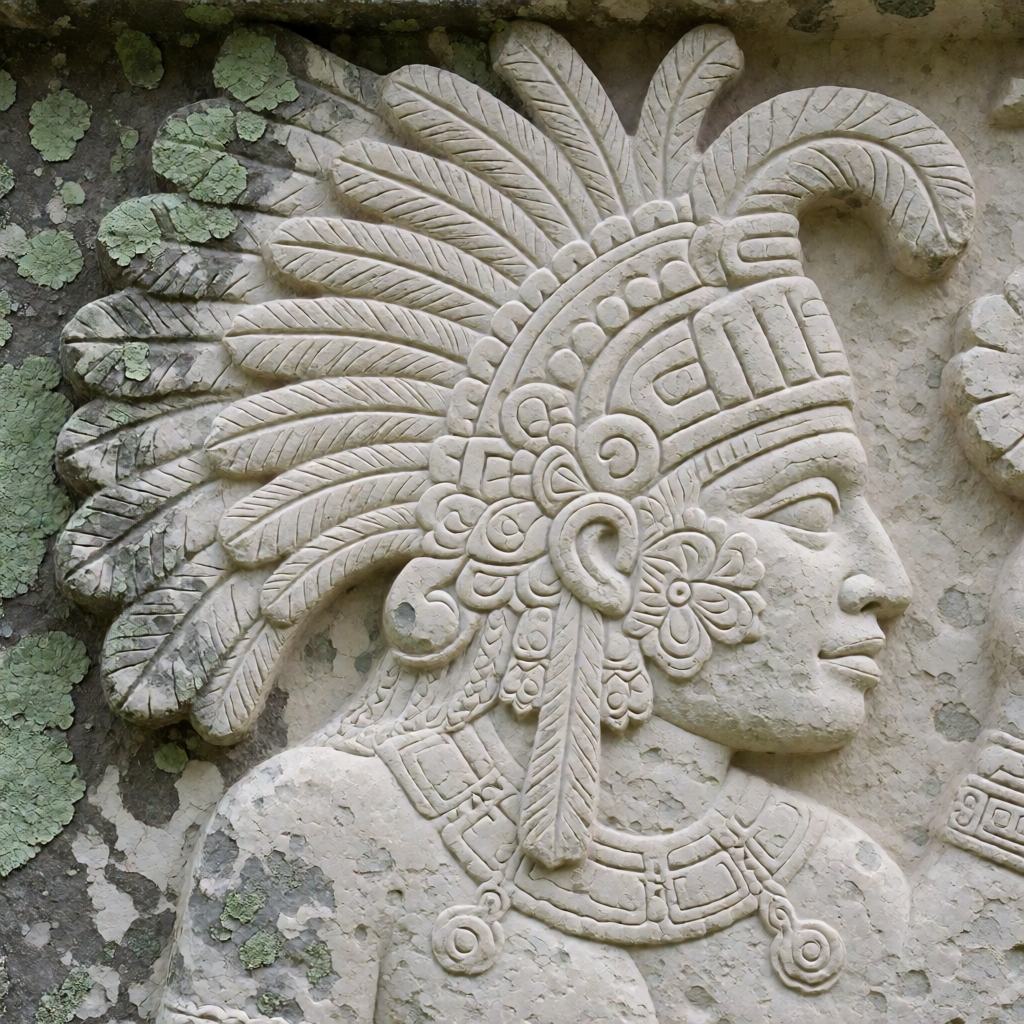
Maya society had a clear order. At the top was the king. He was both a ruler and a holy figure. He led the army and judged disputes. He spoke to the gods for his people. Blood was central to his post. Kings and queens drew blood from their own bodies and offered it. It was thought to open a door to the world of spirits.
Below the king were nobles, priests and rich traders. Below them were the mass of farmers and craftsmen. At the bottom were slaves, often prisoners of war. Writing belonged to a small group of trained scribes. To read and write was a mark of high rank. So was the right to wear cotton and jade. War was fought for captives as much as for land. A captured lord was worth more alive than dead.
He could be kept, shown and offered to the gods. The king who took him gained power and favour. A famous beast of the Maya world was the jaguar. It was the largest cat of the Americas and the top hunter of the jungle. It became the sign of the king himself. Kings sat on jaguar-skin thrones and wore jaguar pelts. The jaguar appears again and again in the carvings of every great city.
Everyday world
Daily Life and Society
Most Maya were farmers. They grew maize as the main crop, with beans, squash, chilli and cacao. They kept turkeys and dogs. A family worked a plot outside the city and lived in a house of poles, mud and thatch. In the dry season they tended the fields. In the wet season they worked on the buildings and paid their dues in labour. The city centre was a different world.
It was built on a grand scale, with paved squares, ball courts, temple pyramids and the long flat palaces of the royal family. The largest pyramid at Tikal stands about 70 m high. Crowds gathered for public rites, and the noise and colour must have been huge. The Maya played a ball game with a heavy rubber ball, in a court with sloping walls. The game had deep religious meaning, and it could end in the death of the losing team. Chocolate was another Maya gift to the world. They ground cacao beans into a bitter drink, frothed it and served it in painted cups.
Only the rich could afford it. Ordinary people lived on maize ground into dough and cooked as flat cakes, with beans and squash on the side. The diet was filling but narrow. It depended on a good harvest. In a bad year the whole system was at risk.
Craft and ideas
Trade, Technology and Ideas
The Maya were great builders and great thinkers. They cut stone with stone and made a mortar from burnt lime. They built roofs that step up in stages to carry weight. They had no metal tools and no wheel for carts. They used rollers to move stone. Their knowledge of the sky was excellent. They watched the sun, the moon, Venus and the stars, and they kept records for centuries. From these they built two calendars.
One was a 260-day sacred round. The other was a 365-day solar year. The two fitted together in a cycle of about 52 years. Their counting system used a shell for zero. That was a rare and strong idea. The Maya also wrote books. They made paper from the bark of a fig tree, folded it into screens and covered it with painted signs. The signs stand for whole words or for sounds, and they can now be read.
The Spanish burned most of these books. Only a handful survive. Almost all the rest of what we know comes from the stone monuments and the carved steps of the cities. Trade moved goods along rivers, across the sea by canoe and over land on the backs of porters. The Maya had no pack animals. Salt, obsidian, jade, cacao, cotton and feathers were the main goods. Salt was vital. The coastal towns that made it grew rich.
What lasted
Legacy
The Maya did not vanish. Millions of Maya people live in the same lands today. They speak more than twenty related languages. The old cities were lost to the forest for centuries.
The villages, the fields, the food and the family life went on. The full recovery of the Maya past is one of the great detective stories of modern research. In the 19th century explorers hacked their way to the ruins and drew them. In the 20th century scholars cracked the calendar and then the writing.
Now we can read the names and the deeds of kings who had been silent for 1000 years. What looked like a quiet people of priests turns out to have been a set of hard, proud and very human states.
Quick hits
Five Things to Remember
- The Maya built rival city-states, not one empire, and the Classic period ran from about AD 250 to 900.
- Written signs on stone and in books can now be read, and they name real kings and real wars.
- The Maya used a shell symbol for zero and kept two calendars that fitted in a cycle of about 52 years.
- The jaguar was the sign of the king and appears in the art of every great city.
- The southern cities were left empty in the 9th century, most likely after a long run of dry years.