 By st20113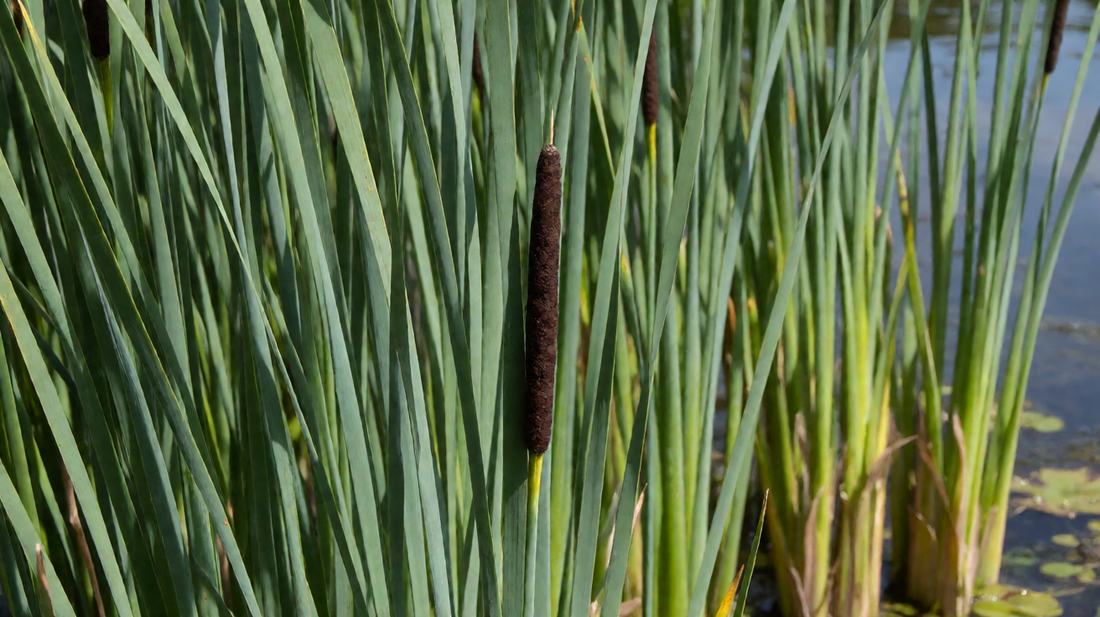
Typha angustifolia | Lesser Bulrush
Species Profile · Typhaceae
Lesser Bulrush
A tall plant of pond margins whose slim brown spike is split into two parts, and whose leaves once went into mats, thatch and even pillows.
A tall bulrush with a bare gap in the middle of its spike
Height
Leaf
Spike
Gap
Seeds
Flowering
The lesser bulrush
A tall plant of shallow water
The Lesser Bulrush is a tall plant of shallow water. It is 1 of the commonest plants of ponds and ditches. It grows in a dense stand.
It carries narrow grey green leaves. In summer a slim brown spike rises above them. The plant spreads fast by its roots.
It gives cover to many small animals. It also helps to clean the water.
Family tree
Poales, Typhaceae
The Lesser Bulrush sits in the phylum Tracheophyta. Its class is the Liliopsida. Its order is the Poales. Its family is the Typhaceae, the bulrushes.
Our plant shares the family with the Bulrush. That plant has broad leaves. Its flower spike has no gap in the middle. Our plant has narrow leaves.
Its spike shows a clear gap. The 2 species may grow side by side. They may also form a hybrid.
2 m and a split spike
How to tell one
The plant grows to about 2 m in height. The leaves are long and narrow. Each leaf measures only 10 mm across. The leaf is flat on one side.
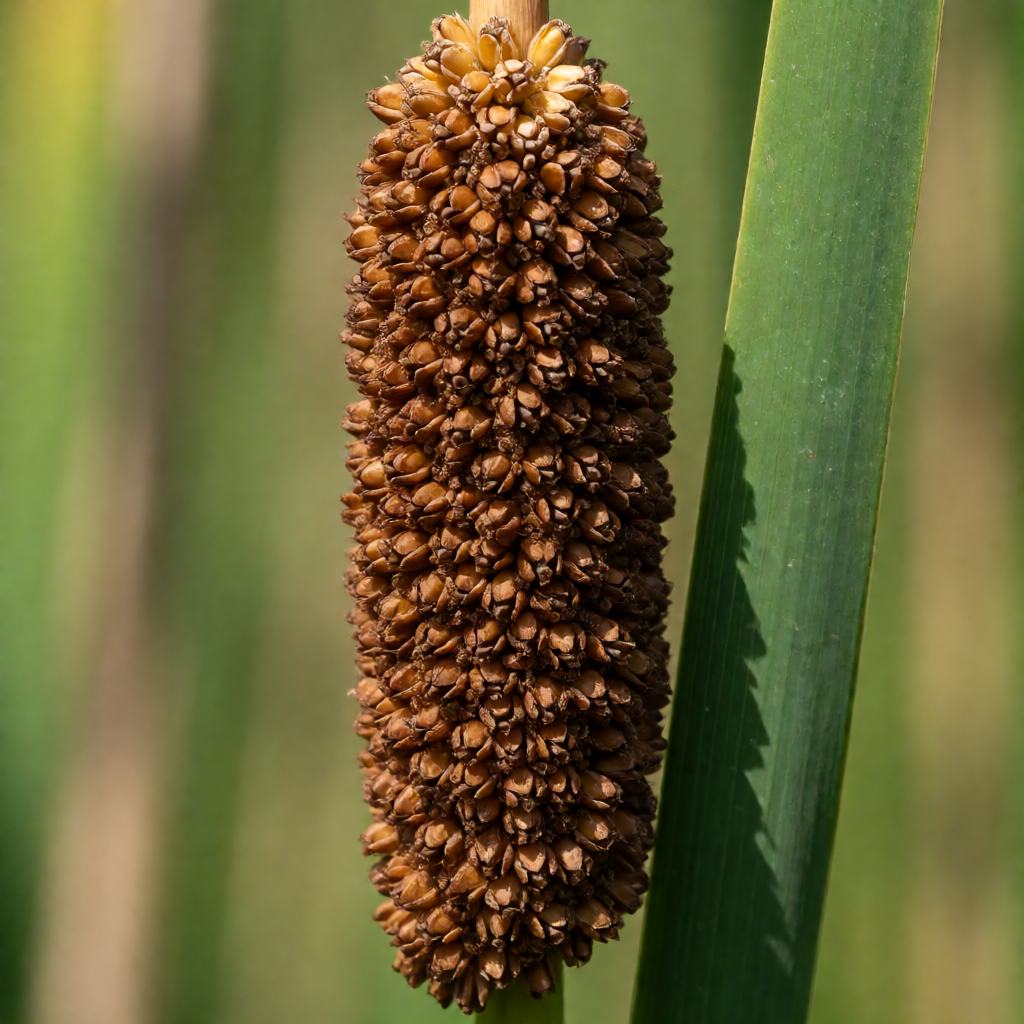
It is slightly curved on the other. The leaves are a dull grey green. A single stem carries the flower head. The lower part of the head is thick and brown.
That part holds the female flowers. The upper part is thin and dusty yellow. A bare piece of stem separates the 2 parts. That gap tells this plant from its cousin.
1
2
3
Ponds, ditches and fens
Where it lives
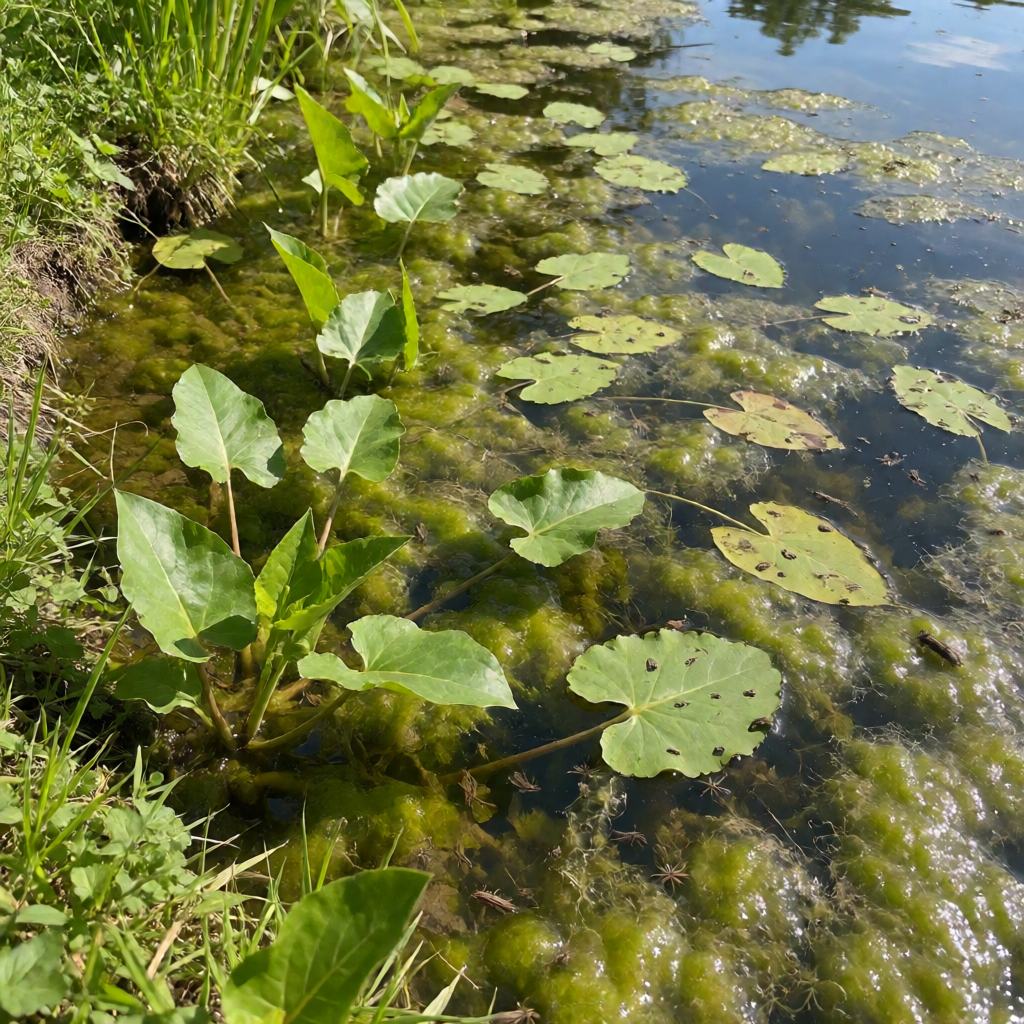
The species lives in ponds, ditches and canals. It also lives in fens and wet meadows. It favours shallow water with mud below. It needs a place with plenty of light.
It grows in water up to about 1 m deep. It can also live in slightly salty water. It spreads by thick roots under the mud. Those roots form a dense mat.
The plant then fills the whole margin. It dislikes fast water and heavy shade.
Light, water and mud minerals
What it eats
The plant makes its own food from light. Its green leaves take in sunlight. They also take gas from the air. The roots draw water and minerals from the mud.
The plant stores food in its roots. That store lasts through the winter. It also feeds the new shoots in spring. The plant needs rich mud to grow well.
It takes up some pollution from the water. That habit helps to clean a pond. It also takes in heavy metals from the mud.
Roots below and 200,000 seeds
The breeding cycle
The plant has 2 ways to spread. It sends out thick roots under the mud. New shoots rise from those roots. In that way it forms a large stand.
It also makes a huge number of seeds. One spike may hold 200,000 seeds. Each seed carries a tiny parachute of hairs. The wind then carries the seed away.
A seed that lands in wet mud may grow. The flowers open in the middle of summer. Wind carries the pollen between the spikes.
Drained ponds and cleared margins
Conservation
The Lesser Bulrush has not been assessed by the IUCN. It is common in most of its range. It has no legal protection. It does well in a ditch or a pond.
It can become a problem in a small pool. It may then fill the open water. Careful cutting keeps a balance. The plant gives cover to nesting birds.
It also shelters young fish. A reedbed with open water suits it best.
Quick hits
Five things to remember
- The flower spike has a bare gap in the middle.
- One spike can release 200,000 tiny seeds.
- Each seed floats away on its own parachute of hairs.
- People once used the leaves for mats and thatch.
- The seed fluff was used to stuff pillows and life jackets.