 By st20113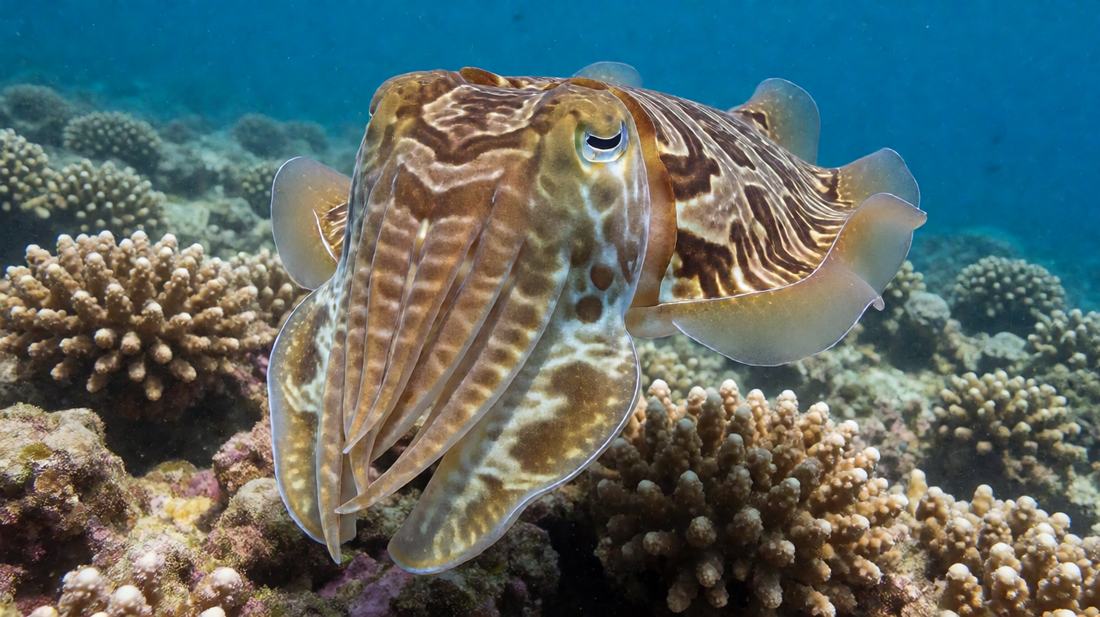
Sepia latimanus | Broadclub Cuttlefish
Species Profile · Sepiidae
Broadclub Cuttlefish
One of the largest cuttlefish, a reef hunter that talks with waves of colour across its skin and catches shrimps with two tentacles that shoot out from its head.
A big reef cuttlefish whose skin ripples with colour
Body
Weight
Arms
Tentacles
Depth
Life
The broadclub cuttlefish
A large hunter of warm coral reefs
The Broadclub Cuttlefish is a large hunter of warm coral reefs. It is 1 of the biggest cuttlefish in the world. It swims with a wide fin along its body.
Its skin changes colour in waves. It uses those waves to talk to other cuttlefish. It hunts shrimps and small fish.
It catches them with 2 long tentacles. It lives for less than 2 years.
Family tree
Cephalopoda, Sepiidae
The Broadclub Cuttlefish sits in the phylum Mollusca. Its class is the Cephalopoda. Its order is the Sepiida. Its family is the Sepiidae, the cuttlefish.
Our animal shares the family with the Common Cuttlefish. That animal lives in the Atlantic and the Mediterranean. It is smaller and it lives at greater depth. Our animal lives on coral reefs.
The 2 species both carry an inner shell called a cuttlebone. Both also have 8 arms.
50 cm and a W shaped pupil
How to tell one
The body may reach about 50 cm in length. The animal may weigh about 10 kg. A wide fin runs along each side of the body. That fin ripples and it drives the animal along.
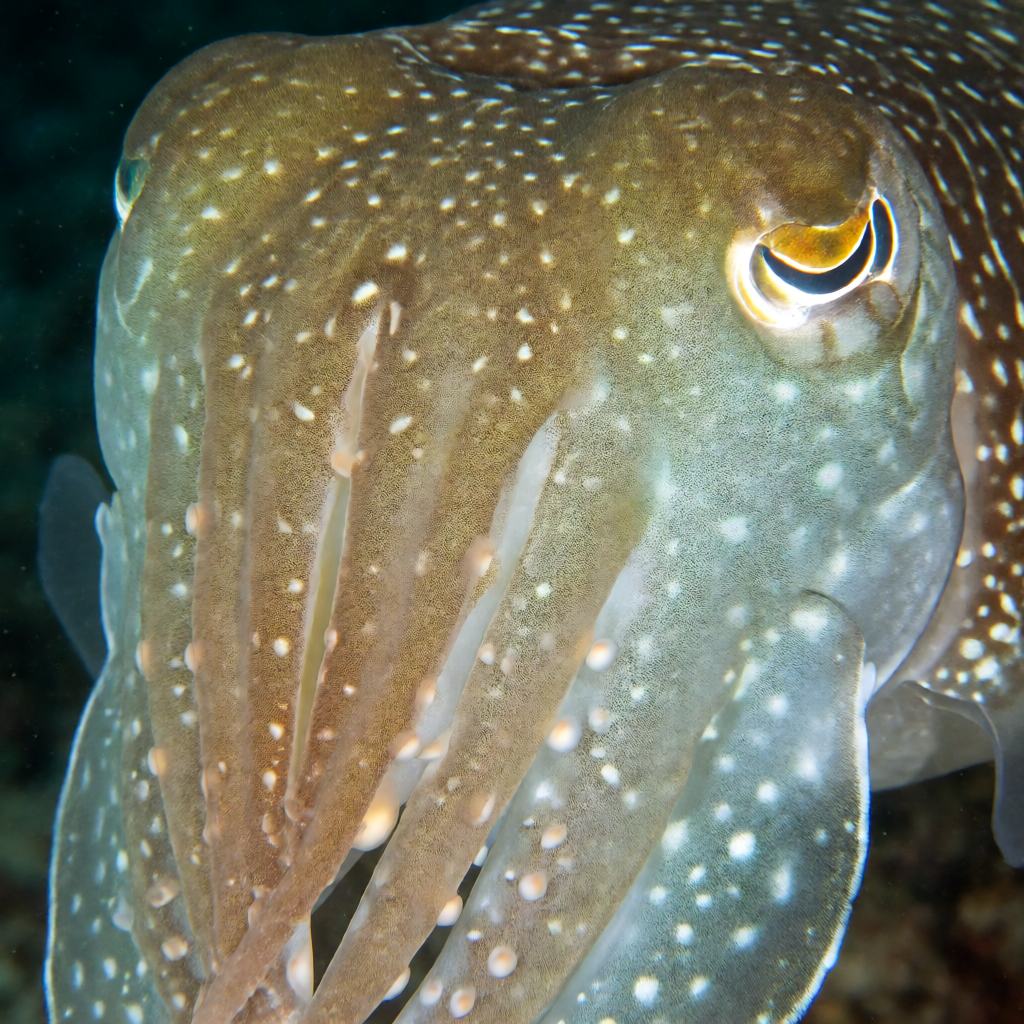
The animal has 8 short arms around the mouth. It has 2 long tentacles that stay hidden. Those tentacles shoot out to take prey. The eyes are large with a W shaped pupil.
Thousands of tiny colour cells sit in the skin. Those cells change size in a moment. The animal can show bands and spots. It can also make its whole body pale or dark.
1
2
3
Coral reefs and sandy flats
Where it lives
The species lives on coral reefs and sandy flats. It favours shallow water with plenty of cover. It lives from the surface down to about 30 m. It needs warm water through the year.
It rests among coral heads and sea grass. It also hides in a crack in the reef. It dislikes cold water and open ocean. The young live in the same kind of place.
The animal stays within a small area. It does not travel far in its short life.
Shrimps, crabs and small fish
What it eats
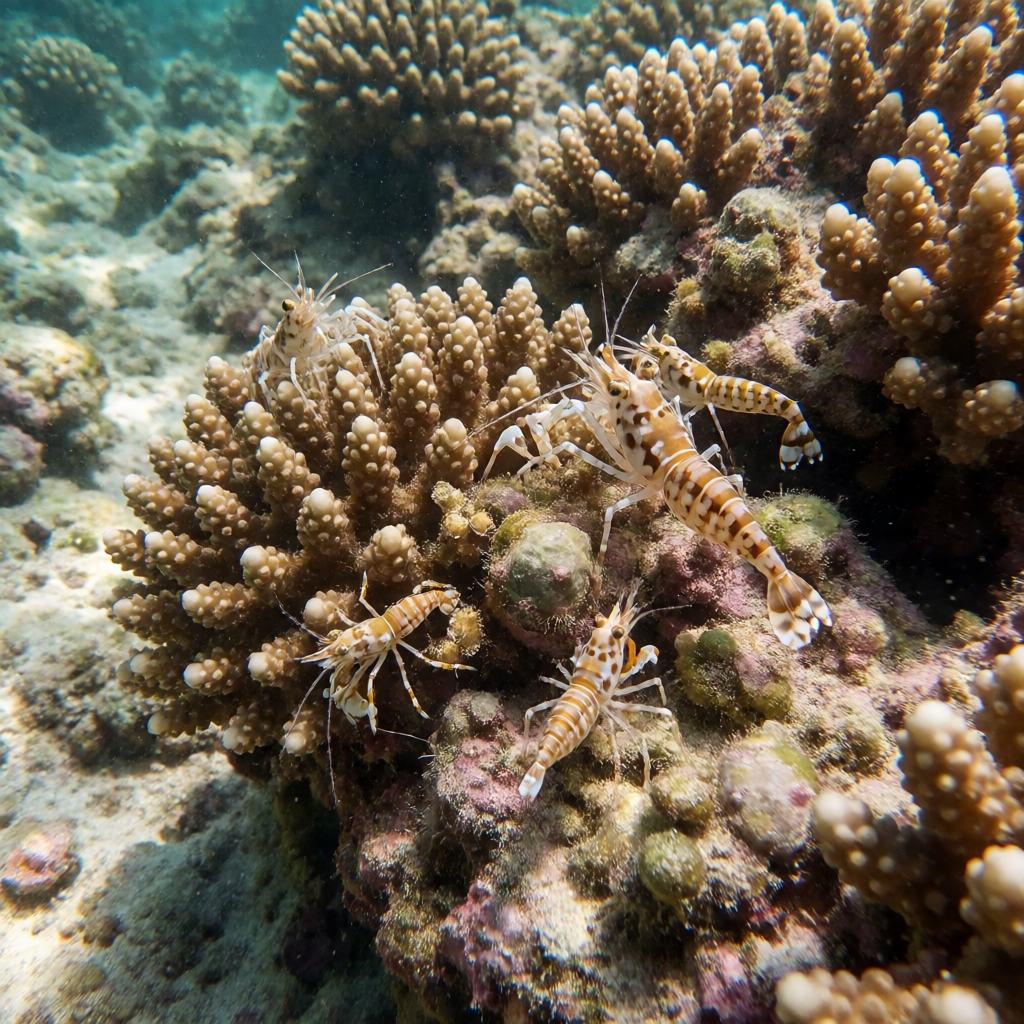
The Broadclub Cuttlefish is an active hunter. It eats shrimps and small crabs. It also takes small fish. The animal drifts close to the prey.
Then the 2 tentacles shoot out. Small suckers at the tips hold the catch. The animal draws the prey to its mouth. The strong jaws then cut the shell.
It also uses a small poison in the bite. The animal feeds most in the early morning. It also hunts in the late afternoon.
Eggs guarded in a coral crevice
The breeding cycle
The male and the female meet on the reef. The male shows bright waves of colour. He drives other males away. The female lays her eggs in a coral crevice.
She fixes each egg to the rock. The eggs are dark and look like small grapes. She guards the clutch for many weeks. She eats very little during that time.
The eggs hatch after about 1 month. The young swim off at once. The adults die soon after breeding. The whole life lasts about 18 months.
Reef damage and fishing
Conservation
The Broadclub Cuttlefish is not listed as endangered. It is fairly common on many reefs. It has no legal protection of its own. Fishing takes it for food and for bait.
Reef damage removes the places where it lays eggs. Warm water also harms a coral reef. The animal breeds only once in its life. That habit makes it slow to recover.
A healthy reef gives it the best chance. Protected areas help it in some places.
Quick hits
Five things to remember
- Its skin changes colour in less than a second.
- It has 8 arms plus 2 hidden feeding tentacles.
- The male puts on a bold show to win a mate.
- The female guards her eggs and then dies.
- It carries a chalky shell inside its body.