 By st20113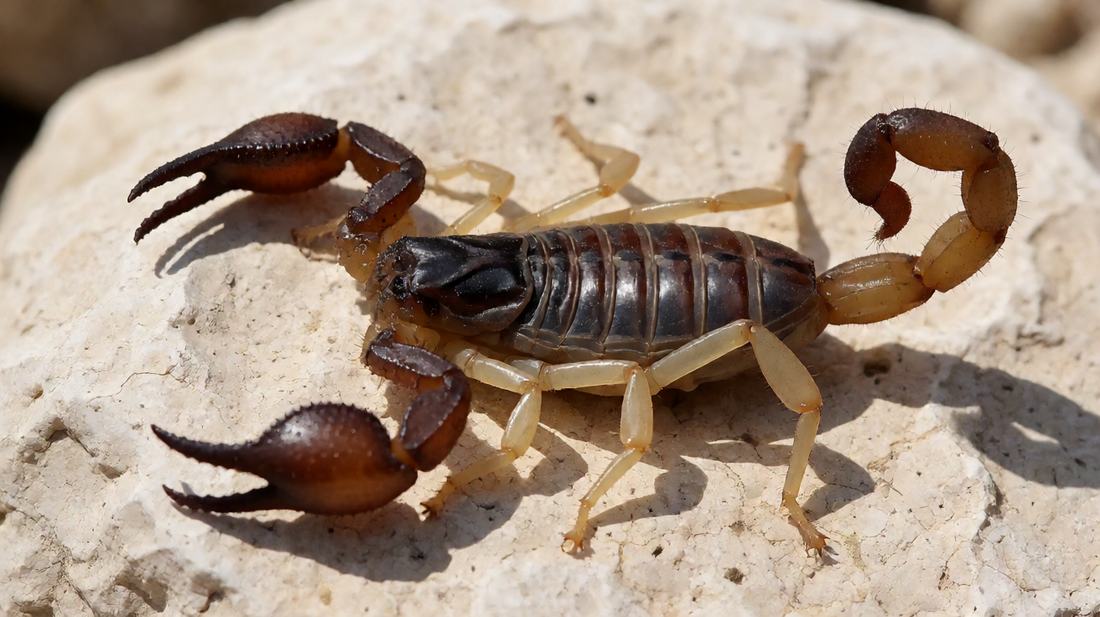
Euscorpius italicus | Italian Scorpion
Species Profile · Euscorpiidae
Italian Scorpion
A small dark scorpion that hides in old walls and ruins by day, hunts insects at night and gives a sting no worse than that of a bee.
A small glossy scorpion of dry stone walls with a mild sting
Body
Legs
Pincers
Tail
Sting
Life
The Italian scorpion
A small hunter of warm stone walls
The Italian Scorpion is a small hunter of warm stone walls. It is 1 of the largest scorpions of Europe. It hides by day in a crack.
At night it walks out to look for prey. It carries the classic curved tail. The tip holds a small sting.
The animal lives in old walls and ruins. It is harmless to people.
Family tree
Arachnida, Euscorpiidae
The Italian Scorpion sits in the phylum Arthropoda. Its class is the Arachnida. Its order is the Scorpiones. Its family is the Euscorpiidae.
Our animal shares the order with the Asian Forest Scorpion. That animal lives in damp tropical forest. It grows much larger and darker. Our animal lives in dry stone walls.
The 2 species both carry a curved tail. The group is a very old one. Scorpions have lived on Earth for about 430 million years.
5 cm and two broad pincers
How to tell one
The body measures about 5 cm with the tail. The animal is flat and glossy. The colour is a dark red brown. The shell shines like polished wood.
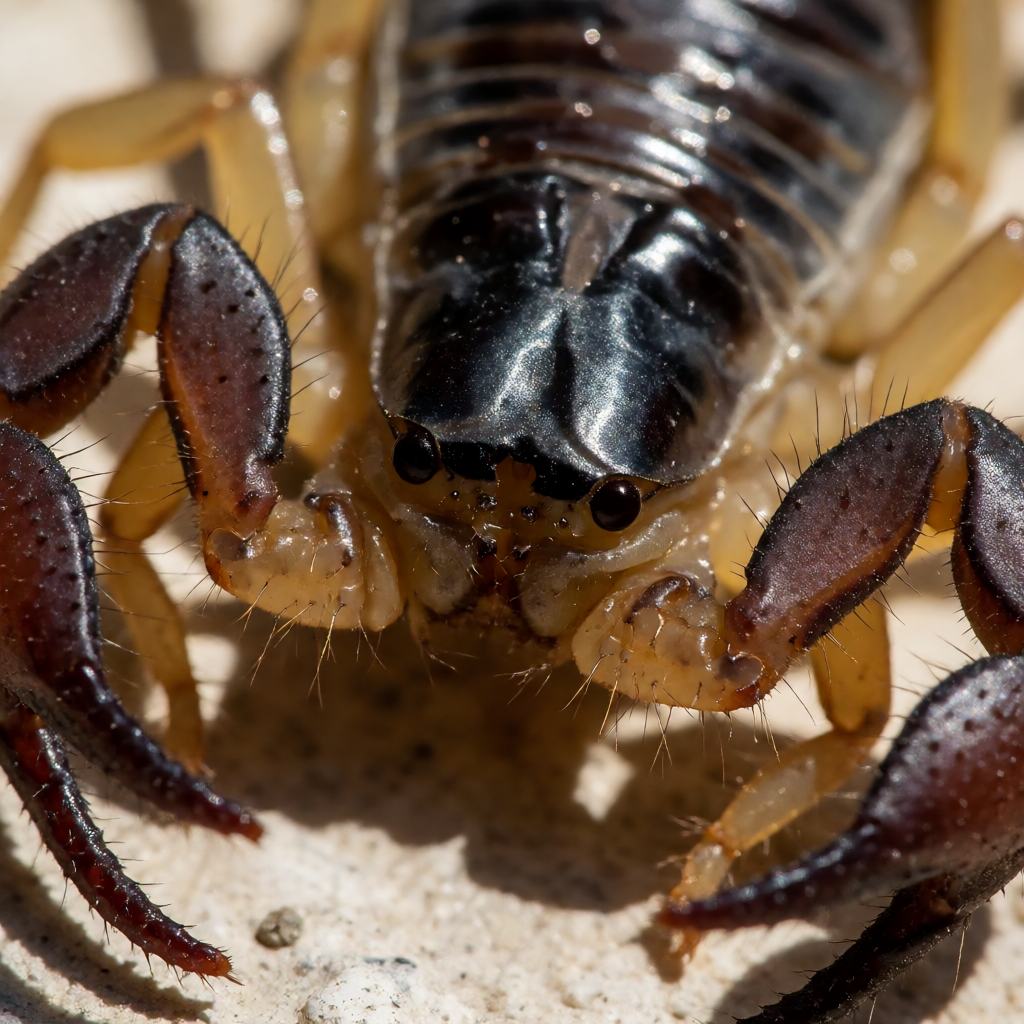
It has 2 large pincers at the front. Those pincers are broad and strong. It has 8 walking legs. The tail has 5 segments.
A curved sting sits at the end. Small eyes sit in 2 groups on the head. The whole shell glows blue green under a special lamp.
1
2
3
Old walls, ruins and dry gardens
Where it lives
The species lives in warm and dry country. It favours old walls and ruined buildings. It also lives under stones and loose bark. It needs a crack that stays damp inside.
The animal rests there through the day. It comes out in the dark. It moves slowly over the stone. It dislikes wet ground and deep shade.
It does well beside a house. It also lives in gardens with dry walls. A warm summer suits it best.
Insects, spiders and woodlice
What it eats
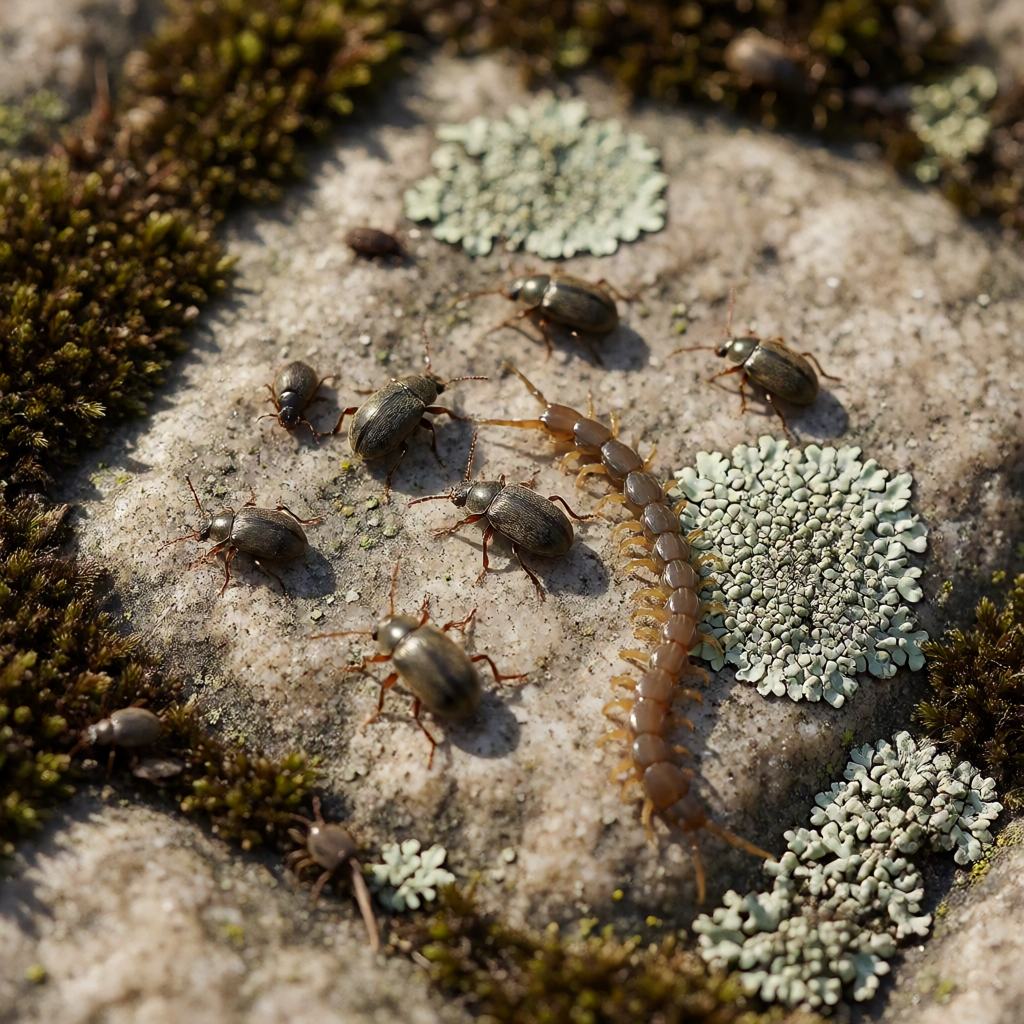
The Italian Scorpion is a hunter. It eats insects and spiders. It also takes woodlice and small centipedes. The animal waits beside its den.
It grabs the prey with the pincers. The pincers crush and hold the catch. The tail then bends forward over the back. The sting gives a small dose of venom.
That dose stops a struggling insect. The animal can live for weeks without food. It needs very little water.
Young carried on the mothers back
The breeding cycle
The male and the female meet at night. They hold pincers and walk together. That walk may last for many hours. The male then leaves a package of sperm.
The female takes it inside her body. She carries the young for several months. She then gives birth to live young. Each young one climbs on her back.
It rides there for some weeks. The young then leave and hunt alone. The animal may live for 3 to 5 years.
Wall repairs and insect poison
Conservation
The Italian Scorpion has not been assessed by the IUCN. It is common in its warm range. It has no legal protection. It does well in old villages and ruins.
Repair work on a wall may remove a group. Clean stone walls offer few cracks. The animal also suffers from insect poison. It is not dangerous to people at all.
Its numbers look stable for now. A dry stone wall gives it the best home. So does a pile of old tiles.
Quick hits
Five things to remember
- Its sting is no worse than a bee sting.
- The female carries her young on her back.
- Its shell glows blue green under a black lamp.
- It will attack another scorpion and eat it.
- Scorpions have lived on Earth for 430 million years.