 By st20113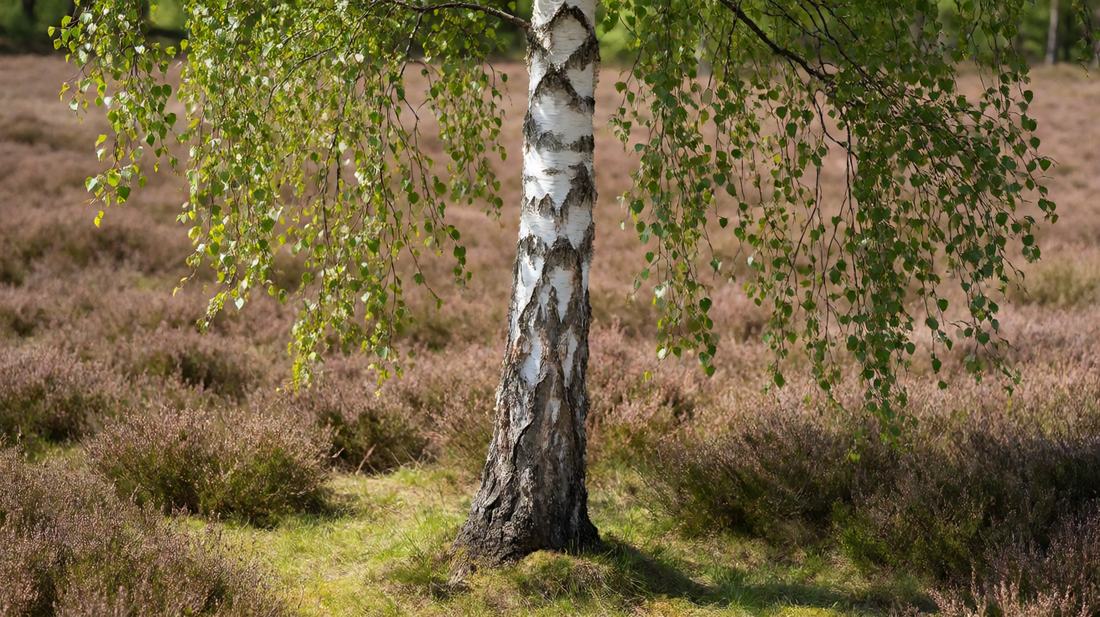
Betula pubescens | Downy Birch
Species Profile · Betulaceae
Downy Birch
A slender tree of bogs and moors that grows further north than any other broadleaf tree and is often the first to return to ground left bare by fire.
A slender northern tree that grows on wet ground and claims bare land
Height
Bark
Leaf
Seed
Ground
Life
The downy birch
A slender tree of wet ground
The Downy Birch is a slender tree of wet ground. It grows across northern Europe and into Siberia. A tall one stands about 20 m high.
The bark is grey white. It does not peel away in sheets. The leaves are small and soft below.
The tree is 1 of the first to claim bare land. It lives for about 100 years. Its fine seed travels on the wind.
Family tree
Fagales, Betulaceae
The Downy Birch sits in the kingdom Plantae. Its class is the Magnoliopsida. Its order is the Fagales. Its family is the Betulaceae, the birches.
Our tree shares the genus with the Silver Birch. That tree hangs its branches lower. It also favours drier ground. Our tree carries softer leaves.
It also carries fine hairs on young shoots. The 2 species often grow side by side. They also cross with each other. That cross makes a hybrid tree.
20 m and a grey white trunk
How to tell one
Heights run from 20 m up to 30 m. A young trunk measures about 4 to 5 cm across. The bark is grey white. Dark lines cross the surface.
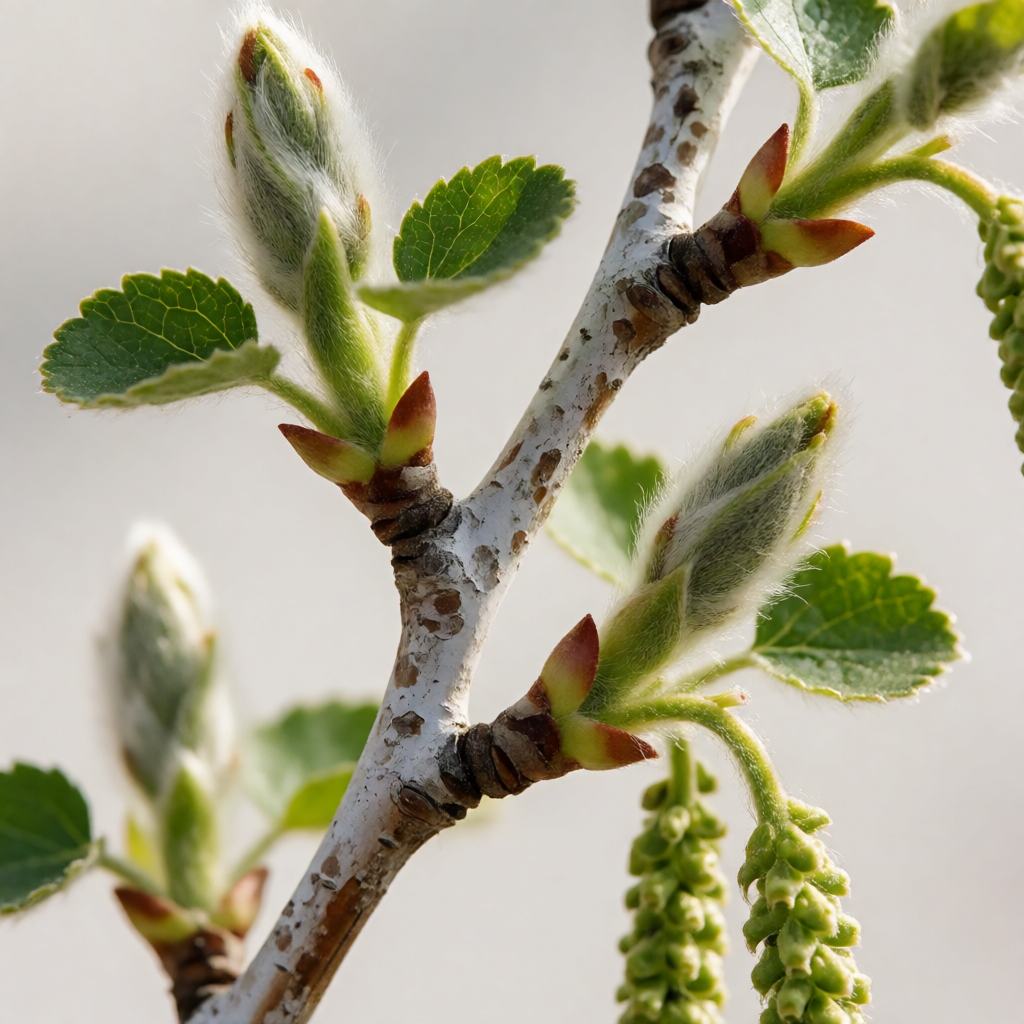
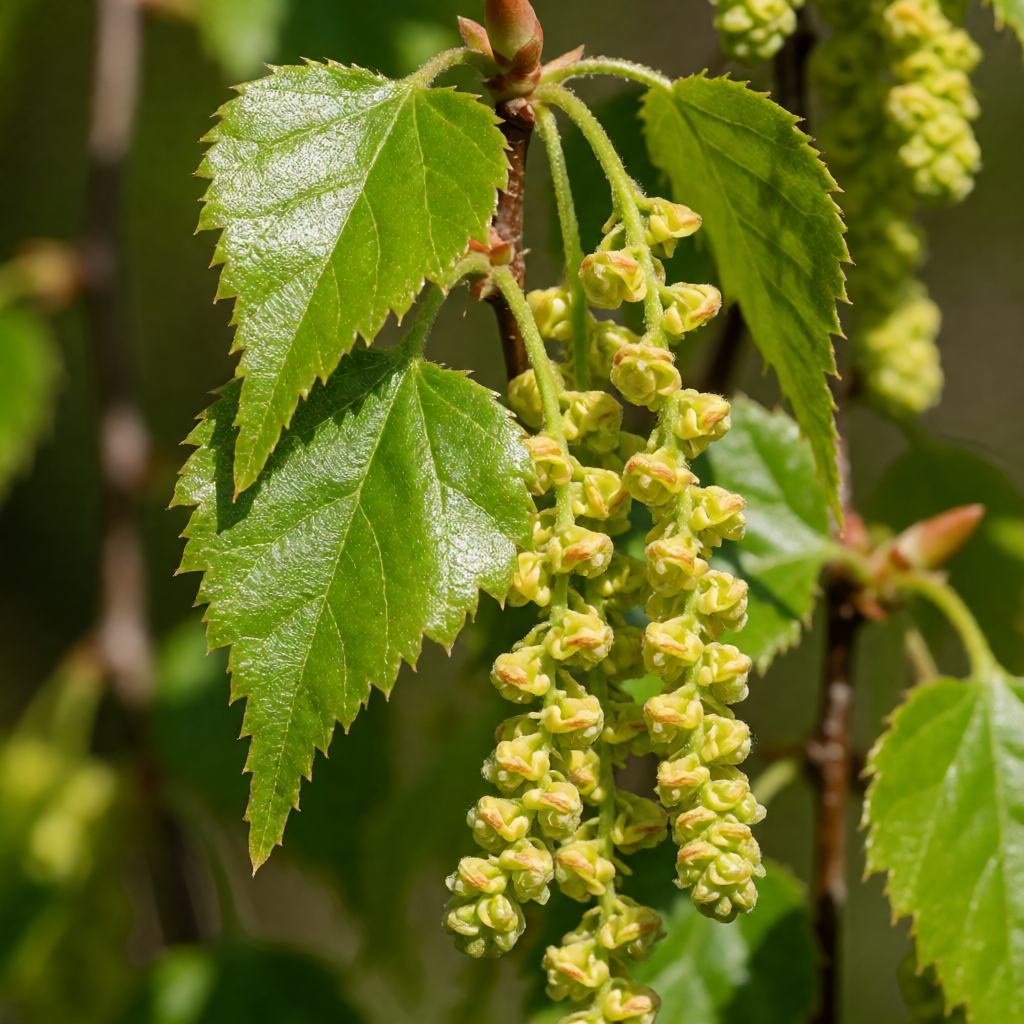
Near the base the bark turns rough and cracked. A young shoot carries fine soft hairs. Each leaf is round with a fine saw edge. The male catkins hang in a long yellow group.
The female ones stand upright at first. The roots spread wide and stay near the surface.
1
2
3
Bogs, moors and wet woods
Where it lives
The species grows on damp and acid ground. It suits a bog, a moor and a wet wood. It also grows on a northern hillside. It takes poor soil that few trees accept.
It claims open ground after a fire. It often forms a whole wood of its own. People call such a wood a birch stand. The tree also grows beside a stream.
It lives further north than most broadleaf trees. It reaches the edge of the tundra.
Light, air and a fungus partner
What it eats
The Downy Birch makes its own food. Its leaves take light and turn it into sugar. People call the process photosynthesis. Water comes up from the roots.
Air enters through small pores in the leaf. The tree also draws minerals from the soil. It keeps a store of sugar in its roots. That store feeds the new shoots in spring.
The tree shares sugar with fungi on its roots. Those fungi bring it water and minerals in return.
A million winged seeds
The breeding cycle
The tree carries both kinds of flower. The male catkins open in spring. They shed a cloud of yellow pollen. The wind carries the pollen to a female catkin.
Each female catkin holds many tiny flowers. The seed forms inside a small winged case. A single tree may make a million seeds. The wind takes the seed far from the parent.
The seed needs bare damp ground to grow. A seedling grows fast in its first year. The tree may live for about 100 years.
Grazing deer and drained bogs
Conservation
The Downy Birch has not been assessed by the IUCN. It is common across the north of Europe. It has no legal protection. The species is a pioneer of bare ground.
It also feeds a great number of insects. Many moth and beetle species depend on it. Heavy grazing by deer may stop young trees. Draining a bog also removes its home.
A changing climate pushes it further north. The tree itself is in no danger.
Quick hits
Five things to remember
- No other broadleaf tree grows as far north as it does.
- The dark lines on its bark are called lenticels.
- Wet ground suits it better than dry ground does.
- A single birch wood may hold thousands of trees.
- After a fire it is often the first tree to return.