 By st20113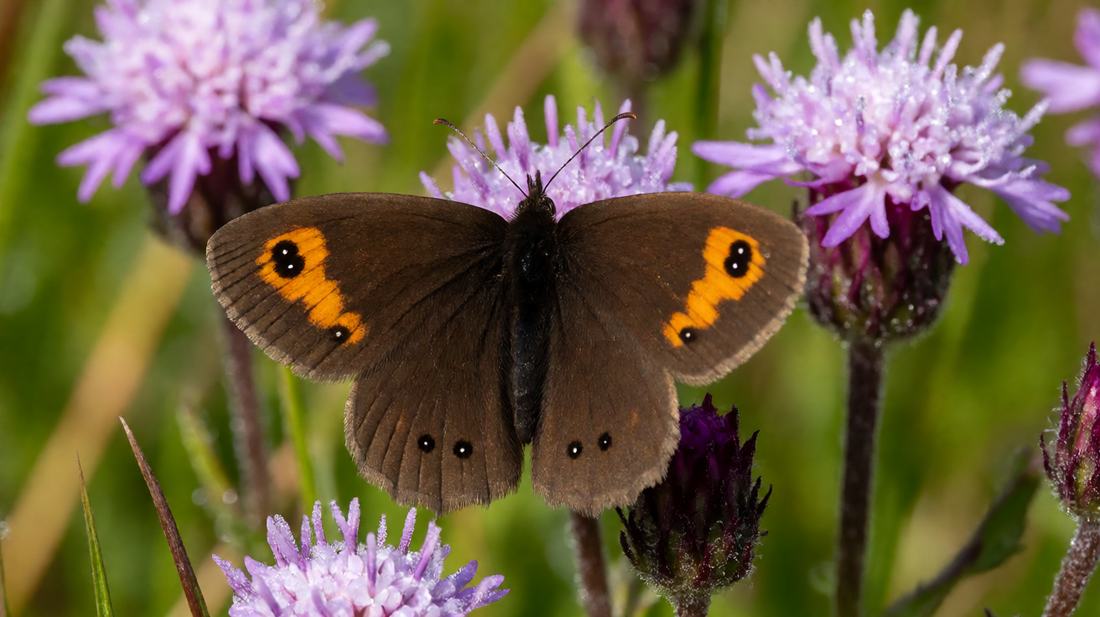
Erebia aethiops | Scotch Argus
Species Profile · Nymphalidae
Scotch Argus
A dark brown butterfly of damp grassland that flies in cool and cloudy weather, when almost every other butterfly of the same country stays hidden.
A dark brown butterfly that flies on dull and cool days
Wings
Colour
Eyespots
Flight
Larval food
Winter
The scotch argus
A dark butterfly of damp grass
The Scotch Argus is a dark brown butterfly of damp grassland. It is 1 of the rarest butterflies of Britain. In that country it lives in a few places in Scotland. It also flies in the hills of central Europe.
The wings are a deep chocolate brown. Small black eyespots sit near the edges. Each one has an orange ring. The insect flies in dull and cool weather.
Most butterflies need warm sun for flight. The adults take nectar from purple flowers. They feed in late summer.
Family tree
Lepidoptera, Nymphalidae
The Scotch Argus sits in the phylum Arthropoda. It belongs to the class Insecta. Its order is the Lepidoptera. Its family is the Nymphalidae.
These are the brush footed butterflies. Our butterfly shares the family with the Small Tortoiseshell. That butterfly has orange wings. Its young feed on nettles.
Our butterfly is dark brown. Its young feed on grass. The 2 species both fold their wings at rest. Both pass the winter as a small larva.
5 cm and 2 to 4 eyespots
How to tell one
The wings span about 5 cm. The upper surface is a rich chocolate brown. A band of orange runs near the outer edge. The front wing carries 2 to 4 black eyespots.
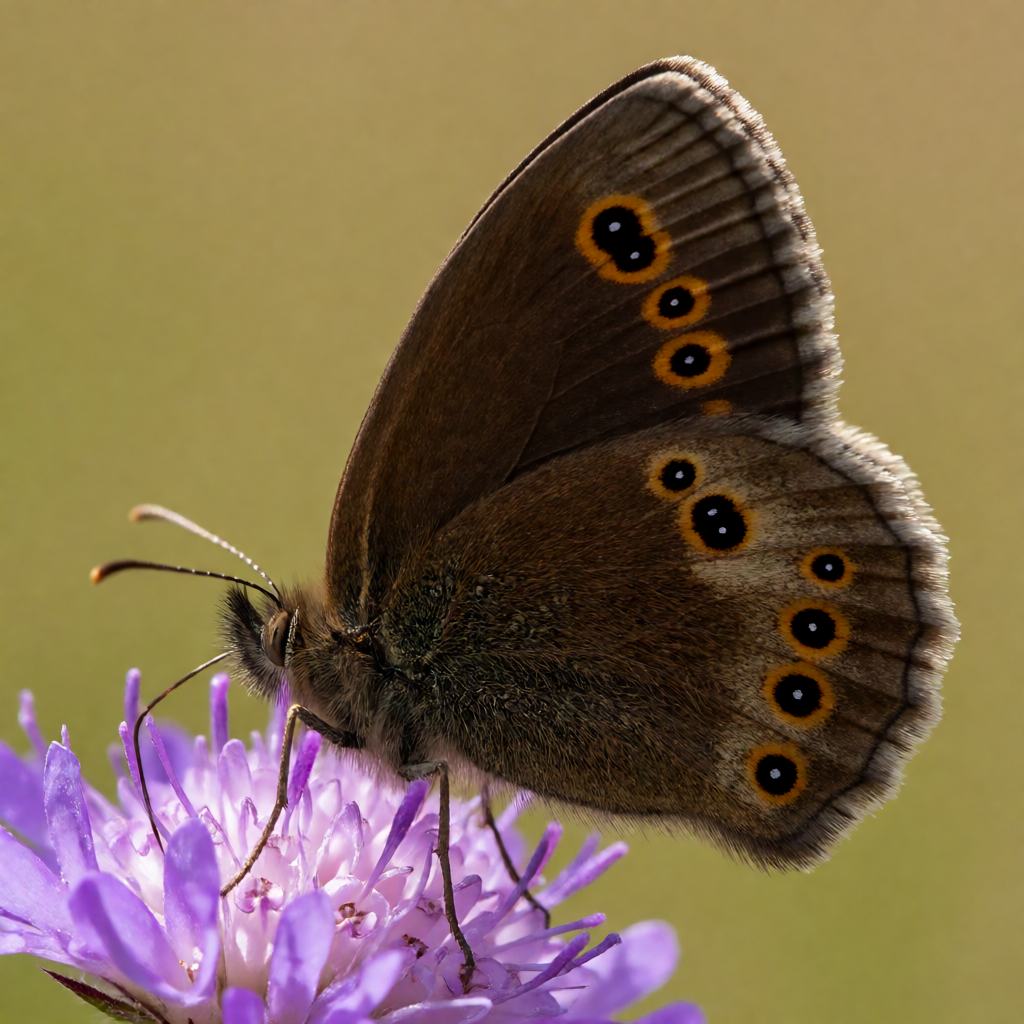
Each spot has a warm orange ring. The hind wing carries a row of small spots. The lower surface is grey brown. A pale band crosses the hind wing.
That pattern hides the insect among dry grass. The body is thick and covered in brown hairs. The antennae are short. They end in a small club.
1
2
3
Damp grassland and open wood
Where it lives
The species lives on damp grassland. It also lives in open woodland. It likes ground that stays moist through the summer. In Scotland it keeps to wet meadows beside a wood.
In Europe it flies in the hills. The female lays her eggs on fine bladed grass. The young feed on purple moor grass. The plant grows in wet acid soil.
The butterfly follows the plant. The animal needs a warm patch for its young. It also needs tall grass. The larva hides among the stems.
Nectar for the adult, grass for the young
What it eats
The adult drinks nectar from flowers. It takes nectar from thistle and knapweed. It feeds in dull weather. Other butterflies rest at that time.
The young insect eats grass. It favours purple moor grass. It also eats blue moor grass. It chews the edge of a blade.
It leaves a notch behind. A young larva feeds at night in the summer. In winter it rests deep among the stems. It starts to feed again in the spring.
Eggs laid one by one on a blade
The breeding cycle
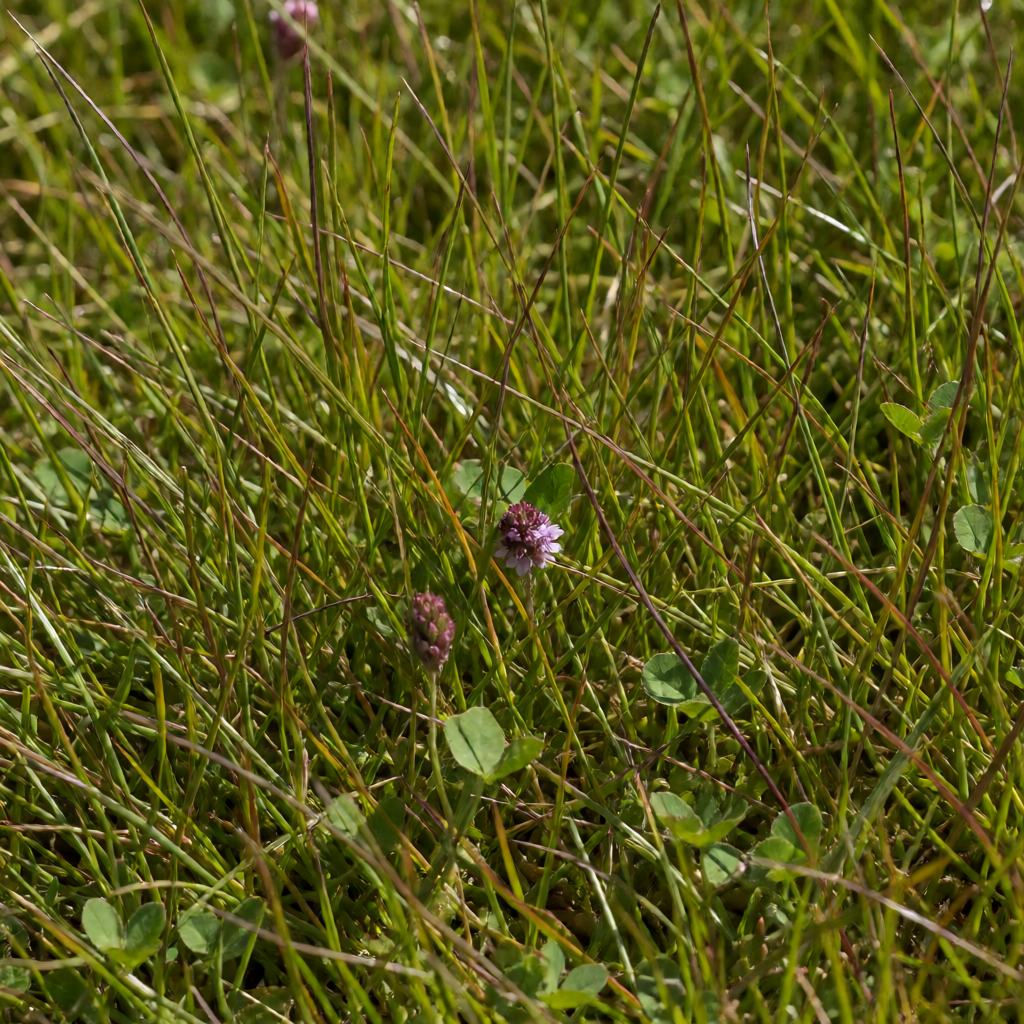
The female lays her eggs one by one. She places each one low on a blade. The egg hatches after a short time. The young larva does not grow much before the winter.
It rests among the stems of the plant. When the spring comes, it starts to feed. It grows through the spring. It moults as it grows.
It then turns into a pupa near the ground. The adult comes out in the summer. The adults fly for only a few weeks.
Draining and heavy grazing
Conservation
The Scotch Argus is listed as Least Concern by the IUCN. Its British range is very small. The animal is protected by law there. A change in farming does great harm.
The draining of a wet field removes its food plant. Heavy grazing also takes away the tall stems. The species needs a wet meadow. It also needs light grazing.
A wood that closes over a clearing loses it. A managed wood with open rides gives it a home.
Quick hits
Five things to remember
- It flies on dull days, when other butterflies stay hidden.
- The eyespots on the wings may startle a hunting bird.
- Its young feed on a coarse grass that most grazers avoid.
- The British population lives far from the main group in Europe.
- A cold summer does not stop it, unlike many of its kin.