 By st20113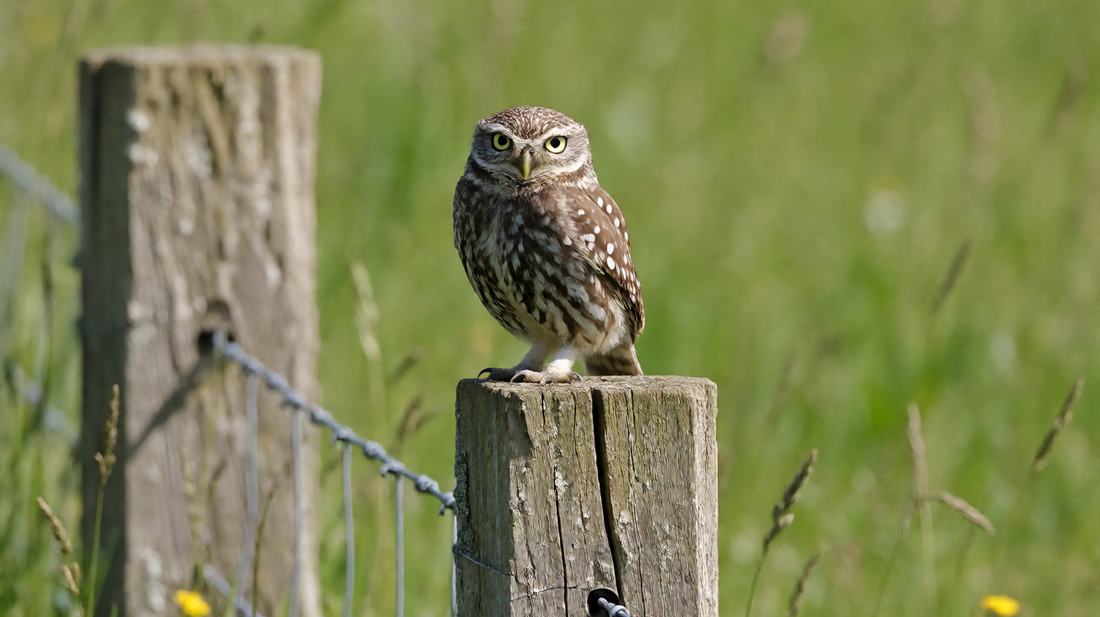
Athene noctua | Little Owl
Species Profile · Strigidae
Little Owl
A small owl of farmland and old trees that hunts beetles on the ground in broad daylight and nods its head when it is nervous.
A small stocky owl that hunts in daylight
Length
Wingspan
Weight
Eggs
Incubation
Life
The little owl
A daytime hunter of the lowlands
The Little Owl is a small, stocky bird. It is about the size of a thrush. It has a flat head and no ear tufts. Its eyes are pale yellow, and they stare hard. The bird is active by day as well as by night.
It often sits on a post or a stone wall. It has a habit of nodding its head. It does this when it is nervous. That habit makes the bird easy to spot. It hunts beetles and worms on the ground.
It is not a native bird of Britain. People brought it there in 1874. It settled well, and it spread across the lowlands. It is 1 of the smallest owls of Europe. Its call is a sharp and clear note.
Family tree
Strigiformes, Strigidae
The Little Owl belongs to the phylum Chordata. It is a member of the class Aves. Its order is the Strigiformes, the owls. Its family is the Strigidae, the typical owls. Our bird sits in the genus Athene.
The genus is named after the goddess Athena. She was the goddess of wisdom in ancient Greece. That link gave the bird its common name. The Eurasian Eagle-Owl is a distant relative in the same order. That bird is far larger, and it hunts at night.
The 2 share the same basic body plan. Our bird is a small owl with a round head. It has no ear tufts at all.
22 cm and no ear tufts
How to tell one
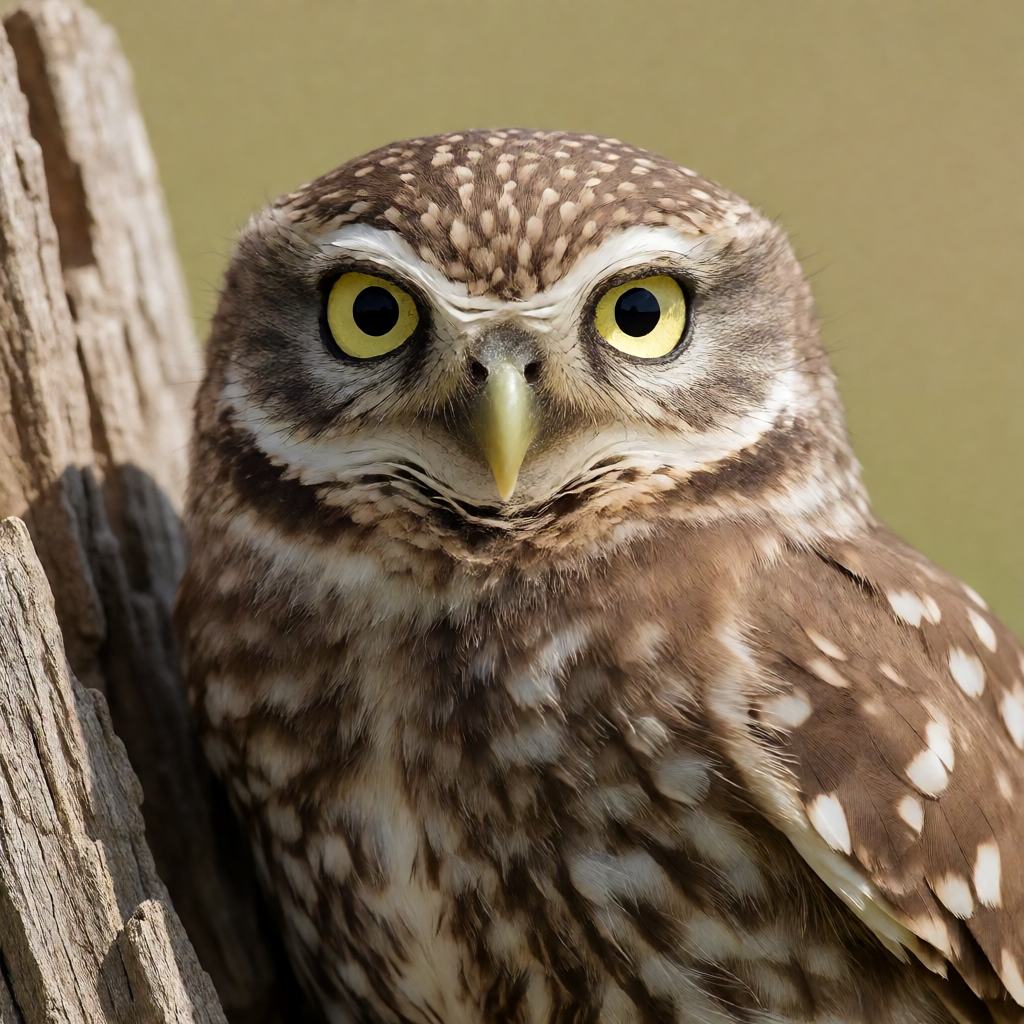
The adult is 22 cm long. The wingspan is 50 to 56 cm. The bird weighs 150 to 200 g. The female is the heavier sex. The head is flat and broad. The eyes are pale yellow, and the bill is pale yellow too.
The upper parts are brown with white spots. The spots are small and round. The underparts are pale with brown streaks. The bird has a white stripe above each eye. That stripe gives the face a stern look. The legs are long and partly bare.
The toes are strong, and they carry sharp claws. The feet carry 4 toes, and the outer toe can swing forward. The wings are short and rounded. The tail is short and square. The bird can turn its head far around.
1
2
3
Farmland and old trees
Where it lives
The bird lives in open country with old trees. It likes farmland, orchard and parkland. It also lives around a village and a farm. It needs a hole for its nest. An old tree, a stone wall and a barn all serve.
It often uses a hole made by a woodpecker. It may also nest in a rabbit burrow. It hunts over short grass and bare ground. It avoids dense forest and high moor. The species is native to Europe and Asia.
It also lives in North Africa. In Britain it is a bird of the lowlands. It is found in England and in Wales. It is scarce in Scotland and absent from Ireland. The bird stays in the same area all year.
Beetles on the ground
What it eats
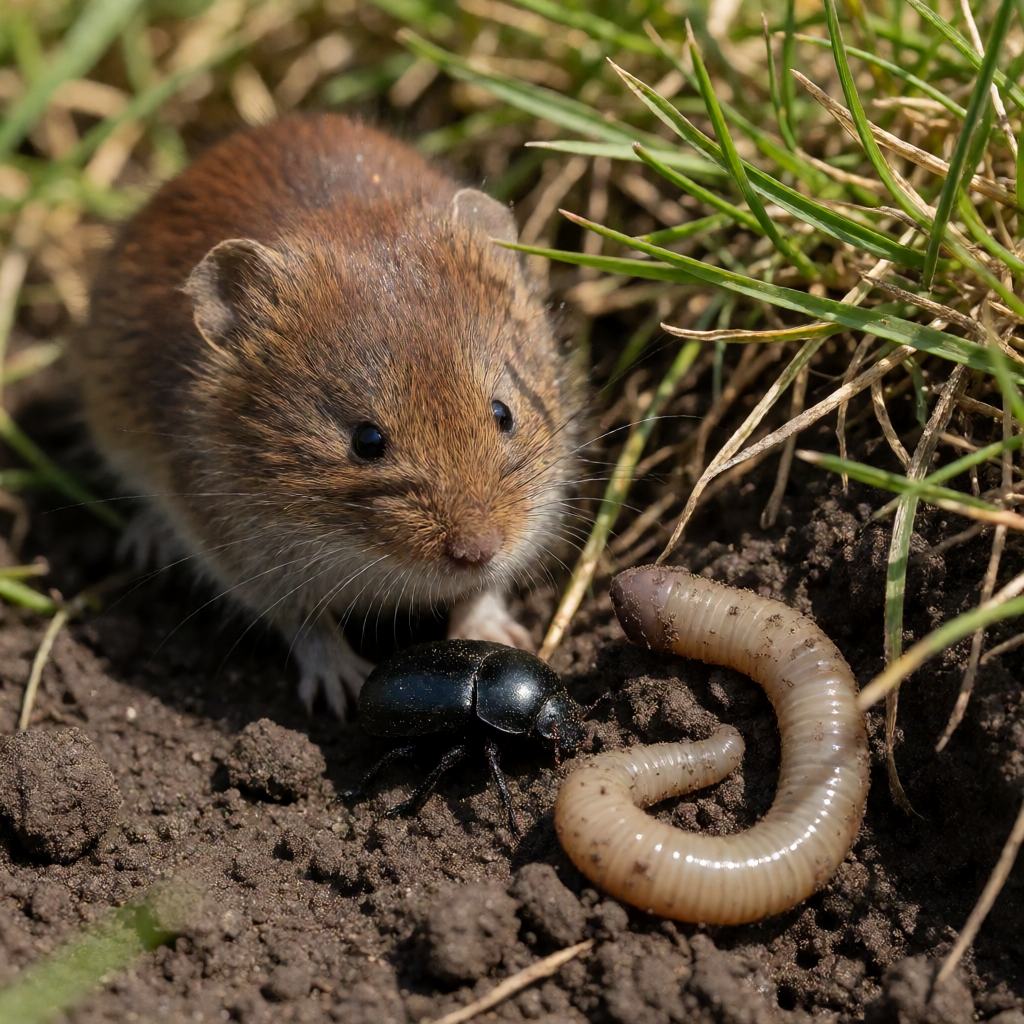
The Little Owl eats beetles and earthworms. It also takes moths, spiders and small mammals. It will eat a small bird or a frog. Much of its food comes from the ground. The bird drops on the prey from a low perch.
It also runs along the ground after a beetle. That habit is unusual in an owl. Its long legs help it to walk and to run. It hunts in daylight as well as at dusk. It is often seen on a post in the afternoon.
The bird needs a great deal of food. It eats many beetles in a single night. It stores extra food in a hole near the nest. The pellets of the bird hold the hard parts of its prey.
3 to 5 eggs in a hole
The breeding cycle
The pair forms a strong bond. They often stay together for life. The female lays her eggs in a hole. She lays 3 to 5 eggs, and 4 is the usual number. The eggs are white and round.
She sits on them for 28 to 29 days. The male brings food to her at the nest. The young are covered with pale down. They grow fast, and they leave the hole after 30 to 35 days. They cannot fly well at that age.
They stay near their parents for a time. The family may stay together into the autumn. The bird breeds in its first year. A bird in a cage has lived for 16 years. A wild bird lives for about 3 years.
A bird in decline
Conservation
The Little Owl is not threatened over its whole range. It is common in Europe and in Asia. In Britain the bird has declined. Its numbers fell sharply since the 1990s. The loss of old trees is the main cause.
A tree with a hole is the nest site of the bird. Hedges that are removed take away its hunting ground. The use of farm chemicals removes its beetle prey. A hard winter also kills many birds. The species has no special legal protection.
It does well on a farm with old trees and rough grass. A nest box can help where a hole is rare. The future of the bird in Britain is uncertain.
Quick hits
Five things to remember
- The bird was brought to Britain by people in 1874.
- It bobs its whole head up and down when it is alarmed.
- Its long legs let it run after beetles on the ground.
- It often hunts in broad daylight, unlike most owls.
- The bird is named after a Greek goddess of wisdom.