 By st20113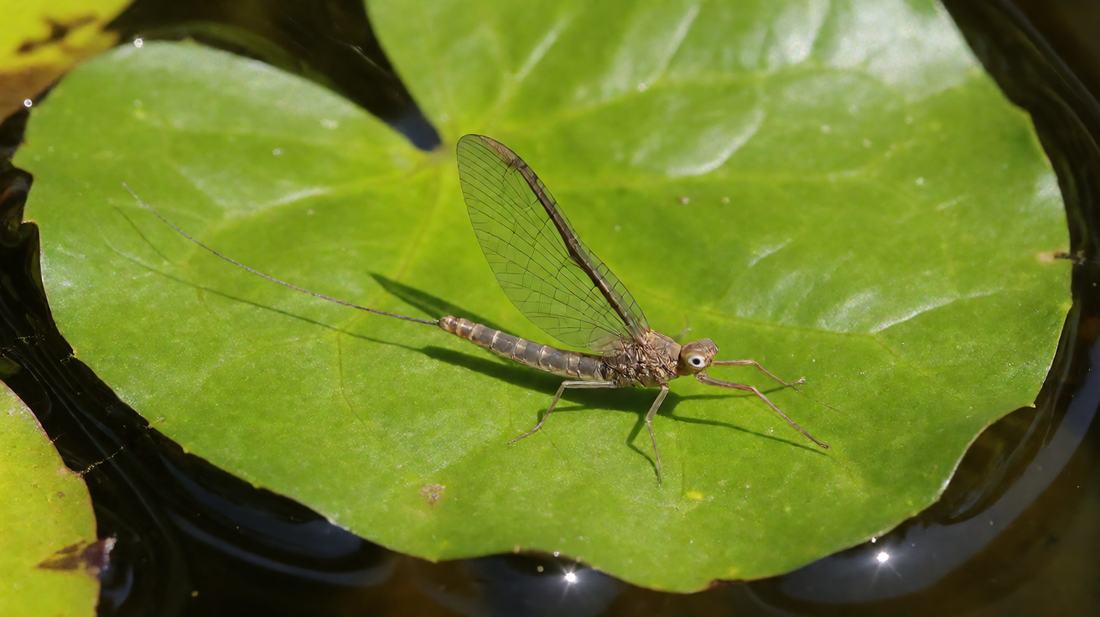
Cloeon dipterum | Pond Olive
Species Profile · Baetidae
Pond Olive
A small mayfly that is unusual among its kind because it lives in ponds, ditches and garden water rather than in a river.
A mayfly that thrives in still water
Body
Gills
Adult life
Order
Generations
Flight
The pond olive
A mayfly of still water
The Pond Olive is a small mayfly of ponds and ditches. It is common in garden ponds. It is unusual among mayflies. It does not need running water. Most mayflies live in rivers and streams. They die out when the water is still. This species does the opposite.
It thrives in a quiet pond. The adult is slender and brown. It carries 2 large wings that stand upright. Its hind wings are tiny. They look like small scales. That is why the species is named dipterum. The name means 2 winged.
The adult lives for only a few days. It does not feed at all. The nymph is the long stage. It lives under water for weeks or months. It swims among the weeds. It feeds on algae and on fine plant material. It is 1 of the easiest mayflies to find.
Family tree
Ephemeroptera, Baetidae
The Pond Olive belongs to the phylum Arthropoda. It is an insect. It sits in the order Ephemeroptera, the mayflies. Its family is the Baetidae. The mayflies are an old group. Their nymphs have been found in rocks that are more than 300 million years old. The order holds about 3000 species. About 51 of them live in Britain.
Mayflies are told from other insects by the wings. They are also told by the tails. An adult carries 2 pairs of wings. The front pair is far larger than the back pair. The order name Ephemeroptera means short lived wing. It refers to the brief life of the adult. Our animal sits in the genus Cloeon. That genus holds a number of species.
Most of them live in still water. The Pond Olive shares its order with the Mayfly, the large mayfly of rivers. That species is far bigger. Its nymph lives in a burrow in a river bed. Our animal is smaller. It lives in a pond.
Upright wings and 2 tails
How to tell one
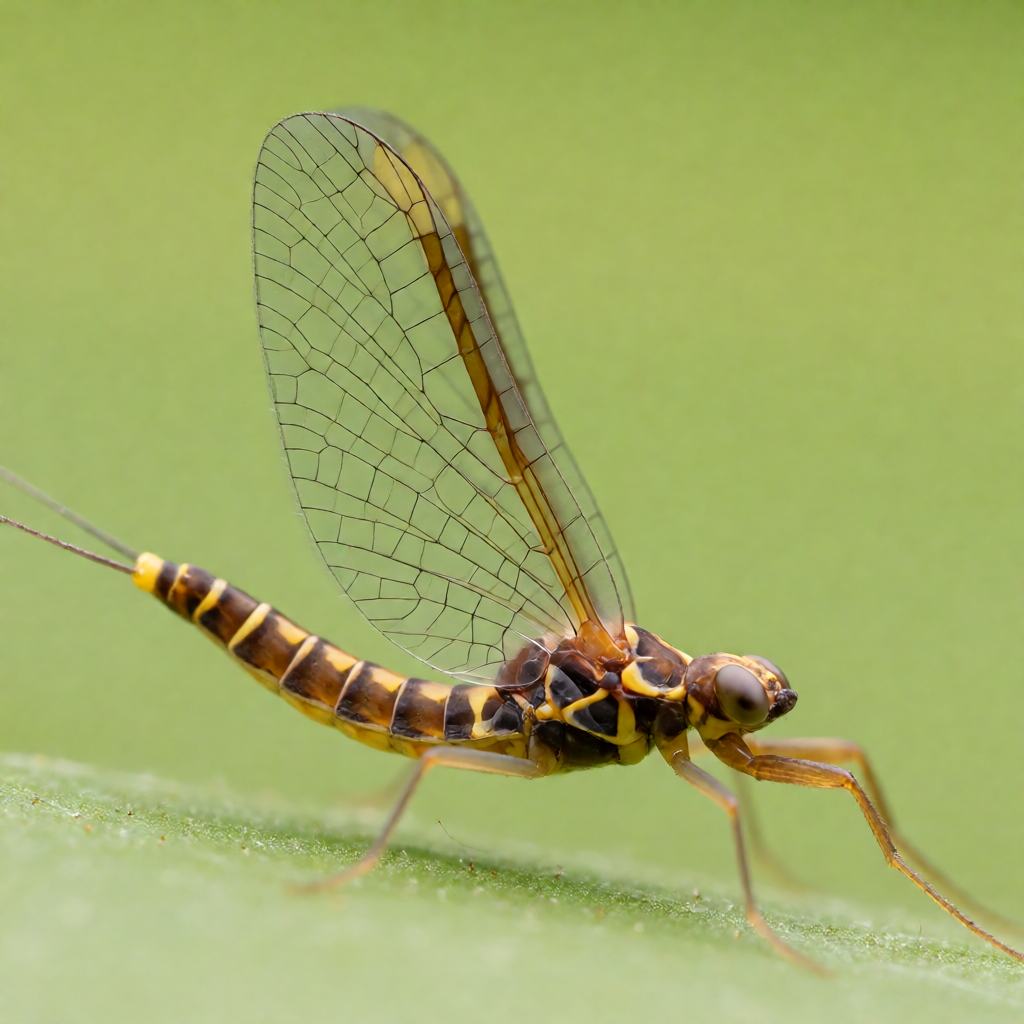
The body measures 6 to 9 mm in length. The female is the larger sex. The adult is slender. The colour is a pale brown with yellow marks. The front wings are large and triangular. They are held upright and tilted back. They are clear. The veins are fine and dark. The hind wings are very small.
They look like tiny scales. The legs are long and thin. The front pair is the longest. The male has a pair of very large eyes. They sit on top of the head like a small turret. He uses them to find a female in a swarm. The rear end carries 2 long tails. Each tail is fringed with fine hairs. The animal has 2 or 3 stages after it leaves the water.
The first stage is dull and hairy. It is called the dun. The second is shiny and clear. It is called the spinner. The nymph has 7 pairs of plate like gills along its body. Each gill is a flat leaf. It takes oxygen from the water.
1
2
3
Ponds, ditches and garden water
Where it lives
The species lives in still water. It is found in ponds, lakes, ditches, canals and slow rivers. It also lives in garden ponds. It is common in towns. It does well in water that is rich in plants. It can live in a pond that dries out in a dry summer. It also copes with low levels of oxygen.
It survives in water that other mayflies cannot use. The nymph swims among the weeds. It also rests on the leaves of plants. It does not need a stony bottom. It does not need a current. The species is found all over Europe. It also lives in parts of Asia and North Africa.
In Britain it is common in the lowlands. It is 1 of the commonest mayflies of the south. The adults gather above the water in the evening. They form a loose swarm. The animal has several generations in a year. A warm pond may produce a new group every few weeks from spring until autumn.
Grazing on the leaf film
What it eats
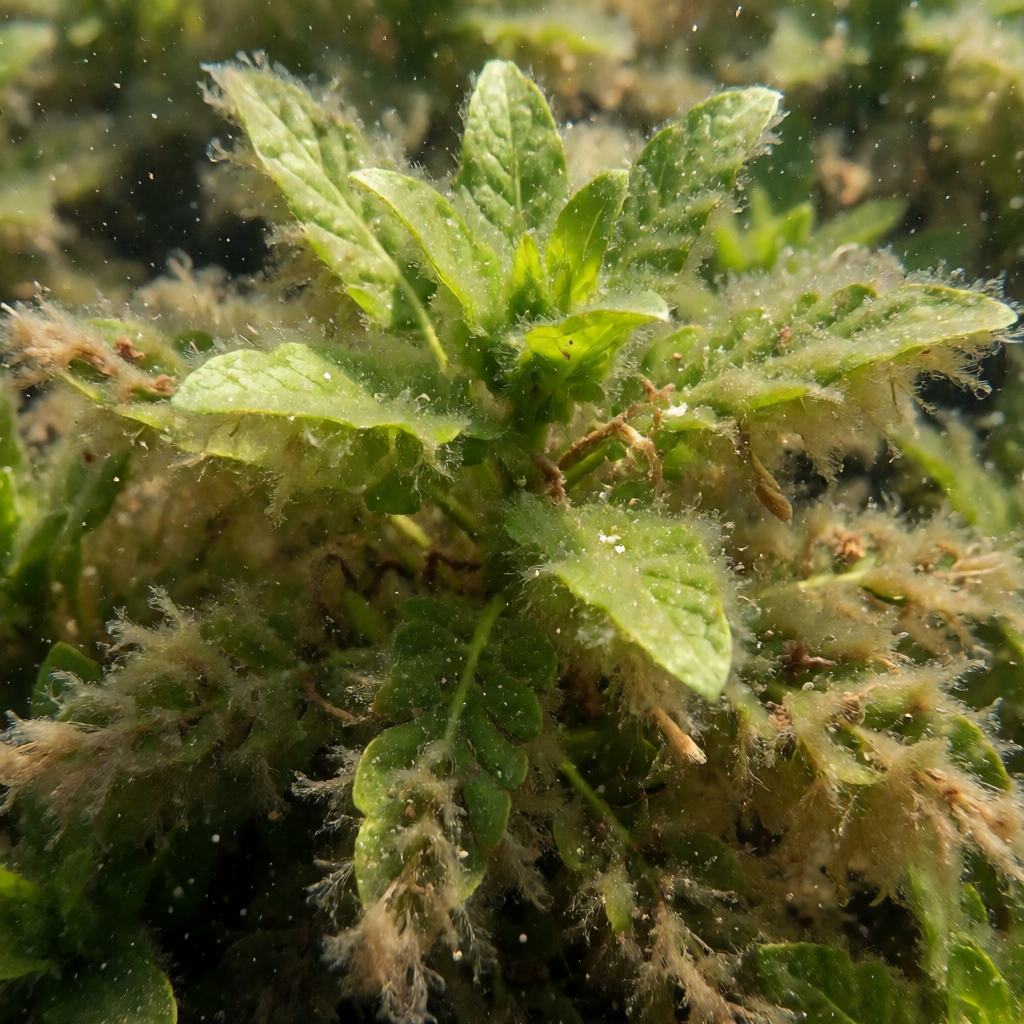
The nymph of the Pond Olive is a grazer. It eats the fine film of algae that covers a leaf. It also takes small pieces of dead plant material. It scrapes the film off with its mouth parts. It swallows the small plants and the bits of leaf together. It does not hunt. It has no jaws for catching animals.
It eats nothing larger than a grain of sand. The nymph must eat almost all the time. Its food is poor. In return the animal cleans the leaves of a pond. It keeps the algae in check. The adult does not feed at all. Its mouth parts are reduced to small soft flaps.
It cannot take food or water. It lives on the fat that it stored as a nymph. It dies after a few days. The whole adult stage is spent in finding a mate. The change between the 2 stages is 1 of the strangest lives in the insect world.
A swarm over the water
The breeding cycle
The adults leave the water in the evening. They gather in a swarm above the surface. The males fly up and down. The females fly into the group. A pair then leaves the swarm. They mate on a plant or on the wing. The female returns to the water and lays her eggs. She may drop them on the surface.
She may dip her abdomen into the water. The eggs sink to the bottom. They hatch in a few days. In some mayflies of this genus the eggs hatch inside the female. The young are born alive. The nymph then grows through many moults. It may take only a few weeks in warm water. It may take several months in the cold.
The animal spends the winter as a nymph. It is active under the ice. When the nymph is ready, it swims to the surface. It splits its skin. The adult then flies away. It leaves a second skin behind.
Tougher than most mayflies
Conservation
The Pond Olive is not a threatened species. It is common over a wide range. It has no legal protection. Its numbers in Britain are healthy. It does well in garden ponds. There is no cause for concern about the species itself. The health of the group is another matter.
Mayflies are sensitive to pollution. Most species need clean running water. Many of them have become rare. Our animal is tougher than most. It can live in water that is warm and low in oxygen. Even so, it does not like acid water. It disappears from a pond that is polluted by farm waste.
The main risk to the species is the loss of its ponds. Small ponds are filled in. Ditches are cleared of their plants. A pond that is stocked with fish loses most of its mayflies. The fish eat the nymphs. The best support for the species is a pond with plants and no fish.
Quick hits
Five things to remember
- It is unusual among mayflies, because it lives in still water and not in a river.
- Its hind wings are tiny and look like scales, and the name dipterum means 2 winged.
- The adult has no working mouth, so it cannot eat or drink and lives for only a few days.
- The nymph carries 7 pairs of flat plate like gills, and it grazes on the algae of a leaf.
- Some females of this group give birth to live young, because the eggs hatch inside the body.