 By st20113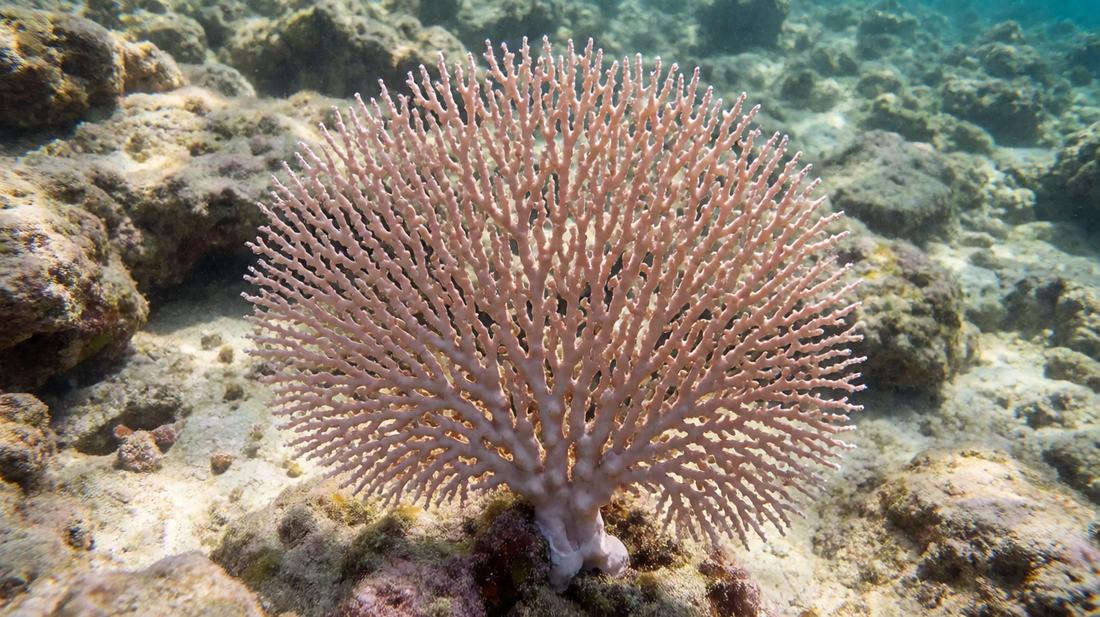
Eunicella verrucosa | Pink Sea Fan
Species Profile · Gorgoniidae
Sea Fan
A lacy pink fan of a colony that stands upright in the current and opens thousands of tiny polyps to the water.
A soft coral shaped like a tree
Range
Colony size
Depth
Polyps
Growth
A coral like a tree
Thousands of polyps in one colony
The Pink Sea Fan is a colonial animal of the rocky seabed. It looks more like a small tree than like a coral. A full grown colony is a flat fan of pink branches. It waves in the current and can reach 50 cm across. The fan stands upright on the rock, braced against the flow. Every branch is covered with thousands of tiny polyps.
Each polyp opens a ring of 8 feathery tentacles to catch food. So the whole fan works like a small net. The species is a soft coral. It lays down no hard stone skeleton, unlike the reef builders of warm seas. Its frame is made of a soft protein with small mineral specks. That is why the fan bends rather than breaks when water surges.
The Pink Sea Fan lives in the north east Atlantic and the Mediterranean. It grows very slowly and lives for many years. It breaks easily as well. So it marks a seabed that has been left alone.
Family tree
Cnidaria, Octocorallia
The Pink Sea Fan is a member of the phylum Cnidaria. That group holds the corals, the anemones and the jellyfish. Within the phylum it sits in the class Octocorallia. The name refers to the polyps, which always carry 8 tentacles. That one feature divides the group from the stony corals of warm reefs. The species belongs to the family Gorgoniidae, the true sea fans.
Those corals build a soft inner skeleton rather than a hard outer one. The species was first named in the 18th century. Its genus, Eunicella, holds several similar fans of the eastern Atlantic. The species name verrucosa means warty. It refers to the small bumps along the branches. Sea fans are an old group.
Their relatives appear in rocks laid down hundreds of millions of years ago. The Pink Sea Fan shares its class with the Dead Man’s Fingers, a soft coral of the same group. That species grows as a lumpy mass, not a flat fan. The 2 often live on the same coast. Both of them feed with open polyps.
Pink, flat and flexible
How to tell one
A Pink Sea Fan is a colony rather than a single animal. The base forms a small grip on the rock. From it rise 1 or more main stems. Those stems divide again and again into fine branches. All of the branches sit in a single flat plane. This flat shape is good design. It shows a wide face to the current.
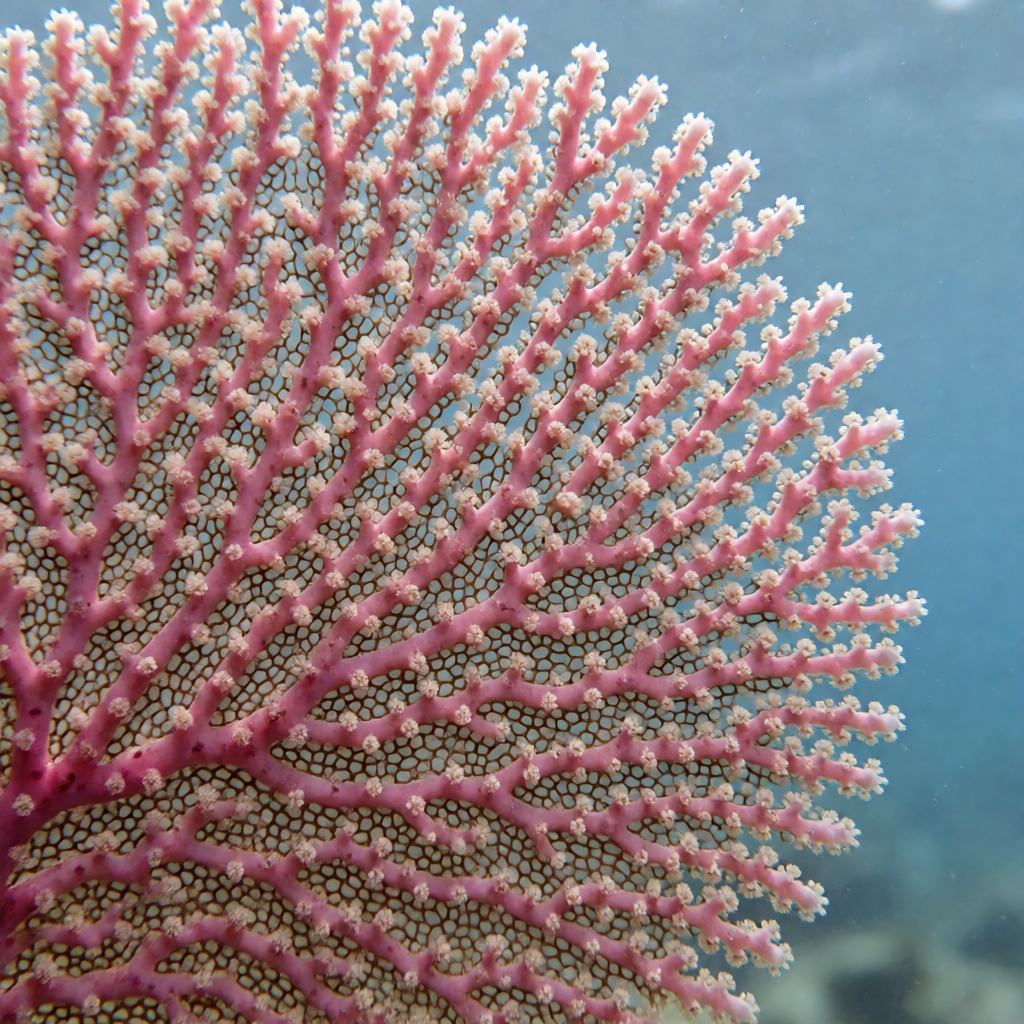
At the same time it takes less force from the water. So the colony bends like a tree in a gale. The colony is pink, rose or pale orange. It may reach 50 cm across and about 1 m high. Most colonies are much smaller than that. The surface of each branch carries small round bumps. Each bump holds 1 polyp.
The polyp has 8 tentacles with tiny side branches. That gives them a feathered look. When the colony feeds, the polyps are open and the fan looks fuzzy. When it is disturbed, the polyps pull back. Then the fan turns smooth. The whole colony is built of many small units. Yet it works as 1 animal.
1
2
3
Rock, clean water, current
Where it lives
The Pink Sea Fan needs hard ground, clean water and a steady current. It grows on rocky reefs, boulders and the sides of gullies. It is found from the lower shore down to about 200 m. It likes a current strong enough to bring food. It cannot take a current strong enough to break it. In Britain and Ireland it is most often seen in the south west.
Its range runs from Dorset and Cornwall into the Irish Sea. It is rare on the colder coasts of the north east. It is also found around the Mediterranean and the coasts of Portugal. There it grows on rock in clear water. The species cannot cope with silt. A fan that is buried in mud cannot feed.
A fan coated in mud cannot feed either. So it is scarce in channels that are dredged. It is scarce where soil runs off the land. It also needs a stable surface. It is absent from sand, gravel and mud. It depends on rock that has been left in peace for many years.
Feeding from the flow
What it eats
The Pink Sea Fan is a filter feeder. It takes its food from the water that flows past it. Each polyp opens its tentacles into the current and waits. The tentacles are armed with great numbers of small stinging cells. A tiny animal that touches a tentacle is stung and held. Then it is passed down to the mouth at the centre of the polyp.
The diet is made up of drifting plankton and fine particles. Small crustaceans and the young of other sea animals are taken. One celled plants and animals are taken as well. So are fine flakes of dead material. The polyps of a large colony open and feed at the same time. The fan is at its busiest when the current runs hard.
In return the colony gives shelter to other animals. Small crabs, shrimp, brittle stars and worms live on the branches. Some of them graze on the fan itself. A heavy load of them can slow its growth. The fan does not need sunlight. So it grows well in dark water and under ledges.
Slow growth, broken pieces
The breeding cycle
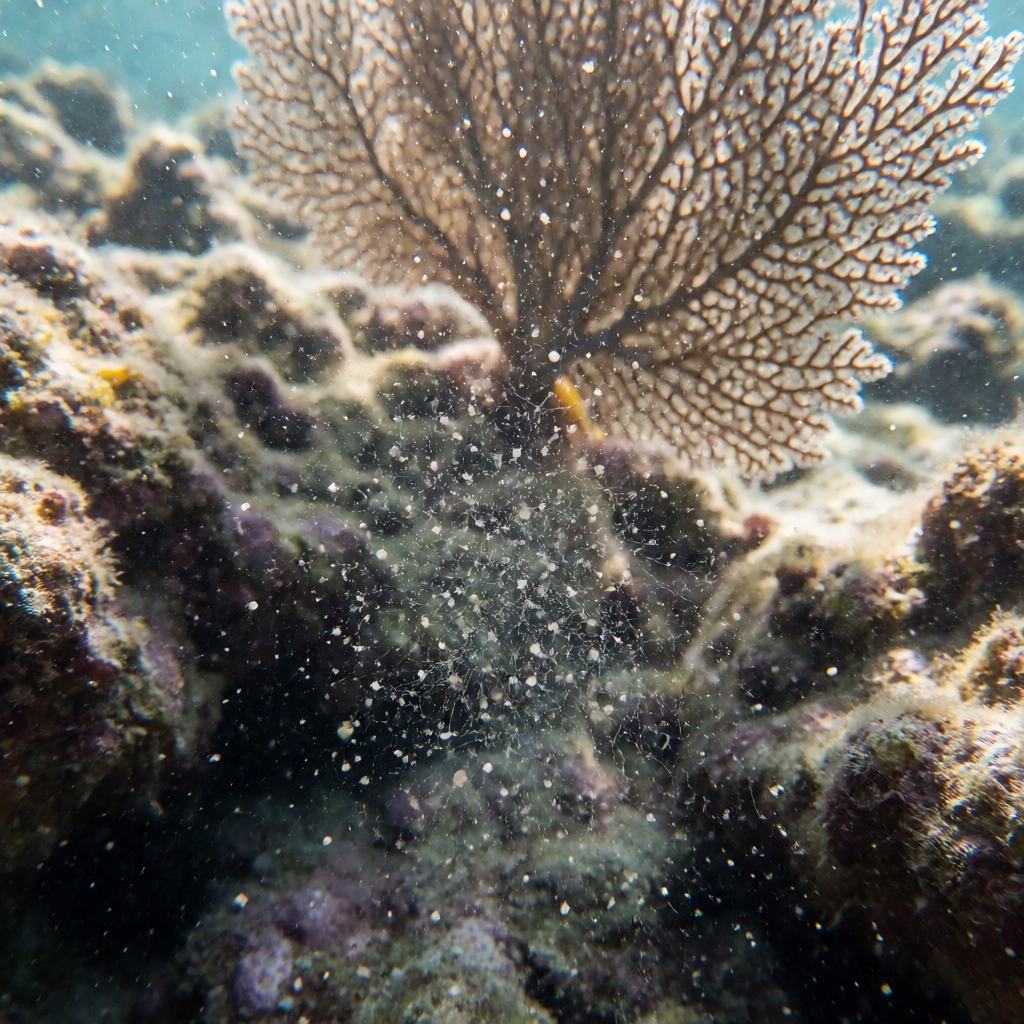
The Pink Sea Fan breeds by releasing eggs and sperm into the water. In summer the colonies ripen their cells. They shed them into the current at the same time. The timing matters. The eggs must meet sperm from another colony. A single fan on a rock has little chance of breeding. The eggs grow into small larvae.
These swim for a short time and then settle on rock. Each one changes into a first polyp. From that point the colony grows by budding. Each new polyp adds to the branch. A fan on bare rock slowly spreads. Growth is very slow. A fan may add less than 1 cm a year.
So a colony of 50 cm across is more than 20 years old. The species can also spread when a branch breaks off. A piece that lands on a good surface can grip the rock. Then it grows into a new fan. Young colonies often die. Only a small share of them reach full size.
Crushed by gear, slow to return
Conservation
The Pink Sea Fan is one of the most at risk animals of the seabed. It grows slowly, breeds late and cannot flee. One pass of a trawl can crush colonies that took years to build. Great numbers of fans have been lost off the south coast of Britain. Dead colonies are often seen piled in the tracks of dredges. Damage does not stop at the break.
The open skeleton of a crushed fan can be infected by a germ. That germ causes a disease with dark patches on the branches. The disease has spread through several groups of the species. Silt, coastal building and the warming of the sea add more strain. In Britain the Pink Sea Fan is a protected species. It is listed as a priority for conservation.
Recovery is possible but very slow. A broken fan needs many years to return. The most useful step is simple. Heavy gear should be kept off the rock where the fans grow.
Quick hits
Five things to remember
- One fan holds thousands of polyps that all open and feed at once.
- Every polyp has exactly 8 feathery tentacles, the mark of the soft coral group.
- A fan grows so slowly that a large colony is likely to be over 20 years old.
- When it is touched, the polyps pull into the branches within seconds.
- A broken piece can grip the rock and grow into a new fan.