 By Iris
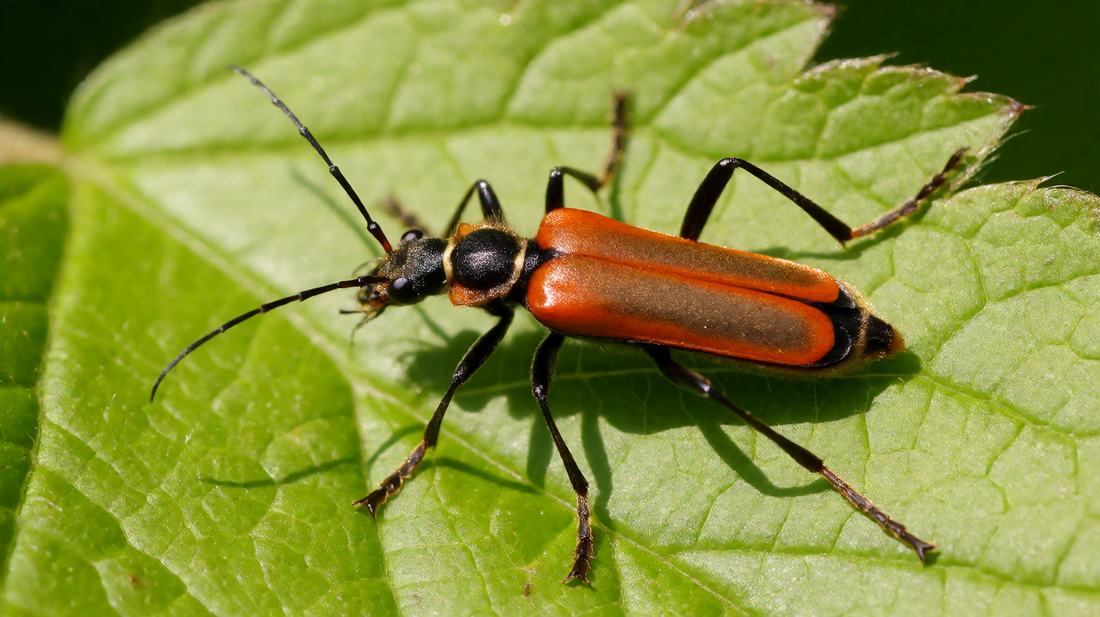
Rhagium inquisitor | Soldier Beetle
Species Profile · Cantharidae
Soldier Beetle
The long red beetle of the open sunny field — a fast hunter of the small caterpillars and aphids, marked with a broad dark stripe down the middle of its back.
IUCN: Least Concern
Range
Body
Mark
Larvae
Threat
The long red hunter of the open field
Keeping the caterpillars down
The soldier beetle is a long, red, fast-moving beetle. It lives in the open, sunny field of the temperate north. It is one of the commonest of the large beetles of the rough, weedy ground of the field margin and the hedge bank. It belongs to the order Coleoptera. That is the beetles. Within this order it sits in the family Cantharidae.
That is the soldier beetles. The genus Rhagium carries the 4 or 5 close relatives of the rough field. The adult is hard to mistake. Its most obvious feature is the long, red-orange body. It is marked with a broad, dark stripe down the middle of the back. The animal is a fast, active hunter.
It will move across the leaf and the flower of the open ground. The species lives across the whole of Europe and across most of the temperate world. It is one of the commonest of the large beetles of the rough, weedy field. It is a hunter of the small, soft-bodied insects of the field. It is one of the animals that keeps the numbers of the small caterpillars and the aphids down in the open ground.
Family tree
Cantharidae, the soldier beetles
The soldier beetle is in the order Coleoptera. That is the beetles. It sits in the family Cantharidae. The Swedish entomologist Linnaeus described it in 1758. It has stayed in the family ever since. The order Coleoptera is defined by the hard, wing-like front wings.
They are the structure that the beetle folds over the soft back. The whole order is one of the largest of the orders of the insects. Within the order the family Cantharidae carries the soft-bodied, long, active beetles of the rough field. The genus Rhagium sits among the 4 or 5 close relatives of the same ground. Its close relatives in the other seas are the other members of the family. Those live in the rough, weedy ground of the temperate world.
The soldier beetle shares the order with the seven-spot ladybird. That is a very different family and a very different kind of beetle. The two live in the same place. They meet in the open, sunny field of the rough ground. The ladybird is one of the animals that the soldier beetle and its close relatives will not fight for.
Red-orange body, dark stripe
How to tell one
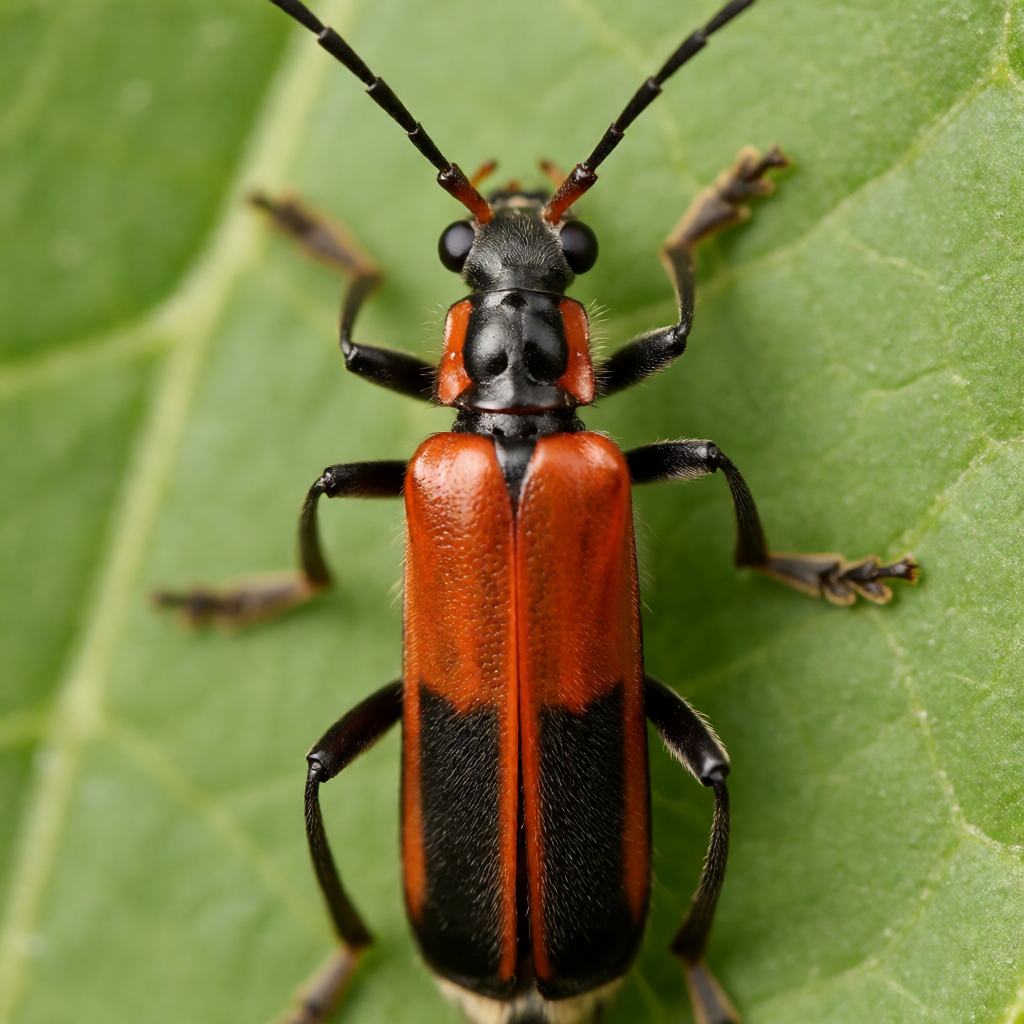
The adult soldier beetle is a long, slender beetle. Its body is about 15 to 18 mm. It is one of the longest of the beetles of the field. Its colour is a clean red-orange. Its two hard wing cases are marked with a broad, dark stripe down the middle of the back.
Its head is small and black. Its two long, fine antennae and its two long, thin legs are the marks of the active hunter. Its body is soft under the hard wing cases. It will open the wings and fly a short distance when it is annoyed. Its larvae are long and thin.
They live in the soil. There they feed on the small, soft-bodied insects of the rough ground. The whole animal is easy to tell by the red body and the dark stripe.
1
2
3
The sunny rough ground
Where it lives
The soldier beetle lives in the open, sunny, rough ground of the temperate north. It is a creature of the field margin, the hedge bank and the weedy, sunny slope. It will grow from the light, open field up into the rough, stony ground of the upland.
The species is one of the commonest of the large beetles of the rough field. It is found across the whole of Europe and across most of the temperate world. The beetle is a strong, active hunter.
It moves across the leaf and the flower of the open ground. It will not take to the deep, shaded ground that the other beetles will. It is one of the beetles that is most at home in the light of the open, sunny field.
Small soft-bodied prey
What it eats
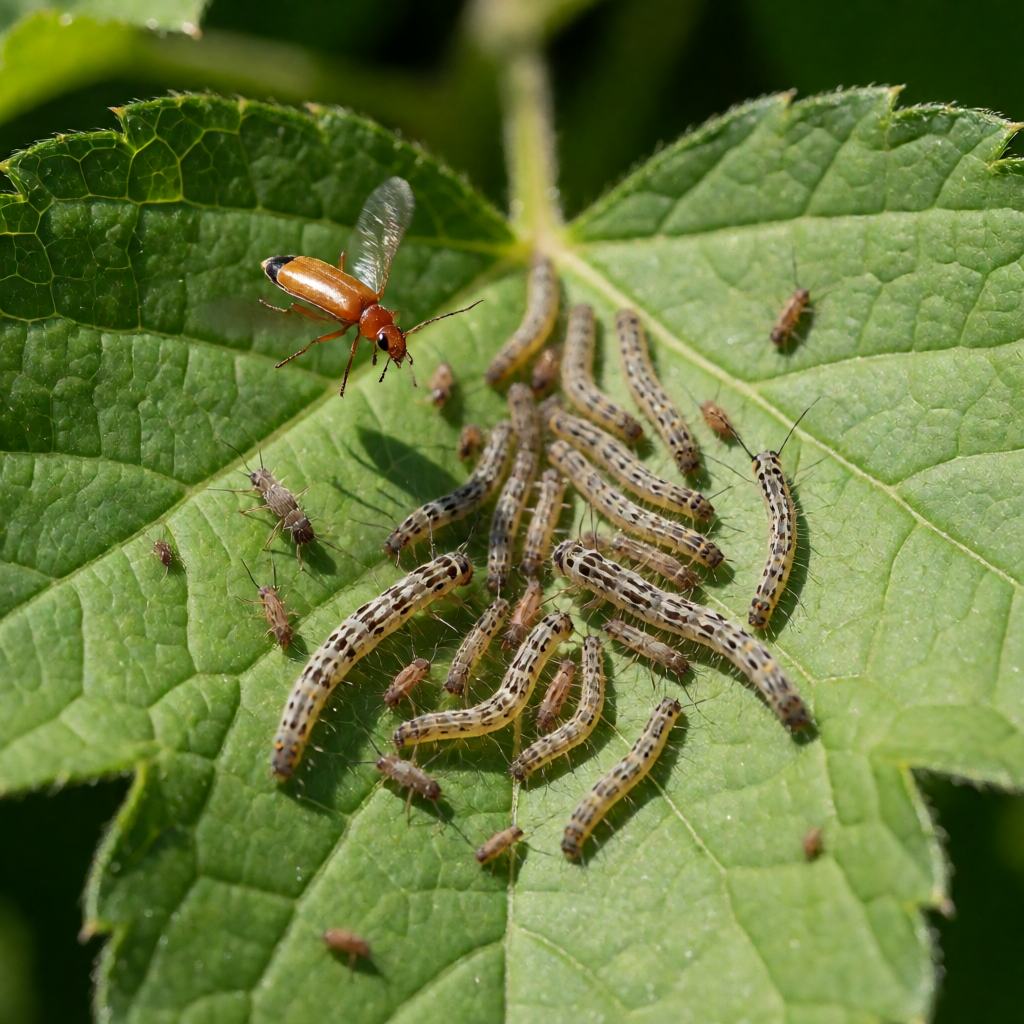
The soldier beetle is a hunter of the small, soft-bodied insects of the open ground. It will take the small caterpillars and the aphids that it meets on the leaf and the flower of the rough field. The adult is a fast, active hunter.
It will take the small, soft-bodied prey that it can catch. The larvae live in the soil. There they hunt the small, soft-bodied insects of the rough ground.
The species is one of the animals that keeps the numbers of the small caterpillars and the aphids down in the open ground. It is one of the hunters that the farmer will not fight.
Eggs in the weedy ground
The breeding cycle
The soldier beetle breeds in the warm months of the summer. The female lays her eggs in the rough, weedy ground of the open field. The larvae will hatch into the soil. There they take the small, soft-bodied prey of the rough ground.
The species is one of the slow breeders. It will not live for more than a year or two in the open ground. The adult will emerge from the soil in the warm months of the summer. It will mate.
It will lay the eggs that start the next generation. A single female will lay a small number of the eggs. The larvae that will come from them will keep the small, soft-bodied insects down in the open ground through the summer.
No danger, the spray is the risk
Conservation
The soldier beetle is not in danger. It is one of the commonest of the large beetles of the rough field. It does not appear on the list of the threatened beetles. Its range is still as wide as it has been.
The one real threat is the loss of the rough, weedy ground that it lives on. The spraying that is put on the crop to kill the small, soft-bodied insects that it feeds on does the same harm. A field that is open and weedy will hold more of the beetles. That is more than the field that has been treated with the spray.
The species marks the health of the rough field well. It will not come back to the ground that has been sprayed.
Quick hits
Five things to remember
- The soldier beetle is one of the longest of the beetles of the field. It carries a broad, dark stripe down the middle of the red-orange body.
- The adult will open the wings and fly a short distance when it is annoyed. It is one of the fast, active hunters of the open ground.
- The larvae spend their early life in the soil. There they take in the small, soft-bodied insects of the rough field.
- The species is a true marker of the health of the rough field. It will not return to ground that has been sprayed.
- The one real threat is the loss of the rough, weedy ground that it lives on, and the spraying that is put on the crop.