 By st20113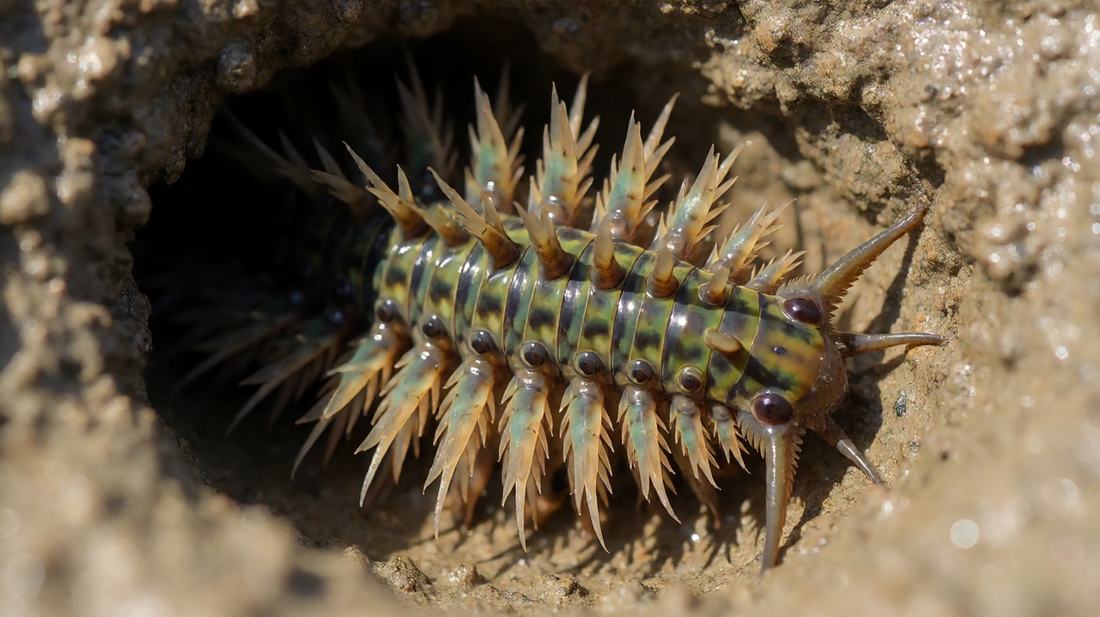
Nereis diversicolor | Ragworm
Species Profile · Nereididae
Ragworm
The big bristle worm of estuary mud, dug for bait for generations — a hunter that turns its throat inside out to grab prey with toothed jaws.
IUCN: Not Evaluated
Range
Body
Segments
Density
Life
The worm in the mud
A bristle worm of estuaries
The ragworm is the bristly, shiny worm that turns over estuary mud. It is one of the commonest animals in the soft mud of European coasts. It is a polychaete. That is a worm with a clear head, a body in segments, and a pair of bristle-bearing paddles on almost every segment. The animal lives in a burrow in mud or muddy sand. It comes to the surface to feed.
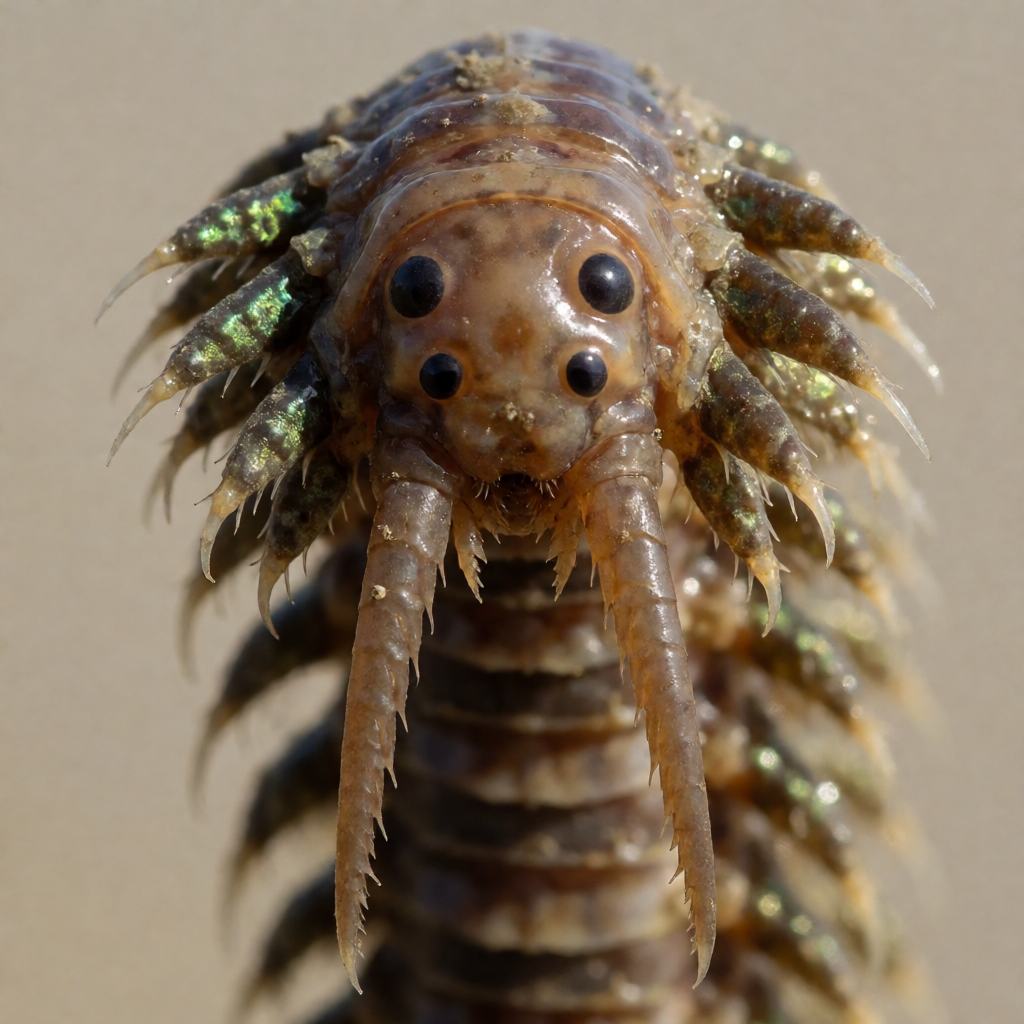
It can be a hunter, a grazer, or both, depending on what is there. Its clearest feature is the head. It has 4 dark eyes, a pair of long feelers, and a proboscis that can be turned inside out. That shows a pair of hard toothed jaws. Those jaws let it take prey as well as waste. The species stands a lot.
It lives in water from almost fresh to full seawater. It lives in mud with almost no oxygen. That is why it rules the mud of estuaries and brackish lagoons where few other animals can live. It is also one of the few worms that people sell. Ragworms are dug and farmed as fishing bait and as feed for shellfish hatcheries. Numbers can be huge.
Family tree
Nereididae, the ragworms
The ragworm is in the family Nereididae and the genus Nereis. It is also widely put in the genus Hediste. It is often listed as Hediste diversicolor. Müller named the species in 1776. The genus name Nereis refers to the sea nymphs of Greek myth. Nereididae is one of the largest and best known families of polychaetes. Its members are known by the well-formed head with feelers and cirri. They are known by the pharynx that turns inside out with a pair of jaws.
They are known by the fleshy paddles with many bristles. The family sits in the order Phyllodocida and the class Polychaeta, the bristle worms. That is the largest group in the phylum Annelida. The move of this species between Nereis and Hediste shows that the old genus Nereis was a catch-all. Later work split it using the paddles and the jaws. Both names are still used. The animal is sold as ragworm under either. The species is close to Nereis virens, the king ragworm.
That is a bigger animal of more open coasts. It is the other main bait species. The ragworm shares the genus with the king ragworm. The two look much alike to an untrained eye. Size, paddle shape and habitat tell them apart. Nereis virens likes clean sand and gravel. This species rules fine organic mud in estuaries.
Segments, bristles and jaws
How to identify one
A full-grown ragworm is 6 to 12 cm long. The biggest reach 15 cm. The body has up to about 120 segments. It is widest in the middle and narrows towards the tail. The colour varies and is often lovely. It can be greenish brown, olive or bronze. The bristles give it a shiny look. A bright red blood vessel runs along the back.
The animal is soft but well armoured with bristles. The head carries 4 dark eyes in a trapezoid. It has a pair of stout feelers and a pair of antennae. Several pairs of cirri sit behind them. The pharynx turns inside out. When the animal feeds or defends itself it pushes the front of the gut out through the mouth. That shows a pair of dark curved toothed jaws and a ring of small teeth. Each body segment but the first and last has a pair of paddles.
These are fleshy flaps edged with bundles of bristles. The paddles serve for walking, for swimming and for pumping water through the burrow. The bristles give grip in the tunnel. 2 long thin cirri sit at the tail end. The blood holds haemoglobin. The animal is red-blooded. That is unusual for an animal of this size. It is part of why it lives in mud with no oxygen.
1
2
3
Tunnels in soft estuary mud
Where it lives
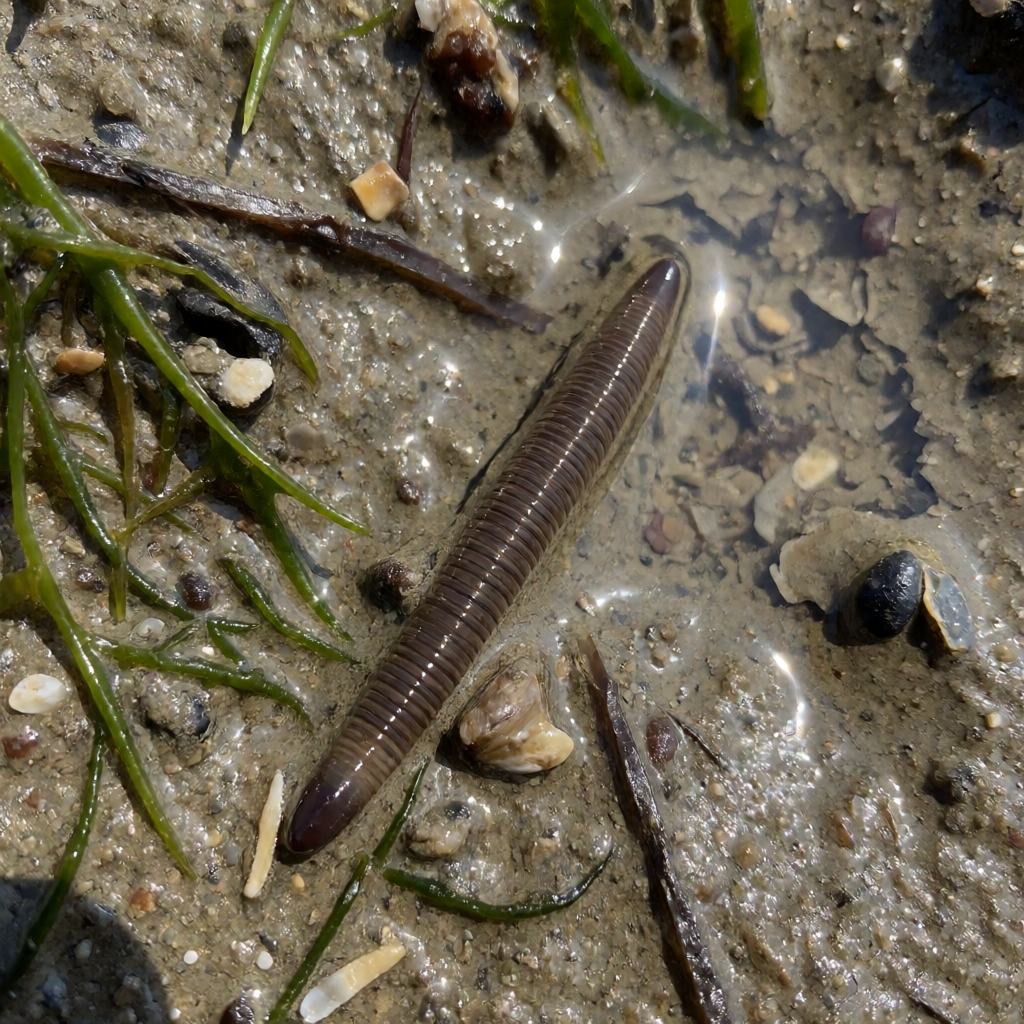
The ragworm is an animal of estuaries and sheltered soft mud. It lives in muddy sand, silt and fine organic mud. It lives in the upper and middle reaches of estuaries. It lives in brackish lagoons, in saltmarsh creeks, in ditches behind sea walls, and in the muddy edges of quiet bays and harbours. It is a burrower. The animal builds a U-shaped or branching tunnel lined with mucus. The tunnel can be 20 cm deep.
The worm keeps the mouth clear and pumps water through it. It stands a very wide range of salt. It lives from almost fresh water at the head of an estuary to full seawater at the mouth. It is one of the few polychaetes that thrives in the middle of that range. It also stands low oxygen and high organic content. It is often common in black, smelling mud where almost nothing else lives. That is why people use it as a sign.
Where mud is heavily enriched with waste, ragworms may be the only large animal left. Their numbers rise as other species go. The range covers the north-east Atlantic. It runs from Norway and the Baltic south to the Mediterranean and the Black Sea. The animal has been recorded elsewhere where it may have been carried by ships. Numbers in good mud can pass 10000 animals per square metre.
Scavenger, hunter and grazer
What it eats
The ragworm eats almost anything. It is an omnivore and a scavenger. It switches between several ways of feeding. It grazes the surface of the mud. It takes diatoms, algae, bacteria and waste. It rakes the mud with its feelers. It takes dead flesh. It is one of the first animals to reach a dead fish or crab in an estuary. It is also a hunter.
The proboscis shoots out. The jaws grip. The animal drags small prey back into the burrow. It takes other polychaetes, small crustaceans, molluscs, and the larvae of insects and other invertebrates. It eats its own kind when two meet in a burrow. There is also a filter-feeding mode. The animal spins a mucus net across the mouth of its burrow. It pumps water through it. Then it eats the net with everything caught in it.
Which way dominates depends on the habitat, the tide and the size of the worm. Big animals take more prey. Animals in rich mud graze and scavenge more. Feeding is mostly at night. The animal comes to the mud surface or waits at the burrow mouth with the proboscis part out. Because it eats waste and dead flesh as readily as live prey, it is a key part of the estuary recycling system. It is a main food for wading birds and for fish.
One breeding season, then death
The breeding cycle
The ragworm has separate sexes. The two look alike until they mature. Most animals live 1 to 3 years and breed once, then die. The striking part of the life cycle is the change that comes with maturity. As the animal nears spawning its body changes shape. The eyes grow. The paddles grow and develop broad swimming blades. The bristles change form. The gut shrinks and stops working.
The body fills with eggs or sperm. This changed swimming form is called the epitoke. Mature worms leave the burrow and swim up into open water. There they gather in swarms. They often swarm on spring tides in spring and summer. Heat and the lunar cycle trigger the swarms. Gametes are shed into the water. The eggs are fertilised outside the body. The adults die after spawning.
Their bodies add to the organic load of the estuary. The eggs grow into trochophore larvae and then into segmented larvae. These spend a short time in the plankton. Then they settle into the mud and take up life in a burrow. Some groups breed in the burrow without a full change. Because spawning is timed together within a group, most of the year’s breeding happens on a few nights. The timing is steady enough that bait diggers and shellfish farmers watch for it.
Not Evaluated, dug for bait
Conservation
The ragworm is not assessed on the global Red List. It is not at risk. It is one of the most common animals in European estuarine mud. It stands disturbance unusually well. That tolerance is the reason. The species lives in low oxygen, wide salt swings and heavy organic waste that kill most other large invertebrates. It often grows in number where pollution has removed its rivals and hunters.
That makes it a sign of damaged conditions as much as a sign of healthy ones. The pressures that do matter are physical. Dredging, land claim, and the building of barrages and sea defences remove estuarine mud altogether. Bait digging at high intensity can empty local groups. Mechanical pumping for bait takes worms faster than they can return. Several estuaries now manage digging with limits and closed seasons. The trade side matters too.
The species is gathered by hand and by pump. It is farmed in tanks in several countries. It is sold fresh, frozen and as feed for shrimp and shellfish hatcheries. It is also used in lab tests of mud toxicity. That is one reason its biology is better known than that of most polychaetes.
Quick hits
Five things to remember
- As it matures the animal changes into a swimming form called an epitoke: the eyes grow, the paddles grow, and the gut stops working entirely.
- The changed worms swarm in the water on spring tides, shed their gametes, and then die, so most animals breed only once.
- It has red blood containing haemoglobin, which lets it live in black mud with no oxygen where almost nothing else survives.
- The proboscis turns inside out to show a pair of dark toothed jaws, and the animal uses it to drag prey back into its burrow.
- Numbers in rich estuary mud can pass 10000 animals per square metre, and the species is dug and farmed as fishing bait.