 By st20113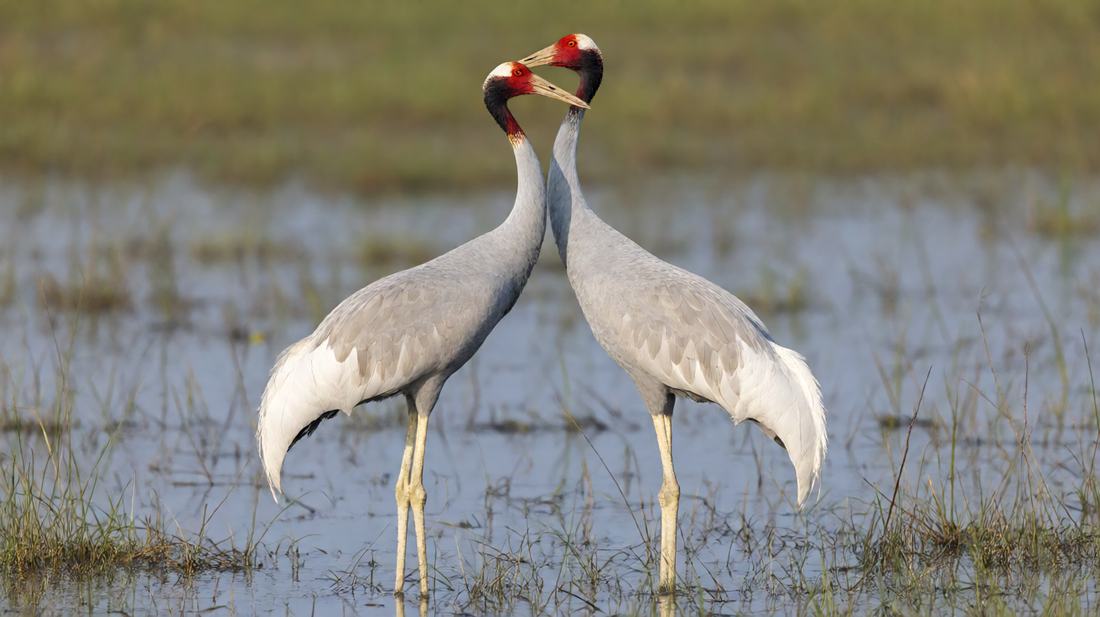
Antigone antigone | Sarus Crane
Species Profile · Gruidae
Sarus Crane
The tallest flying bird in the world, standing 1.8 metres in the wet fields of India — a crane that has made a home in farmland and is now losing it to the plough.
IUCN: Vulnerable
Range
Height
Weight
Nest
Incubation
The tallest bird that flies
A crane of the Indian plain
The sarus crane is the tallest of all the flying birds of the world. A standing male can reach a height of 1.8 metres. That is more than the height of a tall person. The bird is a resident crane. It does not migrate. It lives in the wetlands and the wet fields of the Indian subcontinent. It also lives in the south-east of Asia and in the north of Australia. It is the only crane of the world that has managed to live and breed in settled farmland. That farmland sits in a very densely populated country. The bird is one of the most striking of the large birds of Asia.
It is also one of the most important cultural symbols of the Indian countryside. The bird is a familiar figure of the Indian plains. People know it for the pair that stays together for the whole of the life. The pair defends a very large territory through the whole of the year. That loyalty has been part of the folklore of the region for many centuries. The bird is also the subject of the oldest of the fables of Sanskrit literature. The poet Valmiki saw the death of the male of a pair. His grief at that sight gave the first of the verses of the epic tradition. The species is assessed as Vulnerable on the global Red List. The world population is now estimated at between 15,000 and 20,000 individuals.
The bird has declined very heavily over the last century. Most of that loss came from 3 things. The wetland has been lost. The birds are disturbed. The birds also collide with the power lines of the growing electricity network of the region. The sarus crane is a bird of the very open landscape. It needs the shallow water of the marsh and of the paddy field for the nesting. It is the only crane of the region that does not make the long migration. The whole of the life of the bird is passed within a few kilometres of the place of its birth. So the species is far more open to local changes of the landscape than the cranes that can move away from damage in one place to safety in another.
Family tree
Antigone, the sarus cranes
The sarus crane was described by Linnaeus in 1758. Modern work places it in the genus Antigone. That genus sits in the family Gruidae. The genus is the group that people sometimes call the non-migratory cranes. It holds the sarus crane of Asia and of Australia and the brolga of Australia. It also holds the sandhill crane of North America. The bird is a close relative of the Sandhill Crane (Antigone canadensis). That is the abundant crane of the plains of North America. It shares the same general proportions and the same way of life. It also shares the same grey plumage. The 2 are the 2 most numerous and the 2 most successful of the cranes of the world. Comparing the 2 is one of the most interesting of the studies of the cranes. The sarus crane is the bird of the tropics.
It is resident and it is in decline. The sandhill crane is the bird of the north. It is migratory and it is increasing. The taxonomy of the species has been revised in the modern period. The bird was formerly placed in the large genus Grus. Most of the other cranes sit in that genus. The genetic work of the present century has shown something new. The sarus crane and the brolga and the sandhill crane form a group. That group is the sister of the rest of the family. So the name Antigone has been revived for it. Modern work accepts 3 subspecies. They differ chiefly in size. They also differ in the extent of the bare red skin of the head and of the neck.
The exact tone of the grey of the plumage matters too. The nominate form of the Indian subcontinent is the largest of the 3. It lives on the plains of the north of India and of Nepal and of Pakistan. The form of the south-east of Asia is smaller. It is now very rare over the whole of its range. It holds a small number of sites in Myanmar and in the neighbouring countries. The form of Australia is the smallest of the 3. It lives in the wetlands of the north of the continent. The name of the genus comes from the Greek legend. The name of the species is the Sanskrit word for the bird. So the sarus is one of the few birds of the world whose scientific name and whose common name both come from the language of the country where it is best known.
Red head, grey body
How to identify one
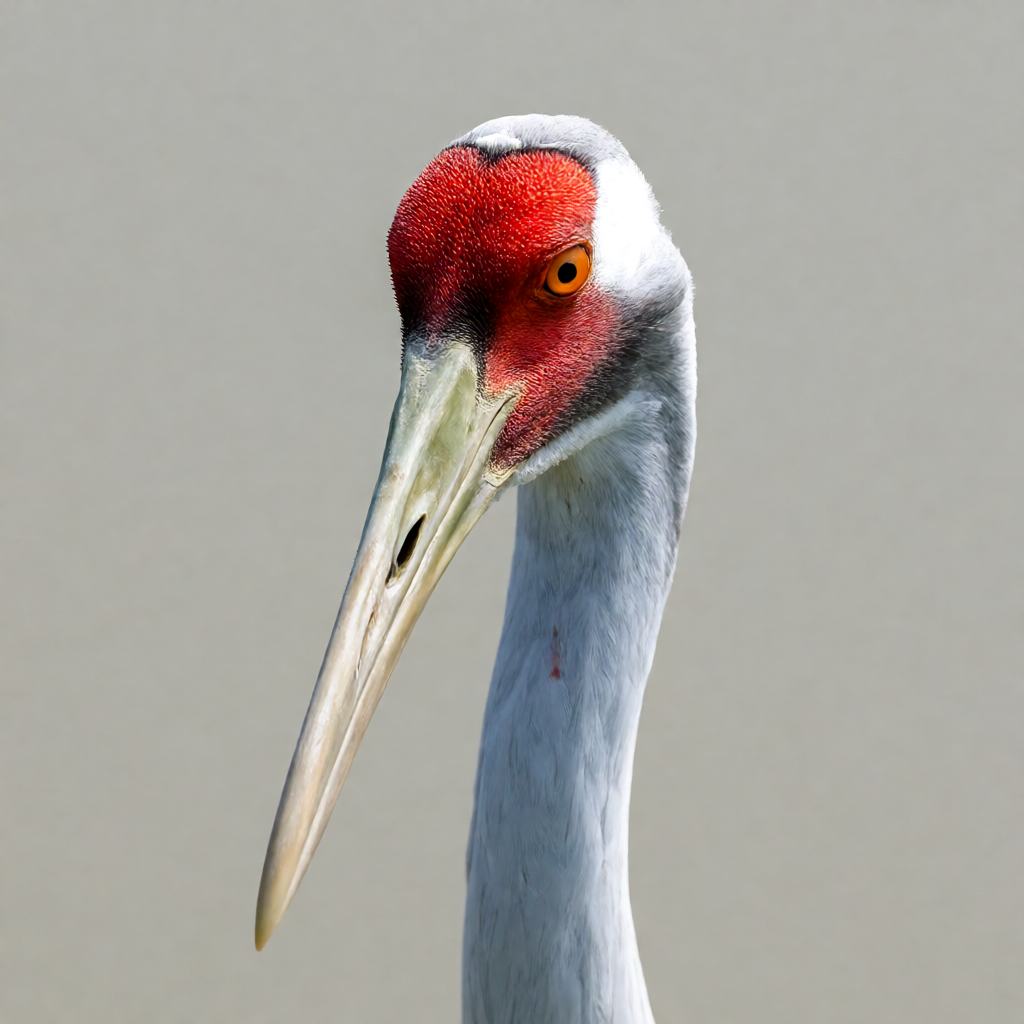
An adult sarus crane is between 152 and 156 centimetres in length. Its wingspan is between 220 and 250 centimetres. Its mass runs from about 5 kilograms in the smaller females. The heaviest males reach 12 kilograms. So the bird is not only the tallest of the flying birds. It is also one of the heaviest of the birds that can fly for a long time. The standing height of the bird is between 1.5 and 1.8 metres. A male of the Indian form can look a person of ordinary height in the eye. The whole of the plumage is a plain pale grey. One part stands out. The bare skin of the head and of the upper neck is a vivid red. Small wart-like bumps cover that skin. The naked red skin is the most obvious character of the bird.
It shows at a very long distance in the open landscape. The red of the head of the sarus is much more extensive than the red of any other crane of the region. The feathers of the wing are a slightly darker grey than the feathers of the body. The inner feathers of the wing are long and fall over the tail. That gives the bird the look of having a long tail. It is one of the reasons that the bird looks even taller and more slender than the measurements alone suggest. The legs are very long and slender. They are a pale grey-green or a dull pinkish colour. In proportion to the size of the body, the legs of the sarus crane are the longest of any of the flying birds. The bird feeds in shallow water up to the knee. It can walk through flooded fields and marsh without wetting the feathers of the body. The bill is long and slender and pale greyish-green. The bill of the sarus is longer and more slender than the bill of the sandhill crane.
That is one of the characters that separates the 2 species. The iris is a pale yellow or an orange. The red of the bare skin surrounds it. The sexes look alike in plumage and differ very greatly in size. The male is the taller and the heavier of the 2. That difference in height shows at a distance. So the pair is easy to identify in the field. The young bird is a duller grey than the adult. The feathers of its head and neck are partly covered. Its bare red skin is much less developed. The red of the head is not complete until the bird is more than 2 years old.
1
2
3
Wetland and flooded paddy
Where it lives
The sarus crane needs shallow wetland and wet field in very open country. The bird is unusual among the cranes in one way. It is not tied to the natural marsh. It also uses the man-made wetlands of the flooded paddy field and of the reservoir and of the canal. So the species has become the bird of the farm landscape of the plains of the north of India. It nests in the small patches of marsh and of wet field that have survived the spread of the cultivation. The bird needs water of a very shallow depth for the nesting. It builds the nest in the standing water. It feeds in the wet ground of the edge. So it depends on the pattern of the rainfall and on the irrigation of the fields.
Modern farming has changed the cropping and the irrigation. That has altered the landscape for the species very greatly over the last 50 years. The bird is a permanent resident and it does not make the long migrations. The pair holds the same territory for the whole of the year. It defends that territory against the other cranes and against the other large birds. The territory of a pair is very large. It may cover several square kilometres of the wetland and of the fields. That defence of the territory is one of the reasons that the number of birds is so low over most of the range. The bird puts up with people to a degree that is remarkable for a bird of its size. It feeds in the fields within a few metres of the plough and of the harvest.
That tolerance is one of the reasons that the species has held on in the settled landscape of the Indian plains. The greater part of the other large birds of the region have gone. The bird is protected by the religious tradition of the region as well as by the law. The killing of a sarus crane is a serious matter in the culture of the villages of the plains. The species has been hit very hard by the spread of the electricity network. Collisions with power lines are one of the greatest of the modern causes of death. The sarus crane is one of the largest of the birds that are killed in that way. The bird is heavy and it flies with slow wing beats. The wires are also hard to see against the bright sky of the plain.
A prober of wet ground
What it eats
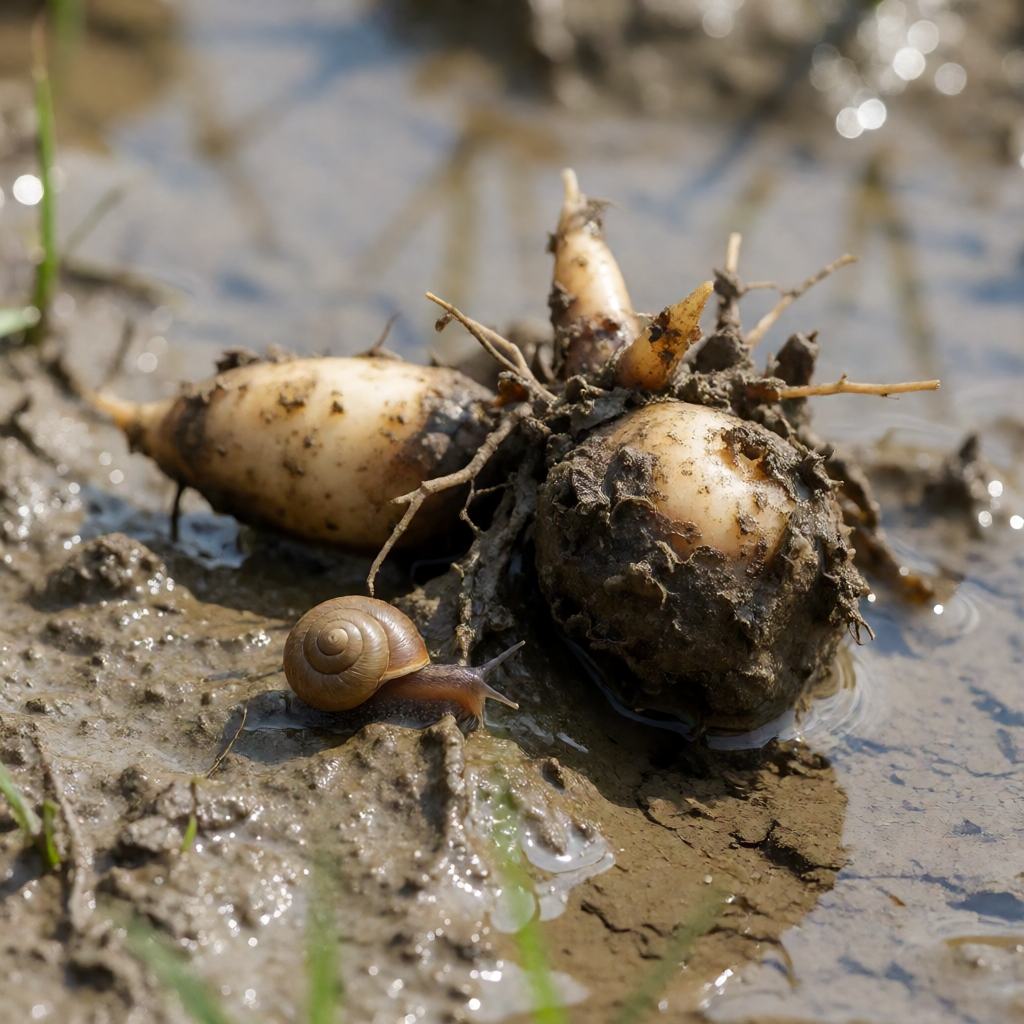
The sarus crane is an omnivorous bird. It takes a very wide range of plant and animal food. The shallow wetland and the wet field supply it. The greater part of the diet is the roots and the tubers and the shoots of water plants. Seeds and grain matter too. The animal food is very important as well. It includes insects and the larvae of insects. Snails and crustaceans and the worms of the mud add to the list. Small vertebrate prey is taken too. Frogs and small fish and snakes are all eaten. So are the young of the other birds. The bird probes the muddy ground with its long bill.
It also pecks the prey from the surface of the water and of the land. It uses the bill to dig out the tubers of the water plants from the soft mud. Those tubers matter a great deal in the dry season. The marsh is low then. The ability of the bird to reach food buried in the mud explains its very long bill. The bird feeds in the fields in the company of cattle and other livestock. It takes the insects and the other small animals that the movement of the animals disturbs. That link between the sarus crane and the grazing animals is one of the most familiar scenes of the Indian countryside. The bird has also learned to feed on the fallen grain of the harvest. It eats the young shoots of the crops as well. Farmers in some parts of the range accuse it of damage to the rice and to the wheat. Yet studies of the diet show something else.
Animal food and weed seeds form the greater part of the diet. The damage to the crops is much less than the farmers believe. The bird needs a very large quantity of food. The daily need of a bird of 10 kilograms is considerable. The pair and the young feed over a large area. So the territory of the pair must hold enough productive wetland for the whole of the year. The loss of the small marsh and of the wet field of the territory is therefore a very serious matter. Both parents feed the young bird for the first weeks. They give the food item by item. The chick can find food for itself from an early age. The parents keep on providing food for the growing young for several months.
A pair for life
The breeding cycle
The sarus crane forms the pair bond at the age of 2 or 3 years. That bond lasts for the whole of the life of the birds. The pair performs an elaborate duet display. The 2 birds call in strict alternation. They also dance with bowing and leaping and spreading of the wings. That duet is the most striking of all the displays of the cranes. The birds perform it at the beginning of the nesting season. They also perform it when the bond needs to be reinforced. The bird does not make the long migration. The nesting is timed to the beginning of the monsoon. The pair builds the nest of reeds and grasses and other vegetation of the marsh. It places the nest in standing water of between 20 and 50 centimetres in depth. The nest is a solid mound that raises the eggs above the surface of the water. Both birds build it.
The material comes from the immediate surroundings. The clutch holds 2 eggs. The usual clutch is of 2. A single egg is not uncommon in a year of poor condition. The eggs have a pale ground with reddish-brown and purple marks. In proportion to the size of the body, the eggs of the sarus crane are among the largest of the eggs of any flying bird. Both parents sit. Incubation lasts for between 31 and 34 days. The birds share the duty. The changeover of the sitting bird comes with a display of the pair. The bird that is not on the nest stands guard nearby. It drives off the predators and the other large birds. The chicks are precocial. They are covered in reddish-brown down that fades to the grey of the adult.
They leave the nest within a day of the hatching. The parents lead them through the shallow water and the wet field. The family of the 2 adults and the 1 or the 2 young moves together for a very long period. The young bird can fly at about 3 months of age. It stays with the parents for the whole of the first year and sometimes longer. It is not driven away until the pair is ready for the next nesting season. So the output of the species is very low. There is a single clutch of 2 eggs in the year. The greater part of the broods is lost to predators and to floods. The bird does not begin to breed until the age of 3 or 4 years. That mix of low output and a very long generation time explains one thing. The species cannot recover quickly from any rise in the death rate of the adults.
A crane of a crowded land
Conservation
The sarus crane is assessed as Vulnerable on the global Red List. The world total is now put at between 15,000 and 20,000 individuals. The species has declined very heavily over the last century. The population of the south-east of Asia is now reduced to a very small number of birds. That group is in the most serious condition of all. The greatest cause of the decline is the loss and the damage of the wetland. The marsh has been drained. Wet field has been turned to other use. Reservoirs and canals have been built. All of that has removed a very large part of the habitat of the bird.
Pollution of the water and disturbance of the nesting sites have added to the losses. Collisions with power lines are the second great cause of death. The bird is among the largest of those that die in this way. Two measures have been shown to cut those losses a great deal. One is the burial of the wires. The other is the marking of the lines with devices that the birds can see. Shooting is a further pressure. So is the collection of the eggs and the trapping of the chicks. Poisoning by pesticides and by the other chemicals of modern farming has been documented in several parts of the range. The bird is protected by the legislation of the countries of the range.
It is also covered by international agreements on migratory and resident birds. The key sites of the species are protected as sanctuaries and as reserves. The species has become the subject of very active conservation programmes in India and in Nepal and in the other countries of the range. Those measures include the protection of the nests in the nesting season. They include payment to farmers for losses to the crops. They also include the reduction of disturbance around the nesting sites. The population of the Indian form has held at a level of about 10,000 birds. It is now regarded as stable. The recovery of the bird of the south-east of Asia is the most urgent task of the conservation of the species.
Quick hits
Five things to remember
- The sarus crane is the tallest of all the flying birds. A male on the ground stands 1.8 metres tall. He can look a person of ordinary height in the eye.
- The bare red skin of the head and of the upper neck is the most obvious character of the species. It can be seen at a very long distance across the open fields of the plains.
- It is the only crane of the world that has managed to live and breed in the settled farmland of a very densely populated country. It nests in the small marsh and the paddy field within a few metres of the plough.
- The pair stays together for the whole of the life of the birds. The poet Valmiki once saw the male of a pair killed. His grief gave the first of the verses of the Sanskrit epic tradition.
- The bird does not make the long migration of the other cranes. The whole of its life is passed within a few kilometres of the place where it hatched. That makes the species far more open to local change of the landscape.