 By st20113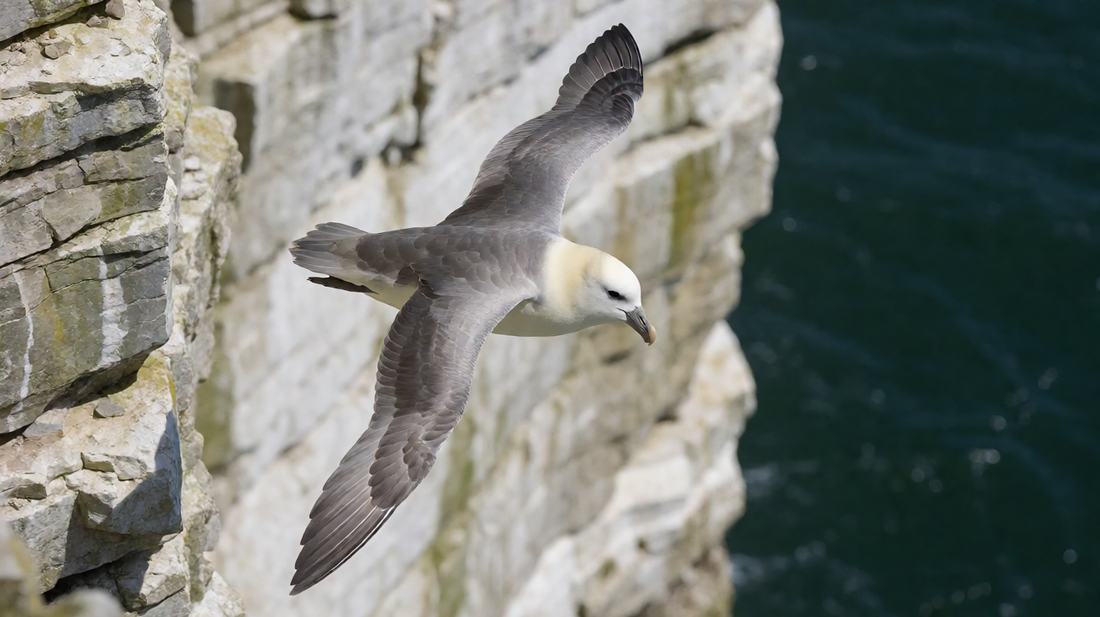
Fulmarus glacialis | Northern Fulmar
Species Profile · Procellariidae
Northern Fulmar
A gull-shaped ocean glider that defends its single egg by spitting oil — and whose stomachs have become the clearest evidence of plastic in the northern sea.
IUCN: Least Concern
Range
Length
Weight
Nest
Chick
The bird that spits oil
A seabird with a chemical defence
The northern fulmar is a medium-sized seabird of the family Procellariidae. It is one of the most abundant birds of the northern seas. Its range covers the whole North Atlantic and North Pacific. Its numbers have grown extraordinarily over two centuries. It was once confined to a few arctic islands. Now it nests on almost every suitable northern cliff. Its numbers run to many millions of pairs.
The bird belongs to the tube-nosed group. That group includes the shearwaters and petrels and albatrosses. The fulmar is the most gull-like of them all. It has a thick neck and a stout body. Its wings are stiff and almost straight. Its bill is stubby and pale. The nostril tubes sit on top of it.
That gull-like look has fooled many people. The bird has one remarkable defence. It can spit foul, oily, sticky liquid at an intruder. That oil can mat a predator’s feathers. It can stop a bird of prey from flying.
Family tree
Fulmarus, the fulmars
The northern fulmar sits in the genus Fulmarus. This is a small group of medium-sized petrels. Its members have a stouter body than the shearwaters. They also have a shorter, stiffer wing. Their flight is shallower and more gull-like. The genus sits with the petrels and shearwaters and albatrosses. All belong to the order Procellariiformes. They share the raised nostril tubes on the upper bill. The genus holds only the northern and the southern fulmar.
The two are so similar that the whole genus is one of the smallest groups of tube-nosed birds. The northern fulmar is the close relative of the Northern Gannet (Morus bassanus). That far larger seabird lives in the same northern waters. It plunge-dives spectacularly for fish. The fulmar feeds gently at the surface. Comparing the 2 species is instructive. One is a heavy diver. One is a light surface skimmer. Both exploit the same water in very different ways.
Linnaeus described the fulmar in 1761. Today we treat it as one species with several colour forms. It occurs in two main morphs. The pale form is grey and white. That is the usual bird of the Atlantic. The dark form is a plain grey-brown all over. It is commoner in the Arctic and the Pacific. The two interbreed freely.
Gull-like and stiff-winged
How to identify one
An adult northern fulmar is 43 to 52 centimetres long. Its wingspan is 101 to 117 centimetres. It weighs 450 to 1000 grams. It is a stout, heavy-bodied seabird. Its build is much more gull-like than the slender shearwater. Its wings are stiff and straight. Flight alternates long glides with stiff, shallow wing beats. Both sexes look alike. The pale form has a white head and body. Its back and upper wing are pale grey.
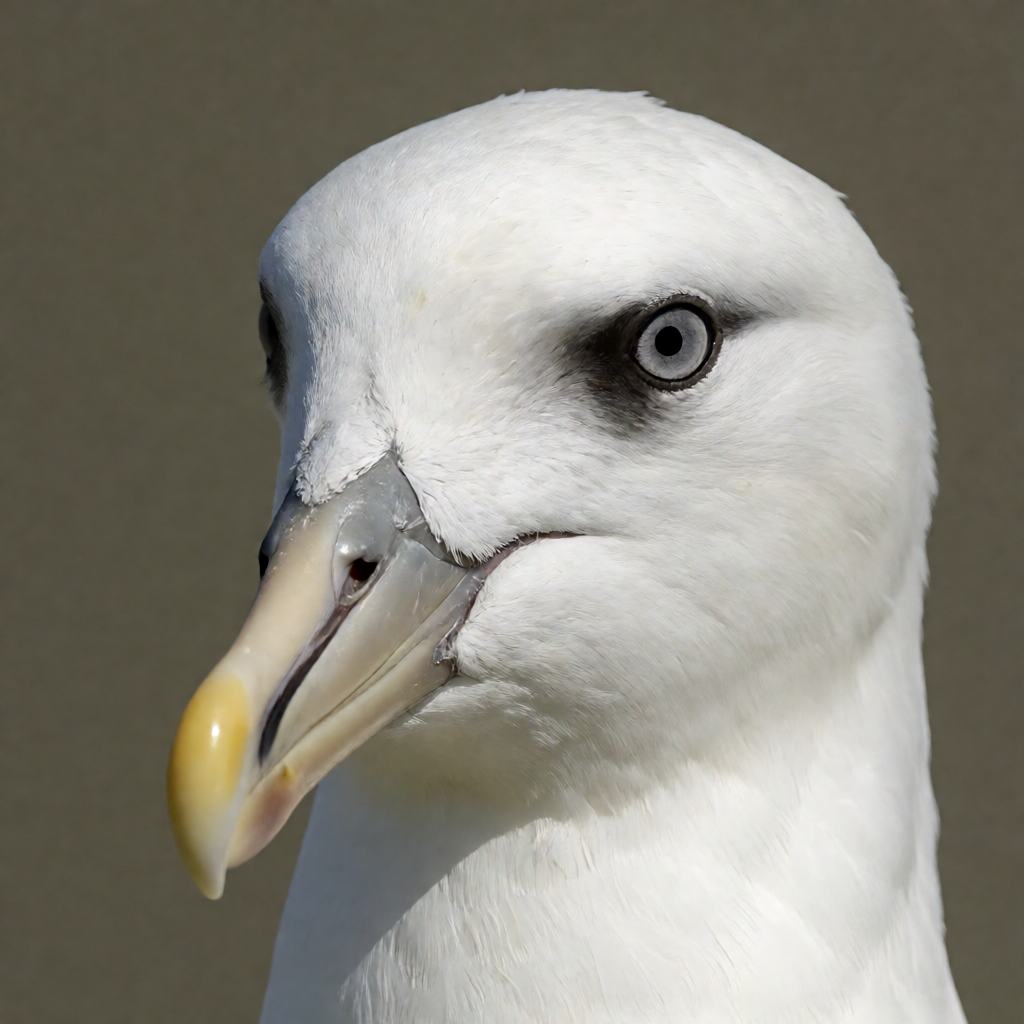
The wing tips are dark. The dark form is uniform grey-brown. Arctic birds are darker still. The bill is stubby and pale. It is yellowish or greyish. The nostril tubes sit raised on top. The legs and feet are pale flesh colour. They sit far back on the body for swimming. The head is round and the neck is thick. The whole look is one of weight and strength.
Flight is the best way to separate it from a gull. The fulmar holds its wings stiff and straight. It glides for long distances without flapping. It shears low across the water and banks against the wind. It never soars and never hovers. Its voice is a low, guttural cluck. It is given at the colony. Much colony communication is by posture and touch.
1
2
3
Cliff ledge and open ocean
Where it lives
The northern fulmar needs a flat, bare ledge on rock. It also needs rich, cold water within reach of the colony. So it lives on the cliffs of the whole northern seas. It also lives on the open water around them. In summer it occupies the whole North Atlantic coast. It nests from Britain and northern France in the south. It reaches Iceland and Greenland and Svalbard.
It also nests on arctic Canada. In the Pacific it ranges from Japan to California. Colonies sit on vertical, inaccessible rock faces. The bird uses the narrowest and barest ledge. The site only needs to be above the waves. In winter the bird leaves the land. It spends the season on the open ocean.
It may wander far from the breeding range. British and Icelandic birds winter in the North Sea and the Channel. They also use the Bay of Biscay and the Atlantic. Pacific birds move south of Japan and California. So the bird is a creature of the open sea for most of the year. Its range has expanded enormously in two centuries. The growth of fishing provided food rather than any change in the sea itself.
A skimmer of the surface
What it eats
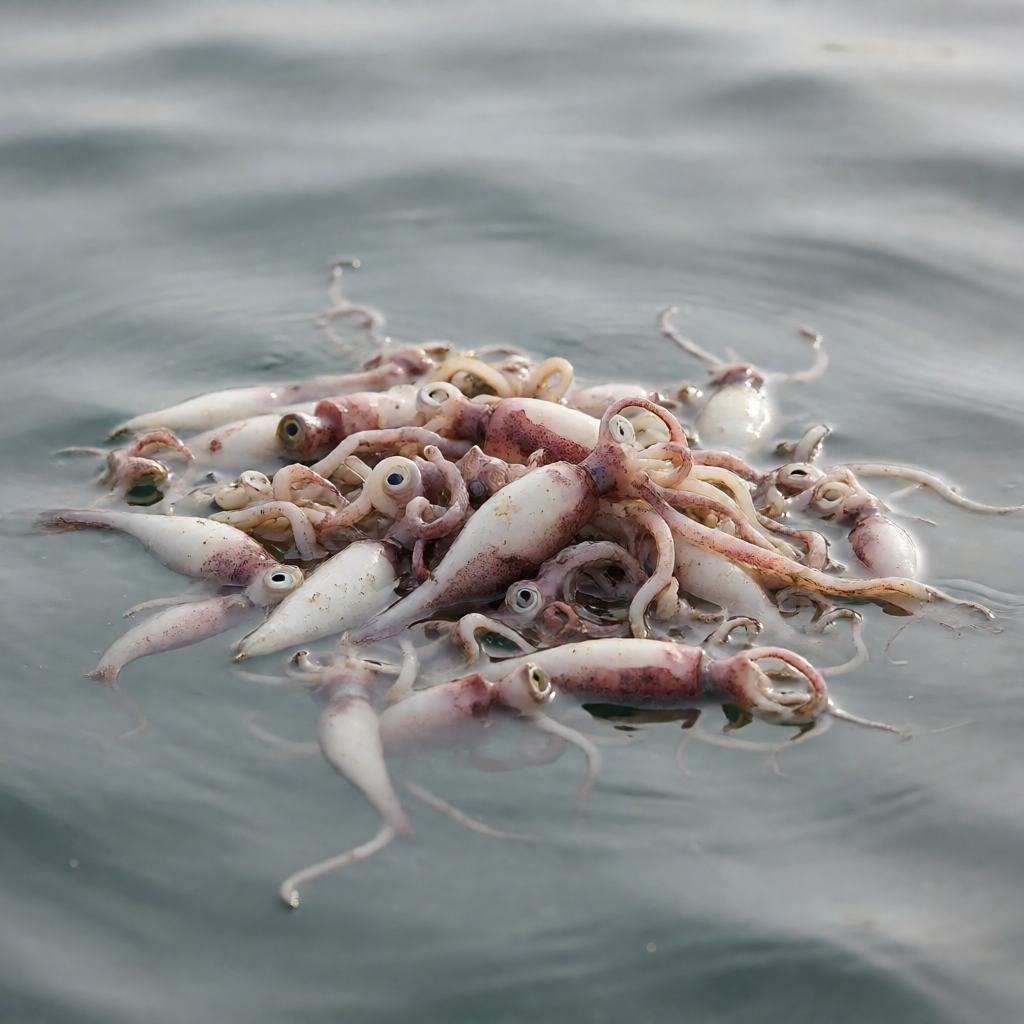
The northern fulmar is a generalist of the cold sea surface. Its diet is mostly fish, squid and crustaceans. It takes small fish and the young of larger fish. It takes squid and octopus from the surface. It eats amphipods and krill and copepods from the plankton. It also eats carrion. Dead fish, whales and seals all provide food. The bird is one of the most eager seabirds around fishing boats.
It now depends heavily on the offal and discards thrown from vessels. The feeding method is surface seizing. The bird picks food from the water as it glides. It settles and paddles with its feet. It does not dive like a gannet or an auk. It can reach only the top metre or two of water. That surface habit explains its success. The bird readily takes dead and waste material.
The growth of fishing therefore fed the species. Numbers rose enormously in the north Atlantic. The bird feeds by day and by night. It follows vessels for great distances. The dependence on fishing waste brings risk. Discards have been cut in the north Atlantic recently. Fulmar numbers on British colonies have since fallen. So the bird that gained from fishing now suffers from the change.
One egg on bare rock
The breeding cycle
Northern fulmars pair for life in most cases. The bond is one of the most durable of any seabird. The pair returns to the same ledge each year. Both birds share the incubation and the rearing. The bird builds no nest at all. The single white egg lies on the bare ledge. It may sit in a shallow scrape if the ground is soft. Both parents sit in long shifts of several days.
The incubation lasts between 47 and 53 days. That is one of the longest periods of any bird of its size. Both parents then guard and feed the chick for between 41 and 57 days. They feed it on stomach oil made from sea food. The chick is not given whole fish. It receives a meal of concentrated oil instead. So the young bird can be fed at long intervals. The parent can travel very far for food.
The chick is deserted some days before it leaves. It then makes its own way to the sea. It lives on stored fat until it can find food alone. The lifespan is one of the longest of the seabirds. Birds are known to live for 40 years and more. A pair can breed for most of those years. So the species is long-lived and very slow to reproduce.
A bird of the plastic sea
Conservation
The northern fulmar is Least Concern on the global Red List. The world total runs to many millions of pairs. The species expanded its range and numbers enormously over two centuries. Yet the recent trend in the north-east Atlantic is downward. Numbers on many British colonies have fallen over the last two decades. The bird is now monitored closely by regional agencies. The likely main cause is a reduced food supply. Fishing discards have been cut.
The abundance and distribution of small fish and squid have changed. The sea has warmed. Together these reduce the food available in the breeding season. Other pressures matter too. Oil, chemicals and plastic pollute the sea. Plastic affects the fulmar more than most seabirds. Birds mistake plastic fragments for food and feed them to the chick. Studies of fulmar stomachs have provided key evidence of marine pollution.
The bird is also taken in longline and gill net fisheries. Disturbance and climate change add further pressure. The species is protected across its whole range. Key colonies are reserves and special protection areas. They are wardened through the season. Monitoring breeding success and stomach plastic has become a key test of northern sea health.
Quick hits
Five things to remember
- The fulmar can spit a jet of foul, oily, sticky liquid at anything that approaches its nest or chick. The oil can mat a predator’s feathers and stop it flying. So the fulmar is one of the very few birds with a chemical defence.
- The bird was once confined to a few arctic islands. It expanded enormously over two centuries by feeding on waste from fishing boats. It now nests on almost every suitable northern cliff, and numbers run to millions of pairs.
- The single egg lies on bare rock with no nest. Incubation takes between 47 and 53 days, one of the longest periods of any bird of its size. The chick is then fed for between 41 and 57 days on stomach oil.
- This bird takes in more plastic than almost any other seabird. Adults pick up plastic bits and pass them to the chick. Studies of fulmar stomachs have been a key source of evidence on marine pollution.
- The chick is deserted by its parents some days before it leaves the ledge. It then makes its own way to the sea and lives on stored fat until it can find food. Some fulmars live for 40 years or more.