 By st20113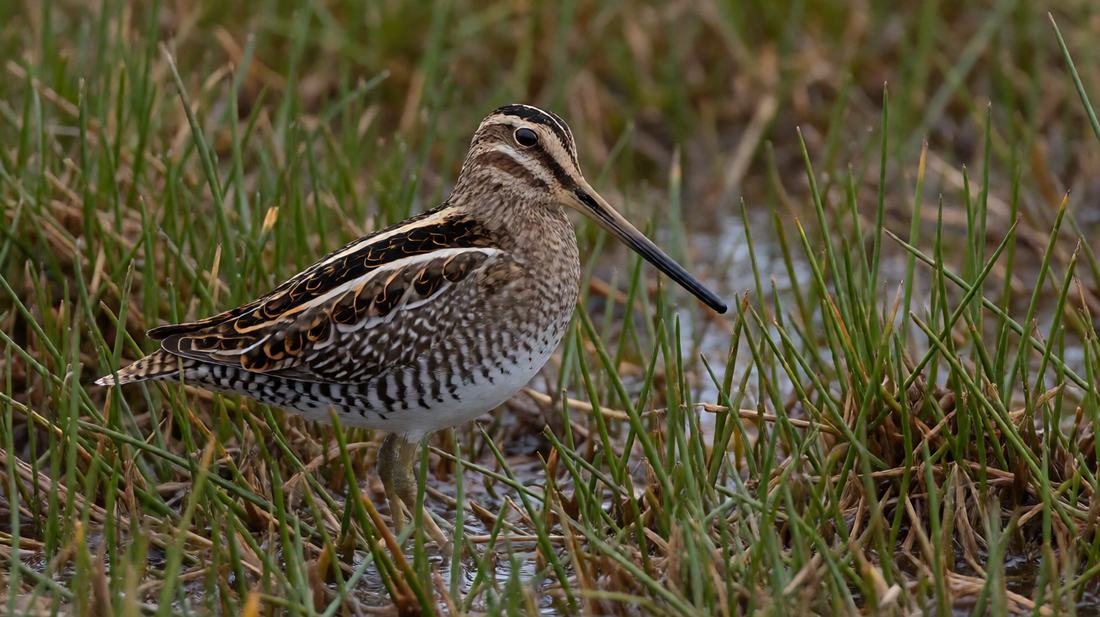
Gallinago gallinago | Common Snipe
Species Profile · Scolopacidae
Common Snipe
A master of concealment whose eye-striped head and bill a full third of its body length let it vanish into the marsh — and whose spring display flight makes a sound like a bleating goat.
IUCN: Least Concern
Range
Length
Bill
Weight
Nest
The bird that is not there
A master of camouflage
The common snipe is a small and secretive wader. It belongs to the family Scolopacidae. It is one of the most widespread shorebirds of the north. It breeds in bogs, fens and wet meadows. Its range spreads from Iceland across Russia. Few people ever see it well. Its striped brown plumage matches the marsh.
The bird sits tight until you are almost on it. Then it bursts into the air. It twists and zigzags away. It gives a harsh, scraping note as it goes. That sudden flush made the bird famous. It also gave us the word sniper. The bird needs soft, waterlogged ground.
Its long bill must sink in deep. It also needs tall plants for cover. So it lives on bogs and rushy pasture. Those places have been drained and improved. So the snipe has become scarce in the west of Europe. It stays common in the north and east.
Family tree
Gallinago, the snipes
The common snipe sits in the genus Gallinago. These are waders with very long, straight bills. Their eyes sit far back and high on the head. That lets the bird see in almost every direction. The bill can be buried then. Gallinago belongs to the family Scolopacidae. The snipe is the close relative of the Eurasian Woodcock (Scolopax rusticola). That bird is larger and lives in woods.
Its bill is longer still. Its habits are much the same. Both hide by day and display in the air. The family has evolved the long bill many times. It has done so for the same reason. The tool finds worms in soft ground. The dull plumage hides the owner. Linnaeus described the snipe in 1758.
Today we treat the Old World bird as the nominate gallinago. The very similar bird of North America is now a separate species. Other forms exist on Atlantic islands. Separating them in the field is very hard. The groups migrate in different directions. So their true relationships remain debated.
Long bill, striped head
How to identify one
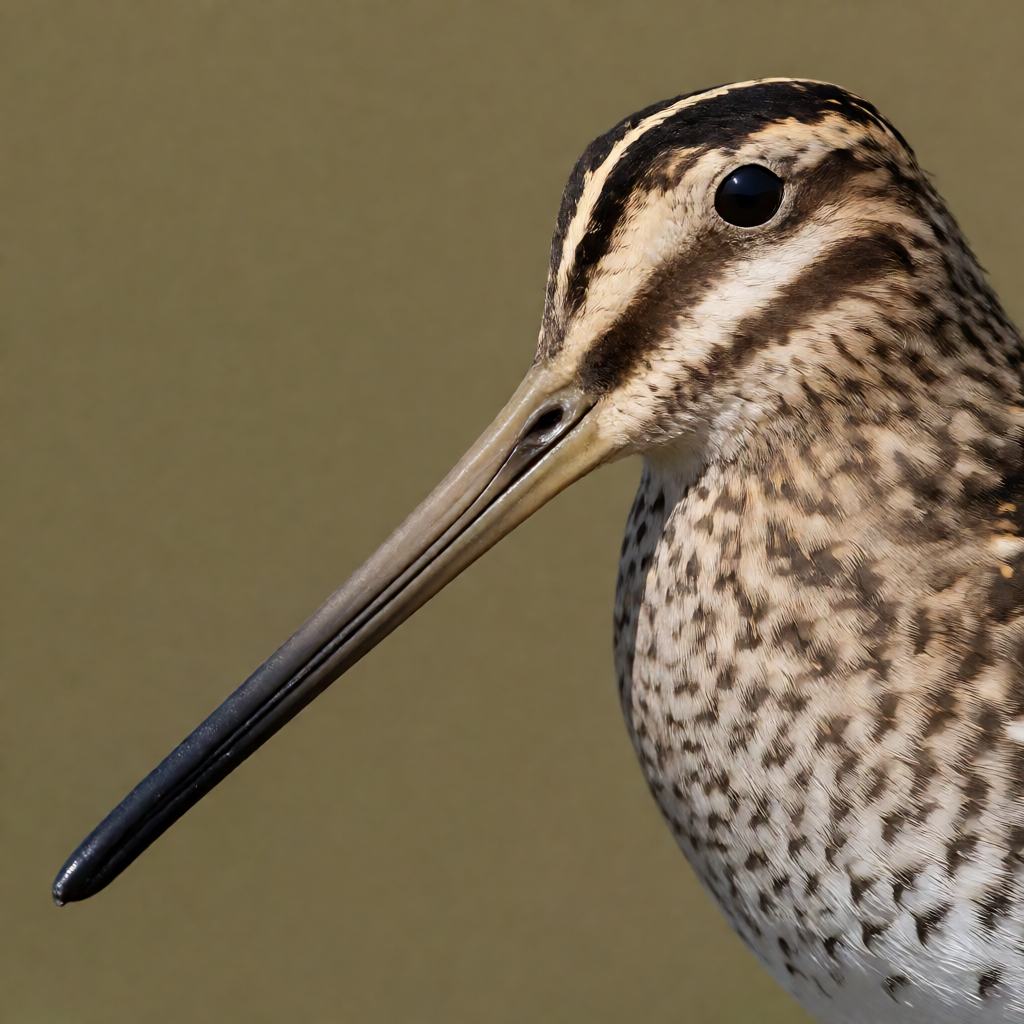
An adult snipe is 25 to 27 centimetres long. Its wingspan is 44 to 47 centimetres. It weighs 80 to 140 grams. Its most striking feature is the bill. It is a straight, slender organ of between 5.5 and 7 centimetres. That is nearly a third of the bird’s length. No other European wader of its size probes deeper. Both sexes look the same.
The pattern is remarkably concealing. The ground colour is buff and brown. Long pale lines run down the crown and back. Darker bars cross those lines. The mix breaks up the bird’s outline. So it vanishes against grass and dead vegetation. Dark stripes also run through the eye. The eye sits far back and high.
That gives the bird a wide field of view. So it can watch for danger with its head down. The wings are long and pointed. Flight is fast and erratic. The bird twists and tower-climbs. That makes it a hard target. Its note sounds like shears being opened.
1
2
3
Marsh, bog and wet field
Where it lives
The common snipe wants wet, soft, tussocky ground. It needs waterlogged soil to probe. It needs tall, rank plants to hide in. So it lives on raised bog and blanket bog. It also uses fens and wet heath. Wet meadows and rushy pasture suit it too. So does a soggy corner of farmland. The water table must stay near the surface all year. That single need links its whole range.
The bird nests from the coast to the uplands. It nests from sea level to the high moor. Density depends on wetness. Rough grazing helps as well. The bird tolerates some disturbance. It will nest on a working farm. It needs the water left alone. It needs the grass cut late. Outside the breeding season the birds move.
They gather on low, wet, unfrozen ground. They feed on soft marsh and winter pasture. The species is a strong migrant. Northern birds move south and west. They reach the Mediterranean and north Africa. Ringing shows regular returns. A bird comes back to the same marsh. It also returns to the same wintering ground.
A prober of deep mud
What it eats
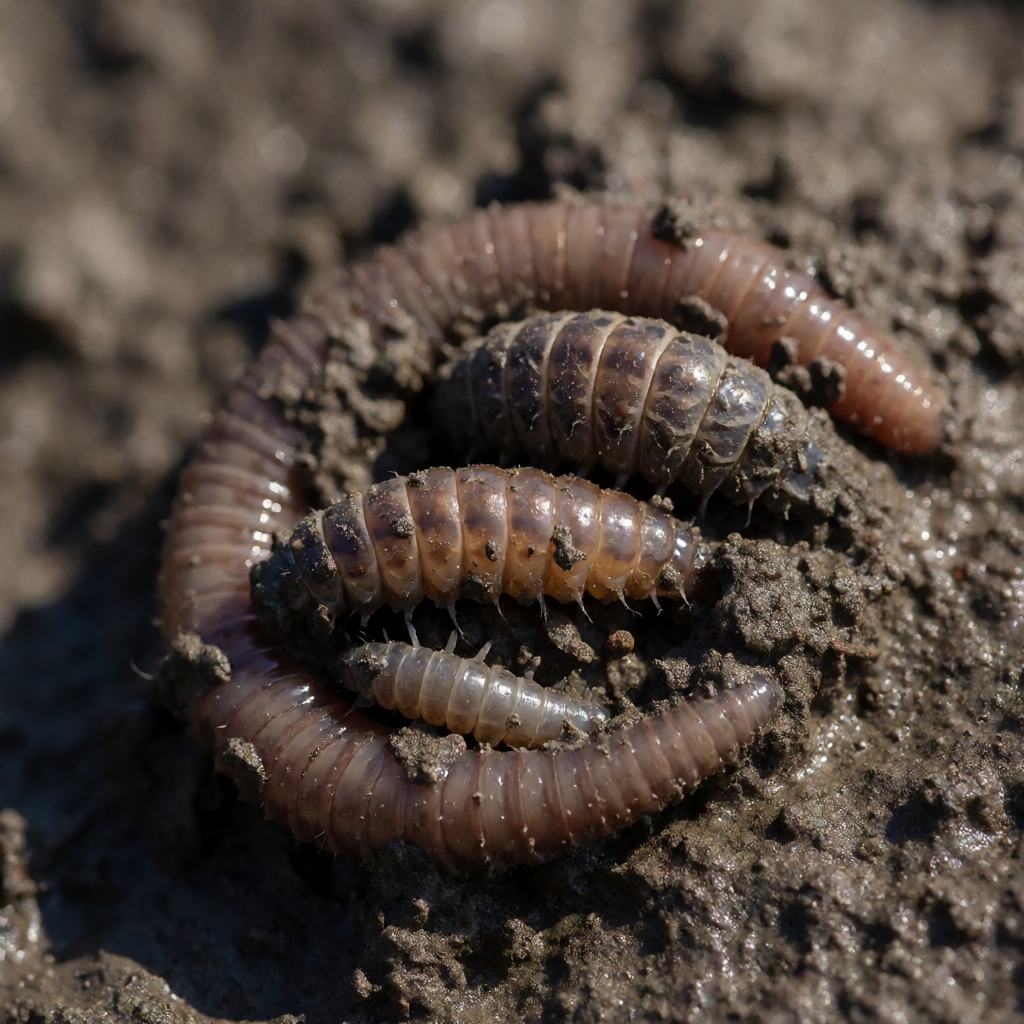
The common snipe eats invertebrates from soft ground. Its diet is mostly earthworms. The bird pushes its whole bill into the mud. It holds the bill vertically and probes. The tip is full of nerve endings. So the bird finds the worm by touch. No short-billed wader can reach this food. Crane fly larvae are also important.
So are beetle and moth larvae. They lie in the same soil layer. Small crustaceans and molluscs add to the list. Insects come from the surface and the vegetation. The bird also takes small spiders and beetles. It swallows a little plant material by accident. It feeds by day and by night. The tide matters less than the soil.
The snipe lives on marsh, not on tidal flats. The ground must stay soft enough to probe. So the bird works along a line. The head stays low and the bill sinks again and again. Dry years concentrate the birds. They crowd onto the few wet patches. That makes them sensitive to drainage.
A scrape in the rush
The breeding cycle
Snipes pair in the spring. The male holds a territory over the marsh. He then performs the famous drumming display. He climbs high into the air. Then he dives steeply towards the ground. The outer tail feathers spread and vibrate. They make a low, throbbing bleat. That sound carries far across the marsh. It is one of the classic sounds of a northern spring.
The nest is a shallow scrape. It is lined with dried grass and sedge. A tussock of marsh plants hides it. The clutch holds 4 eggs. They are laid at daily intervals. The female does most of the sitting. She covers them for between 18 and 21 days. The male hardly helps with incubation. He spends his time displaying and defending the site.
The chicks are precocial. Their down matches the marsh colours. So they are nearly invisible. They leave the nest within a day or two. They feed themselves from the first days. The female leads and broods them. They can fly at between 19 and 20 days. That is very fast for a northern wader. The family then breaks up.
A wader under pressure
Conservation
The snipe is Least Concern on the global Red List. Its range is enormous. The world total still runs to millions of birds. Yet it has fallen sharply in southern and western Europe. British breeding numbers have dropped a lot in fifty years. The bird is now scarce in many former strongholds. The main cause is the drainage of wet ground. Ditches have been deepened. Water tables have been lowered.
Wet meadow and bog have become arable land. Improved pasture has replaced the rest. Afforestation of open moor has added to the loss. So has peat extraction. Cutting marsh hay at the wrong season does harm too. Hunting on passage and in winter takes a further toll. The south of the range suffers most. The European Union protects the species in most countries. Some countries still allow a regulated season.
Key wetlands are now reserves. Managers hold the water table high. They keep the grazing light. Blocking old ditches has restored many bogs. That tool has worked well. So the bird holds its own in the north and east. It retreats from the small sites of the south and west.
Quick hits
Five things to remember
- The snipe has one of the longest bills relative to its body of any European bird. The tip is packed with nerve endings. So the bird can feel a worm without seeing it. The eyes sit far back and high on the head.
- The bird’s name and the word sniper are linked. The flush is sudden and the flight is erratic. The target is small and fast. So a marksman who could bring one down was called a sniper.
- The drumming sound is not a call at all. It is made mechanically by the outer tail feathers. They vibrate against the air as the bird dives. The bleat has been compared to a goat.
- The clutch of 4 eggs sits in a shallow scrape. The eggs and the sitting bird and the downy chicks all match the ground. So the nest is very hard to find even when its position is known.
- The young can fly at between 19 and 20 days of age. That is one of the shortest development periods of any northern wader. The precocial chicks leave the nest within a day or two.