 By st20113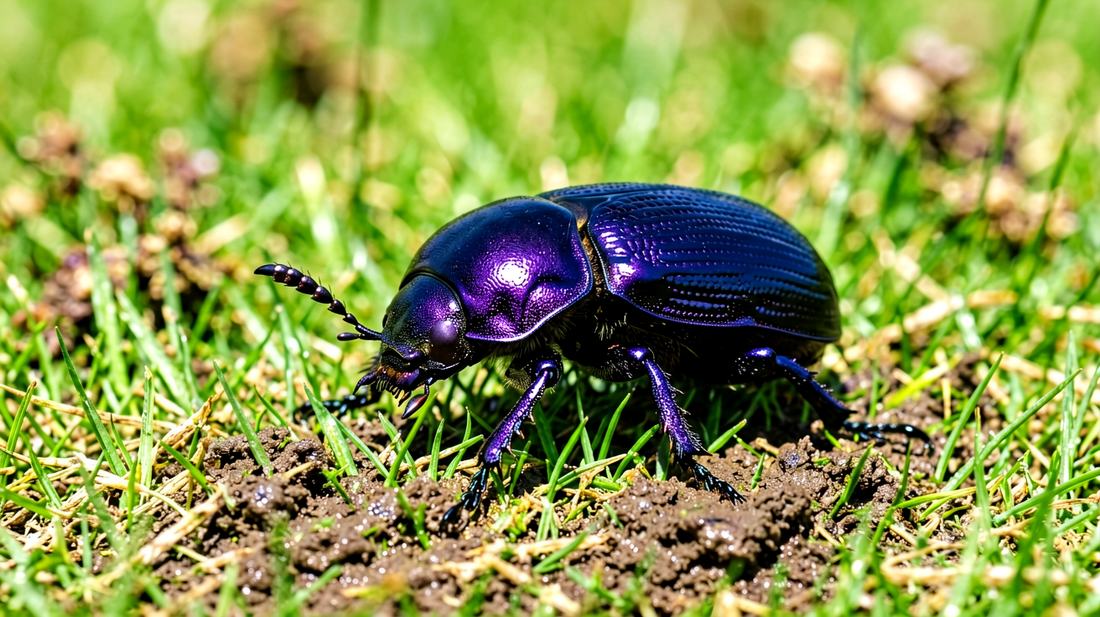
Geotrupes stercorarius | Dor Beetle
Species Profile · Geotrupidae
Dor Beetle
A heavy shining dung beetle that digs brood chambers under the pat and ticks like a clock when it is handled.
Not assessed
Range
Length
Burrow
Brood rooms
Brood store
The beetle under the pat
Europe’s clock beetle
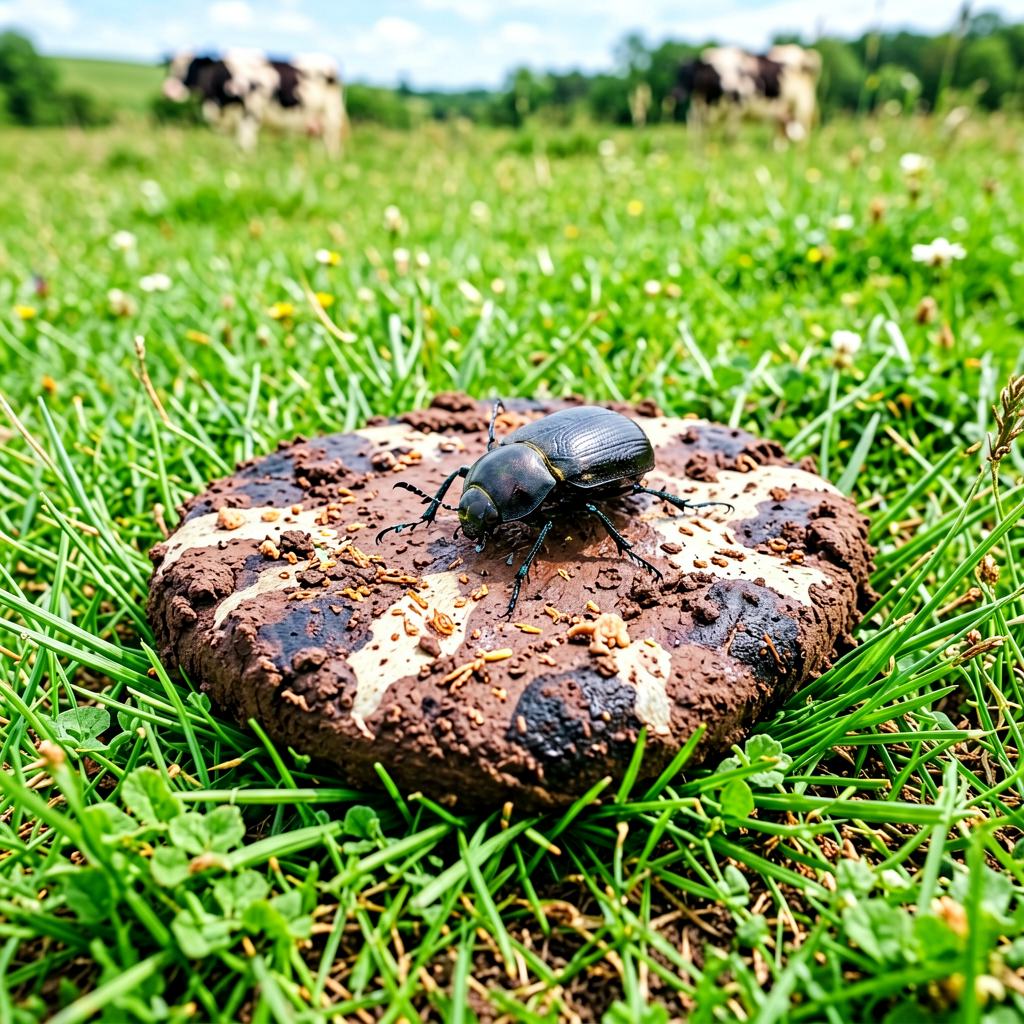
The dor beetle is a large, stout, shining black dung beetle. It lives in pastures and at the edges of woods. It is one of the showiest big beetles of the European countryside. Its heavy domed body makes it easy to know. So do its strong toothed front legs. It flies at dusk and after dark with a loud drone. It gathers in numbers at lights and at any fresh heap of cattle or horse dung.
Its common names record its former plenty. In English it has been called the dor, the dumbledor, the clock and the shard-borne beetle. It makes a dry ticking sound by rubbing the edges of its belly plates. A file on the under side of the wing cases gives the other half of the trick. That is where at least one of those names comes from. The species is in the family Geotrupidae, the earth-boring dung beetles. Its genus name joins the Greek words for earth and for a borer or digger.
That describes its main work well. Its species name is the Latin word for of dung. It points to the stuff in which the grub lives. The beetle matters in farmed grassland. It speeds the way dung is mixed into the soil.
Family tree
Geotrupes, the earth borer
The dor beetle is in the family Geotrupidae. That is a small family of about 600 species. They live in mild and warm regions. The adults dig tunnels under or beside a food source. They do not build the free-standing brood balls of the ball-rolling dung beetles. Within the family the species sits in the genus Geotrupes. That genus holds about 30 species in the Palaearctic region. The dor beetle is set apart from the flower chafers of the family Scarabaeidae, among them the rose chafer, by its small blunt jaws and by its habit of stocking its brood in rooms underground. It is very like two other European species. One is the woodland dor beetle.
The other is the spring dor beetle. The three are often mixed up in the field. They are told apart by the sculpting of the wing cases. The layout of the pits on the plate behind the head differs too. So does the exact form of the male’s sex organs. In practice these marks must be checked. Colour and general look overlap almost fully between the three. The two names together make the beetle’s habits plain. That is rare even for Linnaean naming. The scientific name could be read word for word as the dung-dwelling earth borer.
The genus has not been much revised by gene work. Links within it are still not fully settled. So are its ties to other genera of the family. The fossil record of the family is poor. It is mostly wing-case prints from Tertiary lake beds. Brood tunnels and brood masses laid to geotrupids are known from the Mesozoic. They give some of the first direct signs of dung beetle nesting. The burrow and brood store of the dor beetle are much the same as those of the oldest known fossil forms. So the breeding habits of the group have changed very little.
Toothed legs and a metal sheen
How to identify one
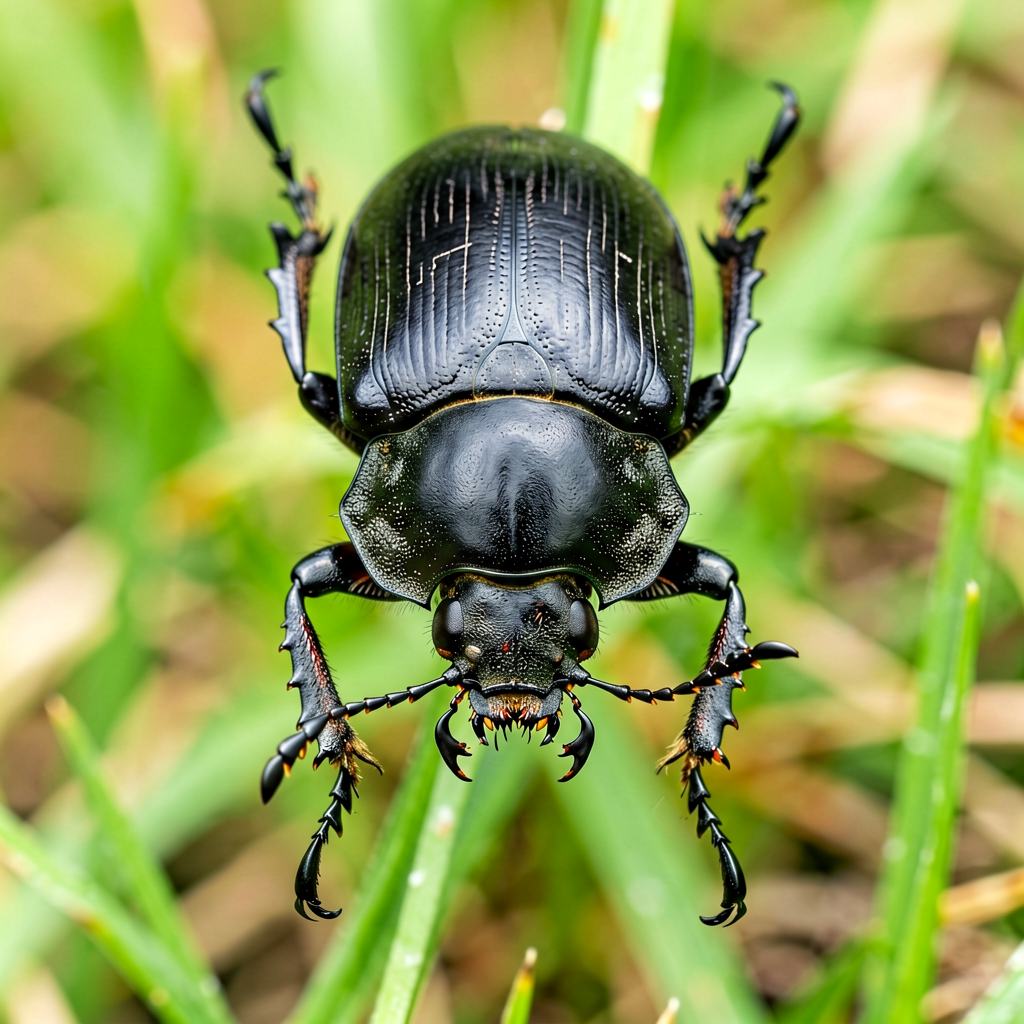
The dor beetle is large and heavily built. Its body is 15 to 25 mm long. Males are a little larger on average than females. The largest beetles come from the richest pastures. The body is broad, oval and strongly domed. For its size it is one of the heaviest of the European dung beetles. Its shell is thick and armoured. That gives it a solid, almost metal look in the hand. The top side is deep, shining, slightly greenish black. The wing cases and the plate behind the head are finely and closely pitted. The pits on the wing cases form faint lengthways grooves. These give the cases a finely lined look.
The under side is often a bold metal blue-violet or purple. This is made by the play of light in the layered shell, not by dye. It is one of the best looking parts of the live insect. It led to one of the older English names. The head is broad and flat. It bears a pair of short, angled feelers with clubbed tips. These are used to find the food. The plate at the front of the head carries a pair of small teeth. These work with the front legs to loosen dung and soil. The front legs are much changed for digging. The outer edge of the shin bears 4 or 5 large, curved, sharp teeth in a comb. The middle and hind legs bear smaller spines and spurs.
They brace the insect and push dug soil out of the burrow. The wings are fully grown. The insect is a strong flier, if not a quick one. It takes to the air at dusk on warm evenings. Its deep buzz can be heard from several metres off. The sexes are told apart by the shape of the last plate visible on the belly. The male also has a shallow dip on the plate under the chest. The feelers differ too. There is no striking gap between the sexes of the kind seen in the ball-rolling dung beetles. Males of those species may bear large horns. The sexes of the dor beetle look rather alike until the sex organs are checked.
1
2
3
Pasture, verges and tracks
Where it lives
The dor beetle lives across most of Europe. Its range runs from the Mediterranean north to southern Scandinavia and the British Isles. It goes on eastwards across central Asia to Siberia. It is absent from the far north. It is also absent from the driest Mediterranean lowlands and from the highest ground. In those places other genera rule the dung beetle fauna. In Britain and Ireland it is commonest in the west and the north. It favours damper pasture country with a long past of cattle and horse grazing. It is much scarcer in the heavy arable districts of the east and south-east. Three things have cost it food and breeding stuff there.
Permanent pasture has been lost. Farm stock numbers have fallen. Worming drugs for stock are widely used. Adults are found in pasture and on the verges of lanes and field edges. They also live in woodland rides and clearings. They use open parkland woods too. They are active from about April to October. They come out and are busiest in late summer and early autumn. They are strong twilight and night fliers. They fly at dusk and are drawn to lights.
On warm damp evenings in September they turn up in numbers at lit windows and street lamps. The grubs grow in brood masses inside tunnels dug by the parents. The site is often below or beside a fresh dung pat. It may also be on the edge of a track. The depth shifts with the hardness of the soil. It is often 20 to 40 cm. In dry or gravelly ground it may pass 60 cm. The beetle needs the dung of large plant eaters. The loss of the ponies, cattle and horses that once grazed the commons has cut its range.
Dung fluid, not dung fibre
What it eats
The adult dor beetle feeds mainly on the fluid part of the dung. It also takes rotting plant matter and the microbes with it. It does not often eat the coarse stringy part of the pat. That runs against the common view of the group. Its mouth parts suit a half-liquid food. The jaws are small and blunt next to those of the plant-eating chafers. Dense brushes of hairs on the inner jaws strain the fluid from the dung. The grubs are different. They get a large amount of dung buried for them by their parents. The female digs a vertical tunnel below the pat.
Into the widened rooms at its base she packs a mass of dung. The male collects this and hands it to her. Each brood store is firm and oval or sausage-shaped. It holds perhaps 10 to 30 cubic centimetres. The grub hatches inside the room. It eats the dung mass from the inside outwards. It is in effect shut inside the store made for it. Field naming is helped by the shape of the store. The brood mass of Geotrupes is a plain dung store. It lacks the neat pear shape and the reworked cap made by the ball-rolling dung beetles of the genus Copris and Scarabaeus.
The Geotrupes burrow is simpler too. It is a plain vertical shaft with brood rooms at the bottom. It is not a branched set of side tunnels. The adult beetles likely eat very little solid food while active. They get most of their food from dung fluid. They are known to visit dead animals and rotting fungi at times. They also take honeydew from leaves. That fits their readiness to take whatever food they find.
A pair working as a team
The breeding cycle
The breeding habits of the dor beetle are among the best recorded of any European insect. Writers have disagreed over how far the parents work as a team. The old accounts tell of a pair digging a burrow together. The male digs the shaft. The female gets the brood rooms ready at its base. The burrow is a plain vertical or slightly slanting tunnel. The pair work at it for several days. The female pushes the dug soil out of the entrance. A small mound of loose earth is left on the surface beside the dung pat. That is one of the best signs of a live nest. When the shaft is deep enough, the male collects dung from the surface. He hands it down to the female.
She packs it into a room in the wall of the gallery at the bottom. She shapes it into an oval mass with a dip at one end. She lays a single egg in that dip. She then seals the room with a plug of soil and starts the next. The number of rooms in one burrow shifts with the size and state of the female. It runs from about 4 to as many as 20. The pair may stay together in the burrow for several weeks. The male stands guard at the entrance on the surface at night. The female works below. The male also feeds the female while she builds. He hands down dung from the surface. This has been read as a sign of a lasting pair bond and of shared care of the brood.
That is rare among insects. The grub hatches within a few days of the room being sealed. It grows inside the dung mass given. It passes through 3 stages over several weeks. It then turns into a pupa within the room. The whole process takes between about 8 weeks and, in the cooler north, most of a year. The new brood comes out in the autumn in which the eggs were laid. More often in the north they come out the next spring. The adults live for a single season. They die with the first hard frosts. The species spends the winter as grubs and pupae, deep in the soil below the old burrow.
No status, but a real fall
The unrecorded losses
The dor beetle has no formal conservation status. It is not listed as at risk by any global or national body. It is still common over a great part of its European range. That is most true in the pasture districts of the west and north. There old-style stock farming survives. This lack of formal notice hides a real problem. A large fall in numbers has been recorded across the heavily farmed lowlands of western Europe. The dor beetle is one of the clearest cases of a wider class of loss. Such insects have been called the unrecorded losses of the 20th century. They are neither rare enough to win legal cover nor common enough to be ignored. The main cause is the loss of the dung itself.
The ivermectin group of worming drugs is widely used in cattle and horses. These drugs stay active in the dung of treated animals. They kill the beetle grubs growing in it. The effect on any routinely dosed pasture has been recorded and is severe. Other things add to it. Farm stock numbers on the land have fallen. Permanent pasture has been turned to arable crops. The pony and the horse have gone from farming and transport. Grassland management has changed as well. Grazing has been taken off many places. The mild food stress that grazing once caused has gone.
The result is rank, even turf that suits few pasture beetles. Hedges, verges and the rough corners of fields have also been lost. Those were the places where adults fed and sheltered. The best steps are clear. Other worming drugs should be used where they exist. Permanent pasture with a mix of grazing animals should be kept. Field edges and rough unimproved ground should be kept. Dung patches can be laid out on purpose on land run for wildlife. That method has had some success in bringing the dung beetle fauna back to lowland heaths and commons.
Quick hits
Five things to remember
- The scientific name is a plain description of its way of life, since Geotrupes means earth borer and stercorarius means of dung.
- The insect makes a dry ticking or clockwork sound by rubbing the edges of its belly plates against a file on the under side of its wing cases, and this gave rise to the old English name clock.
- The under side of the chest and belly carries a brilliant metal violet or blue sheen, made not by dye but by the play of light in the layered shell.
- A single burrow may hold as many as 20 rooms, each sealed with a dung mass and a single egg, and the male stands guard on the surface while the female works below.
- Dor beetles are key middle hosts of the threadworms that live in cattle and horses, which is one reason their fall in numbers matters to vets as well as to ecologists.