 By st20113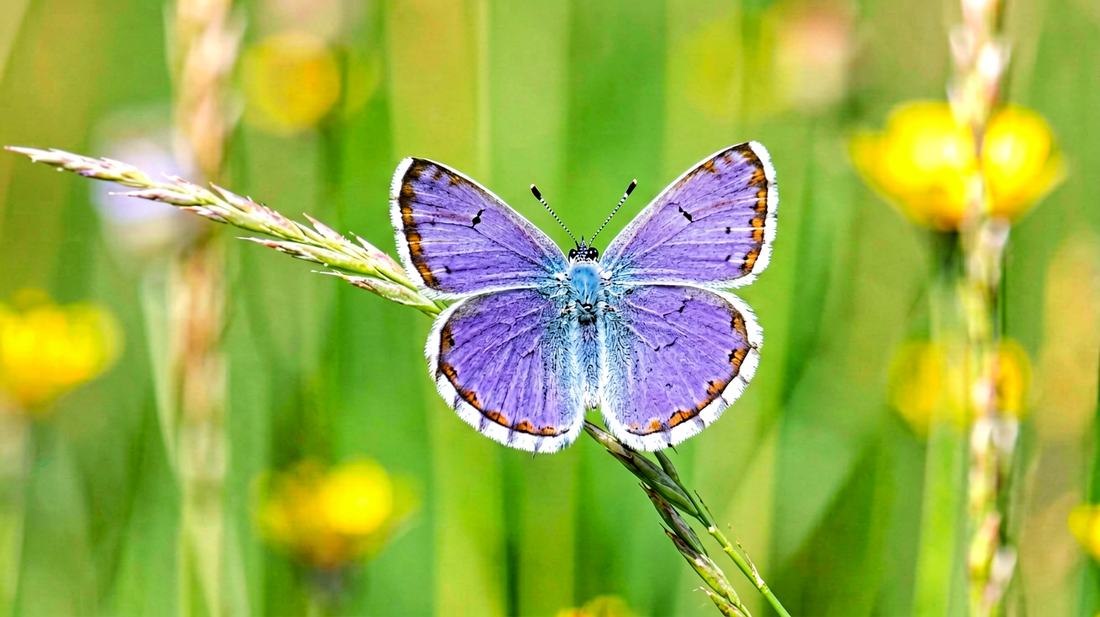
Polyommatus icarus | Common Blue Butterfly
Species Profile · Lycaenidae
Common Blue Butterfly
A small summer butterfly whose males flash violet-blue over rough grassland, and whose caterpillars are guarded by ants.
IUCN: Least Concern
Range
Wingspan
Broods
Foodplant
Overwinter
A flash of blue
The common blue
The common blue is the most widespread blue butterfly in Europe. It is a known small insect of summer. You see it on grassland, road verges and coastal dunes. A male in flight is a flash of violet-blue. He looks like a piece of sky. The female is mostly brown. She has a dusting of blue near the body.
Both sexes have a neat white edge on the wing margins. The underside shows grey-brown spots ringed with orange. A resting butterfly shows this underside to the world. The species is small. Its wingspan is mostly under 35 millimetres. It flies low and fast over the tops of grasses. It pauses to bask with wings half open.
Its caterpillars feed on bird’s-foot trefoil. They also eat a few other legumes. Ants tend the caterpillars. The ants protect them in exchange for a sweet liquid. The butterfly uses many open habitats. It survived changes that stripped Britain of rarer butterflies. Its numbers have still fallen in areas of heavy farming.
Family tree
Among the blues
The common blue belongs to the order Lepidoptera. Its family is Lycaenidae. Its genus is Polyommatus. It is the type species of that large genus. Its best-known large relative is the Monarch Butterfly. That insect is far bigger. It has orange and black wings. It lives by long-distance migration and toxic milkweed foodplants.
The two share the basic butterfly plan. They have clubbed antennae and coiled drinking mouthparts. They have scaly wings. Both pass through complete metamorphosis. They go from egg to caterpillar to pupa to adult. Within Lycaenidae, the blues are a few hundred mostly small species. Many have close ties with ants. Some have become very rare.
The genus Polyommatus holds more than a hundred species. They span Europe and Asia. The common blue is the one most people see. Its name joins Greek words meaning “many eyes”. This refers to the ringed spots on the wing underside. The name icarus comes from a Greek myth. It is the boy who flew too close to the sun.
Blue, brown and spotted
Telling the sexes apart
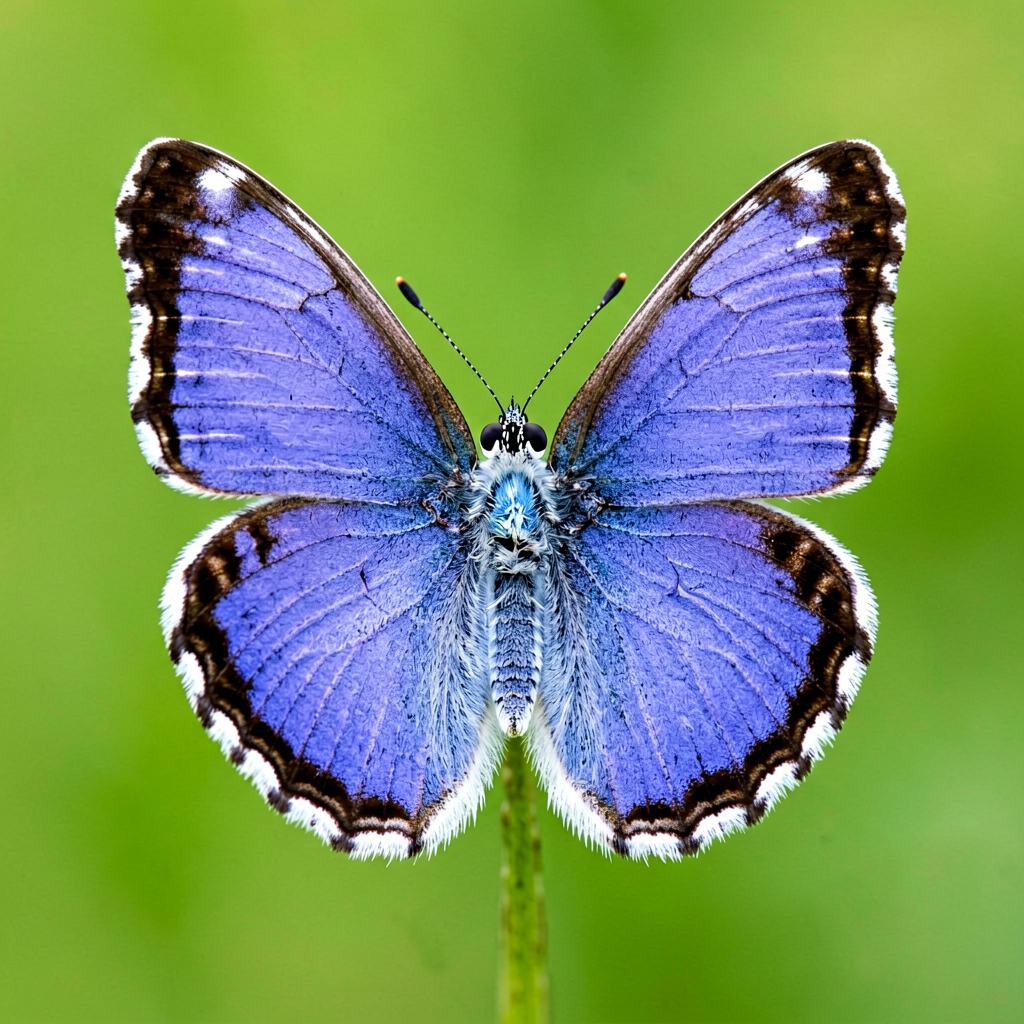
An adult has a wingspan of 25 to 35 millimetres. Males are mostly a bit larger than females. The male’s upper wings are deep violet-blue. They show a fine dark border. The female’s upper wings are brown. She often has a changing wash of blue near the base. She shows a row of orange spots near the outer edge. Both sexes have a white edge on the wing margins. The underside is pale grey-brown.
It is marked with black spots ringed in white. A row of orange crescents lines the hindwing edge. The body is small and fuzzy. It is covered in scales with a greyish-blue sheen. Like all butterflies it has a coiled proboscis. It uses this to sip nectar. It has two large compound eyes. They sense movement well but see detail poorly. The caterpillar is bright green.
It has a dark stripe down its back and fine pale hairs. It grows to about 13 millimetres before pupating. The pupa is green or brown. It has no silk girdle. It lies loose in leaf litter at the base of the foodplant. Each new set varies in size. Late-season ones are smaller and more darkly marked than spring ones.
1
2
3
Sunny, open ground
Where it flies
The butterfly lives across almost all of Europe. It also lives in North Africa and temperate Asia. It ranges from sea level to about 2,000 metres in mountains. It has been brought to parts of North America. It needs open, sunny, sheltered spots. It needs short or broken plants. It needs a supply of its legume foodplants. Liked sites include chalk and limestone grassland. They also include coastal dunes and heathland edges.
Woodland rides and brownfield land attract it. So do railway banks and road verges. Large gardens with rough corners work too. It moves into small patches quickly. It reappears on sites disturbed by grazing or mowing. This holds if some trefoil remains. It is rare in dense woodland. It avoids heavily farmed fields. It avoids wet, peaty ground.
Northern groups produce one set a year. Southern ones produce two or three. In warm years breeding continues into September or October in southern England. The butterfly is not a migrant. It cannot cross large stretches of bad land. Local groups depend on a network of fit patches. These patches must lie within a few kilometres. Adults rarely travel more than a few hundred metres from home. Rare ones wander further.
What it eats
Nectar and legume leaves
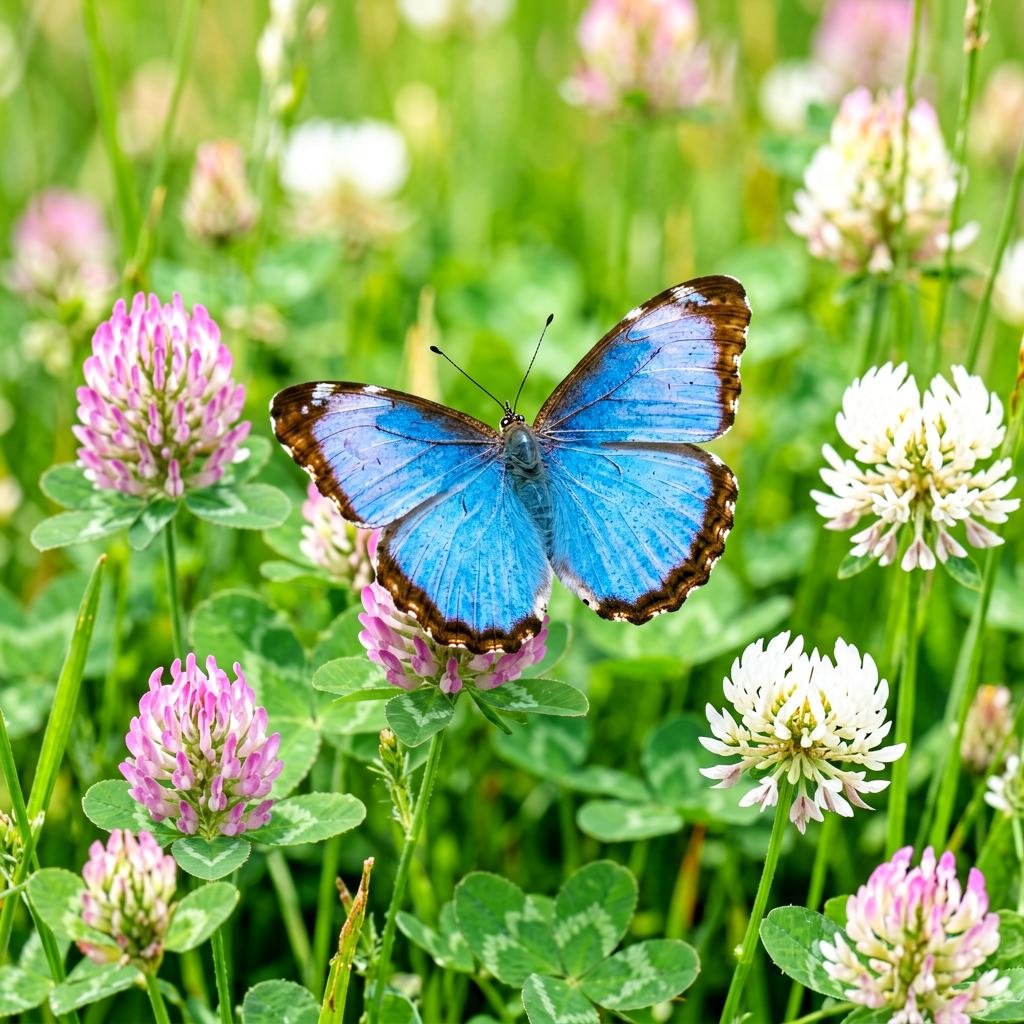
Adults feed almost only on nectar. They sip it through the coiled proboscis. They visit small, shallow flowers. They like bird’s-foot trefoil and white clover. Red clover and kidney vetch are visited too. So are knapweed, thistles, ragwort and buttercups. The butterfly often feeds with wings half open. It warms itself in the sun at the same time.
Nectar gives the power for flight and breeding. Males also take water and salts from damp mud. They take them from animal droppings too. The caterpillar eats leaves and flowers of legumes. Its main food is bird’s-foot trefoil. It also eats greater bird’s-foot trefoil and common restharrow. White clover is eaten, and black medick in some places. The caterpillar usually feeds at night.
It hides low in the plants by day. This lowers the risk of being found by birds. The bond with ants is central to its life. Glands on its body make a sweet liquid. Ants collect this liquid. In return the ants guard it from enemies and parasites. The caterpillar may click and shake to summon its guards. Spiders, robber flies, wasps and birds eat pupae and adults.
Ants and caterpillars
A partnership
Females mate shortly after coming out. This usually happens in the morning. Males patrol low over the plants. They search for ready females. The male performs a brief courtship flight. Pairs remain joined for about an hour. The female then lays eggs singly on the foodplant. She lays on leaves, flower buds or stems. She chooses young, tender growth.
She may lay a few hundred eggs in her life. The egg is pale green when laid. It turns grey before hatching. Hatching takes a week to three weeks by heat. Southern Europe produces two or three broods a year. The north usually produces one. The final brood of the season does not complete growth. Caterpillars from late eggs feed briefly. Then they enter sleep at the base of the foodplant.
They spend the winter half grown among dead leaves. They wake in spring and resume feeding. They pupate in the litter. The adult comes out about three weeks later. Some caterpillars are attacked by tiny wasps. The wasps lay eggs inside the young insect. Such losses can be heavy in years when butterflies are common.
Fewer flowers, fewer blues
Why numbers have fallen
The common blue is safe worldwide. It is not listed as threatened. In many parts of Europe it is the most numerous blue butterfly. Even so, its range has shrunk. This happened where grassland was ploughed or built over. Counts in Britain and the Netherlands show declines. These declines came over recent decades.
Hard farming cuts its foodplants and nectar. So does loss of wild pasture. Nitrogen pollution harms it too. The tidying of verges and brownfield sites hurts it. The butterfly relies on small, spread-out patches. It is at risk of local loss even in green land. It forms short-lived groups.
This makes return slow. Care keeps open, flower-rich grassland. It keeps plenty of bird’s-foot trefoil. Sites are grazed lightly rather than heavily. Rough margins are left uncut. Road verges and disused old land are key safe spots. Several nature schemes now manage such sites for butterflies.
Quick hits
Five things to remember
- The male’s upper wings are a brilliant violet-blue. The female’s are largely brown with a changing blue wash.
- Caterpillars are guarded by ants. They are paid with a sweet liquid from special glands.
- The common blue spends winter as a half-grown caterpillar. It hides in leaf litter, not as an egg or a pupa.
- Males sometimes gather at damp mud to take up salts. This behaviour is called mud-puddling.
- In southern Europe the species can raise three generations in one summer.
[…] most strictly arboreal. That single fact explains most of its biology. It shares a family with the common blue, the small blue of grassland and brownfield sites. Both associate with ants and share a body plan. […]