 By st20113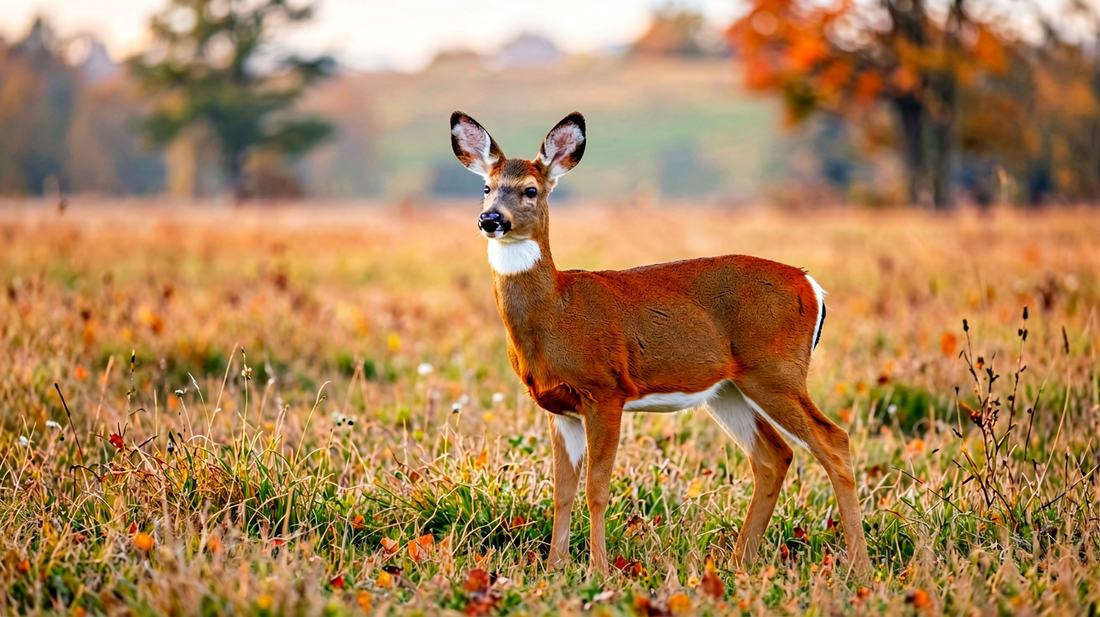
Odocoileus virginianus | White-tailed Deer
Species Profile · Cervidae
White-tailed Deer
North America’s commonest large mammal, known by its red-brown coat, branching antlers and the white flag of its tail.
IUCN: Least Concern
Range
Shoulder
Weight
Gestation
Status
The deer next door
The white-tailed deer
The white-tailed deer is the most widespread large wild mammal in North America. It is the mammal most often seen from a car window. It is a slender, reddish-brown deer. It turns grey in winter. It has a white underside to its tail. When alarmed it flicks the tail up and runs.
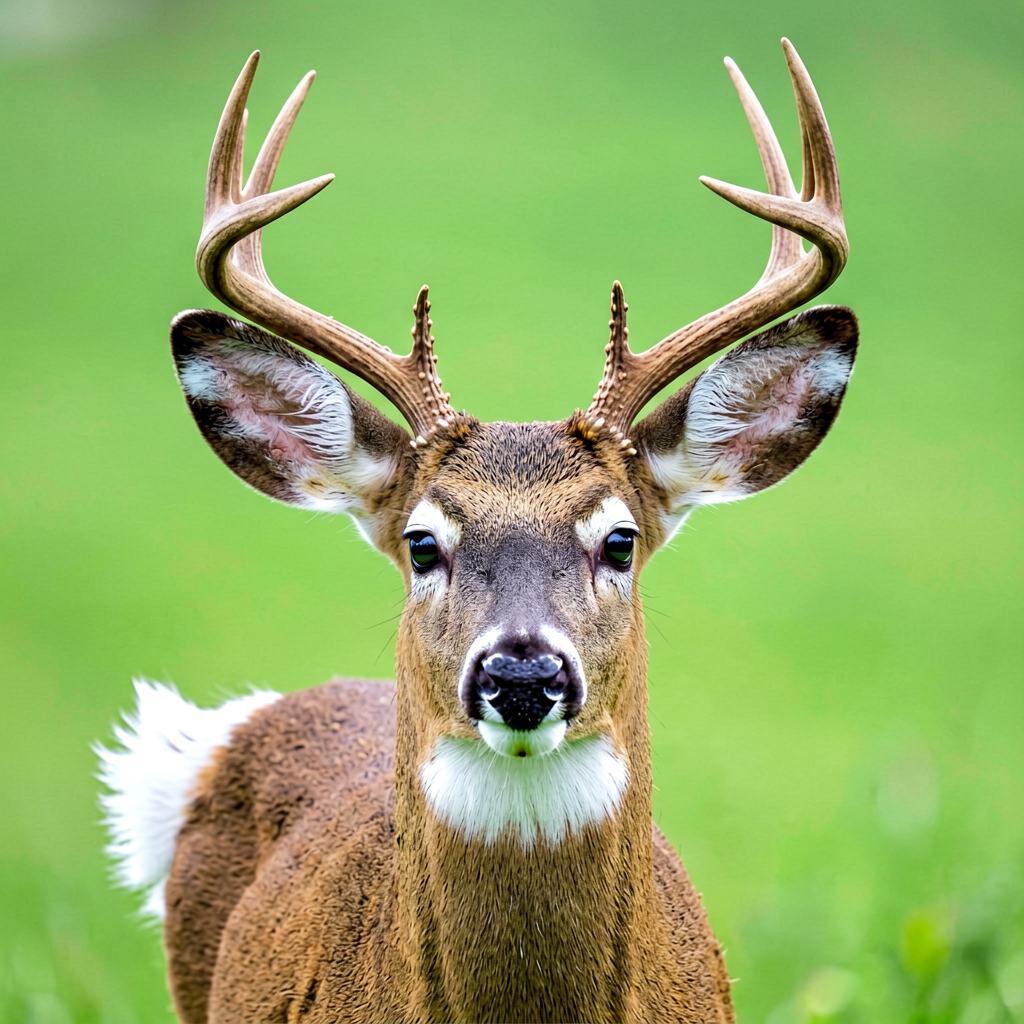
This shows a bright white flag that warns other deer. Males grow branching antlers each year. They shed those antlers in winter. The species thrives in many habitats. These include deep woods, farmland and leafy suburbs. In many parts of the United States deer are now more numerous.
Their numbers are higher than at any time in recorded history. That success brings problems. Too many deer strip the lower woods. They also damage crops and gardens.
Family tree
Among the deer
The white-tailed deer belongs to the family Cervidae. Cervidae is the scientific name for the deer. Its order is Artiodactyla, the even-toed hoofed mammals. Its closest familiar relative here is the Red Deer of Europe and Asia. That deer shares the same antlered, herd-living way of life. The white-tailed deer is one of the few species in the genus Odocoileus.
This genus is found only in the Americas. Its nearest relative in the genus is the mule deer of western North America. The two can interbreed where their ranges meet. Scientists recognise more than 25 types of white-tailed deer. They range from the large northern animals of Canada. The smallest are the tiny Key deer of Florida.
The Key deer stands barely 65 centimetres at the shoulder. The genus name means hollow tooth. It refers to the shape of the teeth. The word virginianus refers to Virginia. The first specimen was collected there.
Coat, antlers and senses
How to identify a deer
An adult white-tailed deer is 1.5 to 2 metres from nose to tail base. It stands 80 to 110 centimetres at the shoulder. Northern bucks weigh 60 to 130 kilograms. The smallest southern kinds weigh only 25 to 35 kilograms. The coat is reddish brown in summer. It is a lighter grey brown in winter. The throat, the inside of the legs and the belly are white. The tail is broad and white underneath. It is bordered with brown.
The deer raises it and flashes it when frightened. Fawns are born with white spots. The spots fade after a few months. Only males carry antlers. The antlers grow from bony bases called pedicles. They are covered in soft velvet while growing. They are shed each winter. Deer lack upper front teeth. They crop plants against a hard pad on the roof of the mouth.
Their senses are excellent. Large ears swivel to catch sound. The nose is far more sensitive than a human’s. The eyes have a shiny layer that improves night vision. That layer also lets them see blue and UV light. They see these far better than people. Bright orange safety clothing looks dull to a deer. Blue clothing stands out instead.
1
2
3
Woodland edges
Where deer thrive
The deer are native to North America. Their range runs from southern Canada through the United States and Mexico. It reaches Central America and northern South America. They have been brought to parts of Europe, the Caribbean and New Zealand. They do best where woods, scrub, farmland and open grass meet. They need both cover and food close together. This is why they do well in towns.
Hedgerows, gardens, parks and wood patches give them everything. Deer are browsers rather than grazers. They follow edges, hedgerows and river valleys. Home ranges are small. They are often only a few square kilometres. Young males travel further to find new land. In northern regions deer move to sheltered stands of evergreen trees in winter.
They gather in groups there, which saves energy. They are most active around dawn and dusk. In deep snow, northern deer gather in sheltered yards under evergreens. The canopy holds warmth. It keeps the snow shallow enough to walk through.
What it eats
A selective browser
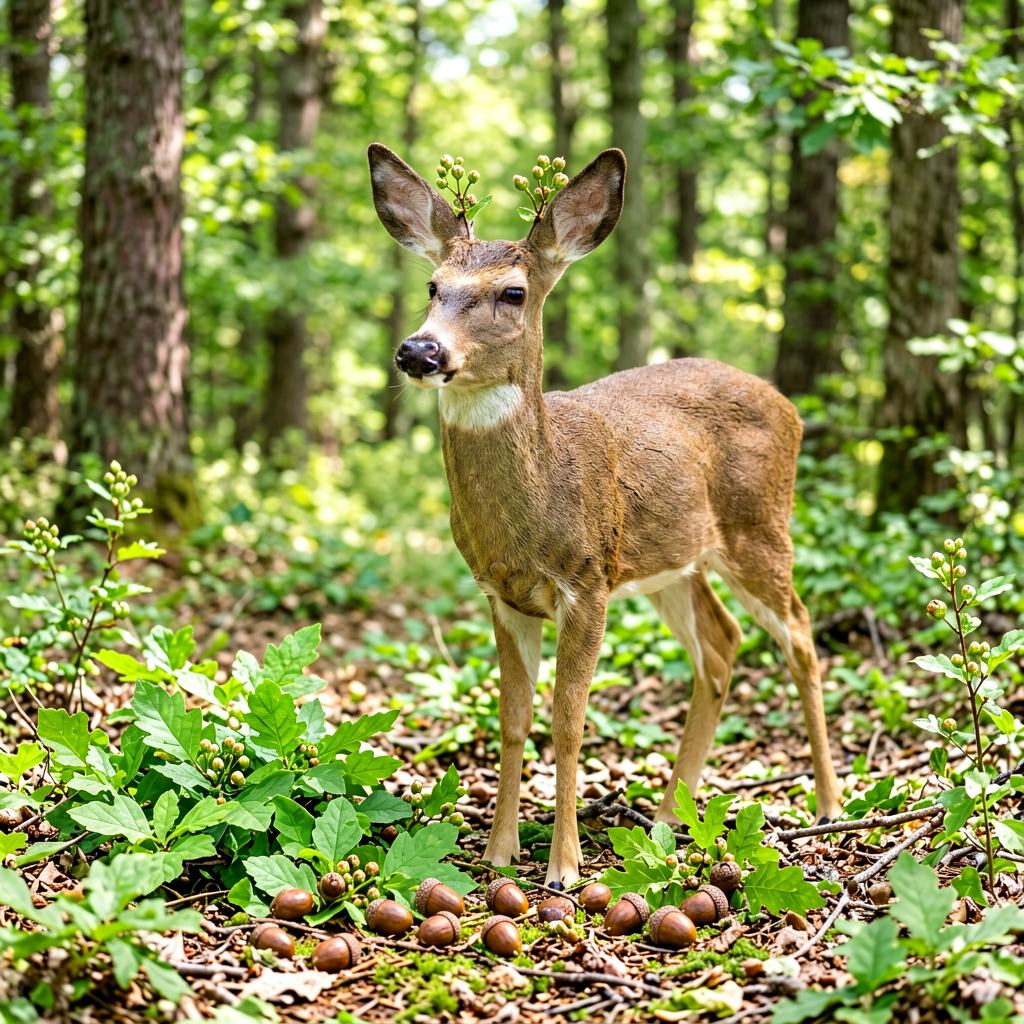
Deer are selective browsers. They eat leaves, twigs, buds and shoots from many trees and shrubs. In spring and summer they also eat grasses, sedges and forbs. Acorns and other nuts are important in autumn. The animals lay down fat for winter then. They readily take farm crops, garden plants and decorative shrubs.
A large deer eats 2 to 3 kilograms of food a day. Like other ruminants, a deer has a stomach with four chambers. A host of tiny organisms breaks down plant fibre. Food is swallowed quickly. It is then brought back up and chewed again as cud. This lets deer feed in the open for short periods.
They retreat to cover to digest. Deer prefer the richest shoots. Their browsing changes the shape of the woods. Favoured plants such as young oaks, trilliums and other herbs disappear. Plants deer will not eat take their place. This is a well-known case of too many plant-eaters changing the land.
Fawns in the spring
The autumn rut
The deer breed in autumn. The rut peaks between October and December in the north. It is later in the south. Males compete for females. They mark trees with their antlers and scrape the ground. They lose weight as they chase and defend mates. A female is in breeding state for only about 24 hours.
Mating usually leads to twins. Twins are the most common result in healthy northern populations. Single fawns and occasional triplets also occur. The pregnancy lasts about 200 days. Fawns are born in late spring. New plant growth then gives the mother plenty of milk. Fawns are born with spots and almost no scent.
They hide in cover while the mother feeds nearby. They are weaned at three or four months. They stay with the female for about a year. Females usually breed first at about one and a half years old. Males can breed at the same age. They seldom get the chance.
Too many or too few
Managing a very common deer
The white-tailed deer is assessed as Least Concern. Its numbers in the United States alone are over 30 million. They were far lower a century ago. That followed unregulated hunting. Recovery came with hunting seasons, limits and new woods. Much former farmland was left to grow back.
Today the species is seen as too numerous rather than threatened. Dense deer herds damage woods, crops and gardens. They spread disease. They cause more than a million car crashes a year in the United States. Chronic wasting disease is a prion illness. Epizootic haemorrhagic disease is also a serious concern.
Deer carry the ticks that spread Lyme disease. A few types are at risk. The Key deer of Florida is protected and endangered. Control now uses hunting, fencing, road crossings and public advice.
Quick hits
Five things to remember
- A deer flashes the white underside of its tail as a warning when it runs.
- Fawns are born spotted and nearly scentless, which helps them hide from predators.
- Northern bucks may weigh six times as much as the endangered Key deer of Florida.
- Antlers are shed and regrown every year, making them the fastest-growing bone in any mammal.
- Deer have no upper front teeth and crop plants against a hard pad in the roof of the mouth.