 By st20113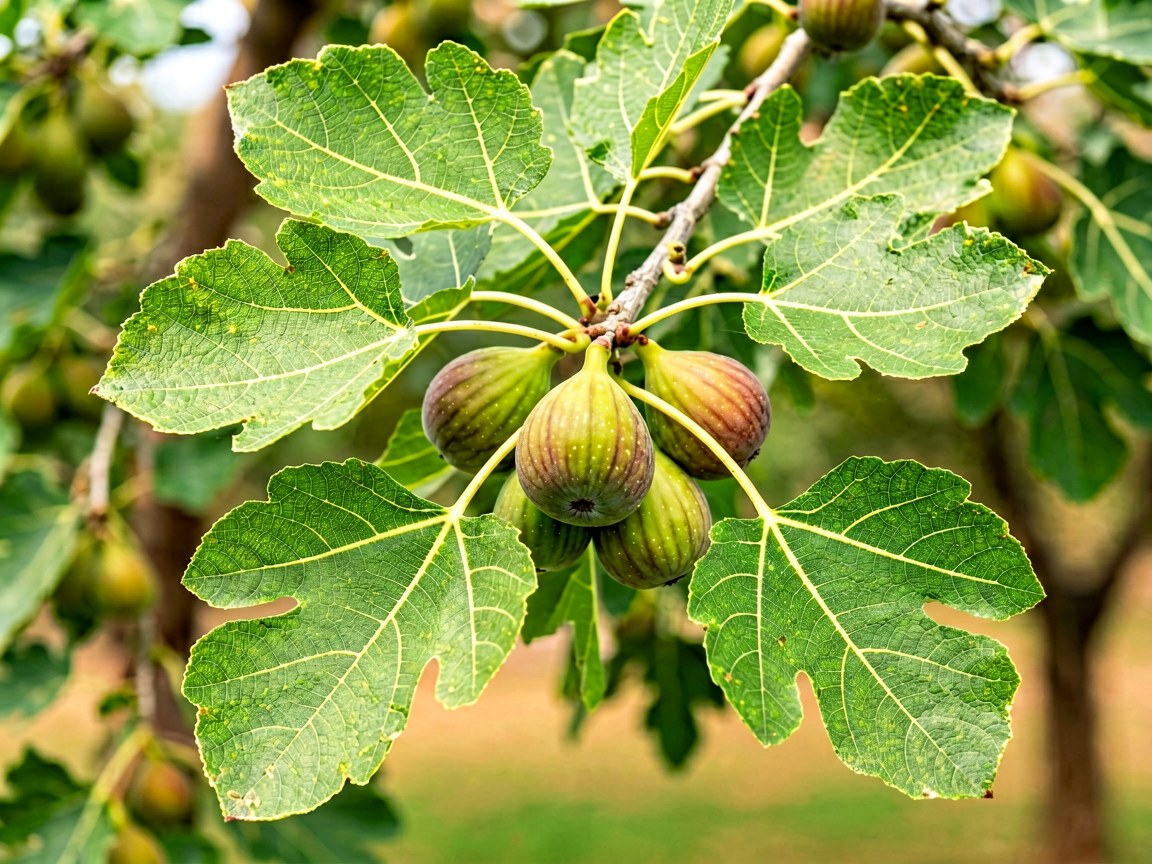
Ficus carica | Common Fig
Introduction
The common fig, Ficus carica, is a deciduous tree or large shrub of the family Moraceae and one of the oldest cultivated plants, grown for sweet, nutritious fruit for over five thousand years and among the first Neolithic crops. Today it is cultivated across warm temperate and Mediterranean regions and holds deep religious and cultural meaning in Judaism, Christianity, Islam, and Greco-Roman tradition. Botanically the fig is not a true fruit but a syconium, a hollow receptacle lined with hundreds of tiny flowers, making it a centerpiece of one of nature’s most specialized mutualisms, in which a tiny wasp pollinates the flowers and lays eggs inside the fruit. The common fig thus bridges plant reproduction, insect ecology, and human agriculture, and its biology rewards study of coevolution and traditional orcharding.
Archaeological evidence from the Jordan Valley shows fig cultivation as early as eleven thousand years ago, predating staple cereals such as wheat and barley, which marks the common fig as a pioneer of deliberate plant domestication. Its ease of propagation from cuttings let early farmers multiply favored trees without understanding their bizarre flowering, and the fig spread rapidly around the Mediterranean with expanding civilizations, becoming a symbol of abundance, peace, and fertility in countless cultures.
Taxonomy
Linnaeus described Ficus carica in Species Plantarum in 1753, the starting point of modern nomenclature. Ficus is the Latin word for fig, and carica refers to Caria, an ancient region of southwestern Anatolia, now Turkey, famed for figs. The genus holds over eight hundred species of figs, banyans, and strangler figs across the tropics and subtropics. F. carica sits in section Ficus, the deciduous Old World figs including the caprifig; molecular studies place it among temperate deciduous figs rather than evergreen tropical ones, within Moraceae alongside breadfruit, jackfruit, and mulberry. It differs from tropical figs in deciduous habit, cold tolerance, and lobed leaves, and from the ornamental weeping fig, Ficus benjamina, in edibility. For a comparison with another ancient staple, see our article on the [Coconut Palm](https://www.gloencyc.com/coconut-palm-cocos-nucifera/); both are old crops but in different families and regions. Cultivars divide into common, caprifig, Smyrna, and San Pedro types by pollination need.
Physical Characteristics
The common fig is a small, spreading deciduous tree or multi-stemmed shrub three to ten meters tall with a broad, irregular crown and smooth grey bark. Its signature is large, deeply lobed leaves, usually three to five lobes and up to twenty-five centimeters across, rough above and softly hairy beneath, dropped each autumn. Twigs and leaves exude milky white latex when cut, a mulberry-family trait containing enzymes and defensive compounds with mild traditional medicinal use but skin-irritating potential. The true flowers hide inside the syconium, the fig fruit, an inverted inflorescence. The mature fig is pear-shaped to round, green, purple, or brown by cultivar, with many tiny achene-like seeds, each from one internal flower. Roots are widespread and sometimes invasive, cracking paving if planted too close. The tree fruits for decades, bearing two warm-climate crops: an early, often inedible breba on old wood and a main crop on new growth in late summer and autumn; weak wood gives a relaxed, gnarled look.
Habitat
Wild common figs grow across the Middle East and western Asia, Turkey, Syria, Lebanon, Israel, Jordan, Iraq, Iran, and the Arabian Peninsula into the eastern Mediterranean and Caucasus, on warm rocky hillsides, river valleys, and disturbed, well-drained ground, often as a small tree in open woodland and maquis. Cultivated figs now span southern Europe, North Africa, California, Chile, South Africa, Australia, and parts of East Asia and the Americas. They need a long, hot, dry summer to ripen fruit and a cool winter for dormancy, yet are more cold-hardy than most figs, tolerating brief frosts and about minus ten degrees Celsius when established. Unfussy about soil, they thrive in poor, stony, or alkaline ground where other fruit trees fail if drained, but do poorly in heavy, wet clay and humid tropics where disease and poor setting prevail. Easy rooting and suckering let abandoned trees persist for generations.
Diet
The common fig feeds people and wildlife and depends on an insect partner. The pulp is eaten fresh, dried, or as jam, pastry, and syrup, valued for fiber, natural sugars, calcium, potassium, and antioxidants; dried figs were a Mediterranean staple energy food for millennia. Ecologically the fig supports the wasp Blastophaga psenes, its obligate pollinator. Female wasps enter the syconium through the narrow ostiole, pollinate internal flowers, and lay eggs in some; larvae eat part of the seed-like structures, and winged adults emerge carrying pollen to the next tree. This mutualism means the wasp depends wholly on the fig, and many varieties need the wasp for seed set, though parthenocarpic cultivars bypass it. Birds such as robins, thrushes, and starlings, plus bats, monkeys, and livestock, eat the fruit; latex limits browsing of leaves, though goats and camels eat them in arid zones, linking agriculture, insect reproduction, and dispersal.
Reproduction
Fig reproduction is governed by the syconium and its wasp. In the wild-type caprifig, male and female flowers share one fig; males make pollen, females receive it. The female Blastophaga enters, pollinates, and oviposits; her young mature inside, wingless males dig exit tunnels, and pollen-laden females depart to new figs. Cultivars vary: the common type bears seedless parthenocarpic fruit without the wasp and dominates commerce; Smyrna needs caprifig pollination; San Pedro sets an unpollinated breba but needs pollination for the main crop. Traditional growers hang caprifig branches, caprification, among edible trees to pollinate wasp-dependent varieties. Seedlings are variable and slow, so propagation is by winter hardwood cuttings that root readily and clone the parent; the tree also spreads by suckers. A cutting can fruit within one to two years and produce for decades, making the fig among the easiest home fruit trees.
Because the caprifig bears both pollen and the wasps that carry it, a single male tree can service many female trees across an orchard, a relationship so reliable that caprifig logs were once a traded commodity in fig-growing regions. Parthenocarpic cultivars arose through selection of trees that set fruit without fertilization, freeing growers from dependence on wasps and allowing figs to be grown far outside the pollinator’s range, including in regions where Blastophaga psenes cannot survive the winter. This human-driven shift from wasp-dependent to wasp-free cultivation is a striking example of directed evolution in a domesticated crop.
Conservation
The common fig is not of conservation concern; abundant in cultivation and naturalized across warm regions, it is not IUCN-listed as threatened, and millennia of cultivation secured its survival beyond its native range. Wild Middle Eastern populations remain widespread, though local habitat loss from agriculture and cities can affect stands. The real theme is agrobiodiversity: hundreds of traditional cultivars selected for flavor, drought tolerance, storage, and season are disappearing as commercial monocultures replace heirlooms; gene banks and farmer initiatives preserve this diversity for breeding. Ecologically the fig is a keystone: feral and cultivated trees feed birds and mammals late in the season when little else is available, supporting biodiversity. Sustainable, low-pesticide cultivation maintains pollinators and soil health. Overall the fig is a success story of a domesticated species thriving because people keep valuing and propagating it.
Fun Facts
- The fig fruit is actually an inverted flower structure, a syconium, with hundreds of tiny flowers hidden inside.
- Common figs are pollinated by tiny fig wasps that live and lay eggs inside the developing fruit.
- Figs are among the oldest crops, with remains found at Neolithic sites over nine thousand years old.
- Many commercial figs are parthenocarpic, developing fruit without fertilization or seeds.
- A single fig tree can bear two crops a year, an early breba and a larger main crop in late summer.