 By st20113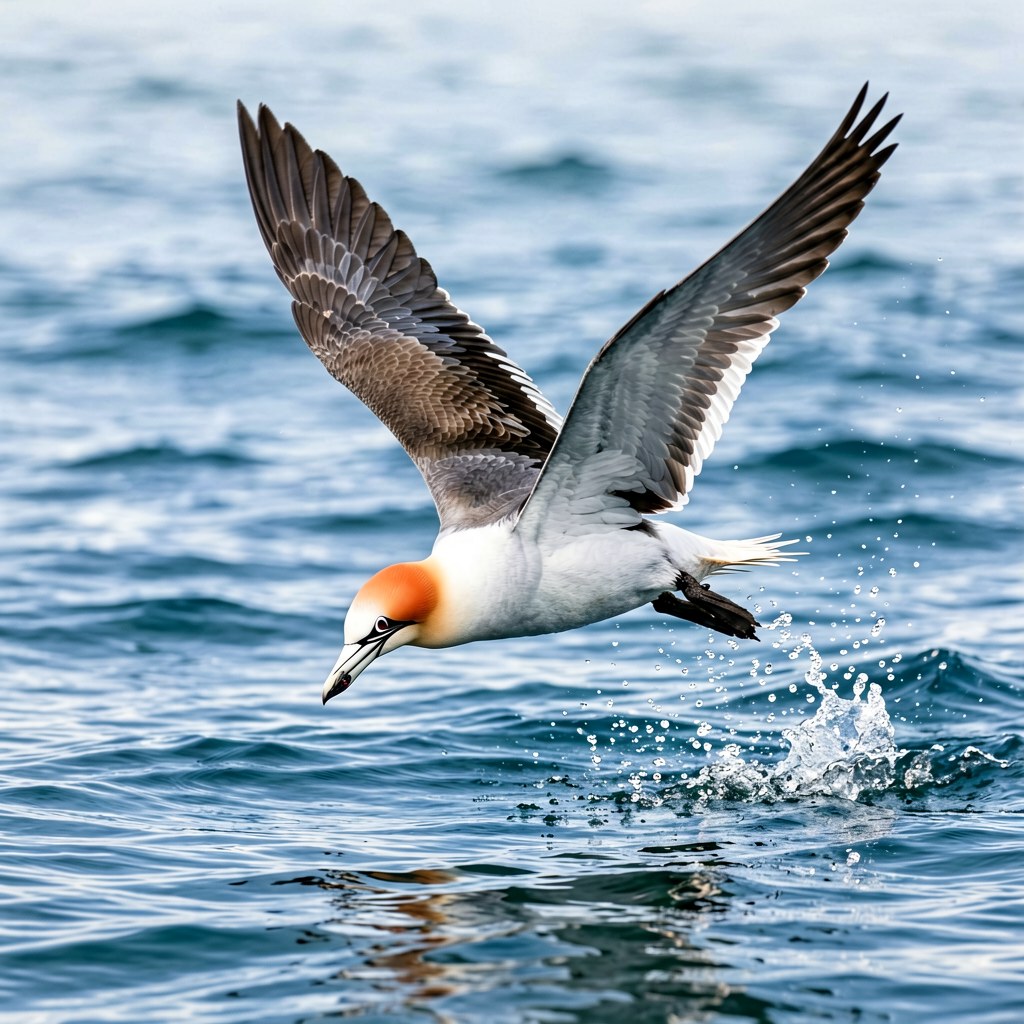
Morus bassanus | Northern Gannet
Introduction
The northern gannet (Morus bassanus) is a large seabird of the family Sulidae, famed as the premier plunge-diver of the North Atlantic and the largest seabird that breeds in that region. Adults are striking: mostly brilliant white plumage set off by black wingtips and a pale straw-yellow head, with a long, pointed bill and a streamlined body built for high-speed entries into the sea. Northern gannets nest in dense, noisy colonies on remote cliff ledges and stacks, where thousands of pairs pack together in one of the most spectacular breeding spectacles in the bird world. They feed almost exclusively on schooling fish, which they capture by diving from heights of up to 30 meters or more, striking the water at speeds that can exceed 100 kilometers per hour. The species ranges across the North Atlantic, breeding on both sides of the ocean and wintering far out to sea. Once heavily persecuted for its eggs and meat, it has since recovered strongly under legal protection and remains vulnerable to shifts in fish stocks and entanglement in fishing gear.
Taxonomy
The northern gannet was first described by Carl Linnaeus in 1758, who initially placed it in the genus Sula; it is now classified in the genus Morus, with the species name bassanus referring to the Bass Rock, the famous gannet colony off Scotland that Linnaeus cited. The genus Morus belongs to family Sulidae, the boobies and gannets, within the order Suliformes. Gannets and boobies are close relatives, with gannets (Morus) being the larger, mostly temperate Northern Hemisphere lineage and boobies (Sula) the tropical lineage. Molecular studies confirm the split between these genera and place the northern gannet as sister to the other two gannet species, the Cape and Australasian gannets. Among terrestrial arthropods near breeding colonies, the harlequin ladybird (Harmonia axyridis), profiled at https://www.gloencyc.com/harmonia-axyridis-harlequin-ladybird/, is a small invasive beetle that, unlike this pelagic bird, is a conspicuous member of coastal food webs. Genetic evidence shows the northern gannet is well adapted to the rich, cool waters of the North Atlantic.
Physical Characteristics
The adult northern gannet is a powerful bird, measuring about 87 to 100 centimeters in length with a wingspan of roughly 165 to 180 centimeters and a weight near 2.3 to 3.6 kilograms. Plumage is predominantly white, with black tips on the long, narrow wings and a pale buff-yellow wash on the head and neck that intensifies during the breeding season. The bill is large, conical, and pointed, colored blue-grey with dark borders and equipped with sharp serrations that help grip slippery fish; the eyes are pale and set in a distinctive black-lined “mask.” Juveniles are markedly different, mottled dark brown and white for their first few years before gradually acquiring adult white plumage through a series of molts, a slow transition that can take up to five years. The body is strongly streamlined, with a long neck and a reinforced, air-sac-cushioned skull that absorbs the shock of plunge-diving.
Habitat
Northern gannets are strictly marine and pelagic, coming to land only to breed. They favor cool, productive waters over the continental shelf and shelf edges of the North Atlantic, where upwelling and mixing create the abundant fish stocks they depend on. Breeding colonies are established on remote, predator-free sea stacks, steep cliff ledges, and small islands—places inaccessible to most terrestrial predators—with the Bass Rock, St. Kilda, and the cliffs of Newfoundland among the most famous. Numbers at a single colony can reach tens of thousands of pairs, covering every available ledge. Outside the breeding season, gannets disperse widely across the open ocean, from the waters off eastern North America to the coasts of Europe and north-western Africa. They tolerate cold, rough conditions well but avoid ice-bound waters and prefer areas where prey is concentrated near the surface.
Diet
The northern gannet is a piscivore that feeds mainly on small schooling fish, with the precise mix varying by region and season. Important prey include Atlantic mackerel, herring, sardines, sprats, capelin, and sandeels, supplemented by squid and other pelagic invertebrates when fish are scarce. Gannets locate prey by flying high above the water and scanning for shoals, often joining other seabirds, dolphins, or fishing boats that reveal concentrations of fish. Once prey is spotted, the bird folds its wings and dives almost vertically at high speed, plunging several meters below the surface to seize fish with its bill, then swallowing them underwater or at the surface and sometimes carrying them back to the colony. Gannets are social foragers, and many birds diving at one spot helps individuals locate patches of fish. Because they depend on dense, surface-associated schools, gannets are sensitive to changes in fish abundance driven by overfishing and climate-related shifts in prey distribution, which can lengthen foraging trips and reduce breeding success.
Reproduction
Northern gannets are colonial, monogamous, and long-lived, often pairing for many years and returning to the same nest site each season. Breeding begins in late winter or spring, with pairs re-establishing bonds through elaborate courtship that includes mutual bill fencing, bowing, and the characteristic “sky-pointing” display. A single egg is laid on a mound of seaweed, grass, and guano built on the ledge, and both parents incubate it for about 42 to 46 days. The chick is altricial, hatched naked and dependent, and is brooded and fed regurgitated fish by both adults for several weeks; as it grows it is left alone while parents forage. Fledging occurs at roughly 75 to 85 days, after which the young bird makes its first flight and soon heads to sea, often wandering far before returning to breed at three to five years of age. High nest density means competition for space is intense, and young chicks are vulnerable to falling, starvation in poor years, and aggression from neighbors. Successful rearing depends on abundant nearby fish; in lean years, many chicks fail. Adults may live twenty or more years, and their faithful return to ancestral colonies gives these sites enormous ecological and cultural value.
Conservation
The northern gannet is classified by the IUCN as Least Concern and has recovered impressively from historical exploitation, when eggs and birds were harvested heavily for food and the species was driven from many traditional sites. Legal protection across its range, together with the inaccessibility of its nesting islands, has allowed populations to rebound, and several of the largest colonies are now protected nature reserves. Current threats are more subtle but real. Chief among them is dependence on commercial fish stocks that are themselves managed and fluctuating; climate change and overfishing can redistribute prey and lengthen foraging trips. Gannets are also vulnerable to bycatch in gillnets and to longline fisheries, and they sometimes abandon nests when disturbed by tourism or research if not properly managed. Pollution, including oil spills and marine plastics, poses episodic risks, and shifting ocean temperatures may alter the productivity of traditional feeding grounds. Ongoing monitoring of colonies, protected status for key islands, and sustainable fisheries management are the principal tools keeping this seabird abundant. The species’ strong recovery stands as a conservation success story for North Atlantic seabirds.
Fun Facts
- Northern gannets hit the water at speeds over 100 km/h, plunging from heights of more than 30 meters to catch fish.
- They are the largest seabirds that breed in the North Atlantic, with wingspans near 1.8 meters.
- A gannet takes up to five years to molt from a mottled brown juvenile into a pure white adult.
- Pairs often mate for life and perform elaborate “sky-pointing” courtship displays at the nest.
- Some gannet colonies host tens of thousands of pairs packed onto a single sea stack, one of the noisiest spectacles in nature.
[…] is one of the smallest groups of tube-nosed birds. The northern fulmar is the close relative of the Northern Gannet (Morus bassanus). That far larger seabird lives in the same northern waters. It plunge-dives spectacularly for fish. […]