 By st20113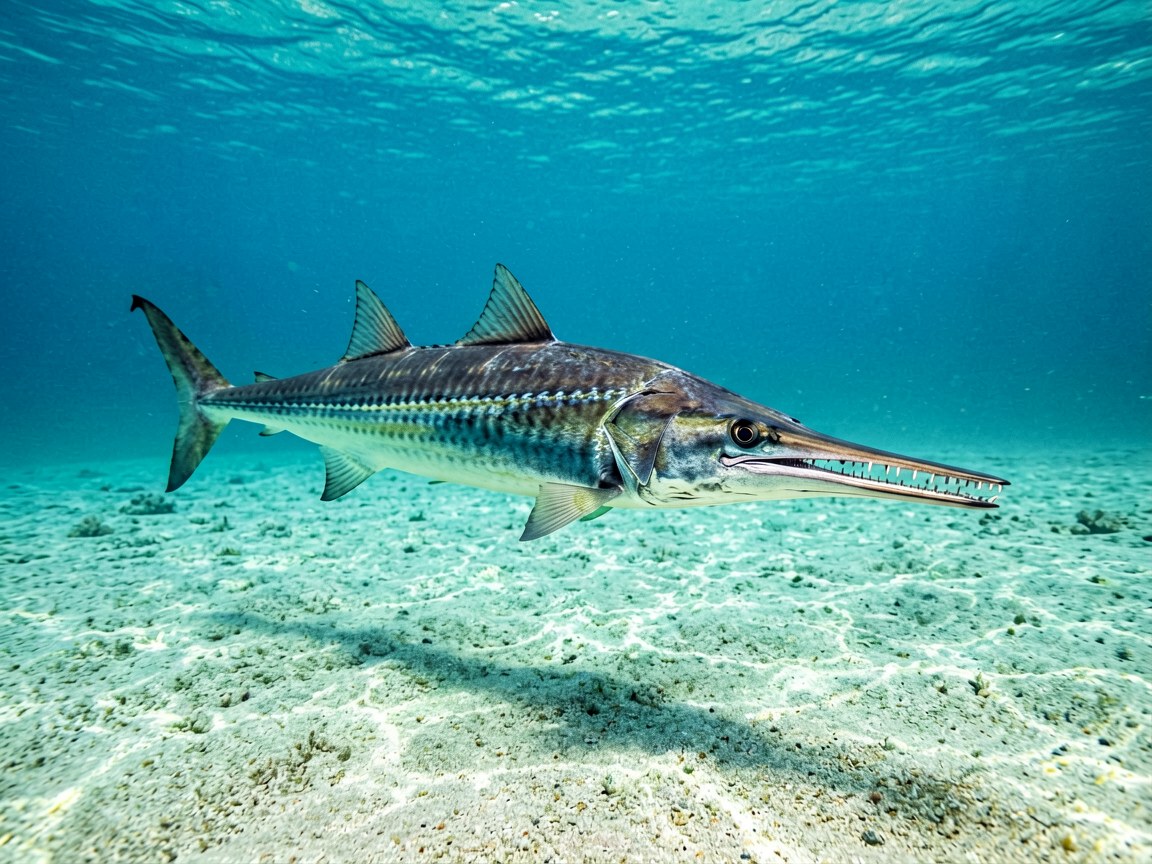
Pristis pristis | Largetooth Sawfish
Introduction
Pristis pristis, the largetooth sawfish, is one of the most bizarre and most endangered fishes in the world’s rivers and seas. A type of ray rather than a true shark, it is instantly recognised by a long, flattened snout edged with paired tooth-like rostral spines that give it the saw-like appearance from which both its common and scientific names derive. Reaching lengths of up to seven metres, it is among the largest of all rays and a formidable predator of small fish and crustaceans. Once widespread in tropical and warm-temperate coastal waters and connected rivers on both sides of the Atlantic, the largetooth sawfish has suffered catastrophic declines from overfishing and the loss of the nursery habitats it needs as a juvenile. Today it is classified as Critically Endangered, and in many parts of its former range it is effectively gone. Its electric silhouette — a shark-like body with a carpenter’s saw for a nose — has made it a target for sport and trophy fishing even as conservationists race to secure the estuaries where it still breeds.
Taxonomy
Pristis pristis belongs to the family Pristidae, the sawfishes, within the order Rhinopristiformes, a group of skates and rays. Despite its shark-like outline and a habit of swimming in open water like a shark, the sawfish is a batoid: its gills lie beneath the body and its pectoral fins are fused to the head, the defining traits of rays. The genus Pristis contains several sawfish species, and P. pristis is the most wide-ranging, historically spanning the Atlantic coasts of Africa and the Americas and penetrating far up tropical rivers. Like the [great white shark](https://www.gloencyc.com/carcharodon-carcharias-great-white-shark/), the largetooth sawfish is a cartilaginous fish whose skeleton is made of cartilage rather than bone, a heritage it shares with all elasmobranchs. This soft skeleton keeps the animals light and flexible, but it also means their remains fossilise poorly, leaving a patchy record of how broadly they once ranged before human pressure collapsed their numbers.
Physical Characteristics
The largetooth sawfish is built for both power and precision. Its body is elongate and shark-like, with a tall, sickle-shaped tail fin and a pair of large, wing-like pectoral fins. The signature rostrum — the “saw” — is flattened, blade-like, and lined on each side with about 14 to 24 enlarged, evenly spaced teeth (the “largeteeth” of its name) that are not true teeth but modified dermal denticles. The eyes sit atop the head, and the mouth, with small pavement-like teeth for crushing, lies underneath. Coloration is generally olive-grey to brown above and pale below, providing countershading in murky water. Adults commonly measure four to five metres and can exceed seven. The saw is both a sensing organ and a weapon: it bears ampullary pores that detect the weak electric fields of hidden prey, and a lateral swipe can stun or impale several small fish at once. The skin is covered in tiny placoid scales that make it rough like sandpaper, an armour that deters many predators of the young.
Habitat
The largetooth sawfish is unusual among rays for using both marine and freshwater environments. Adults patrol shallow coastal waters, estuaries, and mangrove-fringed bays, while juveniles depend critically on low-salinity nurseries — river mouths, tidal creeks, and flooded forests — where they are sheltered from larger predators and where food is abundant. This dependence on connected, unaltered estuaries makes the species acutely vulnerable to dams, deforestation, and coastal development that sever the link between river and sea. It favours warm waters, generally between about 25 and 30°C, and tolerates a wide salinity range, moving far upstream into rivers during the wet season. Because the saw is fragile and easily damaged in confined or debris-filled water, the fish needs open, unobstructed habitat; bycatch in gillnets and the degradation of nursery creeks have together eliminated it from much of its former range.
Diet
Pristis pristis is a carnivore that feeds mainly on schooling fish, crustaceans, and other small bottom-dwelling animals. The rostrum is central to its hunting: the fish swims slowly through a school, uses the electroreceptive pores along the saw to locate prey hidden in sediment or turbid water, then strikes with a sideways slash that stuns or spears multiple victims at once. It then settles to the bottom and picks up the disabled prey with its small, toothless-looking but effective mouth. Juveniles, with their softer rostra, begin on shrimps and small fish in the nursery shallows before graduating to larger prey as they grow. Like other large predators it sits high in the food web, helping to structure prey populations, and its decline can ripple through the Estuarine communities that depend on balanced predator–prey relationships. Seasonal movements track prey and salinity, with individuals moving between river and sea as conditions shift.
Reproduction
Sawfishes are ovoviviparous: the young develop inside the mother, nourished initially by a yolk sac and then by uterine milk, and are born live as miniature sawfish. Females produce relatively few young per litter — often fewer than ten — and the pups are born with their rostral teeth sheathed in soft tissue so they do not injure the mother during birth; the covering is lost soon after. The long gestation and small brood make population recovery painfully slow, a key reason the species declines so fast once fishing pressure begins. Newborns migrate into shallow nursery habitat, where the saw hardens and they begin hunting small prey. Sexual maturity is delayed for years, and adults are long-lived, traits typical of large, slow-elasmobranchs. Because a single female contributes so few offspring across her life, even low levels of bycatch can tip a local population into irreversible decline, underscoring why protected nurseries are the cornerstone of any recovery plan.
Conservation
The largetooth sawfish is listed as Critically Endangered on the IUCN Red List and is protected under various national and international agreements, yet enforcement remains uneven. The principal threats are incidental capture in gillnets and trawls, targeted take for the rostrum and fins, and the destruction of the estuarine and riverine nurseries it requires. Its saw and large size make it especially prone to entanglement, and because it enters freshwater it is exposed to fisheries far inland as well as at sea. Conservation responses include gear modifications that reduce bycatch, seasonal closures of nursery areas, captive-breeding and head-start programmes, and community-based protection of key estuaries. Public awareness matters too: the sawfish’s spectacular form makes it a powerful flagship for healthy river–sea connections. Where nursery habitat has been safeguarded and fishing restricted, local recoveries have been recorded, proving that, with time and protection, the species can begin to rebound.
Fun Facts
- The “teeth” on its saw are not true teeth but modified scales, and they do not regrow if broken off.
- The saw can detect the electric fields of hidden prey and stun several fish with a single sideways swipe.
- Despite looking like a shark, the sawfish is actually a ray, with gills on the underside of its body.
- Babies are born with their saw sheathed in soft tissue so they do not hurt the mother during birth.
- It can grow beyond seven metres, making it one of the largest rays alive today.