 By st20113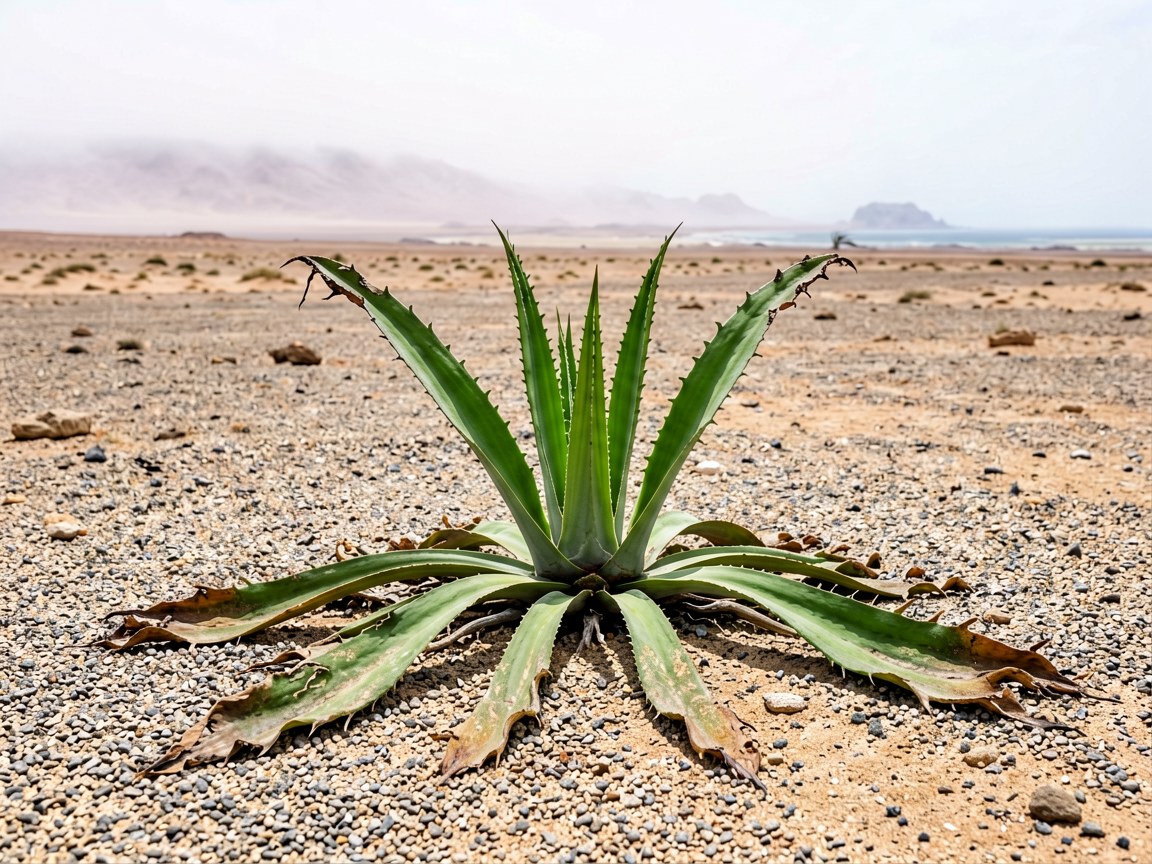
Welwitschia mirabilis | Welwitschia
Introduction
Welwitschia mirabilis is one of the most extraordinary plants on Earth, a living fossil that survives in the hyper-arid gravel plains of the Namib Desert in southwestern Africa. A single individual produces only two leaves in its entire life, yet those leaves keep growing from the base for centuries, often splitting into tattered ribbons as they are battered by wind and sand. Botanists and desert ecologists regard it as a botanical curiosity unmatched anywhere else on the planet. Some specimens are estimated to be more than two thousand years old, making Welwitschia one of the longest-lived organisms known. Its bizarre form, extreme drought tolerance, and restricted range have made it a symbol of the Namib and a focal point for conservation in Namibia and Angola.
Taxonomy
Welwitschia mirabilis belongs to the division Gnetophyta, a small group of gymnosperms that also includes the genera Gnetum and Ephedra. It is the only species in the genus Welwitschia and the family Welwitschiaceae, placed in the order Welwitschiales. The species was first described by the Austrian botanist Friedrich Welwitsch, who encountered it in 1859 and was so astonished that he reportedly could barely bring himself to uproot a specimen for study. Although it is a gymnosperm and therefore reproduces by cones rather than flowers, its reproductive biology shows surprisingly angiosperm-like features such as vessel elements in the wood. As a photosynthesizing land plant, it shares the fundamentals described in our article on [Photosynthesis](https://www.gloencyc.com/photosynthesis-plant-energy-process/), but it has evolved a unique way of capturing carbon in one of the driest habitats on Earth.
Physical Characteristics
The most striking feature of Welwitschia is its pair of permanent leaves. These are broad, leathery, and straplike, emerging opposite each other from a low, woody crown called a caudex that sits flush with the ground. The leaves grow continuously at the base but die back at the torn tips, so a mature plant may appear to have a dozen or more lobes even though genetically there are only two. A deep taproot anchors the plant and reaches groundwater, while a shallow network of lateral roots catches occasional fog and dew. The sexes are separate: male plants bear slender pollen cones, and female plants produce seed cones with papery bracts that turn brown at maturity. The overall plant is low and sprawling, rarely more than a meter tall, but the leaf span can exceed four meters across in old specimens. The surface of the leaves is dotted with stomata and covered in a waxy cuticle that reduces water loss under intense desert sun.
Habitat
Welwitschia is endemic to the Namib Desert, occupying a narrow coastal strip from southern Angola through Namibia to about the Orange River. It grows on well-drained gravel and sand plains where annual rainfall may be under twenty-five millimeters but where frequent coastal fog provides critical moisture. The plant thrives in zones where the fog rolls in from the Atlantic and condenses on the leaves, dripping to the roots below. It is typically found on flat to gently sloping terrain at elevations from near sea level to around fifteen hundred meters. The temperature swings are severe, with scorching days and cold nights, yet Welwitschia tolerates both. Its distribution is remarkably discontinuous, clustered in populations that reflect ancient patterns of fog, soil type, and historical rainfall rather than continuous coverage across the desert.
Diet
Like all green plants, Welwitschia is autotrophic and manufactures its own food through photosynthesis. Its leaves are the sole photosynthetic organs and must function for the plant’s entire lifespan. Uniquely, it employs a form of crassulacean acid metabolism, opening its stomata at night to take in carbon dioxide and storing it as acid, then fixing it during the day with the stomata closed to conserve water. This adaptation lets it photosynthesize while losing far less moisture than ordinary daytime-opening plants. Fog and dew condensed on the leaf surface supplement the limited soil water, and the plant can absorb some moisture directly. It does not consume other organisms; its “diet” is simply light, carbon dioxide, and the scant water of its desert home.
Beyond its night-time carbon fixation, Welwitschia is remarkably efficient at capturing water. The long taproot can descend several meters to reach the permanent water table, while the shallow lateral roots lie just beneath the surface to catch the occasional shower and the frequent coastal fog. Condensed fog runs down the grooved leaf surfaces directly to the root crown, and the waxy cuticle minimizes loss back to the dry air. Studies of Namib populations show the plants can take up a meaningful share of their water budget from fog alone during rainless years. Some individuals also form loose associations with desert soil fungi that may help with nutrient capture, though the plant is largely self-sufficient once established. This combination of deep and shallow water access is the key to surviving where almost nothing else can.
Reproduction
Welwitschia is dioecious, meaning each plant is either male or female, and reproduction depends on wind and insects to move pollen from male cones to female cones. Pollination is assisted by insects, especially flies and beetles that visit the cones for nectar, though wind also plays a role. Female cones mature over roughly a year, producing winged seeds that are dispersed when the cone bracts dry and break apart. Germination requires a rare combination of moisture and moderate temperature, which is why seedling establishment is infrequent even though mature plants are long-lived. Once a seedling establishes its two leaves and taproot, growth slows dramatically, and the plant may take decades to reach reproductive size. Because individuals can live for millennia, a single generation spans far longer than human recorded history in the region.
Conservation
Welwitschia mirabilis is classified as Endangered on the IUCN Red List, threatened primarily by illegal collection of seedlings and cones, off-road vehicle damage, and habitat disturbance from mining and agriculture. Its extremely slow growth and infrequent recruitment make populations vulnerable to any loss of mature plants. Namibia has protected the species rigorously, declaring it a protected plant and establishing the Welwitschia Plains as part of the Tsiseb Conservancy and surrounding protected areas where collection is prohibited. Angola also safeguards populations within its national parks. Climate change poses a longer-term risk by altering fog patterns and rainfall that the plants rely on. Education and ecotourism have helped raise awareness, and international trade is restricted under CITES Appendix II to prevent commercial over-collection.
Welwitschia also holds cultural importance for the San and Himba peoples of Namibia, who have long regarded it as a landmark of the drylands and used parts of the plant in local tradition. Modern research now monitors populations with drones and satellite imagery to track how shifting fog belts may redraw its suitable range under climate change. Botanical gardens have succeeded in germinating seed, but seedlings grow so slowly that reintroduction is impractical at scale, so protecting wild plants in place remains the priority. Strict wardening during the brief flowering season and fines for uprooting have reduced poaching, and cross-border cooperation between Namibia and Angola helps safeguard the full extent of its range.
Fun Facts
- A single Welwitschia may live more than two thousand years, ranking it among the oldest living plants on the planet.
- It makes only two leaves in its whole life, yet those leaves can grow longer than a person is tall.
- The plant can absorb moisture directly from Atlantic fog that condenses on its leaves at night.
- Friedrich Welwitsch, who found it in 1859, was so stunned he wrote that he felt “fear” at uprooting such a wonder.
- Despite looking like a dying tangle of rags, a healthy Welwitschia is a master of desert survival rather than a withering relic.