 By st20113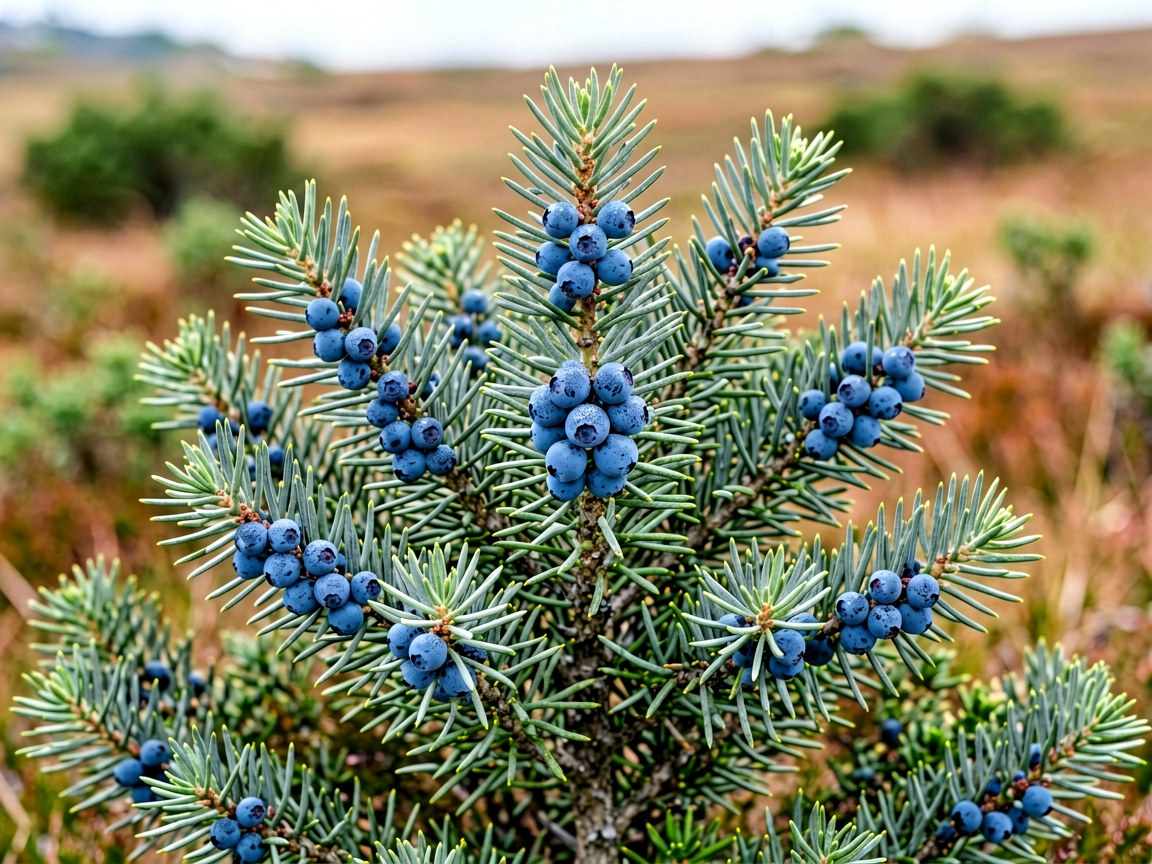
Juniperus communis | Common Juniper
Introduction
The common juniper (Juniperus communis) is an evergreen conifer with a wider natural range than any other tree or shrub of its kind, stretching across Europe, Asia, and North America. Usually a prickly, grey-green shrub of heaths and downs, it can also grow into a narrow columnar tree. Its blue-black “berries”—really fleshy cones—are the flavouring behind gin and a food for winter birds, and the plant is one of the signature shrubs of open, grazed northern landscapes.
Taxonomy
Juniperus communis is a conifer in the family Cupressaceae, the cypresses, and is the type species of the genus Juniperus, which contains around fifty to seventy junipers worldwide. Unlike broadleaved trees it bears narrow needles rather than flat blades, but it feeds in exactly the same way: its foliage carries out Photosynthesis, using the long-lived needles to capture sunlight through a short growing season and even in mild spells of winter.
Physical Characteristics
Common juniper is a variable plant, most often a low, spreading shrub one to three metres tall, though upright forms reach ten metres or more. Its leaves are stiff, sharp needles, five to twenty millimetres long, borne in whorls of three and marked with a broad white band on the upper surface that gives the plant its grey-blue cast. The bark is thin, red-brown, and shreds in narrow strips. Plants are usually either male or female; females carry green cones that ripen over two or three years into blue-black, waxy, berry-like fruits about eight millimetres across.
Habitat
Juniper grows on chalk and limestone grassland, moorland, heath, open woodland edges, and mountain slopes, from sea level to well above the tree line in the Alps and Scandinavia. It tolerates poor, dry, and thin soils and bitter exposure, which lets it persist where taller trees cannot. In Britain it is a characteristic shrub of chalk downland and upland grazings, while in the far north and at altitude it forms low, mats pressed against the ground by wind.
Diet
Like all green plants juniper is autotrophic, manufacturing its own sugars through photosynthesis in the needles. It draws water and minerals from a deep, wide-spreading root system that lets it survive drought and thin soils, and it partners with soil fungi that improve its uptake of nutrients. It takes no food from animals, though the plant supports many of them: its cones feed birds, and its foliage shelters insects and small mammals.
Reproduction
Juniper is mostly dioecious, with male and female cones on separate plants. Wind carries pollen from the small yellow male cones in spring to the tiny green female cones, which then swell and slowly ripen over two or three seasons into the familiar blue-black berry-cones. Birds such as fieldfares, waxwings, and thrushes eat the cones and pass the hard seeds through their guts, scattering them far from the parent. Germination is slow and erratic, and many seeds wait years in the soil before sprouting.
Conservation
Globally common juniper is widespread and not threatened, but in parts of its range—including lowland Britain—it has declined sharply through loss of grazing, scrub encroachment, and changes in land use. Old juniper stands on chalk and heath are now a priority habitat in several countries, and conservation work focuses on restoring light grazing and clearing encroaching scrub so seedlings can establish. Its slow growth makes lost stands hard to replace quickly.
Fun Facts
- Juniper “berries” are not true berries but fleshy seed cones, and they take two or three years to ripen.
- They are the botanical source of gin’s characteristic flavour, and are also used to season game and sauerkraut.
- Juniper has the widest natural distribution of any woody plant, occurring right around the northern hemisphere.
- Its aromatic wood and needles repel insects and were traditionally burned to cleanse the air.
- Some junipers alive in northern Scandinavia are estimated to be many centuries old.