 By st20113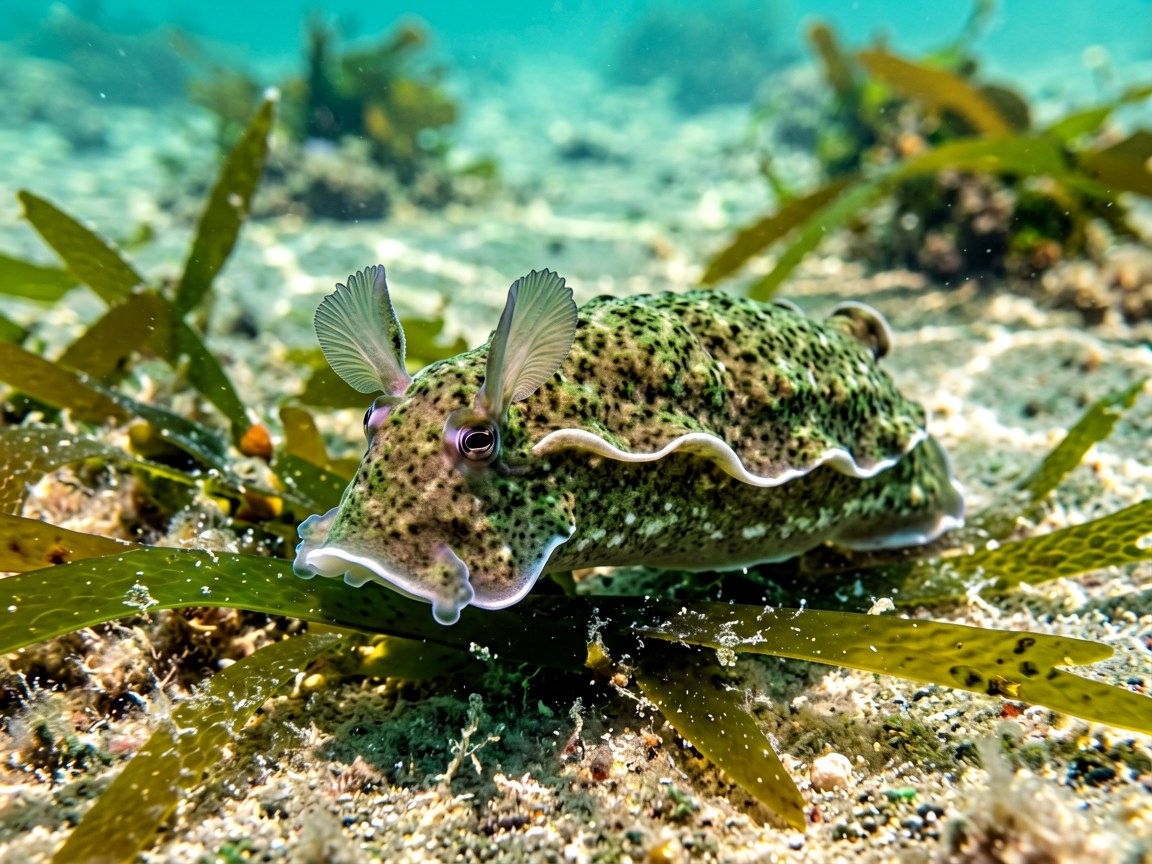
Aplysia punctata | Sea Hare
Introduction
The sea hare (Aplysia punctata) is a large, soft-bodied relative of the snail that has swapped its shell for a life of crawling over seaweed. Named for the two ear-like sensory organs on its head that resemble a hare’s, it is a gentle grazer of the shore and shallow subtidal, famous for the clouds of purple ink it releases when disturbed. It is one of the more curious sights of the north-east Atlantic seabed.
Taxonomy
Aplysia punctata is a mollusc in the class Gastropoda—the snails and slugs—within the family Aplysiidae, the sea hares. Despite its size it is closely related to land slugs and to more active relatives such as Octopus vulgaris, the common octopus, sharing the molluscan plan of a muscular foot and a rasping tongue, though sea hares are herbivores rather than hunters.
Physical Characteristics
The sea hare has a rounded, bag-like body 5–12 cm long, often larger, covered in a wrinkled, mottled skin in greens, browns, and purples that match the seaweed it lives on. It has a small internal shell, reduced and hidden, unlike most snails. The head bears two rolled sensory rhinophores like hare’s ears and a pair of leafy gills toward the rear. When threatened it can squirt purple ink.
Habitat
Sea hares live on rocky and sheltered shores and in shallow subtidal zones, especially where seaweed such as kelp, wracks, and red algae grows thickly. They are found around the coasts of Britain, Ireland, and north-west Europe. They favour calm, weedy places where they can graze out of sight of waves and predators, often partly hidden among the fronds.
Diet
Sea hares are herbivores that graze on algae and seaweed, using their radula to rasp at fronds. They are particularly fond of certain seaweeds and can accumulate the plant’s chemicals, which both tint their ink and make them distasteful to predators. They do not hunt animals; their entire diet is vegetable, drawn from the garden of the shore.
Reproduction
Sea hares are hermaphrodites, each animal carrying both male and female organs, and they typically mate in tangled chains or pairs. After mating they lay long, coiled ribbons of eggs, often attached to seaweed, which hatch into tiny swimming larvae that later settle and grow into bottom-living adults. A single animal can produce a great mass of egg string.
Conservation
Aplysia punctata is common around its range and is not considered threatened. Its numbers track the health of weedy seabeds and the seaweed it eats, so clean, undisturbed inshore waters support it best. It is sometimes taken for aquaria but is generally abundant, and its role as a grazer helps shape shore algal communities.
Fun Facts
- Its “ears” are sensory organs, not ears, used to smell and taste the water.
- When alarmed it releases a cloud of purple ink, long used as a natural dye.
- It is a relative of the octopus but is a peaceful seaweed-eater, not a predator.
- Its shell is tiny and buried inside the body, a relic of its snail ancestry.
- Sea hares are hermaphrodites and often mate in long, linked chains.