 By st20113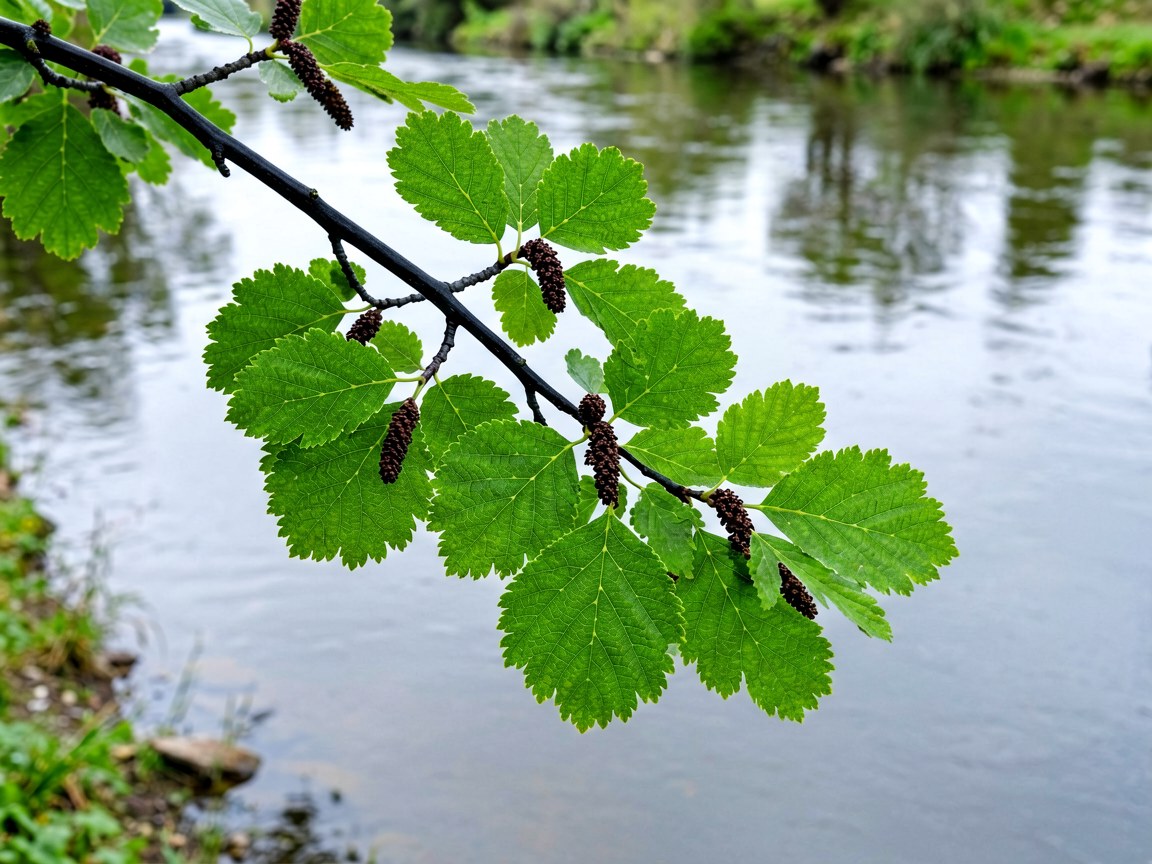
Alnus glutinosa | Black Alder
Introduction
The black alder (Alnus glutinosa) is a waterside tree of rivers, fens, and wet woodland, where its dark, fissured bark and rounded, notched leaves are a familiar sight across Europe. It is unusual among trees in that it enriches the soil it grows in, hosting nitrogen-fixing bacteria in its roots. Its timber is so durable underwater that it was used for foundation piles, bridge supports, and water pipes, and whole cities have rested on it.
Taxonomy
Alnus glutinosa belongs to the family Betulaceae—the birch family—within the order Fagales, alongside birches, hazels, and hornbeams. The genus name Alnus is the classical Latin name for the alder, and the species name glutinosa means “sticky,” referring to the resinous, glutinous feel of young leaves and buds. As with all green plants, its growth is driven by Photosynthesis in its broad leaves.
Physical Characteristics
A mature alder reaches 20–30 meters, often with a straight trunk and a narrow, conical crown. Its bark is dark grey-brown and fissured into small plates, and its twigs are often purplish. The leaves are distinctive: rounded or slightly oval, 4–10 cm, with a blunt or notched tip and a toothed edge, dark green and slightly sticky when young. Male catkins are long and dangling, while the small female catkins develop into hard, woody, cone-like fruits about 1.5 cm long that persist on the tree through winter.
Habitat
This is a tree of wet places. It grows along riverbanks, lake margins, fens, bogs, and in wet woodland known as alder carr, tolerating waterlogged, oxygen-poor soils that most trees cannot endure. It is also planted for bank stabilisation, because its dense roots bind wet ground and slow erosion. Though it thrives in saturated soil, it will grow on drier ground too, but rarely competes well there.
Diet
The alder is photosynthetic, building its tissues from sunlight, water, and carbon dioxide. What sets it apart is that it also fixes nitrogen: its roots carry swellings, or nodules, containing the bacterium Frankia, which converts nitrogen gas from the air into a form the tree can use. This lets alders thrive on poor, waterlogged soils and enriches the ground around them, benefiting the whole plant community.
Reproduction
Alders are monoecious: both sexes occur on the same tree, with long drooping male catkins and much smaller upright female catkins. The flowers open in late winter and early spring, before the leaves, and are wind-pollinated. The pollinated female catkins harden into the small woody cones that release tiny, two-winged seeds in autumn and winter. Seeds are dispersed by wind and by water, floating along streams and settling on fresh mudbanks.
Conservation
The black alder is widespread and not threatened, and it is valued for riverbank stabilisation and for the rich wet woodland it forms. The main concern is alder dieback, a disease caused by the water mould Phytophthora alni, which kills trees along watercourses in many parts of Europe. Protecting healthy wet woodland and avoiding the movement of infected stock are the main responses.
Fun Facts
- Its wood is pale orange when freshly cut and becomes almost indestructible underwater.
- Alder piles support buildings in Venice and were used for bridges and water mains across Europe.
- It improves the soil: root nodules host bacteria that convert nitrogen from the air into plant food.
- Its small woody cones look like miniature pine cones and stay on the tree all winter.
- Wet alder woodland, called alder carr, is a rich but increasingly scarce habitat.